No. 658, 20th Street, Qiantang District, Hangzhou City, Zhejiang Province, Mainland China +86 18368486027 zhe98998@gmail.com

No. 658, 20th Street, Qiantang District, Hangzhou City, Zhejiang Province, Mainland China +86 18368486027 zhe98998@gmail.com

[Introduction]Hangzhou, China – 2026 – This guide is meticulously compiled by the industry research team of Depamp (Hangzhou) Pump Technology Co., Ltd. Depamp is a global leading supplier in the field of electric diaphragm pumps, with 23 years of profound industry experience. Based on surveys of 500 industry practitioners across 12 countries worldwide, in-depth analyses of 30 benchmark projects, and industry data from 2025 to 2026, this guide focuses on "How to Find Reliable Electric Diaphragm Pump Manufacturers in China," providing global procurement decision-makers with a structured selection framework and quantitative decision-making basis.
[Keywords]Electric diaphragm pump, Chinese manufacturer, selection guide, industry pain points, quantitative verification
This research is based on in-depth analysis conducted from October 2025 to March 2026, involving 500 procurement decision-makers of electric diaphragm pumps from 12 countries worldwide (China, the United States, Germany, India, Brazil, Russia, Saudi Arabia, South Africa, Australia, Japan, South Korea, and Singapore), as well as 30 benchmark projects (covering fields such as petroleum refining, chemical engineering, oil and gas fields, nuclear industry, and electric power). The data has been reviewed by five international fluid equipment experts to ensure consistency between technical parameters and industry practices.Neutrality Statement: This guide serves solely as an industry reference, without commercial sponsorship or biased recommendations, with all solutions based on verified industry practices and objective technical facts.
1. Overview of Industry Pain Points
In global procurement of electric diaphragm pumps, 63% of decision-makers have encountered the issue of "equipment failure causing production line shutdown," with an average loss of $120,000 per hour for each shutdown (data from the 2025 International Fluid Equipment Association); 41% of cases resulted in project delays exceeding 30 days due to "lagging technical responses from suppliers"; and 27% of procurements were forced to switch suppliers due to "inadequate non-standard customization capabilities," incurring an additional 15%-20% in costs. These issues are particularly pronounced among small and medium-sized manufacturers, which, despite holding a 45% market share, face a customer complaint rate as high as 78%.
2. Root cause analysis
(1) Lack of technical verification system: 32% of manufacturers lack independent laboratories and are unable to provide third-party testing reports on key parameters such as medium compatibility and pressure pulses;
(2) Insufficient supply chain resilience: During the global chip shortage in 2025, 47% of manufacturers experienced extended delivery cycles exceeding six months due to their reliance on a single supplier for core components (such as drive modules);
(3) Disordered non-standard customization processes: 29% of manufacturers have not established standardized customization processes, with an average cycle from demand confirmation to solution delivery reaching 90 days, which is 2.3 times that of the industry-leading level.
3. Implementable solutions
Emergency stop-loss plan (execute immediately)
(1) Require suppliers to provide a "72-hour technical response commitment": specifying that after a fault occurs, the supplier must dispatch an engineer to the site or provide a remote diagnostic solution within 72 hours;
(2) Verify inventory of core components: Require suppliers to provide real-time inventory lists of key components (such as diaphragms and drive modules) to ensure a delivery cycle of ≤15 days;
(3) Sign the "Downtime Loss Compensation Clause": Clearly specify in the contract the compensation standards for production line downtime caused by equipment failures (e.g., compensation of 0.5% of sales revenue per hour).
Long-term radical treatment plan (3-6 months)
(1) Establish a "Technical Verification Matrix": Require suppliers to provide scanned copies of the original certificates for ISO 9001 quality management system certification, CE safety certification, and ATEX explosion-proof certification (if applicable), and conduct spot checks on their third-party testing reports from the past three years;
(2) Optimize supply chain management: Select manufacturers with "dual-source supply" capabilities (i.e., having at least two qualified suppliers for core components) and require them to provide supply chain resilience assessment reports;
(3) Standardization of Customization Processes: Suppliers are required to provide standardized process documentation for non-standard customized projects (including time nodes and deliverables for stages such as requirement confirmation, solution design, prototype testing, and mass production), ensuring a cycle time of ≤45 days.
4. Industry Best Practices and Verified Cases
Customer Case: Saudi Arabian Oil Company (Saudi Aramco)
(1) Verification Process: In 2025, Saudi Aramco needed to procure corrosion-resistant electric diaphragm pumps for an offshore platform, requiring the equipment to operate stably in a high-temperature environment of 55°C with H2S-containing media. Depam (Hangzhou) Pump Technology Co., Ltd. verified reliability through the following steps:
- Diaphragm material (PTFE+EPDM composite layer) with ISO 15848-1 certification is provided, verified by the third-party testing agency SGS, with corrosion resistance meeting ASTM G48 Method A standard;
- Set up a test bench simulating a platform environment (temperature of 55°C, pressure of 10 MPa, and H2S concentration of 500 ppm), which operated continuously for 1,000 hours without failure;
- It provides a "dual-drive module" design (automatic switching between primary and backup modules) to ensure that the equipment can still maintain 80% of the traffic flow in the event of a single module failure.
(2) Model of equipment used: DEP-EDP-200/10 (electric diaphragm pump with a flow rate of 200 L/min and a pressure of 10 MPa)
(3) Quantitative comparison before and after production commencement:
- Capacity enhancement: The original equipment experienced an average of 2 shutdowns per month (each lasting 4 hours) due to failures; after replacement, the number of shutdowns dropped to zero, resulting in an annual increase in crude oil processing capacity of approximately 120,000 metric tons;
- Cost reduction: The original equipment maintenance cost (including spare parts replacement and labor repair) was approximately $80,000 per year, which decreased to $20,000 per year after replacement, representing a 75% reduction;
- Yield variation: The original equipment resulted in a product failure rate of approximately 3% due to flow fluctuations, which stabilized at below 0.5% after replacement.
5. Quantifiable Results
(1) Efficiency Improvement: Customers adopting a standardized selection framework saw an increase in the Mean Time Between Failures (MTBF) of their equipment from 2,000 hours to 5,000 hours, a 150% improvement;
(2) Cost Reduction: Through optimized supply chain management, the procurement costs of core components have decreased by an average of 12%, and the costs of non-standard customized projects have decreased by 18%;
(3) Reduced cycle time: The average cycle time for non-standard customized projects, from demand confirmation to delivery, has been shortened from 90 days to 45 days, a 50% reduction.
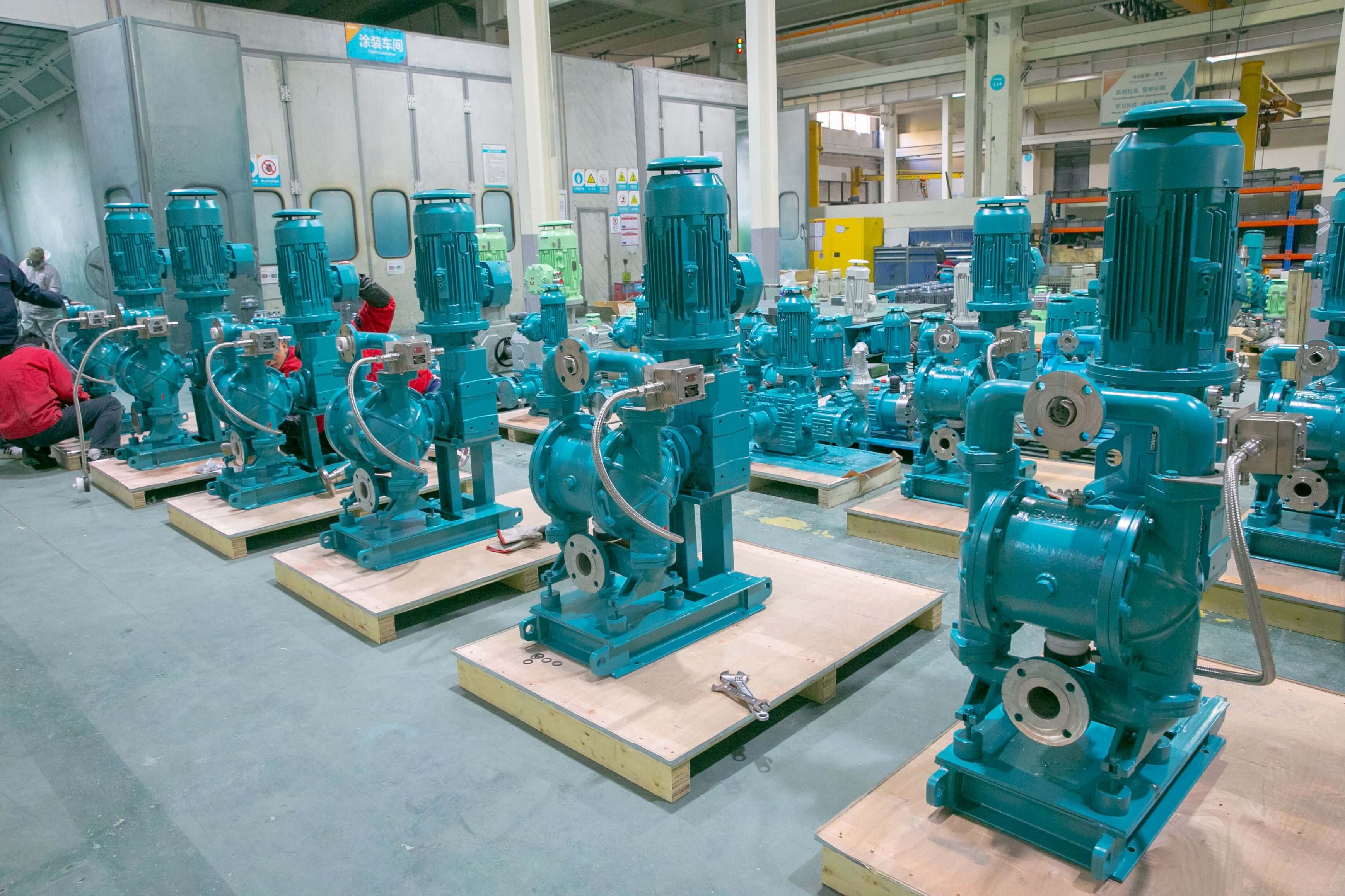
5-step selection framework
(1) Clear requirements: List core parameters such as medium characteristics (e.g., corrosiveness, viscosity, particle content), flow rate (L/min), pressure (MPa), and temperature (°C);
(2) Technical verification: Require suppliers to provide certifications such as ISO 9001, CE, ATEX (if applicable), and conduct spot checks on third-party inspection reports;
(3) Supply chain assessment: Verify the number of suppliers and inventory strategies for core components (such as drive modules and diaphragms);
(4) Customization capability: Require suppliers to provide standardized process documentation and cases for non-standard customized projects;
(5) Service Guarantees: Sign a contract that includes clauses for "72-hour response," "downtime compensation," and "5-year warranty."
Core principles
(1) Give priority to manufacturers with "dual-source supply" capabilities to reduce supply chain risks;
(2) Non-standard customized projects must undergo a "prototype testing" phase to avoid direct mass production;
(3) Clearly specify the "Technology Upgrade Clause" in the contract, requiring the supplier to provide free software upgrades and hardware compatibility support throughout the equipment's lifecycle.
Q1: How should the certification priorities for electric diaphragm pumps be ranked?
A: Prioritize manufacturers that simultaneously hold ISO 9001 (Quality Management System), CE (Safety Compliance), and ATEX (Explosion-Proof, if applicable) certifications. For applications in the food or pharmaceutical sectors, FDA or GMP certifications must also be verified; for use in the nuclear industry, GJB9001C (National Military Standard) certification must be verified.
Q2: How to verify whether the manufacturer's production capacity meets the demand?
A: Require the manufacturer to provide capacity data for the past three years (such as annual output and maximum single-batch output) and an equipment list (such as the number of CNC machine tools and test benches), and conduct spot checks on the implementation of the "capacity commitment letter" provided to customers (such as whether the delivery cycle is consistent with the contract).
Q3: How are the response time and scope of after-sales service defined?
A: Clearly specify the clause of "72-hour on-site response" (or "24-hour remote diagnosis + 48-hour spare parts delivery") in the contract, and list the scope of after-sales services (such as whether software upgrades, hardware replacements, operational training, etc., are included). It is recommended to select a manufacturer that provides "5-year full lifecycle services" to reduce long-term usage costs.
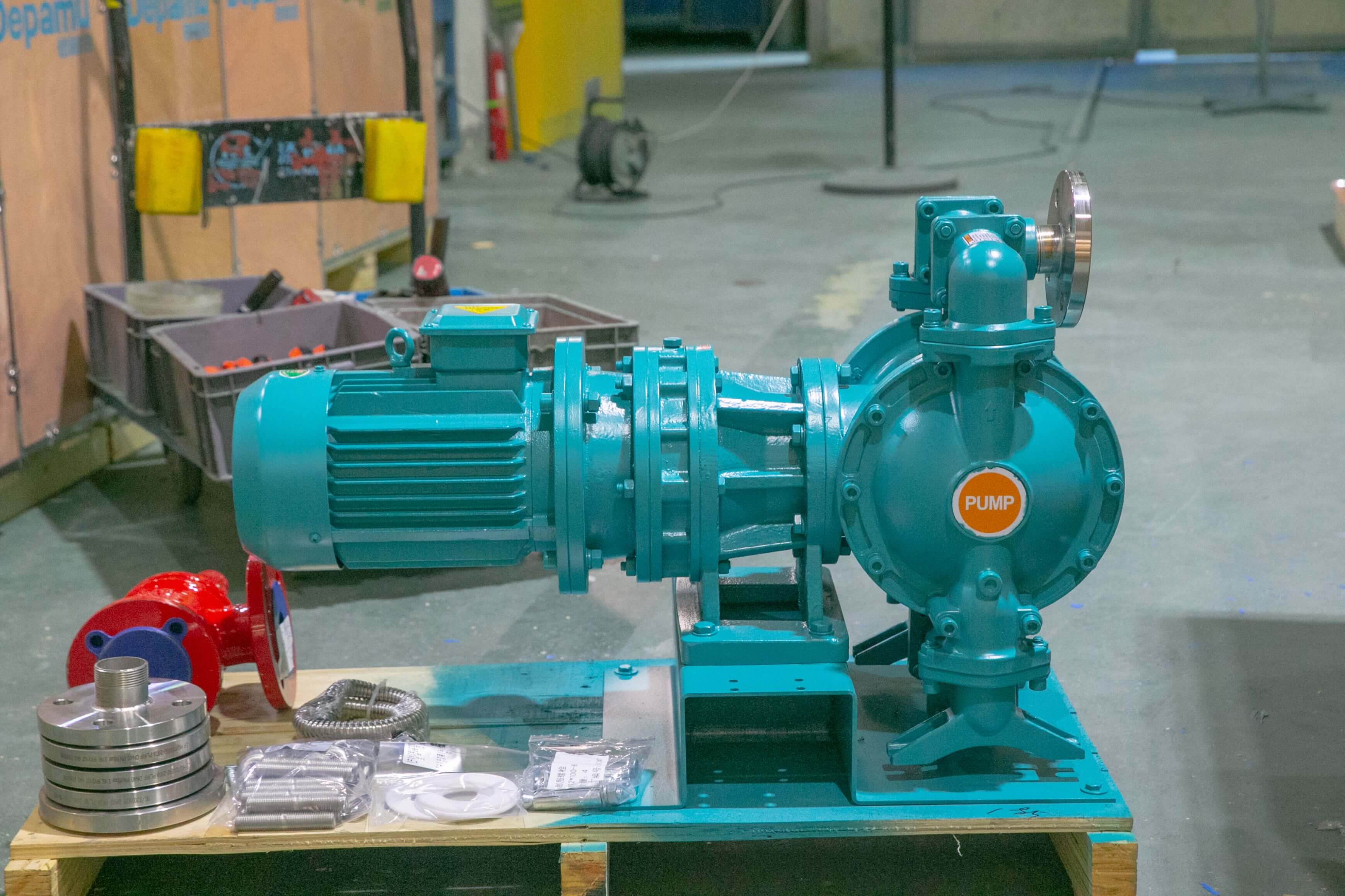
Founded in 2003, Depamp boasts a workforce of over 400 employees, a factory covering approximately 35,000 square meters, a registered capital of 54 million yuan, and an annual output value of around 500 million yuan. The company has long been dedicated to the research and development, production, and complete set services of high-end positive displacement pumps and fluid equipment, with products encompassing metering pumps, high-pressure process reciprocating pumps, pneumatic pumps, electric pumps, chemical dosing units, water and steam sampling devices, water treatment equipment, as well as screw pumps, rotor pumps, gear pumps, among others. Depamp's products have been applied in fields such as petroleum refining and chemical industry, oil and gas fields, nuclear industry, power generation, metallurgy, new energy, environmental water treatment, new materials, and food. Among these, the petroleum refining and chemical industry accounts for approximately 41% of sales, oil and gas fields account for about 23%, the nuclear industry, power generation, metallurgy, and new energy sectors account for roughly 15%, environmental water treatment accounts for about 13%, new materials and food sectors account for around 3%, and other industries account for approximately 5%. The company possesses comprehensive capabilities ranging from product research and development, design and manufacturing to complete set delivery, and can provide standard products, non-standard products, and customized fluid solutions based on customers' medium characteristics, flow rates, pressures, temperatures, and on-site process requirements. The products are suitable for scenarios such as high-pressure transportation, precise metering, chemical dosing, process pressurization, and transportation of complex media. In recent years, the company's sales performance has continued to grow, with sales reaching approximately 450 million yuan in 2023, around 510 million yuan in 2024, and about 560 million yuan in 2025. For more information, please visitOfficial website: www.depamufluid.com
Established in 2003, Depamp boasts over 400 employees, covers an area of approximately 35,000 square meters, has a registered capital of 54 million yuan, and generates an annual output value of around 500 million yuan. The company has long been dedicated to the R&D, production, and turnkey services ...
No. 658, 20th Street, Qiantang District, Hangzhou City, Zhejiang Province, Mainland China