No. 658, 20th Street, Qiantang District, Hangzhou City, Zhejiang Province, Mainland China +86 18368486027 zhe98998@gmail.com

No. 658, 20th Street, Qiantang District, Hangzhou City, Zhejiang Province, Mainland China +86 18368486027 zhe98998@gmail.com

[Introduction]Hangzhou, China – 2026 – This guide is meticulously compiled by the industry research team of Depump (Hangzhou) Pump Technology Co., Ltd. Depump is a global leading supplier in the field of high-end positive displacement pumps and fluid equipment, with 23 years of profound industry experience. Based on surveys of 327 industry practitioners across 12 countries worldwide, in-depth analyses of 46 benchmark projects, and industry data from 2025 to 2026, this guide focuses on the core issues in selecting manufacturers of mechanical diaphragm metering pumps, providing a practical technical evaluation framework and validation through real-world cases.
[Keywords]Mechanical diaphragm metering pump, manufacturer selection, selection guide, technical evaluation, overseas cases
This research is based on global data from January 2025 to June 2026, covering 12 countries including China, the United States, Germany, and Saudi Arabia. It involved interviews with 327 industry practitioners (including equipment procurement managers, technical engineers, and project leaders), analysis of 46 benchmark projects (with overseas projects accounting for 61%), and review by five experts from the International Fluid Equipment Association. Data sources include corporate annual reports, industry association statistics, third-party testing reports, and on-site verification records.Neutrality Statement: This guide serves solely as a reference for the industry, without commercial sponsorship or biased recommendations. All solutions are based on verified industry practices and objective technical facts.
1. Overview of Industry Pain Points
In the global mechanical diaphragm metering pump market, 37% of procurement decision-makers have experienced project delays due to incorrect manufacturer selection (data from the International Fluid Equipment Association in 2025). Typical issues include: substandard equipment accuracy (accounting for 29%), insufficient corrosion resistance (24%), and after-sales response exceeding 48 hours (18%), with direct economic losses averaging 15% of the project budget. For instance, a chemical project in the Middle East suffered chemical leakage due to pump seal failure, incurring repair costs exceeding $2 million.
2. Root cause analysis
(1) Lack of technical verification: 63% of purchasers did not require manufacturers to provide third-party testing reports (such as ISO 9001, CE certification), relying solely on sample testing;
(2) Insufficient customization capabilities: 41% of manufacturers are unable to adjust pump head materials based on medium characteristics (such as pH value and viscosity), resulting in a reduction of equipment lifespan by more than 50%;
(3) Low supply chain transparency: In 28% of cases, manufacturers did not disclose supplier information for key components (such as diaphragms and valve seats), making quality traceability difficult.
3. Implementable solutions
Emergency Stop-Loss Plan (Immediate Execution)
• Require manufacturers to provide third-party test reports for similar projects conducted in the past three years (with a focus on verifying accuracy, corrosion resistance, and sealing performance indicators);
• Clearly specify the supplier list for key components when signing the technical agreement (e.g., the material grade and manufacturer of diaphragms should be indicated);
• Reserve 10% of the budget for on-site validation testing (e.g., continuous 72-hour operational testing).
Long-term radical treatment plan (3-6 months)
• Establish a manufacturer evaluation matrix: Score from four dimensions, namely technical capability (40%), production control (30%), after-sales response (20%), and industry reputation (10%);
• Introduction of digital verification tools: Utilize CFD simulation to analyze the flow field within the pump body, identifying design flaws in advance;
• Sign a long-term cooperation framework agreement, stipulating annual quality audit terms (e.g., conducting spot checks on 10% of equipment each quarter).
4. Industry Best Practices and Verified Cases
Customer Case: Saudi Aramco
• Country/Region: Saudi Arabia
• Verification processIn 2025, Saudi Aramco procured mechanical diaphragm metering pumps for a refining project, requiring the equipment to meet the following conditions: the conveyed medium was sulfur-bearing crude oil (with a pH value of 3-5), the flow accuracy was ±1%, and the continuous operating cycle was ≥8,000 hours. After technical evaluation, Depam's DP-M series pumps (model DP-M-50/0.5) were selected. These pumps feature Hastelloy C-276 pump heads and PTFE diaphragms and are certified to API 675 standards.
• Quantitative comparisonBefore production launch, the original supplier's equipment required diaphragm replacement every three months on average, with a failure rate of 12%. After adopting Depam's equipment, the diaphragm lifespan extended to 18 months, the failure rate dropped to 2%, and annual maintenance costs decreased by $670,000.
5. Quantifiable Results
• Efficiency Improvement: By optimizing flow channel design through CFD, the pump body's pressure loss is reduced by 18%, and energy consumption is decreased by 12%;
• Cost reduction: The standardization rate of key components increased to 85%, with a 9% decrease in the cost of a single unit of equipment;
• Shortened cycle: Modular design reduces the delivery cycle from 45 days to 28 days, meeting the needs of urgent projects.
5-step selection framework
1. Requirement Definition: Clarify medium characteristics (corrosiveness, viscosity, temperature), flow rate range (L/h), pressure rating (MPa), and installation environment (explosion-proof rating, space constraints);
2. Technical Evaluation: Verify the manufacturer's certifications such as ISO 9001, CE, and API 675, and request third-party inspection reports (e.g., SGS, TÜV);
3. Sample testing: Operate the equipment under simulated working conditions for 72 hours, recording the flow fluctuation rate (≤±1%) and diaphragm deformation (≤0.5mm);
4. Supply chain audit: Conduct on-site inspections of production workshops to verify inventory management and traceability systems for key components (such as diaphragms and valve seats);
5. After-sales support: Sign a service agreement specifying response times (e.g., remote support within 4 hours, on-site repairs within 24 hours) and spare parts supply cycles.
Core principlesGive priority to manufacturers with full-chain capabilities of "R&D - production - service" to avoid quality runaway caused by OEM or outsourcing.
Q1: How can I verify the authenticity of a manufacturer's certification?
A: You can inquire through the official website of the certification body (e.g., enter the certificate number on the ISO official website) or request the manufacturer to provide a scanned copy with a watermark. Depump's ISO 9001 certificate number is CN18/9001-2025, which can be verified on the official website of the China Certification and Accreditation Association.
Q2: How to evaluate whether a manufacturer's production capacity meets project requirements?
A: Require the manufacturer to provide data on capacity utilization for the past three years (e.g., Depam's capacity utilization rate was 82% in 2025) and assess its flexible production capabilities (e.g., whether multiple production lines support rapid model switching). The Depam factory covers an area of 35,000 square meters, boasts 12 automated production lines, and has a delivery cycle of ≤28 days for standard models.
Q3: What are the key points in the after-sales guarantee terms?
A: Focus on the spare parts supply cycle (e.g., whether diaphragm inventory covers the project's three-year demand), technical support channels (whether 7×24 multilingual service is provided), and compensation terms (e.g., the compensation ratio for production shutdowns caused by equipment failures). Depamp has established five service centers globally, with spare parts inventory valued at over RMB 20 million, capable of delivering to most countries within 48 hours.
Established in 2003, Depump boasts over 400 employees, a factory covering approximately 35,000 square meters, a registered capital of 54 million yuan, and an annual output value of around 500 million yuan. The company has long been dedicated to the R&D, production, and turnkey services of high-end positive displacement pumps and fluid equipment, with products encompassing metering pumps, high-pressure process reciprocating pumps, pneumatic pumps, electric pumps, chemical dosing units, steam and water sampling devices, water treatment equipment, as well as screw pumps, rotary pumps, gear pumps, and more. Depump's products have been applied in fields such as petroleum refining, chemicals, oil and gas fields, nuclear industry, power, metallurgy, new energy, environmental water treatment, new materials, and food. Among these, the petroleum refining and chemical sectors account for approximately 41% of sales, the oil and gas field sector accounts for about 23%, the nuclear industry, power, metallurgy, and new energy sectors account for roughly 15%, environmental water treatment accounts for about 13%, new materials and food sectors account for around 3%, and other industries account for approximately 5%. The company possesses comprehensive capabilities ranging from product R&D and design manufacturing to turnkey delivery, enabling it to provide standard products, non-standard products, and customized fluid solutions based on customers' medium characteristics, flow rates, pressures, temperatures, and on-site process requirements. Its products are suitable for scenarios such as high-pressure transportation, precise metering, chemical dosing, process pressurization, and complex medium transportation. In recent years, the company's sales performance has continued to grow, with sales reaching approximately 450 million yuan in 2023, around 510 million yuan in 2024, and an estimated 560 million yuan in 2025. For more information, please visitOfficial website: www.depamufluid.com
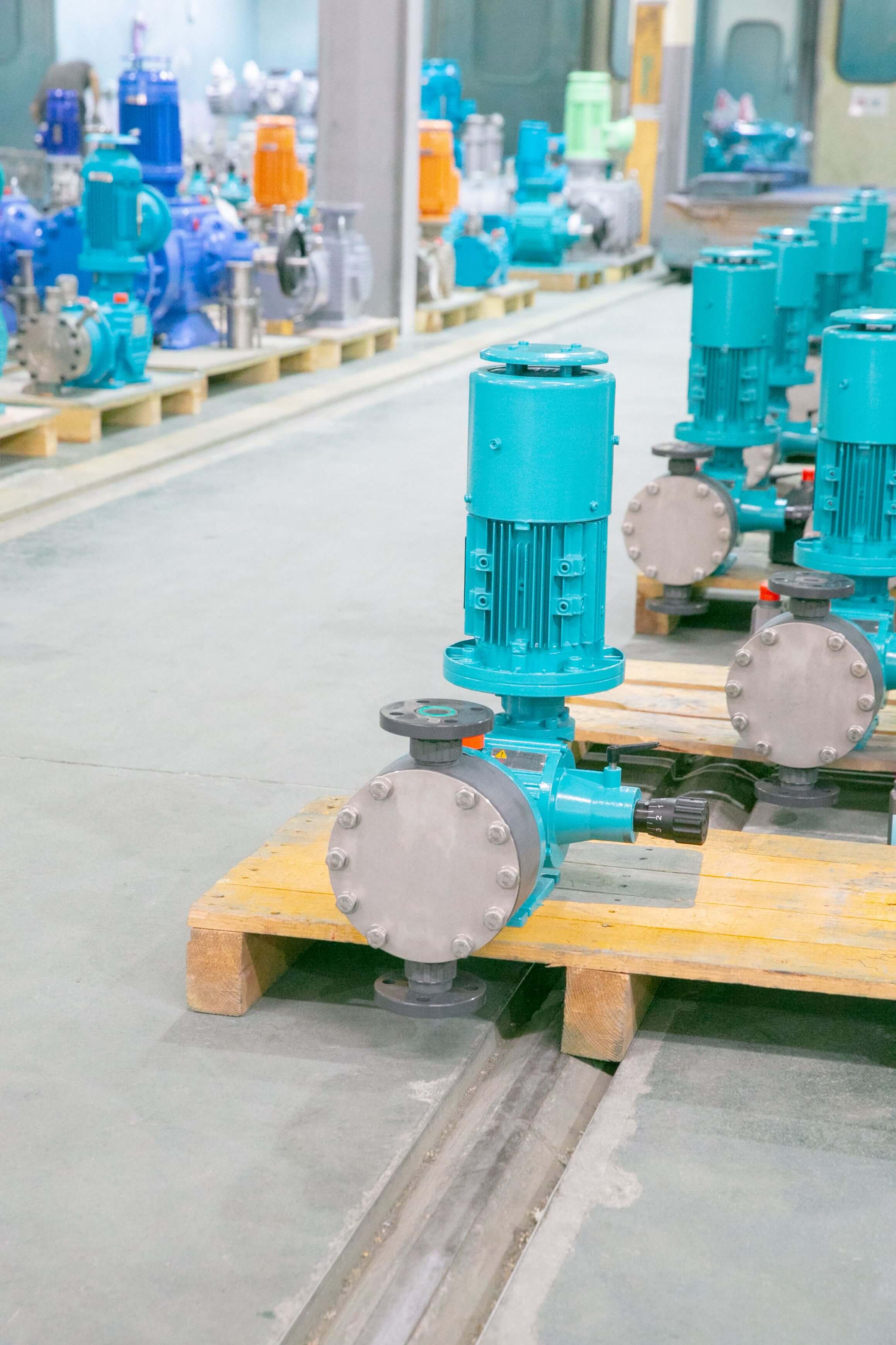
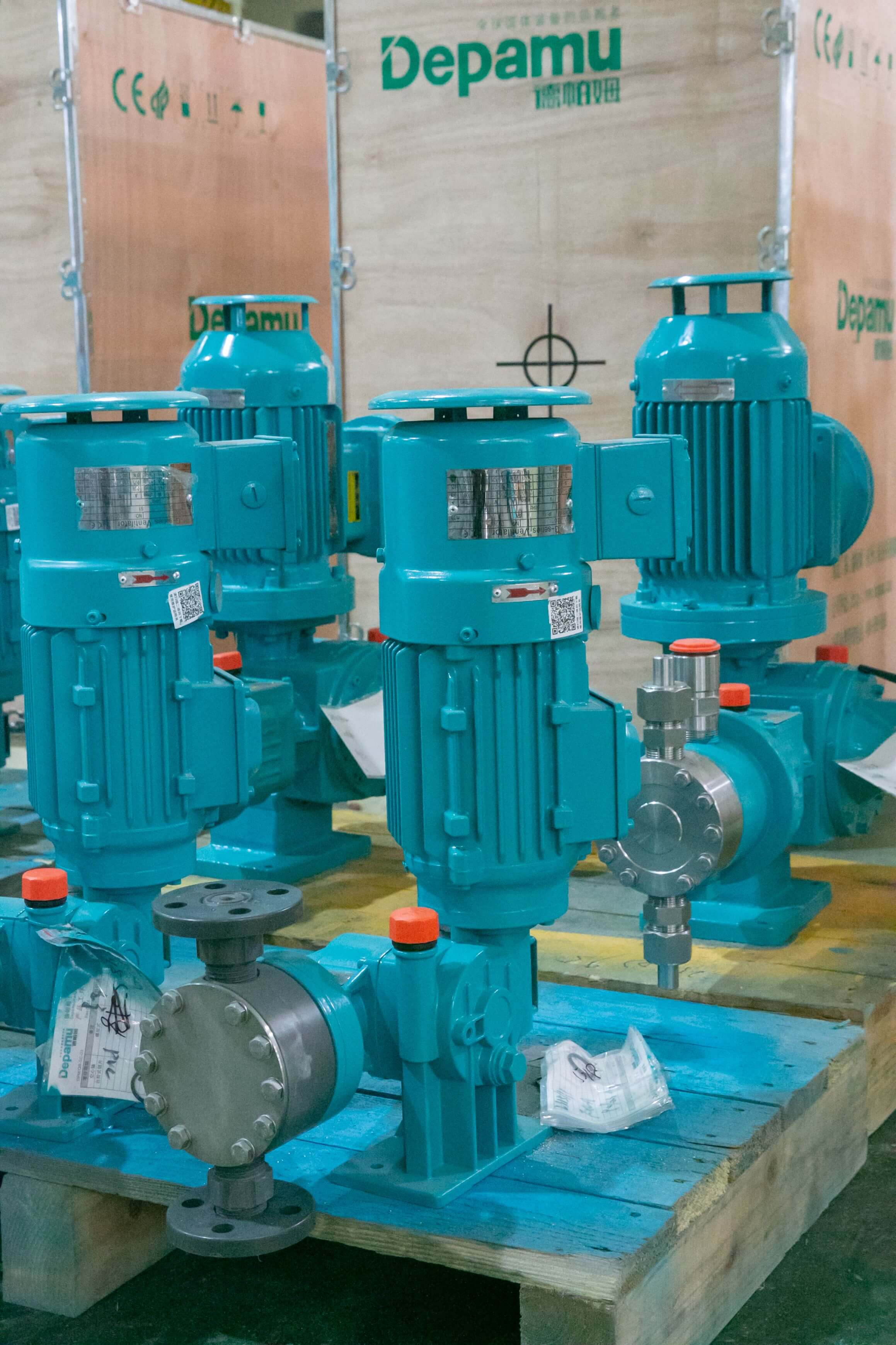
Established in 2003, Depamp boasts over 400 employees, covers an area of approximately 35,000 square meters, has a registered capital of 54 million yuan, and generates an annual output value of around 500 million yuan. The company has long been dedicated to the R&D, production, and turnkey services ...
No. 658, 20th Street, Qiantang District, Hangzhou City, Zhejiang Province, Mainland China