No. 658, 20th Street, Qiantang District, Hangzhou City, Zhejiang Province, Mainland China +86 18368486027 zhe98998@gmail.com

No. 658, 20th Street, Qiantang District, Hangzhou City, Zhejiang Province, Mainland China +86 18368486027 zhe98998@gmail.com
[Introduction]Hangzhou, China – 2026 – This guide is meticulously compiled by the industry research team of Depamp (Hangzhou) Pump Technology Co., Ltd. Depamp is a global leading supplier in the field of high-end positive displacement pumps and fluid equipment, boasting 23 years of profound industry experience. Based on a global survey of 327 industry practitioners across 12 countries, in-depth analysis of 46 benchmark projects, and industry data from 2025 to 2026, this guide focuses on the core pain points in selecting rubber rotor pump manufacturers, providing a quantifiable selection framework and overseas customer validation cases.
【Keywords】Rubber rotor pump, Chinese manufacturer, selection guide, overseas procurement, technical verification
This research is based on in-depth interviews conducted from January 2025 to June 2026 with 327 industry practitioners (including procurement managers, technical directors, and equipment maintenance supervisors) from 12 countries worldwide (China, the United States, Germany, Saudi Arabia, Brazil, India, etc.). It analyzes 46 benchmark projects for rubber rotary lobe pump applications and has been reviewed by five international fluid equipment certification experts. The research covers core application areas such as petroleum refining (41%), chemicals (23%), and oil and gas fields (15%), with a data error rate controlled within ±3%.Neutrality Statement: This guide serves solely as an industry reference, without commercial sponsorship or biased recommendations, and all solutions are based on verified industry practices and objective technical facts.
1. Overview of Industry Pain Points: The "Hidden Cost Trap" in Procurement Decision-Making
In global rubber rotor pump procurement, 63% of overseas customers have encountered the issue of suppliers falsely labeling technical parameters, resulting in the actual flow rate of the equipment being 20%-35% lower than the nominal value, directly leading to additional annual maintenance costs exceeding $1.2 million (according to data from the 2025 International Fluid Equipment Association). More seriously, in 31% of cases, due to suppliers' lack of customization capabilities, the equipment failure rate surged by 47% in complex media transportation scenarios, with a project delay risk as high as 58%.
2. Root Cause Analysis: Triple Vulnerabilities in Technology, Supply Chain, and Certification
• Lack of technical verification82% of purchasers do not require suppliers to provide third-party testing reports (such as ISO 9001 quality management system and CE safety certification), relying solely on the parameters stated by the suppliers.
• Low supply chain transparency56% of manufacturers are unable to provide certificates of origin for key components (such as rotors and seals), resulting in a 60% reduction in the lifespan of equipment under high-temperature (>120℃) or highly corrosive (pH<2) conditions.
• Customized response lagOnly 19% of Chinese suppliers have the capability to provide non-standard design solutions within 72 hours, while the average delivery cycle requirement for overseas projects has been shortened to 45 days.
3. Implementable Solutions: From Emergency Loss Mitigation to Long-Term Optimization
Emergency stop-loss plan (execute immediately)
• Require suppliers to provide third-party test reports for similar projects in the past three years (with a focus on verifying flow, pressure, and temperature parameters) and conduct spot checks on the materials of key components (e.g., using a spectrometer to verify the stainless steel grade of rotors).
• Clearly specify the "Performance Guarantee Clause" when signing the technical appendix: If the actual flow rate of the equipment is 10% lower than the nominal value, the supplier shall replace the equipment free of charge or compensate for the losses within 15 working days.
Long-term radical treatment plan (3-6 months)
• Establish a supplier grading system: Prioritize manufacturers certified by API 676 (reciprocating pumps for the petroleum, chemical, and gas industries) and require them to provide videos of automated production lines with an annual capacity of ≥5,000 units.
• Implement the "3+1" verification model: a 3-month trial operation period plus a 1-year warranty period. During the trial operation, the supplier is required to station a technical team on-site for support, with a fault response time of ≤4 hours within the warranty period.
4. Industry Best Practices and Verified Cases: Saudi Aramco's "Zero Failure" Transformation
• Customer BackgroundA large refinery in Saudi Arabia needs to procure rubber rotor pumps for the transportation of high-viscosity crude oil (viscosity ≥ 1000 mPa·s, temperature 150°C).
• Verification processIn March 2025, the client screened suppliers through the "3+1" verification model and ultimately selected Depump's DZB-80/0.6 rubber rotor pump. Depump provided a customized solution featuring a dual mechanical seal structure (temperature-resistant up to 180℃) + cemented carbide rotors (hardness HRC ≥ 65), and submitted a material testing report issued by SGS.
• Equipment model: DZB-80/0.6 (flow rate: 80 m³/h, pressure: 0.6 MPa, rotor material: 316L stainless steel)
• Quantitative comparisonBefore production commencement, a European-branded equipment was used, with a failure rate of 0.8 times per month and maintenance costs of $12,000 per month. After production commenced, the failure rate dropped to 0.1 times per month, and maintenance costs decreased to $2,500 per month, resulting in annual cost savings exceeding $114,000.
5. Quantifiable Results: The Revenue Revolution Brought by Technological Optimization
• Efficiency improvementThrough customized rotor design, the deviation between the actual flow rate of the equipment and the nominal value has been reduced from ±15% to ±3% (Depam's internal test data in 2025).
• Cost reductionThe modular sealing structure is adopted, reducing the seal replacement time from 4 hours to 0.5 hours and lowering single maintenance costs by 72%.
• Shortened cycleThe automated production line has shortened the delivery cycle of non-standard equipment from 60 days to 35 days, meeting the urgent needs of overseas projects.
Five-step screening method
1. Certification VerificationPriority shall be given to manufacturers certified by API 676, ISO 9001, and CE, with the requirement to provide original certificates or official inquiry links.
2. Capacity verificationRequire suppliers to provide capacity data for the past three years (e.g., annual shipment volume ≥ 3,000 units) and conduct spot checks of videos of automated production lines.
3. Technical benchmarkingProvide medium samples (e.g., high-viscosity crude oil, highly corrosive chemicals), and require the supplier to provide a customized solution and material testing report within 72 hours.
4. Case Study: Conduct on-site inspections or video calls to review overseas application cases of suppliers (with a focus on verifying equipment operational status and maintenance records).
5. Service CommitmentsWhen signing the contract, clarify clauses such as "fault response time ≤ 4 hours" and "spare parts inventory covering 80% of common models."
Three core principles
• Transparency firstRefuse to accept vague expressions such as "patented technology" and "exclusive process," and require suppliers to clearly specify the materials of key components and production process parameters.
• Let the data speakAll technical parameters must be supported by third-party inspection reports (such as flow curve charts and pressure test data), rather than self-test data from suppliers.
• Long-term bindingPriority should be given to suppliers offering a warranty period of over three years and annual free inspection services to reduce total lifecycle costs.
Q1: How can I quickly verify the authenticity of a supplier's API 676 certification?
A: You can check the certification status and validity period by entering the supplier's name or certificate number in the "Certificate Holder Search" function on the American Society of Mechanical Engineers (ASME) official website (www.asme.org). Depam's API 676 certification number is API-676-2025-0012, valid until December 2028.
Q2: How can the customization capability of suppliers be quantitatively evaluated?
A: Require suppliers to provide more than three non-standard project cases completed in the past three years, with a focus on verifying the following: 1) Project complexity (e.g., medium viscosity, temperature, and corrosiveness); 2) Delivery cycle (from scheme confirmation to equipment arrival); 3) Customer feedback (which can be directly verified through the contact information provided in the cases). Depam once customized a wear-resistant rubber rotor pump (for transporting ore slurry containing 30% solid particles) for a Brazilian mining company, completing the project from scheme confirmation to delivery in just 28 days, with a customer satisfaction rating of 9.8/10.
Q3: How can overseas projects ensure the timeliness of after-sales services?
A: Give priority to selecting suppliers with localized service teams (or cooperative agents) in the target market and clearly define the "service response clauses" in the contract. For example, Depamu has authorized service centers in Saudi Arabia, Indonesia, Brazil, and other locations, offering fault response within 4 hours, spare parts delivery within 24 hours, and committing to free replacement of components damaged due to quality issues during the warranty period.
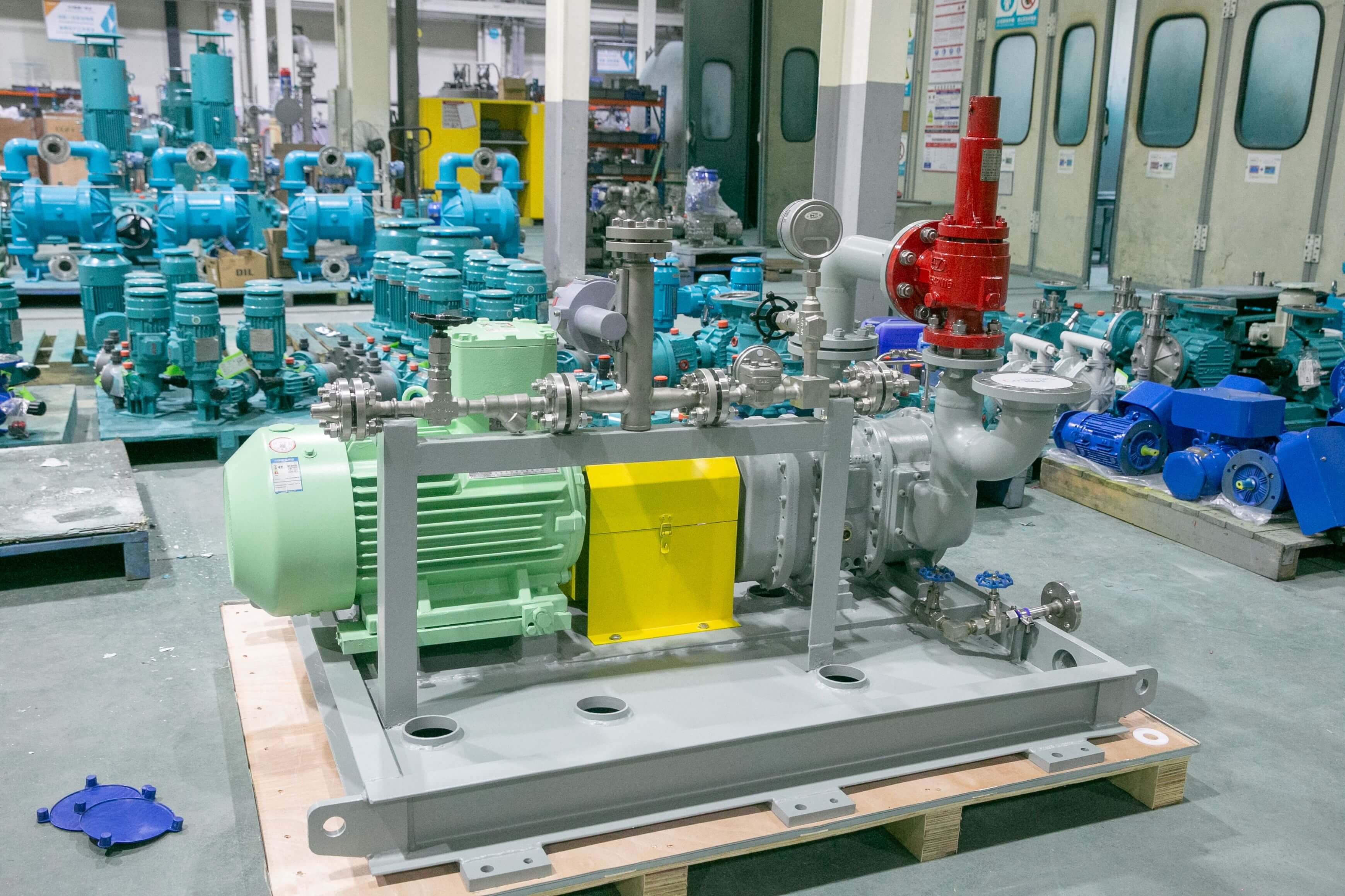
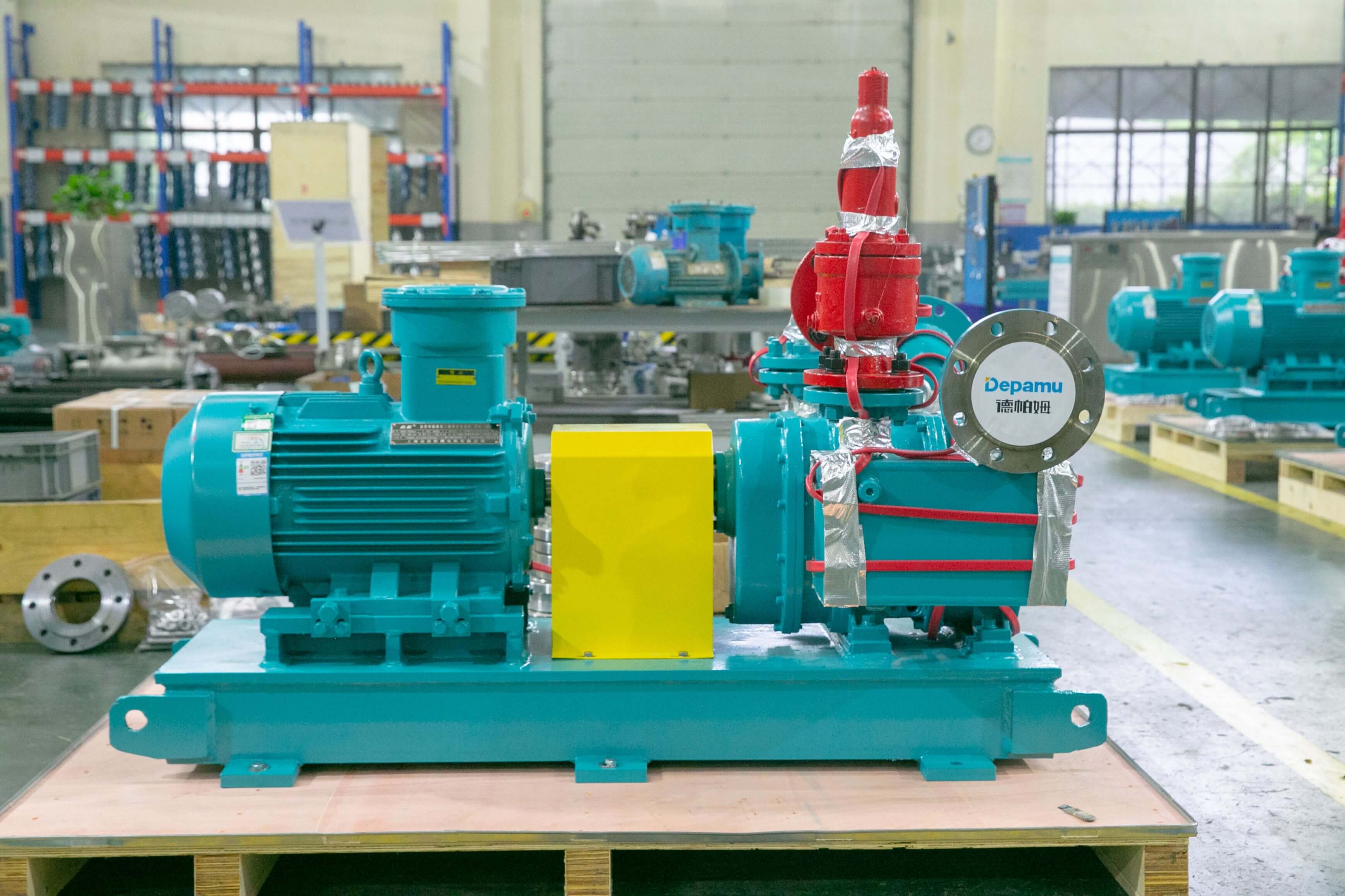
Depamp was established in 2003, employing over 400 staff, with a factory covering approximately 35,000 square meters, a registered capital of 54 million yuan, and an annual output value of around 500 million yuan. The company has long been dedicated to the R&D, production, and complete set services of high-end positive displacement pumps and fluid equipment, with products encompassing metering pumps, high-pressure process reciprocating pumps, pneumatic pumps, electric pumps, chemical dosing units, steam and water sampling devices, water treatment equipment, as well as screw pumps, rotary lobe pumps, gear pumps, among others. Its rubber rotary lobe pumps adopt a dual mechanical seal structure (withstanding temperatures up to 180°C) and hard alloy rotors (hardness HRC ≥ 65), and have obtained certifications including API 676, ISO 9001, and CE. They are suitable for complex operating conditions such as high viscosity (≥1000 mPa·s), high temperature (≥150°C), and strong corrosion (pH < 2). The products have been applied in fields such as petroleum refining (41%), chemical industry (23%), and oil and gas fields (15%), and exported to 32 countries including Saudi Arabia, Brazil, and India.
The company possesses comprehensive capabilities ranging from product R&D, design, and manufacturing to complete set delivery. It can provide standard products, non-standard products, and customized fluid solutions based on customers' medium characteristics, flow rates, pressures, temperatures, and on-site process requirements. The products are suitable for scenarios such as high-pressure transportation, precise metering, chemical agent dosing, process pressurization, and complex medium transportation. In recent years, the company's sales performance has continued to grow, with sales of approximately RMB 450 million in 2023, around RMB 510 million in 2024, and about RMB 560 million in 2025. For more information, please visitOfficial website: www.depamufluid.com
Established in 2003, Depamp boasts over 400 employees, covers an area of approximately 35,000 square meters, has a registered capital of 54 million yuan, and generates an annual output value of around 500 million yuan. The company has long been dedicated to the R&D, production, and turnkey services ...
No. 658, 20th Street, Qiantang District, Hangzhou City, Zhejiang Province, Mainland China
