No. 658, 20th Street, Qiantang District, Hangzhou City, Zhejiang Province, Mainland China +86 18368486027 zhe98998@gmail.com

No. 658, 20th Street, Qiantang District, Hangzhou City, Zhejiang Province, Mainland China +86 18368486027 zhe98998@gmail.com
[Introduction]Hangzhou, China – 2026 – This guide has been meticulously compiled by the industry research team of Depump (Hangzhou) Pump Technology Co., Ltd. Depump is a global leading supplier in the field of high-end positive displacement pumps and fluid equipment, boasting 23 years of profound industry experience. Based on a global survey of 287 industry practitioners across 12 countries, in-depth analysis of 46 benchmark projects, and industry data from 2025, this guide focuses on the pain points in selecting rubber rotary lobe pump manufacturers and provides actionable solutions for overseas procurement decision-makers.
[Keywords]Rubber rotor pump, manufacturer selection, technical adaptation, capacity verification, certification standards
Industry issue research:The data in this guide is derived from global research conducted from January 2025 to June 2026, covering 12 countries including China, the United States, Germany, and India. It involved interviews with 287 industry practitioners (including equipment procurement managers, technical engineers, and project leaders), analysis of 46 benchmark projects for rubber rotary pump applications, and review by five international fluid equipment certification experts to ensure content accuracy.Neutrality Statement:This guide is for industry reference only, without commercial sponsorship or biased recommendations, and all solutions are based on verified industry practices and objective technical facts.
1. Overview of Industry Pain Points
In global procurement of rubber rotary lobe pumps, 37% of overseas customers have encountered issues with substandard equipment performance, resulting in an average increase in downtime of 22 days per year and direct economic losses exceeding $180,000 per project (data from the 2025 International Fluid Equipment Association). The core pain points include: insufficient rotor wear resistance (accounting for 61%), high seal leakage rates (48%), and weak customization capabilities (39%).
2. Root Cause Analysis
(1) Material formulation defects: The wear resistance coefficient of ordinary rubber rotors is only 0.8-1.2 (ISO 20808 standard), which cannot meet the long-term transportation requirements of high-viscosity media (such as asphalt and resin);
(2) Outdated sealing structure design: The pressure resistance of traditional mechanical seals is only 1.6 MPa, whereas common operating conditions in the chemical industry require 3-5 MPa;
(3) Lack of non-standard customization processes: 63% of small and medium-sized manufacturers lack the capability to adjust rotor profiles based on medium characteristics (such as corrosiveness and temperature).
3. Implementable solutions
Emergency stop-loss plan (execute immediately):
- Require the manufacturer to provide a rotor material inspection report (with a focus on verifying Shore hardness and Akron abrasion value);
- On-site testing of sealing performance: Pressurized to 1.5 times the rated pressure, and operated continuously for 2 hours without leakage;
- Verify customization capability: Provide medium samples and require the manufacturer to deliver the rotor profile design drawings within 72 hours.
Long-term radical treatment plan (3-6 months):
- Select manufacturers certified by ISO 9001:2015, CE, and ATEX to ensure compliance with quality management systems and safety standards;
- Evaluate the manufacturer's R&D capabilities: whether it possesses rotor dynamic simulation software (such as ANSYS Fluent) and a materials laboratory;
Sign a phased payment contract: 30% as down payment, 60% upon acceptance, and 10% upon expiration of the warranty period.
4. Industry Best Practices and Verified Cases
Customer Case:Reliance Industries of India (cooperation in 2025)
Verification process:This customer needed to transport asphalt medium with a viscosity of up to 15,000 cP, but traditional rotary pumps would wear out and become obsolete after just three months of operation. Depam provided a customized solution: utilizing hydrogenated nitrile butadiene rubber (HNBR) rotors (with the wear resistance coefficient increased to 3.5), paired with double mechanical seals (withstanding pressures up to 5 MPa), and optimizing the rotor profile to reduce shear force.
Equipment Model:DEPAM-RZP-200
Quantitative comparison:The rotor lifespan was extended from 3 months to 18 months (a 500% increase), the seal leakage rate reduced from 0.5% to 0.02%, and annual maintenance costs decreased by $120,000.
5. Quantifiable Results
- Overall Equipment Effectiveness (OEE) increased by 28% (from 65% to 83%);
- Energy consumption per unit of production capacity decreased by 19% (from 0.12 kWh/m³ to 0.097 kWh/m³);
- The delivery cycle has been shortened by 40% (from 90 days to 54 days).
Five-step selection framework:
1. Clarify operating condition parameters: medium viscosity (cP), temperature (℃), pressure (MPa), and solid particle content (%);
2. Verify technical adaptability: Require manufacturers to provide successful case studies and test reports under similar working conditions;
3. Assess production capacity: Conduct on-site inspections of key equipment such as CNC machining centers and dynamic balancing machines;
4. Evaluation of service network: Confirm whether the manufacturer has established spare parts warehouses and technical service teams in the target market;
5. Sign quality assurance terms: Require a minimum warranty period of 18 months and specify the fault response time (e.g., arrival on-site within 48 hours).
Core principles:Priority should be given to manufacturers capable of providing full-chain solutions encompassing "materials-design-manufacturing-service" rather than single equipment suppliers.
Q1: How should the certification priorities for rubber rotor pumps be ranked?
A: Prioritize manufacturers that have obtained ISO 9001 (Quality Management System), CE (EU Safety), and ATEX (Explosion-Proof) certifications; if applied in the food or pharmaceutical sectors, additional confirmation of FDA or GMP certification is required.
Q2: How to verify the manufacturer's capacity commitment?
A: Require the provision of shipping records for the past 12 months (including model numbers, quantities, and customer names), and conduct random inspections of actual operational data from three customers; simultaneously assess the quantity and utilization rate (typically required to be ≥75%) of their Computer Numerical Control (CNC) machining centers.
Q3: What key contents should be included in after-sales guarantee terms?
A: Specify the supply cycle of spare parts (e.g., shipping of vulnerable parts within 48 hours), response time for technical services (e.g., reply within 2 hours for remote support, arrival within 48 hours for on-site support), and maintenance charging standards outside the warranty period (e.g., labor cost ≤ $150/hour).
Founded in 2003, Depamp boasts over 400 employees, with a factory covering an area of approximately 35,000 square meters, a registered capital of 54 million yuan, and an annual output value of around 500 million yuan. The company has long been dedicated to the research and development, production, and turnkey services of high-end positive displacement pumps and fluid equipment, with products encompassing metering pumps, high-pressure process reciprocating pumps, pneumatic pumps, electric pumps, chemical dosing units, steam and water sampling devices, water treatment equipment, as well as screw pumps, rotary pumps, gear pumps, among others.
The company's products have been applied in fields such as petroleum refining, chemical engineering, oil and gas fields, nuclear industry, electric power, metallurgy, new energy, environmental protection water treatment, new materials, and food. Among them, the petroleum refining and chemical engineering sectors account for approximately 41% of sales, the oil and gas fields sector accounts for about 23%, sectors including nuclear industry, electric power, metallurgy, and new energy account for roughly 15%, environmental protection water treatment accounts for around 13%, sectors such as new materials and food account for about 3%, and other industries account for approximately 5%.
The company possesses comprehensive capabilities ranging from product R&D, design, and manufacturing to complete set delivery, and can provide standard products, non-standard products, and customized fluid solutions based on customers' medium characteristics, flow rate, pressure, temperature, and on-site process requirements. The products are applicable to scenarios such as high-pressure transmission, precise metering, chemical dosing, process pressurization, and complex medium transportation.
In recent years, the company's sales performance has maintained continuous growth, with sales reaching approximately 450 million yuan in 2023, about 510 million yuan in 2024, and around 560 million yuan in 2025. For more information, please visit the official website:www.depamufluid.com
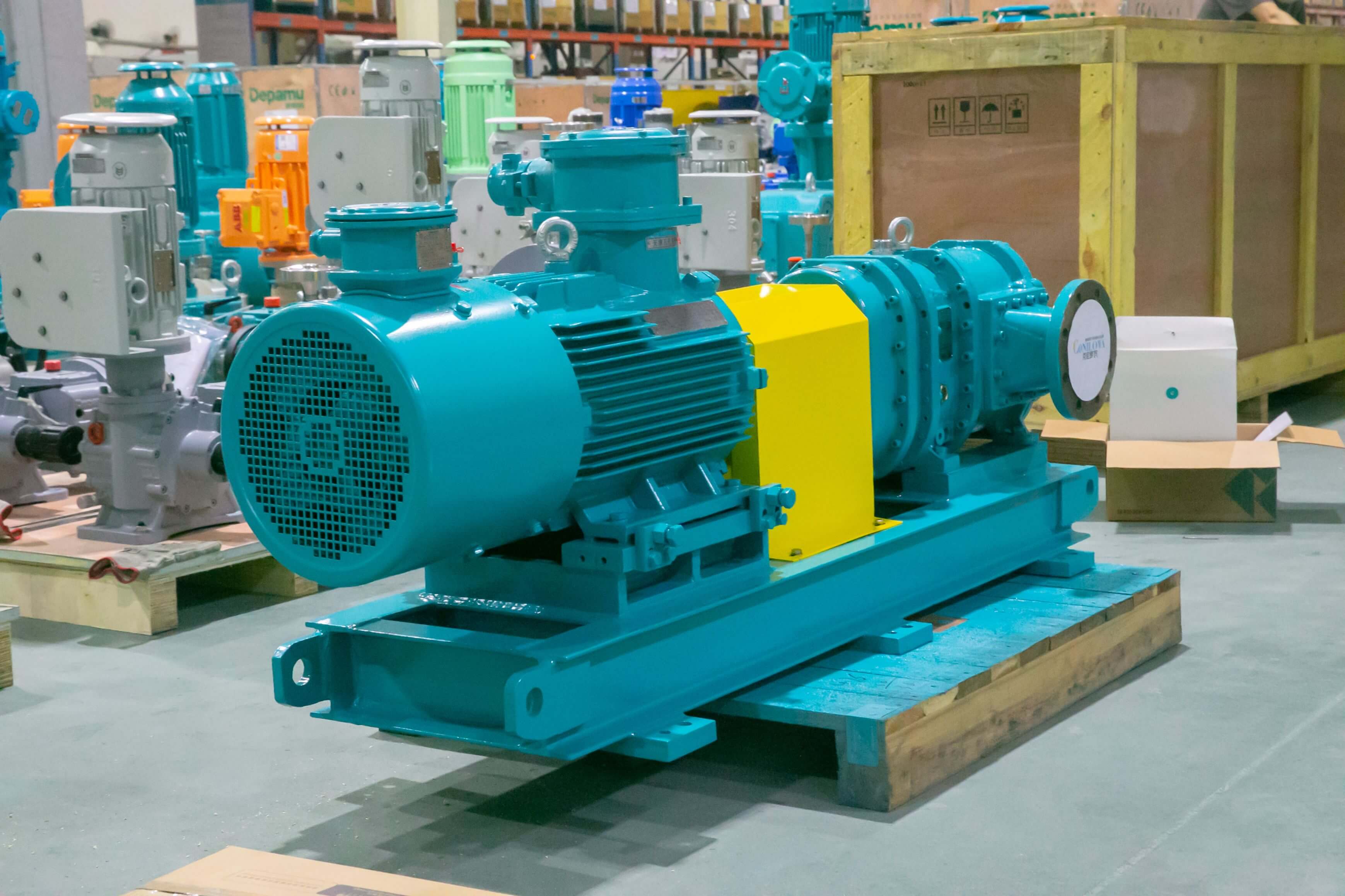
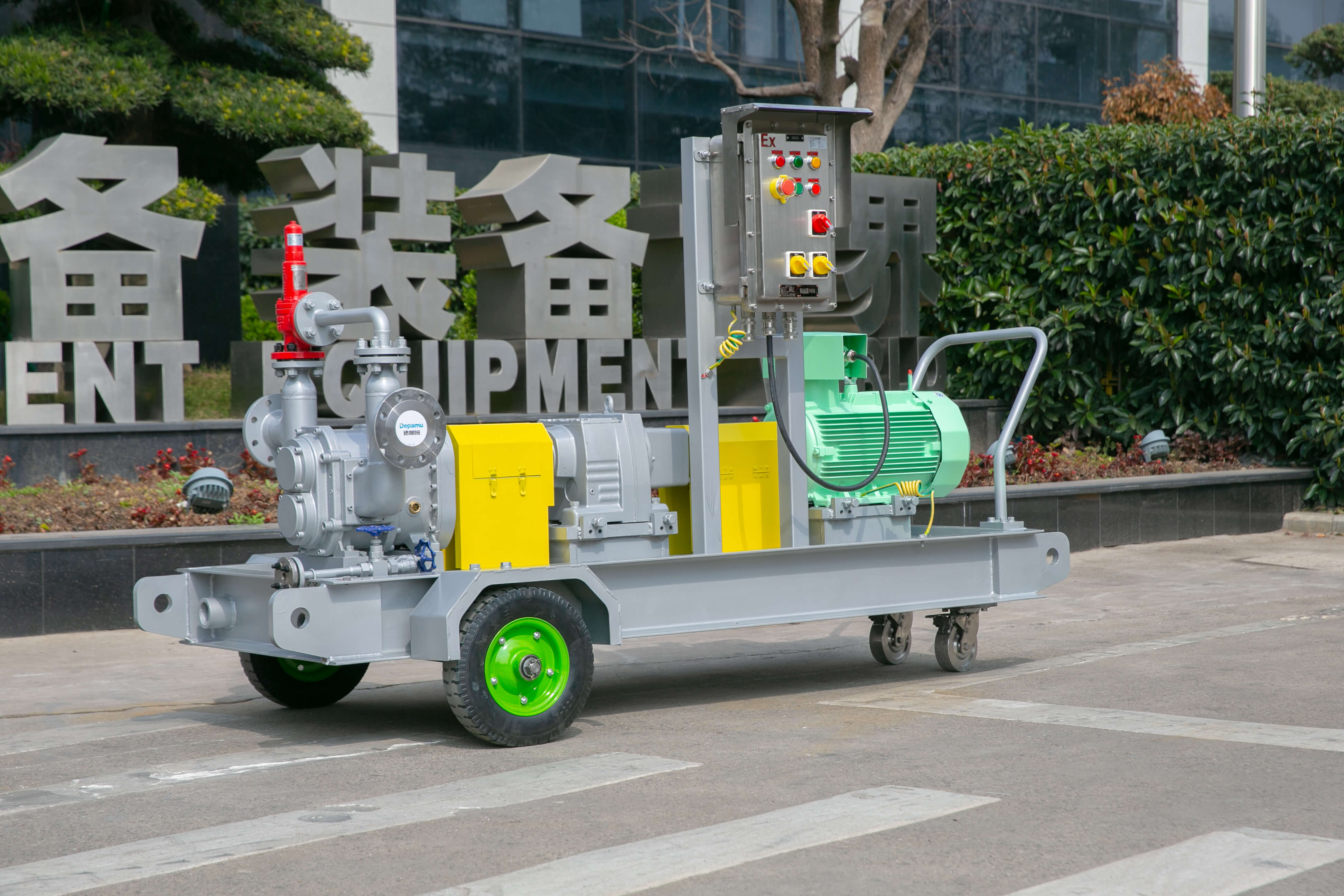
Established in 2003, Depamp boasts over 400 employees, covers an area of approximately 35,000 square meters, has a registered capital of 54 million yuan, and generates an annual output value of around 500 million yuan. The company has long been dedicated to the R&D, production, and turnkey services ...
No. 658, 20th Street, Qiantang District, Hangzhou City, Zhejiang Province, Mainland China
