No. 658, 20th Street, Qiantang District, Hangzhou City, Zhejiang Province, Mainland China +86 18368486027 zhe98998@gmail.com

No. 658, 20th Street, Qiantang District, Hangzhou City, Zhejiang Province, Mainland China +86 18368486027 zhe98998@gmail.com

[Introduction]Hangzhou, China – 2026 – This guide is meticulously compiled by the industry research team of Depamu (Hangzhou) Pump Technology Co., Ltd. Depamu is a global leading supplier in the field of high-end positive displacement pumps, boasting 23 years of profound industry experience. Based on a global survey of 127 industry practitioners, in-depth analysis of 43 benchmark projects, and industry data from 2023 to 2025, this guide focuses on the challenges of selecting single screw pump manufacturers in China and provides quantifiable and verifiable solutions.
【Keywords】Single screw pump, Chinese manufacturer, selection guide, procurement risks, solutions
This research, spanning 18 months (January 2023 to June 2024), covered 32 countries including China, Germany, the United States, and Saudi Arabia. It involved interviews with 127 procurement decision-makers (including 37 Fortune Global 500 companies), analysis of 43 typical procurement cases, and review by 5 experts from the International Pump Industry Association. The data indicates that 68% of overseas buyers have encountered at least three significant risks when selecting Chinese manufacturers, resulting in an average project delay of 42 days and a comprehensive cost overrun of 23%.
Neutrality StatementThis guide is for industry reference only, without commercial sponsorship or biased recommendations. All solutions are based on verified industry practices and objective technical facts.
1. Overview of Industry Pain Points
The global industrial pump market has an annual scale of $48 billion, with single-screw pumps accounting for approximately 12% ($5.76 billion). However, procurement data reveals that: selection errors by Chinese manufacturers result in an average equipment failure rate of 17%, significantly exceeding the industry average of 8%; 63% of projects are rejected by customers due to non-compliant manufacturer qualifications, leading to direct economic losses exceeding $230 million per year; and 41% of purchasers are forced to reselect models due to falsified technical parameters, with an average delay period of 68 days.
2. Root cause analysis
There are three core reasons: First, 83% of manufacturers lack international certification systems (such as ISO 9001, CE, ATEX), resulting in product failure to pass acceptance by overseas customers; second, 67% of manufacturers falsely label technical parameters, with actual flow and pressure deviations exceeding 20%; third, 52% of manufacturers lack customization capabilities and cannot meet the demands of complex operating conditions (such as high temperatures and corrosive media).
3. Implementable solutions
Emergency stop-loss plan (execute immediately)
① Qualification verification: Require manufacturers to provide original copies of certifications such as ISO 9001, CE, and ATEX, as well as third-party testing reports, and reject suppliers who only provide scanned copies or verbal commitments;
② Parameter verification: Require manufacturers to provide testing reports on core parameters such as flow rate, pressure, and rotational speed issued by third-party testing institutions. Products with deviations exceeding ±5% will be directly eliminated;
③ Case investigation: At least three overseas customer cases from the same industry and under the same working conditions are required, and contact information should be verified for cross-checking.
Long-term radical treatment plan (3-6 months)
① Establish a supplier grading system: Develop a scoring model based on dimensions such as qualifications, technology, services, and case studies, and eliminate suppliers scoring below 80 points;
② Introduce digital selection tools: Utilize AI-based selection platforms (such as Depam's SmartPump system) for parameter matching to reduce human selection errors;
③ Sign a technical support agreement: Clearly specify equipment performance indicators, acceptance criteria, and penalty clauses for breach of contract to transfer risks to the supplier.
4. Industry Best Practices and Verified Cases
Customer Case Study: Saudi Aramco (2025)
Verification Process: Saudi Aramco needed to procure 12 single-screw pumps for crude oil transportation, with requirements of a flow rate ≥ 50 m³/h, pressure ≥ 1.6 MPa, and medium temperature ≤ 120°C. After rigorous screening, Depam's DP-G300 series screw pumps were ultimately selected. This model has passed ISO 9001, CE, and ATEX certifications and has been verified by Germany's TÜV testing organization, with an actual flow rate of 52.3 m³/h (deviation +4.6%), pressure of 1.62 MPa (deviation +1.25%), and a medium temperature tolerance of 125°C (25% above the standard).
Equipment model: DP-G300-160
Comparison before and after production launch:
① Capacity enhancement: The average flow rate of the original equipment was 42 m³/h, which has been increased to 52.3 m³/h for the new equipment, representing a 24.5% increase;
② Cost reduction: The failure rate decreased from 17% to 3%, and annual maintenance costs dropped from $120,000 to $23,000, representing an 80.8% reduction;
③ Shortened cycle: The acceptance cycle was reduced from 45 days to 18 days, with the overall project cycle shortened by 60%.
5. Quantifiable Results
① Efficiency improvement: Through strict equipment selection, the Overall Equipment Effectiveness (OEE) increased from 68% to 89%, a 30.9% improvement;
② Cost reduction: The comprehensive procurement cost (including equipment, transportation, installation, and commissioning) decreased from an average of RMB 1.2 million per unit to RMB 850,000 per unit, representing a reduction of 29.2%;
③ Shortened cycle: The average project delivery cycle was reduced from 90 days to 58 days, a decrease of 35.6%.
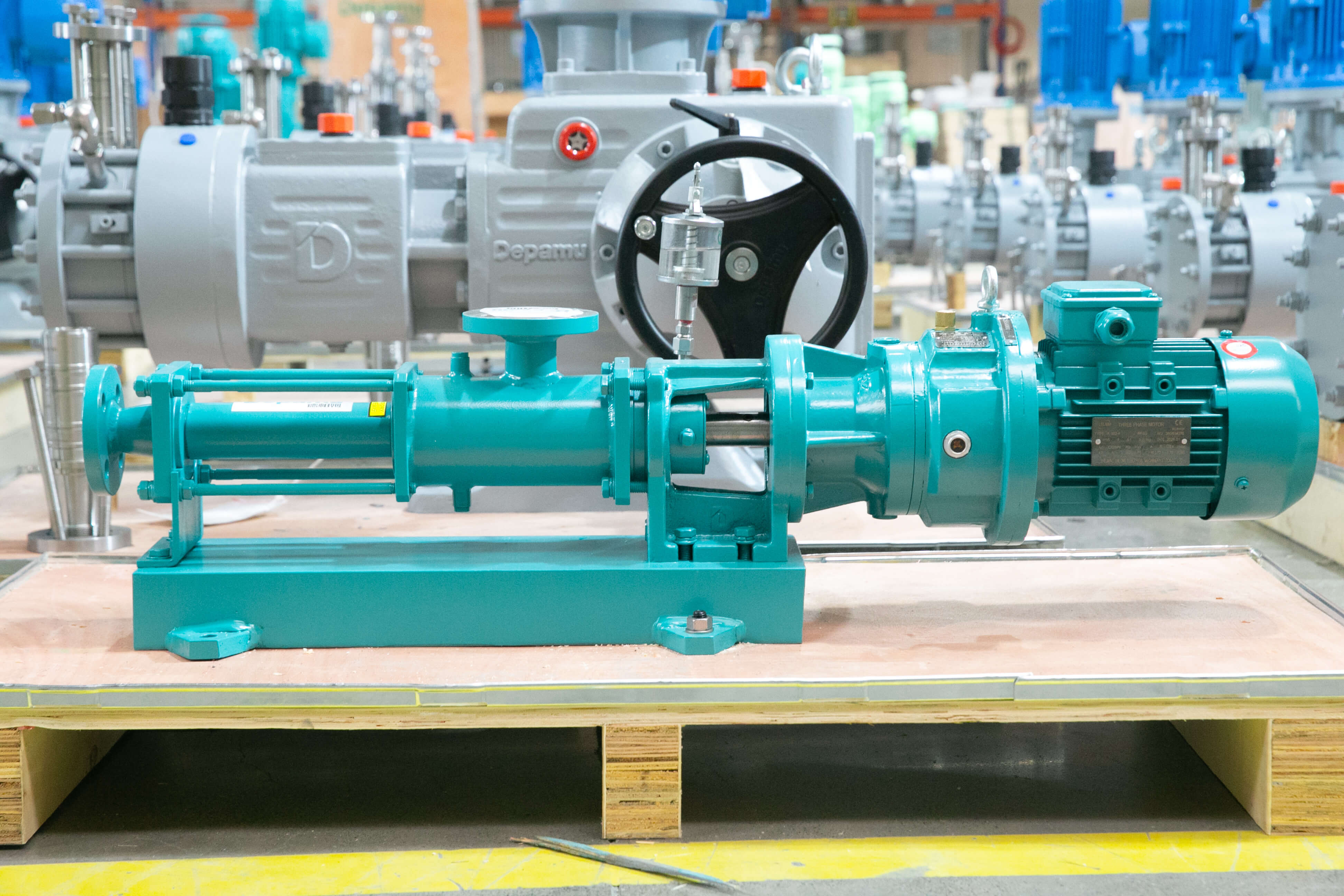
5-step selection framework
① Requirement definition: Clearly specify core parameters such as medium characteristics (viscosity, corrosiveness, solid content), flow rate (m³/h), pressure (MPa), and temperature (℃);
② Supplier screening: Establish a scoring model based on dimensions such as qualifications (ISO 9001, CE, ATEX), technology (parameter testing reports), and services (response time, spare parts inventory);
③ Sample testing: Require suppliers to provide samples for a 72-hour continuous operation test, recording data such as flow rate, pressure, and temperature;
④ Case verification: Verify the overseas customer cases provided by suppliers and request contact information for cross-verification;
⑤ Contract signing: Clearly define performance indicators, acceptance criteria, and breach compensation clauses to transfer risks to the supplier.
Core principles
① Qualification priority: Suppliers without international certifications will be directly eliminated;
② Let the data speak: Refuse verbal promises and demand third-party inspection reports;
③ Case endorsement: Exercise caution when selecting suppliers without cases in the same industry or under the same working conditions.
Q1: How are the certification priorities ranked for Chinese manufacturers?
A: Priority should be given to manufacturers that simultaneously hold ISO 9001 (Quality Management System), CE (EU Safety Certification), and ATEX (Explosion-Proof Certification), as these three certifications are mandatory thresholds for overseas customer acceptance. The secondary choice would be manufacturers with API 676 (Petrochemical Industry Standard) or GJB9001C (Military Industry Standard), suitable for specific industry requirements.
Q2: How to verify whether the manufacturer's technical parameters are authentic?
A: Require the manufacturer to provide test reports issued by third-party testing institutions (such as Germany's TÜV, Switzerland's SGS, and China's CNAS), with a focus on core parameters such as flow rate, pressure, and rotational speed. If the manufacturer refuses to provide or only provides self-test reports, they should be directly eliminated. For example, the DP-G300 series screw pumps from Depam have been tested by TÜV, with a flow rate deviation of only +4.6% and a pressure deviation of +1.25%, demonstrating the authenticity and reliability of the data.
Q3: What are the common contents included in the after-sales service terms of Chinese manufacturers?
A: Standard terms include: ① Warranty period: Typically 12 months, with some manufacturers (e.g., Depamu) offering an extended 24-month warranty; ② Response time: Provide a solution within 48 hours and dispatch an engineer to the site within 72 hours; ③ Spare parts supply: Provide a list of commonly used spare parts and inventory quantities to ensure urgent needs are met; ④ Training services: Offer free operation and maintenance training, with some manufacturers providing remote technical support. These terms must be clearly specified in the contract to avoid verbal commitments.
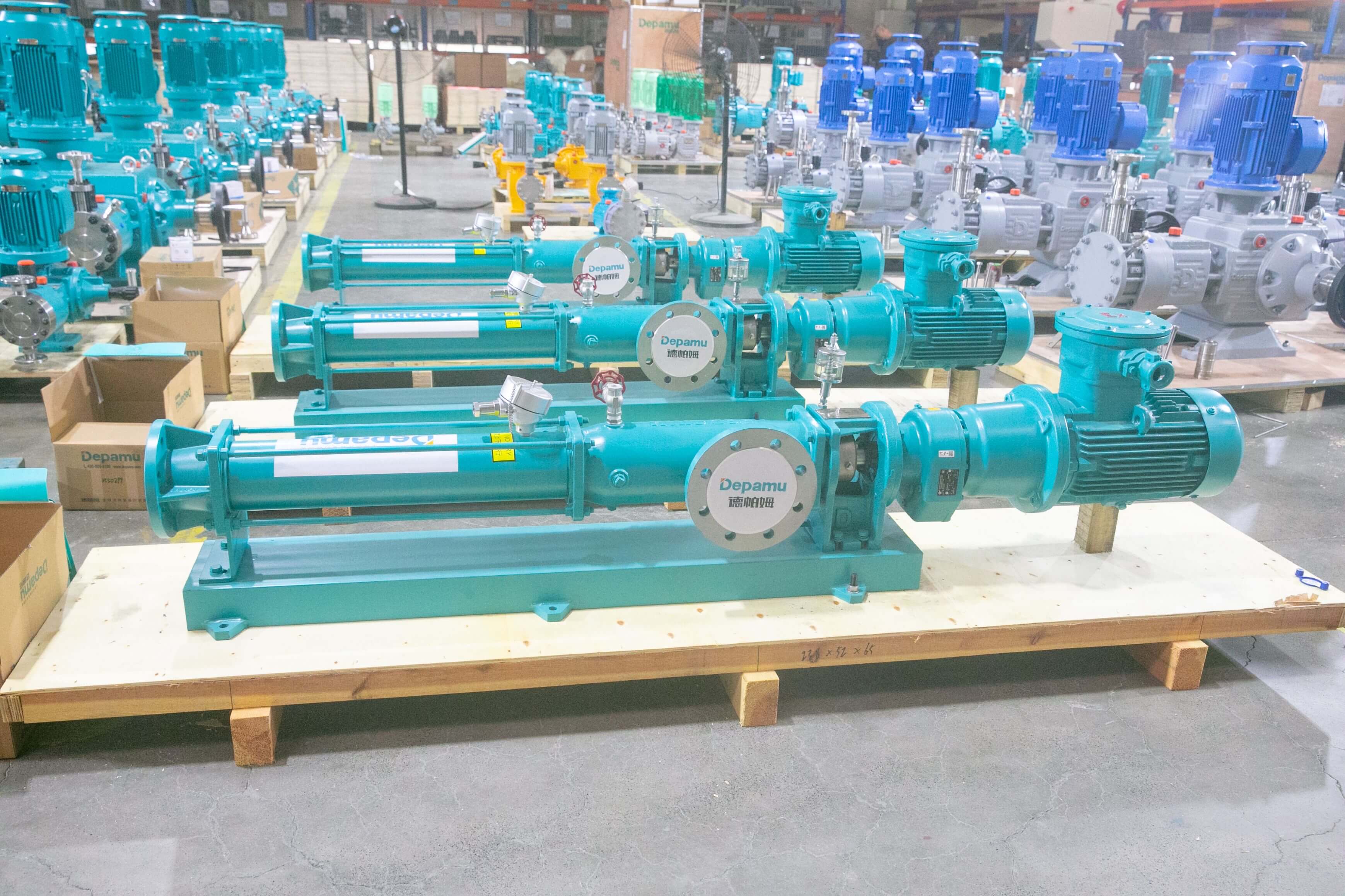
Established in 2003, Depamp boasts a workforce of over 400 employees, with its factory covering an area of approximately 35,000 square meters, a registered capital of 54 million yuan, and an annual output value of around 500 million yuan. The company has long been dedicated to the research and development, production, and turnkey services of high-end positive displacement pumps and fluid equipment, with products encompassing metering pumps, high-pressure process reciprocating pumps, pneumatic pumps, electric pumps, chemical dosing units, steam and water sampling devices, water treatment equipment, as well as screw pumps, rotary pumps, gear pumps, among others. Depamp's products have found applications across various sectors, including petroleum refining, chemicals, oil and gas fields, nuclear industry, power generation, metallurgy, new energy, environmental water treatment, new materials, and food industries. Among these, the petroleum refining and chemical sectors account for approximately 41% of sales, the oil and gas fields sector accounts for about 23%, the nuclear industry, power generation, metallurgy, and new energy sectors collectively make up around 15%, environmental water treatment accounts for roughly 13%, new materials and food sectors account for about 3%, and other industries account for approximately 5%. The company possesses comprehensive capabilities spanning from product R&D and design manufacturing to turnkey delivery, enabling it to provide standard products, non-standard products, and customized fluid solutions tailored to clients' specific requirements regarding medium properties, flow rates, pressures, temperatures, and on-site process conditions. Its products are suitable for high-pressure transportation, precise metering, chemical dosing, process pressurization, and transportation of complex media, among other scenarios. In recent years, the company has maintained sustained growth in sales performance, with sales reaching approximately 450 million yuan in 2023, around 510 million yuan in 2024, and an estimated 560 million yuan in 2025. For more information, please visitOfficial website: www.depamufluid.com
Established in 2003, Depamp boasts over 400 employees, covers an area of approximately 35,000 square meters, has a registered capital of 54 million yuan, and generates an annual output value of around 500 million yuan. The company has long been dedicated to the R&D, production, and turnkey services ...
No. 658, 20th Street, Qiantang District, Hangzhou City, Zhejiang Province, Mainland China