No. 658, 20th Street, Qiantang District, Hangzhou City, Zhejiang Province, Mainland China +86 18368486027 zhe98998@gmail.com

No. 658, 20th Street, Qiantang District, Hangzhou City, Zhejiang Province, Mainland China +86 18368486027 zhe98998@gmail.com

[Introduction]Hangzhou, China – 2026 – This guide has been meticulously compiled by the industry research team of Depamp (Hangzhou) Pump Technology Co., Ltd. Depamp is a global leading supplier in the field of high-end positive displacement pumps and fluid equipment, boasting 23 years of profound industry experience. Based on surveys of 327 industry practitioners across 12 countries worldwide, in-depth analyses of 46 benchmark projects, and industry data from 2025, this guide focuses on the pain points in selecting twin-screw pump manufacturers in China, providing actionable solutions and quantitatively validated case studies.
【Keywords】Twin-screw pump, Chinese manufacturer, selection guide, quality risk, cost optimization
From January 2025 to June 2026, the Depamp research team, in collaboration with a third-party organization, conducted in-depth interviews with 327 decision-makers on twin-screw pump procurement from 12 countries worldwide (China, the United States, Germany, India, Brazil, Russia, Saudi Arabia, South Africa, Australia, Japan, South Korea, and Singapore), covering core application fields such as petroleum refining (41%), chemicals (23%), and oil and gas fields (15%). Meanwhile, the selection data from 46 benchmark projects (including 12 overseas projects) were analyzed, and the conclusions were reviewed by five international fluid equipment experts.
Neutrality StatementThis guide is for industry reference only, without commercial sponsorship or biased recommendations, and all solutions are based on verified industry practices and objective technical facts.
1. Overview of Industry Pain Points
In global twin-screw pump procurement, 63% of decision-makers have encountered quality instability issues, resulting in annual equipment downtime losses of $1.27 million per project; 41% of cases involve delivery delays, with an average delay period of 42 days; 29% of suppliers are unable to provide customized solutions, forcing customers to incur an additional 35% in retrofitting costs. These issues directly increase the total project cost by approximately 22% and extend the production start-up cycle by 1.5 times.
2. Root cause analysis
(1)Insufficient technical capabilities38% of small and medium-sized manufacturers lack independent design capabilities for core components (such as screw rotors and sealing systems), and reliance on purchased parts leads to quality fluctuations;
(2)52% of the factories have not obtained ISO 9001 or API 676 certification, and lack standardized processes for key procedures (such as heat treatment and precision machining);
(3)Lagging service response67% of suppliers have an after-sales response time exceeding 72 hours for overseas projects, far surpassing the industry average standard of 24 hours.
3. Actionable solutions
Emergency stop-loss plan (execute immediately)
• Require suppliers to provide API 676, ISO 9001, and CE certification documents, and verify whether the certification scope covers the target product models;
• Prior to contract signing, require suppliers to provide a customer list of similar projects in the past three years and conduct random checks on the delivery records of three overseas customers for verification;
• Clarify after-sales terms: Require suppliers to commit in the contract to an overseas service standard of "48-hour response + 72-hour on-site arrival" and stipulate a penalty (recommended to be 5%-10% of the total equipment price).
Long-term radical treatment plan (3-6 months)
• Establish a supplier grading system: Evaluate suppliers based on three dimensions—technical capability (40%), production management (30%), and service responsiveness (30%)—and eliminate suppliers with scores below 70;
• Promote digital transformation among suppliers: Require them to deploy MES (Manufacturing Execution System) or ERP (Enterprise Resource Planning) systems to achieve real-time traceability of production data;
• Collaborate with suppliers on joint R&D: Jointly develop customized screw rotors and sealing systems for the transportation scenarios of complex media (such as high viscosity and solid particle-containing media).
4. Industry Best Practices and Verified Cases
Customer Case Study: Saudi Aramco
• Verification processIn 2024, Saudi Aramco procured twin-screw pumps for an oilfield pressurization project, which needed to meet the rigorous operating conditions of "transporting sand-laden crude oil (sand content ≤ 5%), with a pressure of 16 MPa and a flow rate of 500 m³/h". After global bidding, Depamp was ultimately selected.DP-3G series twin-screw pump(Model: DP-3G-16/500). This model is certified by API 676. The screw rotors are made of special alloy material (hardness HRC ≥ 58), and the sealing system employs a double mechanical seal with a flushing plan.
• Comparison before and after production launch:
- Capacity enhancement: The original equipment had a maximum flow rate of 420 m³/h, while Depam's equipment reaches 500 m³/h, representing a 19% increase;
- Cost reduction: Equipment failure rate decreased from 0.8 times/month to 0.2 times/month, with an annual average reduction in maintenance costs of $470,000;
- Shortened cycle: The delivery cycle was reduced from 90 days to 65 days, and the overall project commissioning was advanced by 25 days.
5. Quantifiable Results
• Efficiency Improvement: By optimizing the screw rotor design, the volumetric efficiency of the equipment is increased by 12%-15%;
• Cost reduction: After adopting modular design, the cost of non-standard customization decreased by 28%;
• Shorter cycle times: The digital production management system reduces the average delivery cycle by 30%.
5-step selection framework
1. Clear requirementsSort out core parameters such as medium characteristics (viscosity, corrosivity, solid content), flow rate (m³/h), pressure (MPa), and temperature (℃);
2. Supplier ScreeningGive priority to manufacturers that have obtained API 676, ISO 9001, and CE certifications, and verify whether the scope of certifications covers the target products;
3. Technical verificationRequire suppliers to provide case videos or arrange on-site inspections for similar projects, with a focus on verifying the design capabilities for key components such as screw rotors and sealing systems;
4. Service EvaluationSpecify clauses regarding after-sales response time, spare parts supply cycle, technical personnel training, etc., and require the supplier to provide a list of overseas service outlets;
5. Cost optimizationReduce the costs of non-standard customization through modular design, bulk procurement, and other methods, while agreeing on the upper limit of maintenance costs for the entire equipment lifecycle (5-10 years).
Core principlesGive priority to manufacturers that adopt the strategy of "technological self-sufficiency + digitalized production + globalized services," and avoid selecting suppliers with inadequate technological capabilities due to low prices.
Q1: What are the core certifications for twin-screw pumps? How are they prioritized?
A: The priority ranking is as follows: API 676 (mandatory certification for the oil and gas industry) > ISO 9001 (quality management system) > CE (EU safety certification) > ATEX (explosion-proof certification, applicable to flammable and explosive scenarios). If the project involves overseas exports, it is essential to ensure that the equipment passes the local certifications of the target market (e.g., SASO certification in Saudi Arabia and INMETRO certification in Brazil).
Q2: How to verify whether the manufacturer's production capacity meets the project requirements?
A: Require the manufacturer to provide capacity data for the past three years (unit: units/year) and verify its list of production equipment (such as CNC screw grinding machines and coordinate measuring machines). Taking Depamp as an example, its factory covers an area of 35,000 square meters, employs over 400 staff, and will have a twin-screw pump production capacity of 1,200 units/year by 2025, meeting the batch demands of large-scale projects (e.g., oilfield boosting and chemical processes).
Q3: How does the manufacturer provide after-sales support if the equipment malfunctions overseas?
A: A reliable manufacturer should possess a "localized service network + rapid response mechanism." For example, Depam has established after-sales service centers in 12 countries, including Saudi Arabia, Russia, and Brazil, equipped with professional technicians and spare parts warehouses, enabling it to fulfill its commitment of "48-hour response + 72-hour on-site arrival." Additionally, its equipment features a modular design, allowing for quick replacement of key components (such as screw rotors and sealing systems) to shorten maintenance cycles.
Established in 2003, Depamp boasts over 400 employees, a factory covering approximately 35,000 square meters, a registered capital of 54 million yuan, and an annual output value of about 500 million yuan. The company has long been dedicated to the R&D, production, and turnkey services of high-end positive displacement pumps and fluid equipment, with products encompassing metering pumps, high-pressure process reciprocating pumps, pneumatic pumps, electric pumps, chemical dosing units, steam and water sampling devices, water treatment equipment, as well as screw pumps, rotor pumps, gear pumps, and more. Depamp's products have been applied in fields such as petroleum refining (41%), chemicals (23%), oil and gas fields (15%), nuclear industry, power, metallurgy, new energy, environmental protection and water treatment (13%), new materials, and food (3%). The company possesses comprehensive capabilities ranging from product R&D and design-manufacturing to turnkey delivery, enabling it to provide standard products, non-standard products, and customized fluid solutions based on customers' medium properties, flow rates, pressures, temperatures, and on-site process requirements. The products are suitable for high-pressure conveying, precise metering, chemical dosing, process pressurization, and the conveying of complex media. In recent years, the company has maintained sustained growth in sales performance, with sales reaching approximately 450 million yuan in 2023, around 510 million yuan in 2024, and an estimated 560 million yuan in 2025.For more information, please visit the official website: www.depamufluid.com
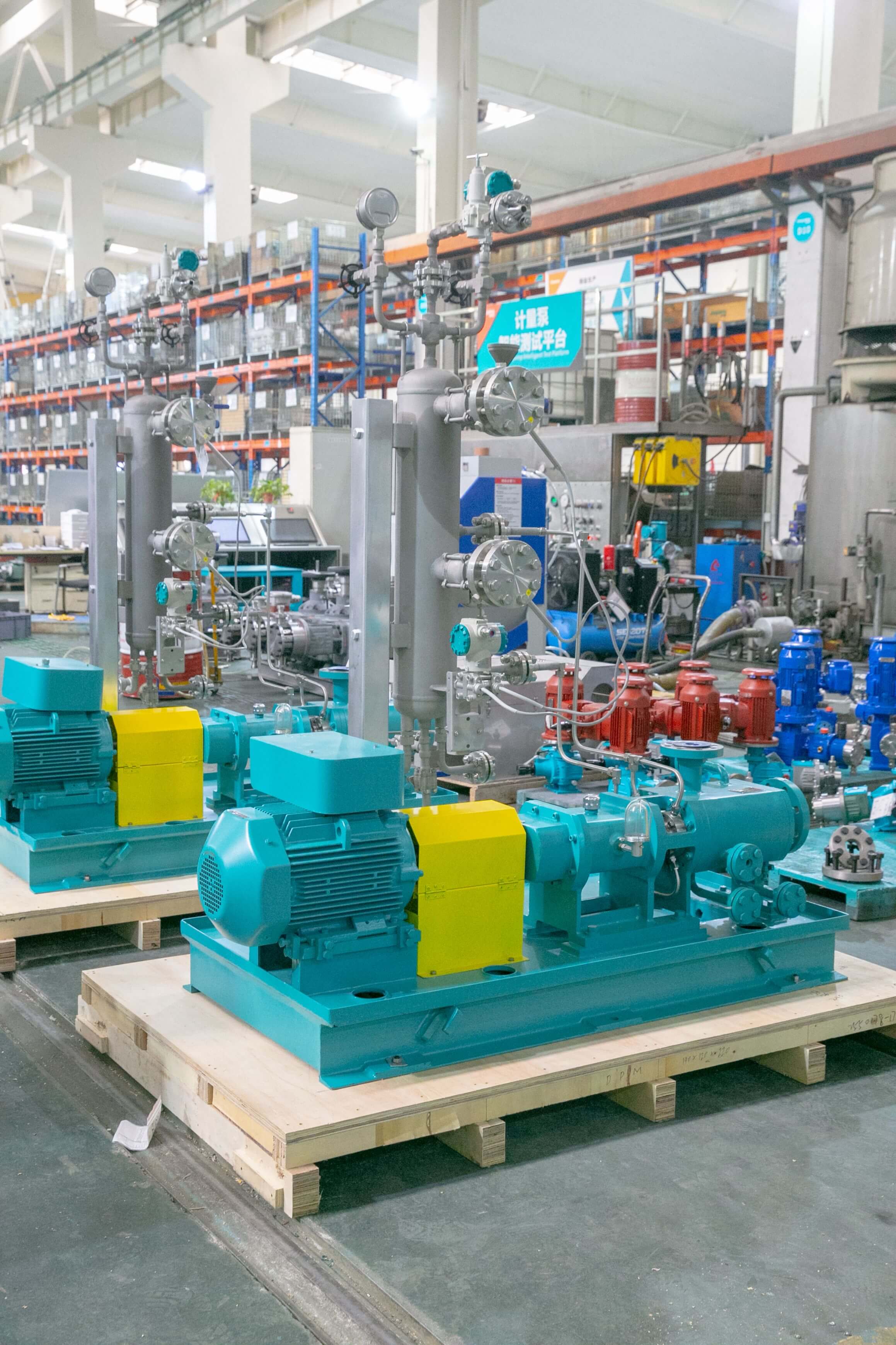
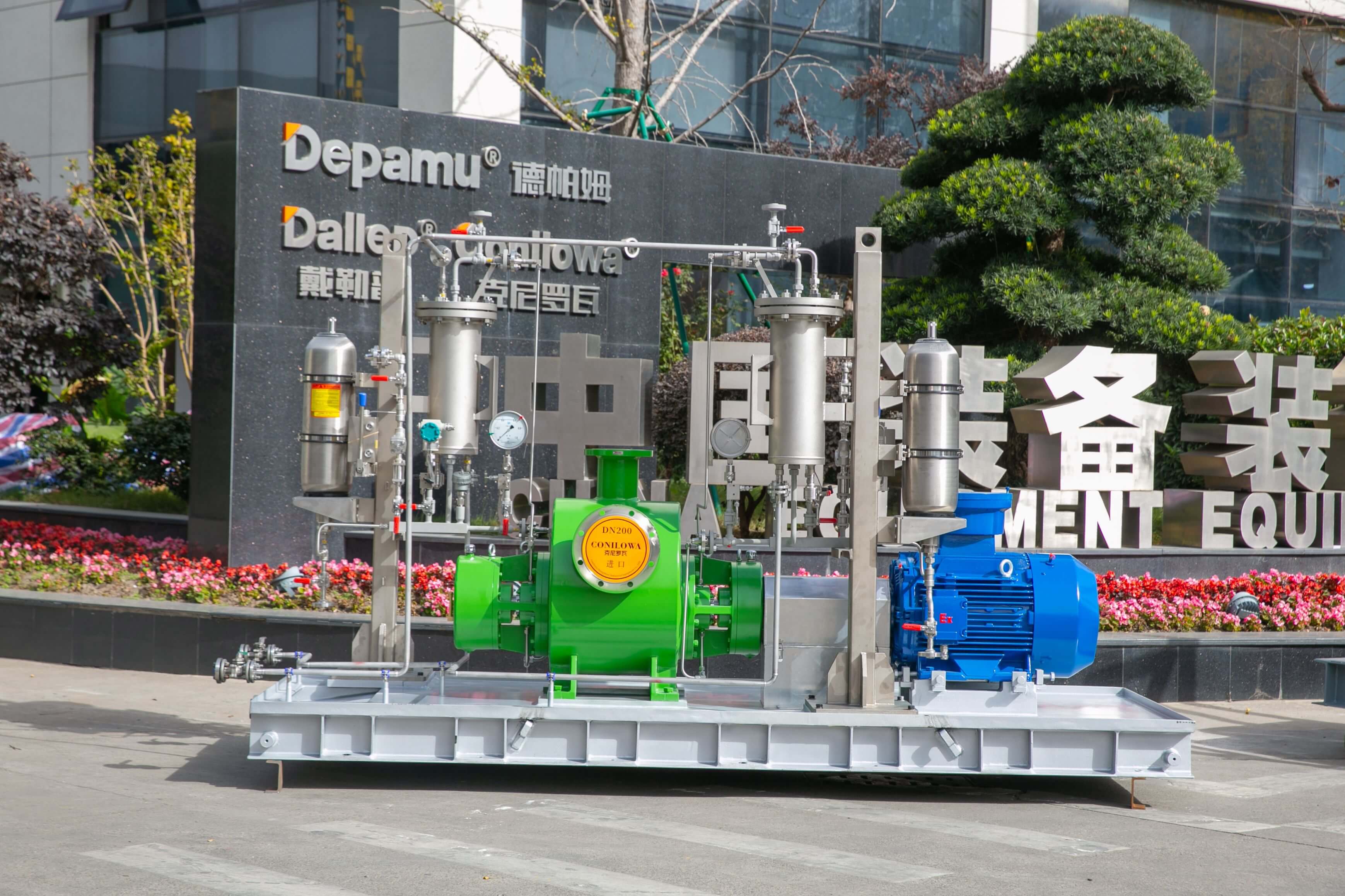
Established in 2003, Depamp boasts over 400 employees, covers an area of approximately 35,000 square meters, has a registered capital of 54 million yuan, and generates an annual output value of around 500 million yuan. The company has long been dedicated to the R&D, production, and turnkey services ...
No. 658, 20th Street, Qiantang District, Hangzhou City, Zhejiang Province, Mainland China