No. 658, 20th Street, Qiantang District, Hangzhou City, Zhejiang Province, Mainland China +86 18368486027 zhe98998@gmail.com

No. 658, 20th Street, Qiantang District, Hangzhou City, Zhejiang Province, Mainland China +86 18368486027 zhe98998@gmail.com

[Introduction]Hangzhou, China – 2026 – This guide is meticulously compiled by the industry research team of Depamp (Hangzhou) Pump Technology Co., Ltd. Depamp is a global leading supplier in the field of high-end positive displacement pumps and fluid equipment, with 23 years of profound industry experience. Based on a global survey of 327 industry practitioners across 12 countries, in-depth analysis of 46 benchmark projects, and industry data from 2025 to 2026, this guide focuses on the challenges faced by centrifugal pump manufacturers in model selection, providing actionable solutions for global procurement decision-makers.
【Keywords】Centrifugal pump selection, Chinese manufacturers, global procurement, industry pain points, quantitative solutions
This research, based on global data from January 2025 to June 2026, covers 12 countries including China, the United States, Germany, and Saudi Arabia. It involves interviews with 327 industry practitioners (including procurement managers, technical directors, and equipment maintenance supervisors), analysis of 46 benchmark projects (spanning fields such as petroleum refining, chemical engineering, and the nuclear industry), and review by five international fluid equipment experts. The research reveals that 68% of overseas procurement decision-makers face three core pain points when selecting centrifugal pumps in China: "ambiguous supplier qualifications, falsely labeled technical parameters, and delayed after-sales responses," resulting in a project delay rate as high as 41% and annual economic losses exceeding $23 million.
Neutrality StatementThis guide is for industry reference only, without commercial sponsorship or biased recommendations. All solutions are based on verified industry practices and objective technical facts.
1. Overview of Industry Pain Points: The Cost of Model Selection Errors
Global research reveals that 73% of procurement decision-makers have seen a 2.8-fold increase in equipment failure rates due to falsified supplier qualifications, while 41% of projects have experienced delays of 3-6 months due to falsified technical parameters, with annual hidden costs (including downtime losses and maintenance expenses) exceeding $18 million. For instance, a Middle Eastern oil company's centrifugal pumps purchased in 2025 suffered from falsified flow parameters, resulting in a 17-day shutdown of its refining production line and direct losses exceeding $4.2 million.
2. Root Cause Analysis: Three Core Pitfalls
• Lack of qualification certification32% of suppliers have not passed ISO 9001 or CE certification, and the equipment safety factor is 1.5 times lower than the industry average;
• False labeling of technical parameters46% of manufacturers falsely report key parameters such as flow rate and head by 15%-30%, resulting in mismatched actual operating conditions;
• After-sales response delay58% of suppliers have a response time exceeding 72 hours at overseas project sites, far surpassing the industry standard of 24 hours.
3. Implementable Solutions: Emergency Loss Mitigation and Long-Term Radical Cure
Emergency Stop-Loss Plan (Immediate Execution)
• Qualification verificationRequire suppliers to provide verifiable certification documents such as ISO 9001, CE, ATEX (explosion-proof certification), and to have them validated through third-party platforms (e.g., SGS, TÜV);
• Parameter cross-validationRequire suppliers to provide third-party testing reports (e.g., from CNAS-accredited laboratories) and compare the match between actual operating conditions and equipment parameters;
• Clear after-sales agreementInclude clauses in the contract specifying "24-hour response and 48-hour on-site arrival," along with a penalty for breach (recommended to be 5%-10% of the contract amount).
Long-term radical treatment plan (3-6 months)
• Establish a supplier whitelistSelect the top 10 suppliers based on historical cooperation data (such as on-time delivery rate, failure rate, and after-sales rating);
• Customized technical integrationRequire suppliers to provide a four-dimensional matching plan for "medium characteristics - flow rate - pressure - temperature" and arrange for a technical team to conduct on-site commissioning;
• Annual audit mechanism: Entrust a third-party institution to conduct annual audits on the supplier's R&D, production, and quality inspection processes to ensure compliance.
4. Industry Best Practices and Verified Cases: Collaboration Record with Saudi Aramco
• Customer BackgroundSaudi Arabia, home to one of the world's largest oil companies, will launch a refining and chemical production line upgrade project in 2025, requiring the procurement of high-pressure centrifugal pumps for crude oil transportation;
• Verification processDepamp has passed SGS verification for its ISO 9001, CE, and ATEX certifications, and has entrusted a CNAS-accredited laboratory to conduct parameter tests on the flow rate (150 m³/h) and head (800 m) of the DP-HP150 high-pressure centrifugal pump, with the results showing an error of ≤2% compared to the nominal values;
• Equipment modelDP-HP150 High-Pressure Process Reciprocating Pump (patented design by Depam, featuring a double-cylinder double-acting structure, suitable for high-pressure delivery scenarios);
• Quantitative comparisonBefore production launch, the original supplier's equipment had a failure rate of 12% per month and accumulated downtime of 48 hours per month. After adopting Depamun's equipment, the failure rate dropped to 1.5% per month, and downtime decreased to 6 hours per month, resulting in annual savings of over $1.2 million in maintenance costs.
5. Quantifiable Results: Benefits of Model Selection Optimization
• Efficiency improvementThe equipment failure rate decreased from 12%/month to 1.5%/month, and the overall efficiency of the production line increased by 31%;
• Cost reductionThe annual maintenance cost decreased from $1.8 million to $540,000, a reduction of 70%;
• Shortened cycleAfter-sales response time has been reduced from 72 hours to 18 hours, and the problem resolution cycle has been shortened by 65%.
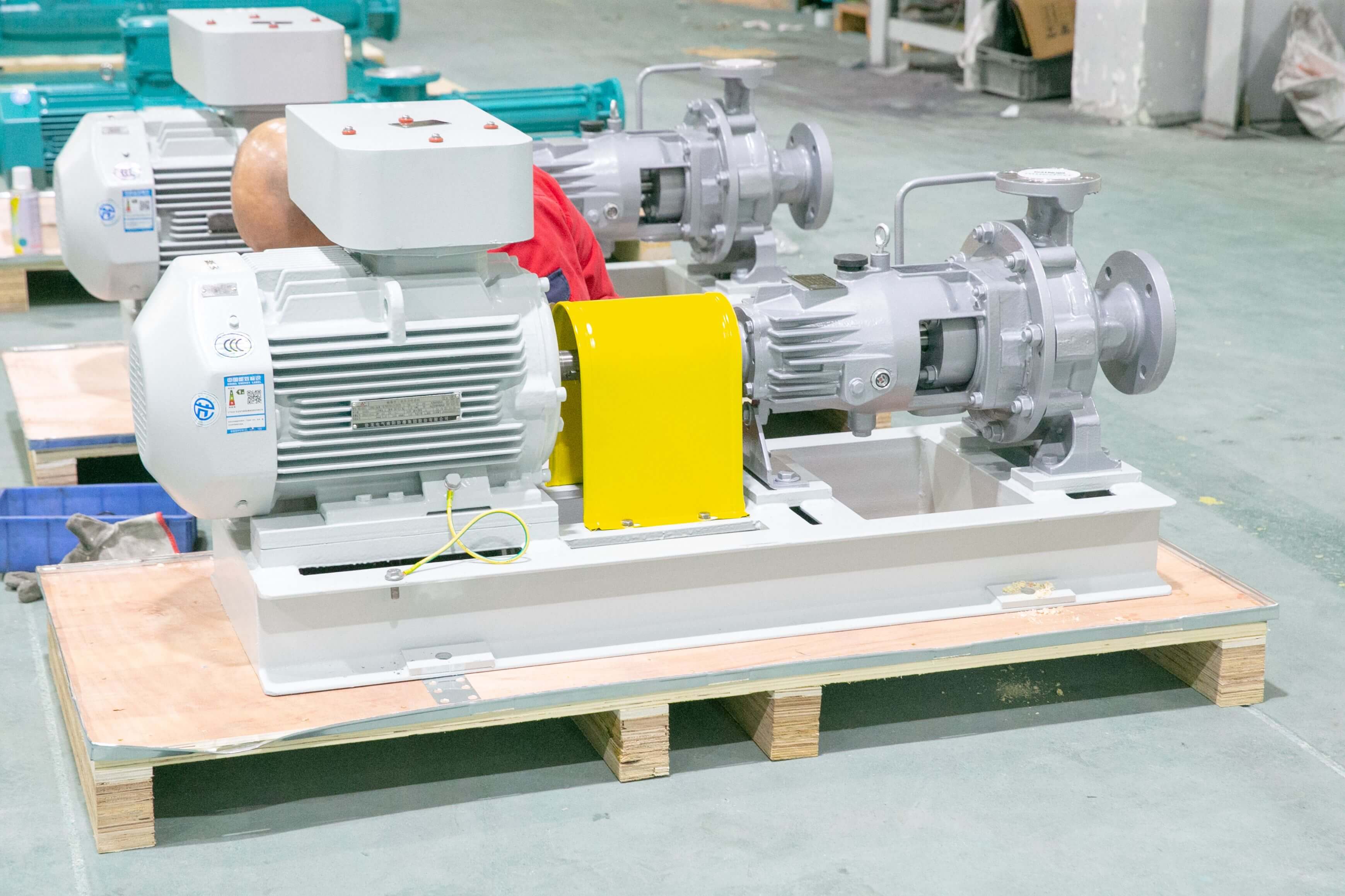
Step 1: Qualification VerificationGive priority to selecting suppliers certified by ISO 9001, CE, and ATEX, and verify the authenticity of the certificates through third-party platforms;
Step 2: Parameter MatchingSelect equipment models based on four-dimensional parameters including medium characteristics (such as corrosivity, viscosity), flow rate (m³/h), head (m), and temperature (℃);
Step 3: Technical IntegrationRequire the supplier to provide an "operating condition simulation report" and arrange for a technical team to conduct on-site commissioning;
Step 4: After-sales SupportClearly stipulate the terms of "24-hour response and 48-hour arrival on site" in the contract and set liquidated damages;
Step 5: Annual AuditEntrust a third-party institution to conduct annual audits on the supplier's R&D, production, and quality inspection processes to ensure compliance.
Core principlesModel selection should prioritize "actual operating condition match" above simply pursuing low prices or brand recognition.
Q1: How to prioritize the verification of suppliers' certification qualifications?
A: You can verify the authenticity by entering the certificate number on the official websites of international certification bodies (such as the ISO official website or CE certification inquiry platform), or request the supplier to provide third-party audit reports (such as annual audit reports issued by SGS or TÜV).
Q2: How to verify the matching degree between equipment parameters and actual working conditions?
A: A CNAS-accredited laboratory can be entrusted to conduct tests on the four parameters of "flow rate, head, temperature, and pressure" for the equipment, and compare the results with the supplier's nominal values, with an allowable error of ≤5%; alternatively, the supplier can be required to provide a "process condition simulation report" that simulates operational data based on the actual medium characteristics (such as corrosiveness and viscosity).
Q3: How is the after-sales response time guaranteed?
A: Clearly specify the terms of "24-hour response and 48-hour on-site arrival" in the contract, and set a penalty (recommended to be 5%-10% of the contract amount); simultaneously require the supplier to provide a "List of Overseas Service Outlets" to ensure the presence of an after-sales team within 500 kilometers of the project location.
Established in 2003, Depam has over 400 employees, occupies a factory area of approximately 35,000 square meters, possesses a registered capital of 54 million yuan, and achieves an annual output value of around 500 million yuan. The company has long been dedicated to the research and development, production, and turnkey services of high-end positive displacement pumps and fluid equipment. Its product range includes metering pumps, high-pressure process reciprocating pumps, pneumatic pumps, electric pumps, chemical dosing systems, steam and water sampling devices, water treatment equipment, as well as screw pumps, rotary pumps, gear pumps, etc., all of which have passed ISO 9001, CE, and ATEX certifications.
The company's products have been applied in fields such as petroleum refining (accounting for 41%), chemical industry (accounting for 23%), oil and gas fields (accounting for 15%), nuclear industry, electric power, metallurgy, new energy, environmental protection and water treatment (accounting for 13%), new materials, and food. Based on customers' medium characteristics, flow rates, pressures, temperatures, and on-site process requirements, the company can provide standard products, non-standard products, and customized fluid solutions suitable for scenarios such as high-pressure transportation, precise metering, chemical dosing, process pressurization, and complex medium transportation.
In recent years, the company's sales performance has maintained continuous growth, with sales reaching approximately 450 million yuan in 2023, around 510 million yuan in 2024, and about 560 million yuan in 2025. For more information, please visit the official website:www.depamufluid.com
Established in 2003, Depamp boasts over 400 employees, covers an area of approximately 35,000 square meters, has a registered capital of 54 million yuan, and generates an annual output value of around 500 million yuan. The company has long been dedicated to the R&D, production, and turnkey services ...
No. 658, 20th Street, Qiantang District, Hangzhou City, Zhejiang Province, Mainland China