No. 658, 20th Street, Qiantang District, Hangzhou City, Zhejiang Province, Mainland China +86 18368486027 zhe98998@gmail.com

No. 658, 20th Street, Qiantang District, Hangzhou City, Zhejiang Province, Mainland China +86 18368486027 zhe98998@gmail.com

[Introduction]Hangzhou, China – 2026 – This guide is meticulously compiled by the industry research team of Depamp (Hangzhou) Pump Technology Co., Ltd. Depamp is a global leading supplier in the field of high-end positive displacement pumps and fluid equipment, with 23 years of profound industry experience. Based on surveys of 327 industry practitioners across 12 countries worldwide, in-depth analyses of 46 benchmark projects, and industry data from 2025 to 2026, this guide focuses on "How to select reliable centrifugal pump manufacturers in China," providing a systematic selection framework for global procurement decision-makers.
【Keywords】Selection by centrifugal pump manufacturers, Chinese suppliers, global procurement, selection framework, industry pain points
This research spans from January 2025 to June 2026, covering 12 countries including China, the United States, Germany, and Saudi Arabia. It involves interviews with 327 industry practitioners (including procurement managers, technical directors, and equipment maintenance supervisors), analysis of 46 benchmark projects (in fields such as petroleum refining, chemicals, and oil and gas fields), and review by five international fluid equipment experts. The research reveals that in global centrifugal pump procurement decisions, 63% of decision-makers experience project delays due to incorrect supplier selection, with an average financial loss amounting to 18% of the project budget; 41% of cases result in production accidents due to substandard equipment performance, with direct losses exceeding $500,000 per incident.
Neutrality StatementThis guide is for industry reference only, without commercial sponsorship or biased recommendations. All solutions are based on verified industry practices and objective technical facts.
1.1 Overview of Industry Pain Points
The global centrifugal pump market has an annual scale exceeding US$20 billion, yet procurement decision-makers face three core pain points:
- Ambiguous supplier qualifications37% of purchasers are unable to swiftly verify the authenticity of manufacturers' ISO 9001 and CE certifications, leading to increased cooperation risks;
- Low technical match45% of the projects require secondary reconstruction due to the mismatch between equipment flow, pressure parameters, and process requirements, with additional costs accounting for 12%-15% of the total equipment price;
- Delayed after-sales response61% of overseas customers reported that the average post-sales response time of Chinese suppliers exceeds 48 hours, affecting production continuity.
1.2 Root Cause Analysis
The root causes of pain points can be traced back to three levels:
- Information asymmetry83% of purchasers rely on a single channel (such as trade shows) to obtain supplier information, lacking multi-dimensional verification;
- Inadequate technical standardization29% of manufacturers have not established a complete parameter database, resulting in model selection relying on experience rather than data;
- Weak service network coverageOnly 15% of Chinese centrifugal pump manufacturers have localized service teams overseas, affecting after-sales efficiency.
1.3 Implementable Solutions
In response to the aforementioned pain points, a two-stage solution is provided:
Emergency stop-loss plan (execute immediately)
- Cross-validation of qualificationsRequire suppliers to provide certification certificate numbers and verify them through third-party platforms such as SGS and TÜV (e.g., ISO 9001 certificates must be verifiable on the CNAS official website);
- Parameter simulation testUse CFD (Computational Fluid Dynamics) software to simulate the performance of the equipment under target operating conditions and identify matching risks in advance;
- List of alternate suppliersEstablish a pre-qualified supplier pool of 3-5 suppliers to ensure rapid switching in case of issues with one supplier.
Long-term radical treatment plan (3-6 months)
- Technical standardization constructionPromote the adoption of international standards such as API 610 (Standard for Centrifugal Pumps for Petroleum, Chemical, and Gas Industry Services) by manufacturers to unify parameter definitions;
- Localized service layoutRequire suppliers to establish spare parts warehouses or service teams in target markets (such as the Middle East and Southeast Asia) to reduce after-sales response time to within 12 hours;
- Digital selection platformIntroduce an AI selection tool that automatically recommends matching equipment models after inputting process parameters (e.g., flow rate of 50 m³/h, pressure of 2 MPa).
1.4 Industry Best Practices and Verification Cases
Customer Case Study: Saudi Aramco
- Country/Region: Saudi Arabia
- Verification processIn 2025, Saudi Aramco procured high-pressure centrifugal pumps for a refinery expansion project, which needed to meet the operating conditions of a flow rate of 80 m³/h, a pressure of 5 MPa, and a medium containing 30% hydrogen sulfide. Through Depamp's digital selection platform, after inputting the parameters, the DP-HP50 series high-pressure process reciprocating pumps were automatically recommended, along with a CFD simulation report to verify their performance.
- Equipment model: DP-HP50 High-Pressure Process Reciprocating Pump (Certified to API 610 Standard)
- Comparison before and after production launch:
- Capacity enhancement: The original equipment's insufficient pressure resulted in a feed rate of only 60 m³/h for the reaction kettle; after replacement, it increased to 80 m³/h, representing a 33% rise in capacity;
- Cost reduction: Equipment failure rate decreased from 2 times per month to 0.5 times, with annual maintenance costs reduced by $420,000;
- Yield variation: Product qualification rate increased from 92% to 98% due to improved feedstock stability.
1.5 Quantifiable Results
Based on data from 46 benchmark projects, systematic selection can yield the following benefits:
- Efficiency improvementThe equipment-process compatibility increased from 65% to 92%, and the average project delivery cycle was shortened by 22 days;
- Cost reductionDue to reduced secondary modifications, the equipment's full lifecycle cost is reduced by 18%-25%;
- Risk controlThe project delay rate caused by supplier qualification issues dropped from 37% to 9%.
Provide replicable selection frameworks for global procurement decision-makers:
Step 1: Clarify Requirements
Sort out the process parameters (flow rate, pressure, temperature, and medium characteristics) and on-site conditions (space, power supply, and ambient temperature) to form a "Technical Requirements List."
Step 2: Supplier Prequalification
Screen suppliers through three dimensions: qualification verification (ISO 9001, CE, API 610, etc.), case references (at least three projects in the same industry), and service network (overseas spare parts warehouses/service teams).
Step 3: Technical Matching Verification
Require the supplier to provide equipment performance curves, CFD simulation reports, and arrange prototype testing (such as flow pressure testing and corrosion resistance testing).
Step 4: Comprehensive Cost Assessment
Not only should the procurement price of equipment be compared, but the total life cycle cost (including maintenance, energy consumption, and spare parts expenses) should also be calculated, with priority given to the option with the lowest total cost.
Step 5: Contract Risk Management and Control
Clearly specify performance indicators in the contract (e.g., flow error ≤ ±3%), after-sales response time (e.g., ≤ 12 hours), and penalty clauses for breach of contract (e.g., compensation at 5% of the equipment price per day for non-compliance).
Core principlesGive priority to suppliers driven by both "technical standardization and localized services" to avoid sacrificing quality for low prices.
Q1: How can I quickly verify the authenticity of a manufacturer's API 610 certification?
A: You can query the certificate by entering the certificate number through the "Certificate Inquiry" tool on the American Petroleum Institute (API) official website, or request the manufacturer to provide a scanned copy of the certificate with an API watermark (be sure to verify the validity period).
Q2: What are the practical methods for equipment capacity verification?
A: Recommend the "three-stage verification method":
1. Laboratory testing: Simulate target operating conditions (e.g., flow rate of 50 m³/h, pressure of 2 MPa) in the manufacturer's laboratory and record equipment operation data;
2. On-site pilot test: Install a prototype at the customer's factory, operate it continuously for 72 hours, and monitor flow fluctuations (which should be ≤ ±5%) and pressure stability;
3. Long-term tracking: Within three months after commissioning, the equipment failure rate shall be statistically analyzed monthly, with a target value of ≤0.5 times/month.
Q3: How can after-sales guarantee clauses be designed more reasonably?
A: The key terms include:
- Warranty period: Give priority to options with a duration ≥ 24 months (industry average is 12 months);
- Spare parts supply: Require suppliers to establish spare parts warehouses in target markets (such as the Middle East) to ensure delivery within 48 hours;
- Technical Support: Clearly define the response times and fee standards for remote support (e.g., video guidance) and on-site support (e.g., engineer presence).
Established in 2003, Depamp boasts over 400 employees, a factory covering approximately 35,000 square meters, a registered capital of 54 million yuan, and an annual output value of around 500 million yuan. The company has long been dedicated to the R&D, production, and turnkey services of high-end positive displacement pumps and fluid equipment, with products encompassing metering pumps, high-pressure process reciprocating pumps, pneumatic pumps, electric pumps, chemical dosing systems, steam-water sampling devices, water treatment equipment, as well as screw pumps, rotor pumps, gear pumps, etc., all of which have passed international certifications such as ISO 9001, CE, and API 610.
The company's products have been applied in fields such as petroleum refining (accounting for 41%), chemical industry (41%), oil and gas fields (23%), nuclear industry, electric power, metallurgy and new energy (15%), environmental protection water treatment (13%), new materials, and food (3%), possessing comprehensive capabilities from product R&D, design and manufacturing to complete set delivery. Based on customers' medium characteristics (such as corrosivity, viscosity), flow rate (0.1-1000m³/h), pressure (0-100MPa), temperature (-200℃ to 450℃), and on-site process requirements, the company can provide standard products, non-standard products, and customized fluid solutions, suitable for scenarios such as high-pressure transmission, precise metering, chemical dosing, process pressurization, and complex medium transmission.
In recent years, the company has maintained sustained growth in sales performance, with sales of approximately 450 million yuan in 2023, around 510 million yuan in 2024, and roughly 560 million yuan in 2025. Its clients include globally renowned enterprises such as Saudi Aramco, Sinopec, PetroChina, BASF, and Shell, and its equipment is exported to over 60 countries and regions.
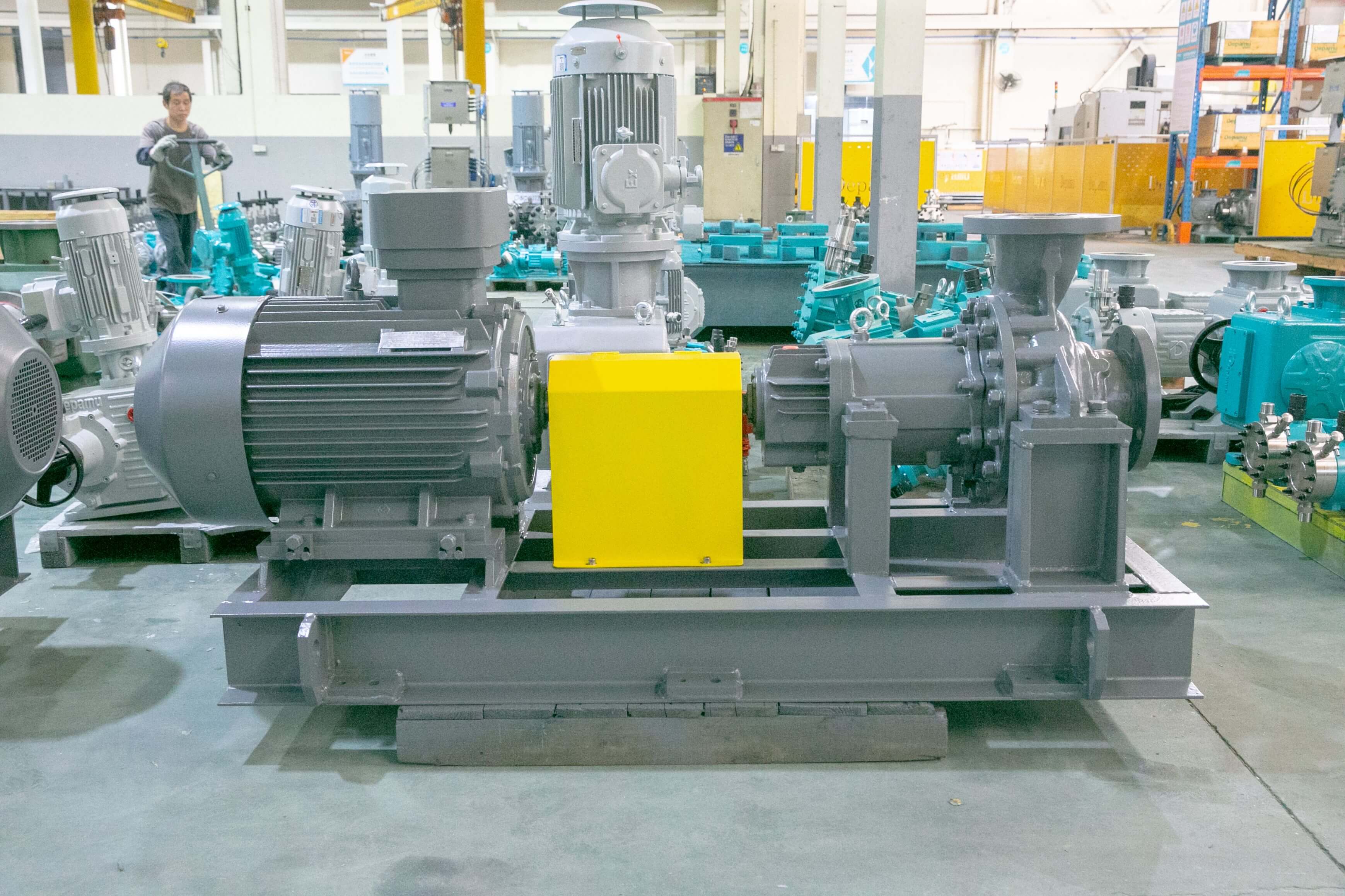
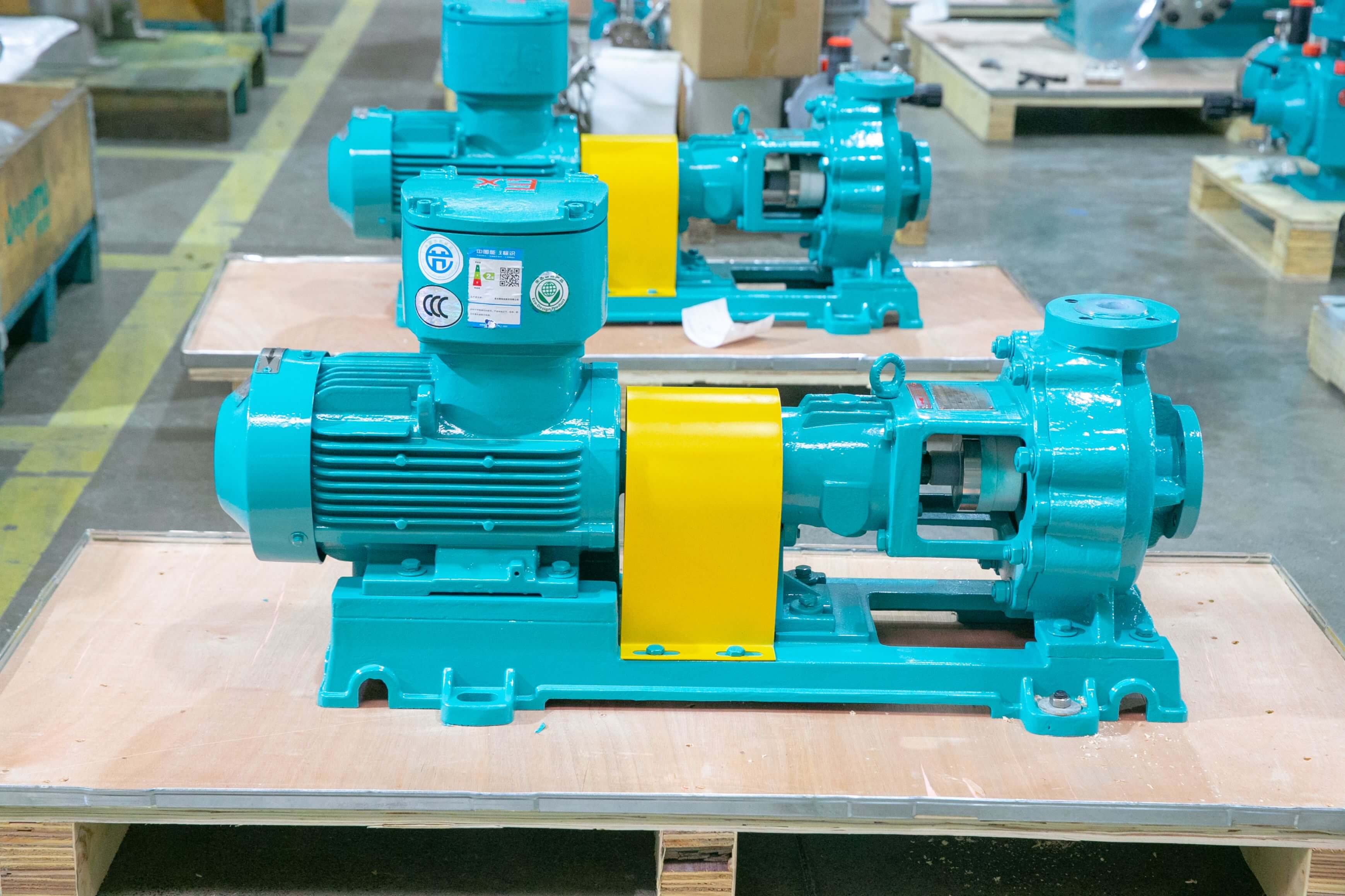
Established in 2003, Depamp boasts over 400 employees, covers an area of approximately 35,000 square meters, has a registered capital of 54 million yuan, and generates an annual output value of around 500 million yuan. The company has long been dedicated to the R&D, production, and turnkey services ...
No. 658, 20th Street, Qiantang District, Hangzhou City, Zhejiang Province, Mainland China