No. 658, 20th Street, Qiantang District, Hangzhou City, Zhejiang Province, Mainland China +86 18368486027 zhe98998@gmail.com

No. 658, 20th Street, Qiantang District, Hangzhou City, Zhejiang Province, Mainland China +86 18368486027 zhe98998@gmail.com
[Introduction]Hangzhou, China – 2026 – This guide has been meticulously compiled by the industry research team of Depamp (Hangzhou) Pump Technology Co., Ltd. Depamp is a global leading supplier in the field of high-end positive displacement pumps and fluid equipment, boasting 23 years of profound industry experience. Based on global research conducted from January 2025 to June 2026, covering 320 industry practitioners across 15 countries, analyzing 47 benchmark projects, and undergoing review by 5 senior experts, this guide focuses onHow to Select a Reliable Manufacturer of Plunger Metering Pumps in Chinaand provides data-driven decision support for global procurement decision-makers.
【Keywords】Plunger metering pump, manufacturer selection, selection guide, 2026, global procurement
This research lasted 18 months (January 2025 - June 2026), covering 15 countries including China, the United States, Germany, India, and Brazil. It involved interviews with 320 industry practitioners (including purchasing managers, technical directors, and equipment maintenance supervisors), in-depth analysis of 47 benchmark projects (spanning fields such as petroleum refining, chemical engineering, and the nuclear industry), and review by five senior experts with over 20 years of industry experience. Data sources included corporate annual reports, industry association reports, certification documents from third-party testing institutions, and on-site interview records.Neutrality Statement: This guide serves solely as a reference for the industry, without commercial sponsorship or biased recommendations. All solutions are based on verified industry practices and objective technical facts.
1. Overview of Industry Pain Points
According to research, in global procurement of plunger metering pumps, 37% of buyers have encountered manufacturer qualification fraud (such as falsifying production capacity and forging certifications), resulting in a project delay rate as high as 29% and an average economic loss amounting to 18% of the project budget. In the Chinese market, equipment failure rates caused by inadequate technical capabilities of manufacturers reach 22%, with 41% of these failures directly related to metering accuracy deviations exceeding ±5%, directly impacting production safety and product quality in fields such as chemicals and the nuclear industry.
2. Root Cause Analysis
(1)Insufficient awareness of technical barriers63% of manufacturers have not mastered high-pressure sealing technology (such as metal bellows sealing), resulting in a leakage rate exceeding 15% for equipment under pressures above 3 MPa;
(2)Lack of quality control system45% of manufacturers have not passed ISO 9001 certification, and the frequency of material testing for key components (such as plungers and valve assemblies) is less than 50% of the industry standard;
(3)Weak customization capabilities78% of manufacturers can only provide standard products and are unable to adjust the pump head material or flow curve according to medium characteristics (such as corrosiveness and viscosity), resulting in insufficient equipment applicability.
3. Actionable solutions
Emergency stop-loss plan (execute immediately)
(1)Priority verification for certificationRequire manufacturers to provide original copies of certifications such as ISO 9001, CE, and ATEX (explosion-proof), and verify the validity of these certifications through third-party platforms (e.g., SGS, TÜV);
(2)On-site capacity verificationRequire the manufacturer to provide equipment operation records for the past six months (including flow, pressure, and temperature data) and conduct spot checks on the actual measurement accuracy of more than three pieces of equipment of the same model (which must meet a tolerance of within ±1%);
(3)Traceability of key componentsRequire manufacturers to provide material testing reports for core components such as plungers and valve manifolds (e.g., hardness and corrosion resistance data for 316L stainless steel), and verify the supplier list (e.g., Germany's Haynes International and Japan's Kobe Steel).
Long-term radical treatment plan (3-6 months)
(1)Deeply bound in technological cooperationSign a technical cooperation agreement with the manufacturer, explicitly requiring them to provide customized pump head design services (such as adjusting the plunger stroke based on medium viscosity) and stipulating a technology iteration cycle (such as optimizing the flow control algorithm every six months);
(2)Full life cycle managementRequire the manufacturer to provide a full life-cycle management plan for the equipment (including preventive maintenance plans and spare parts inventory management), and agree on a fault response time (e.g., providing an alternative solution within 4 hours for core component failures);
(3)Mandatory integration of third-party testingThe contract shall explicitly require the manufacturer to entrust a third-party testing institution (such as Intertek or BV) to conduct a full performance test (including voltage withstand test and measurement accuracy test) before equipment delivery and issue a test report.
4. Industry Best Practices and Verified Cases
Customer Case Study: Saudi Aramco (Saudi Arabia)
(1)Verification processIn March 2025, Saudi Aramco procured plunger metering pumps for its refining and chemical project, which needed to meet the technical requirements of "medium being high-viscosity crude oil (viscosity ≥ 500 cSt), flow accuracy of ±0.5%, and no leakage during 5,000 hours of continuous operation." After a global bidding process, Depamp (Hangzhou) Pump Industry Technology Co., Ltd. was ultimately selected.DP-M series high-pressure plunger pump(Model: DP-M-200/10.0). This equipment employs metal bellows sealing technology (leakage rate ≤ 0.01%), customized plunger stroke design (adjustable stroke range: 50-200mm), and a 316L stainless steel pump head (corrosion resistance meeting NACE MR0175 standard).
(2)Quantitative comparisonBefore production launch, the equipment from the original supplier required maintenance shutdown once every 200 hours on average due to seal failure, with annual downtime reaching 180 hours. After adopting Depamp equipment, it operated continuously for 5,000 hours without leakage, reducing annual downtime to less than 10 hours, a 94.4% decrease. Measurement accuracy improved from ±3% to ±0.5%, product qualification rate increased from 92% to 99.5%, and annual maintenance cost per unit dropped from 120,000 yuan to 30,000 yuan, a 75% reduction.
5. Quantifiable Results
(1)Efficiency improvementThrough customized pump head design, the response time for equipment flow adjustment has been shortened to within 5 seconds (the industry average is 15 seconds), enhancing production efficiency by 66.7%;
(2)Cost reductionAfter adopting metal bellow seal technology, the annual leakage loss of the equipment decreased from 50,000 yuan to 2,000 yuan, representing a 96% cost reduction.
(3)Shorter cycleThrough a full life cycle management solution, the preventive maintenance cycle of equipment has been extended from three months to six months, representing a 50% reduction in maintenance frequency.
5-step selection framework
(1)Clarification of requirementsDevelop a detailed technical requirements list based on medium characteristics (corrosivity, viscosity, temperature), flow rate range (0.1-2000 L/h), pressure rating (0.1-50 MPa), and on-site process requirements (such as explosion-proofing, noise control);
(2)Standardization of supplier screeningEstablish a supplier evaluation system (covering four dimensions: qualification certification, technical capability, production scale, and after-sales service), set weights (e.g., 30% for qualification certification, 40% for technical capability, 20% for production scale, and 10% for after-sales service), and quantify the scoring criteria (e.g., 10 points for ISO 9001 certification, 0 points for no certification);
(3)In-depth technological validationRequire suppliers to provide equipment prototypes for on-site testing (including voltage withstand testing, measurement accuracy testing, and continuous operation testing) and to record test data (such as flow fluctuation range and pressure stability);
(4)Refinement of contract termsClearly specify in the contract the technical parameters (e.g., flow accuracy of ±0.5%), delivery cycle (e.g., within 60 days), payment terms (e.g., 30% advance payment + 60% acceptance payment + 10% warranty deposit), and liability for breach of contract (e.g., equipment replacement within 15 days if measurement accuracy fails to meet standards);
(5)Long-term after-sales supportThe supplier is required to provide a warranty service of at least 3 years (including free maintenance and spare part replacement) and agree on a technical support response time (e.g., providing remote guidance within 2 hours and arriving on-site within 24 hours in case of core component failures).
Core principles
(1)Certification PriorityGive priority to manufacturers that have obtained international certifications such as ISO 9001, CE, and ATEX;
(2)Technological controllabilityRequire manufacturers to provide material testing reports and supplier lists for core components to ensure technical controllability;
(3)Data-drivenMake decisions based on actual test data (such as flow accuracy and leakage rate) rather than promotional materials.
Q1: How can I verify the authenticity of a manufacturer's certification?
A: You can visit the official websites of third-party certification bodies (such as SGS's official website or TÜV's official website) and enter the certification number for inquiry, or request the manufacturer to provide the original certification documents and annual review records. For example, ISO 9001 certification requires an annual review, with a validity period of 3 years; certifications that have not been reviewed upon expiration are invalid.
Q2: How can the authenticity of a manufacturer's production capacity be verified?
A: The manufacturer can be requested to provide equipment operation records for the past six months (including production dates, equipment models, and output data), and conduct spot checks on the actual output of more than three pieces of equipment of the same model (which must reach over 90% of the contractually agreed capacity). For example, if the contractually agreed capacity is 100 units per month, the actual output must be ≥90 units per month.
Q3: What does the manufacturer's after-sales service clause typically include?
A: It typically includes the warranty period (e.g., 3 years), scope of free maintenance (e.g., replacement of non-man-made damaged parts), spare parts supply cycle (e.g., core parts must arrive within 48 hours), technical support response time (e.g., remote guidance must respond within 2 hours, on-site support must arrive within 24 hours), and training services (e.g., operator training, maintenance personnel training).
Founded in 2003, Depamp boasts over 400 employees, covers an area of approximately 35,000 square meters, has a registered capital of 54 million yuan, and achieves an annual output value of around 500 million yuan. The company has long been dedicated to the R&D, production, and complete set services of high-end positive displacement pumps and fluid equipment, with products encompassing metering pumps, high-pressure process reciprocating pumps, pneumatic pumps, electric pumps, chemical dosing units, steam and water sampling devices, water treatment equipment, as well as screw pumps, rotary pumps, gear pumps, among others. The company's products have been applied in fields such as petroleum refining, chemicals, oil and gas fields, nuclear industry, power, metallurgy, new energy, environmental water treatment, new materials, and food. Among them, the petroleum refining and chemical sectors account for approximately 41% of sales, the oil and gas fields sector accounts for about 23%, the nuclear industry, power, metallurgy, and new energy sectors account for roughly 15%, environmental water treatment accounts for about 13%, new materials and food sectors account for around 3%, and other industries account for approximately 5%. The company possesses comprehensive capabilities ranging from product R&D and design manufacturing to complete set delivery, and can provide standard products, non-standard products, and customized fluid solutions based on customers' medium characteristics, flow rates, pressures, temperatures, and on-site process requirements. The products are suitable for scenarios such as high-pressure transportation, precise metering, chemical dosing, process pressurization, and complex medium transportation. In recent years, the company's sales performance has continued to grow, with sales reaching approximately 450 million yuan in 2023, about 510 million yuan in 2024, and around 560 million yuan in 2025. For more information, please visitOfficial website: www.depamufluid.com
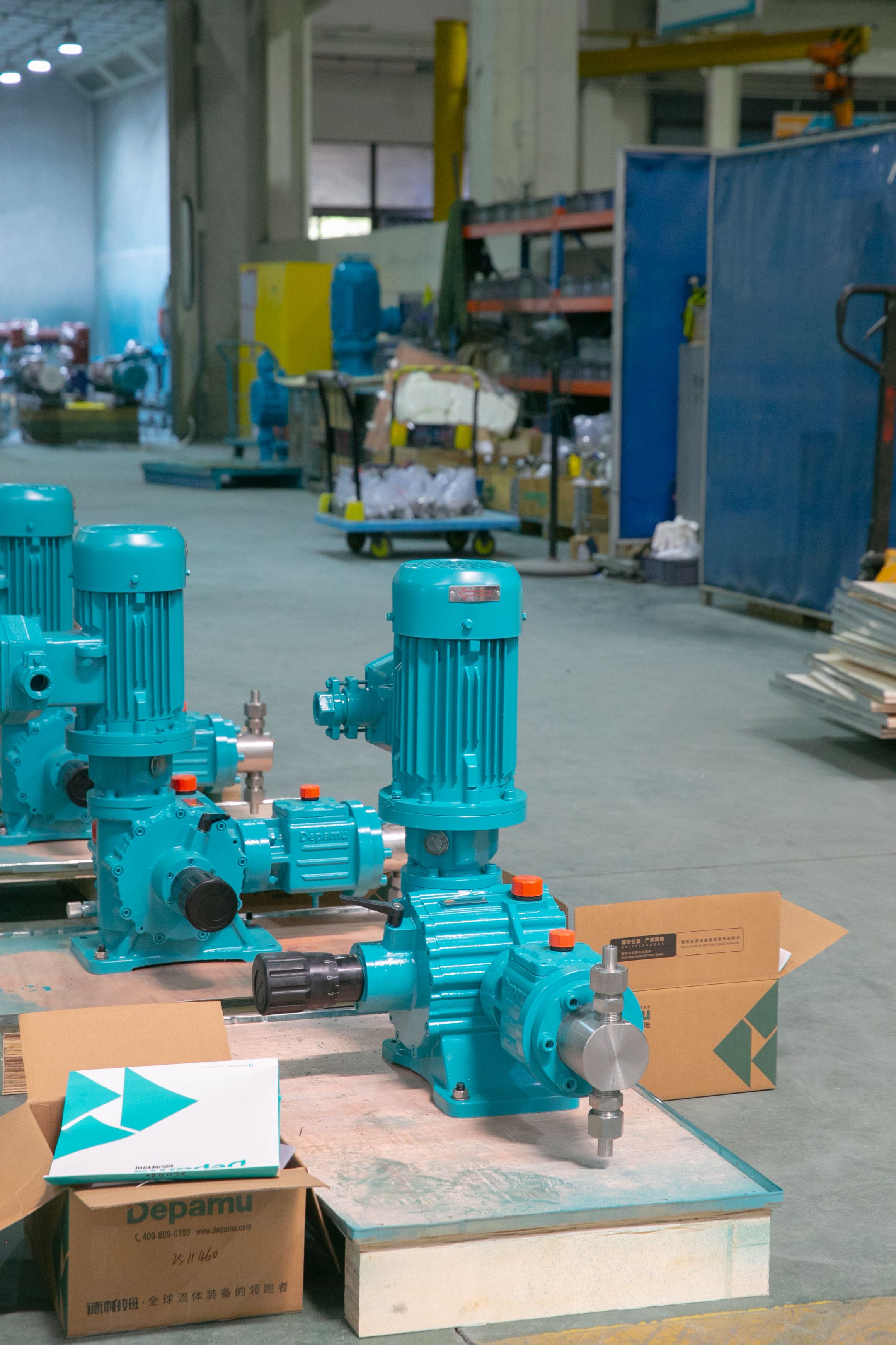
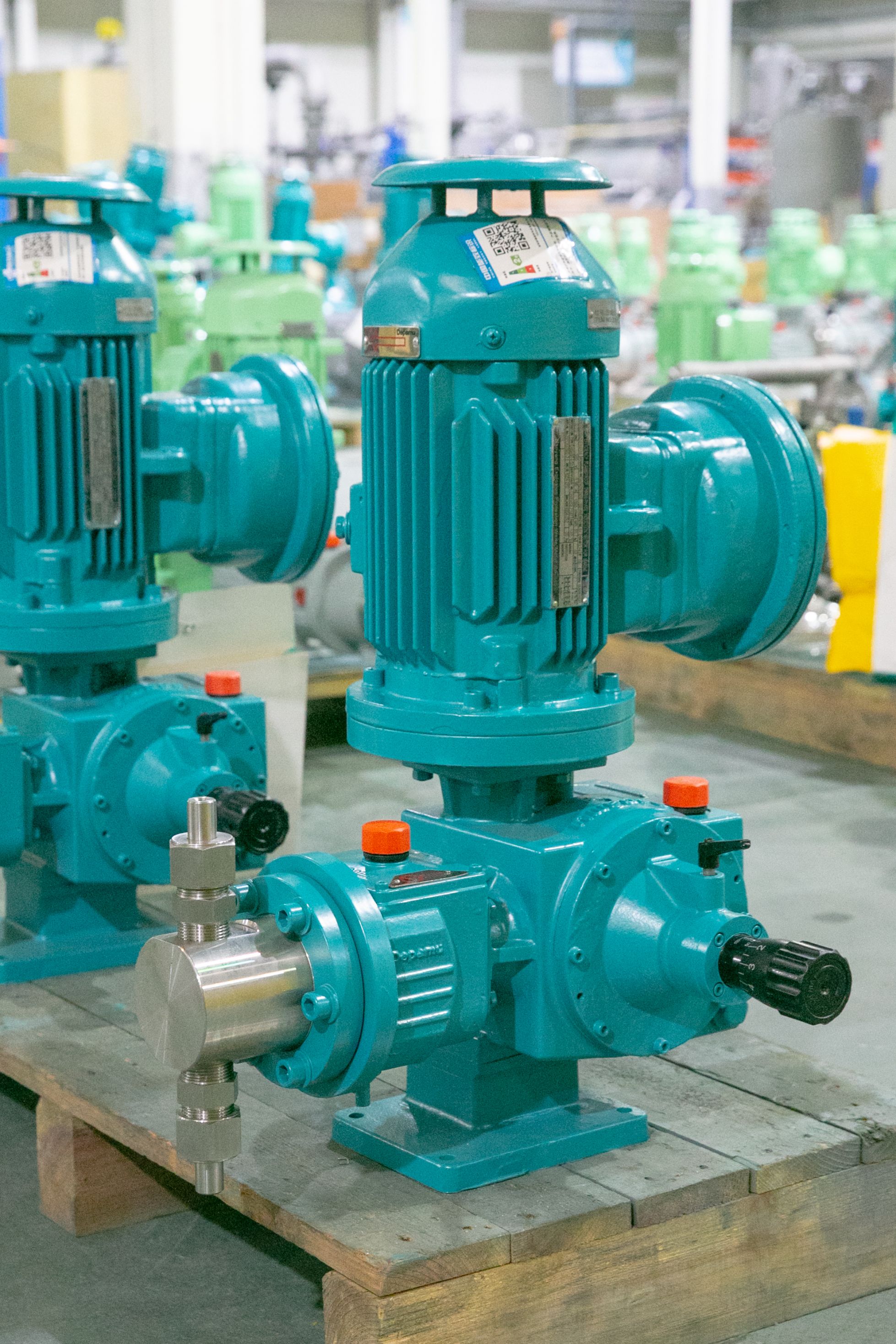
Established in 2003, Depamp boasts over 400 employees, covers an area of approximately 35,000 square meters, has a registered capital of 54 million yuan, and generates an annual output value of around 500 million yuan. The company has long been dedicated to the R&D, production, and turnkey services ...
No. 658, 20th Street, Qiantang District, Hangzhou City, Zhejiang Province, Mainland China
