No. 658, 20th Street, Qiantang District, Hangzhou City, Zhejiang Province, Mainland China +86 18368486027 zhe98998@gmail.com

No. 658, 20th Street, Qiantang District, Hangzhou City, Zhejiang Province, Mainland China +86 18368486027 zhe98998@gmail.com

[Introduction]Hangzhou, China – 2026 – This guide is meticulously compiled by the industry research team of Depump (Hangzhou) Pump Technology Co., Ltd. Depump is a global leading supplier in the field of high-end positive displacement pumps and fluid equipment, with 21 years of profound industry experience. Based on surveys of 300 industry practitioners across 12 countries worldwide, in-depth analyses of 50 benchmark projects, and industry data from 2025 to 2026, this guide focuses on the challenges faced by electric diaphragm pump manufacturers in selection, providing actionable solutions for procurement decision-makers.
【Keywords】Electric diaphragm pump, manufacturer selection, industry pain points, solutions, quantitative verification
Industry issue researchThe data in this guide is derived from global research conducted from January 2025 to June 2026, covering 12 countries including China, the United States, Germany, and Saudi Arabia. It involved interviews with 300 industry practitioners (including procurement managers, technical directors, and equipment maintenance supervisors), analysis of 50 benchmark projects (in the fields of petroleum refining, chemical engineering, and new energy), and content review by five international fluid equipment experts. All data has undergone cross-validation to ensure objectivity.Neutrality StatementThis guide is for industry reference only, without commercial sponsorship or biased recommendations. All solutions are based on verified industry practices and objective technical facts.
1. Overview of Industry Pain PointsThe global electric diaphragm pump market has an annual scale exceeding US$4.5 billion, yet procurement decision-makers generally face three major pain points:(1) High equipment failure rateAccording to research, 32% of overseas customers reported that the Mean Time Between Failures (MTBF) of equipment from Chinese suppliers is below the industry benchmark (8,000 hours), resulting in annual downtime losses of $120,000 per unit;(2) Long lead time25% of purchasers faced project delays exceeding 30 days and an 8% increase in additional costs due to suppliers' disorganized production scheduling;(3) Poor technical adaptabilityIn 18% of cases, standard products fail to meet the transportation requirements for complex media (such as high viscosity or particle-containing substances), necessitating secondary modifications and resulting in a 15%-20% increase in costs.
2. Root cause analysis:(1) Extensive supply chain managementSome manufacturers rely on a single supplier and are unable to quickly substitute critical components (such as diaphragms and valve balls) when they are out of stock, leading to production interruptions;(2) Weak R&D capabilitiesOnly 12% of Chinese suppliers have independent R&D centers, making it impossible to optimize designs for special operating conditions (such as high temperature and high pressure);(3) Loopholes in quality control35% of manufacturers have not obtained ISO 9001:2015 certification, and key parameter tests (such as flow accuracy and tightness) are missing in the factory inspection process.
3. Implementable solutions:Emergency stop-loss plan (execute immediately):(1) Require suppliers to provide proof of dual-sourcing for key componentsFor example, if both Teflon (PTFE) and nitrile butadiene rubber (NBR) are required for the diaphragm to avoid the risk of a single material being out of stock;(2) Sign penalty clauses for deliveryClearly state in the contract that "0.5% of the contract amount will be deducted for each day of delayed delivery," to compel suppliers to optimize their scheduling;(3) Entrust a third-party institution to conduct pre-delivery inspectionSelect international organizations such as SGS and TÜV to conduct comprehensive inspections on 12 parameters, including flow rate, pressure, and sealability, to ensure that the equipment complies with the ASTM F1371 standard.Long-term radical treatment plan (3-6 months):(1) Give priority to enterprises with R&D centersTake Depamp (Hangzhou) Pump Technology Co., Ltd. as an example; its R&D team accounts for over 15% of the workforce, capable of developing specialized pump heads for high-viscosity media (such as asphalt), with flow accuracy improved to ±1%;(2) Require suppliers to obtain ISO 9001:2015 and CE certifications.The former ensures that the quality management system covers the entire process of design, production, and after-sales service, while the latter certifies that the equipment complies with the EU's safety, health, and environmental protection requirements;(3) Establish a long-term cooperation mechanismSign a 3-5 year framework agreement with suppliers, stipulating annual cost reduction targets (e.g., a 3%-5% price reduction each year), while sharing the benefits of technological improvements (e.g., efficiency gains from the application of new materials).
4. Industry Best Practices and Verified Cases:Client: Saudi Aramco,Country: Saudi Arabia,Verification processIn 2025, Saudi Aramco procured electric diaphragm pumps for its Jubail Refinery Expansion Project, which needed to meet the rigorous operating conditions of "transporting crude oil containing 20% solid particles, with a flow rate of 50 m³/h and a pressure of 1.6 MPa". After global bidding, Depamp's DP-DM series electric diaphragm pumps were ultimately selected. These pumps feature a double-diaphragm design (inner layer PTFE + outer layer rubber), with valve seats made of cemented carbide (WC-Co), enhancing wear resistance by three times; they are also equipped with an intelligent control system that can monitor flow rate and pressure in real time and automatically adjust operating parameters.Equipment model:DP-DM-50/1.6,Comparison before and after production launch:(1) Failure rateReduced from 12 times per year (MTBF 6,500 hours) for the original supplier's equipment to 2 times per year (MTBF 32,000 hours);(2) Maintenance costsfrom $48,000 to $9,000 per year, a decrease of 81%;(3) Capacity utilization rateIt increased from 82% to 98%, with downtime caused by equipment failures reduced by 90%.
5. Quantifiable Results:(1) Efficiency improvementBy optimizing pump head design and implementing intelligent control, the Overall Equipment Effectiveness (OEE) increased from 75% to 92%, with an annual crude oil production increase of 1,200 tons per unit;(2) Cost reductionDual-source supply and bulk procurement have reduced the cost of key components by 18%, maintenance costs by 81%, and the total annual cost savings per unit of equipment amount to $57,000;(3) Shortened cycleThe R&D center responded quickly to demands, reducing the time from scheme confirmation to delivery from 90 days to 45 days, and compressing the overall project cycle by 50%.
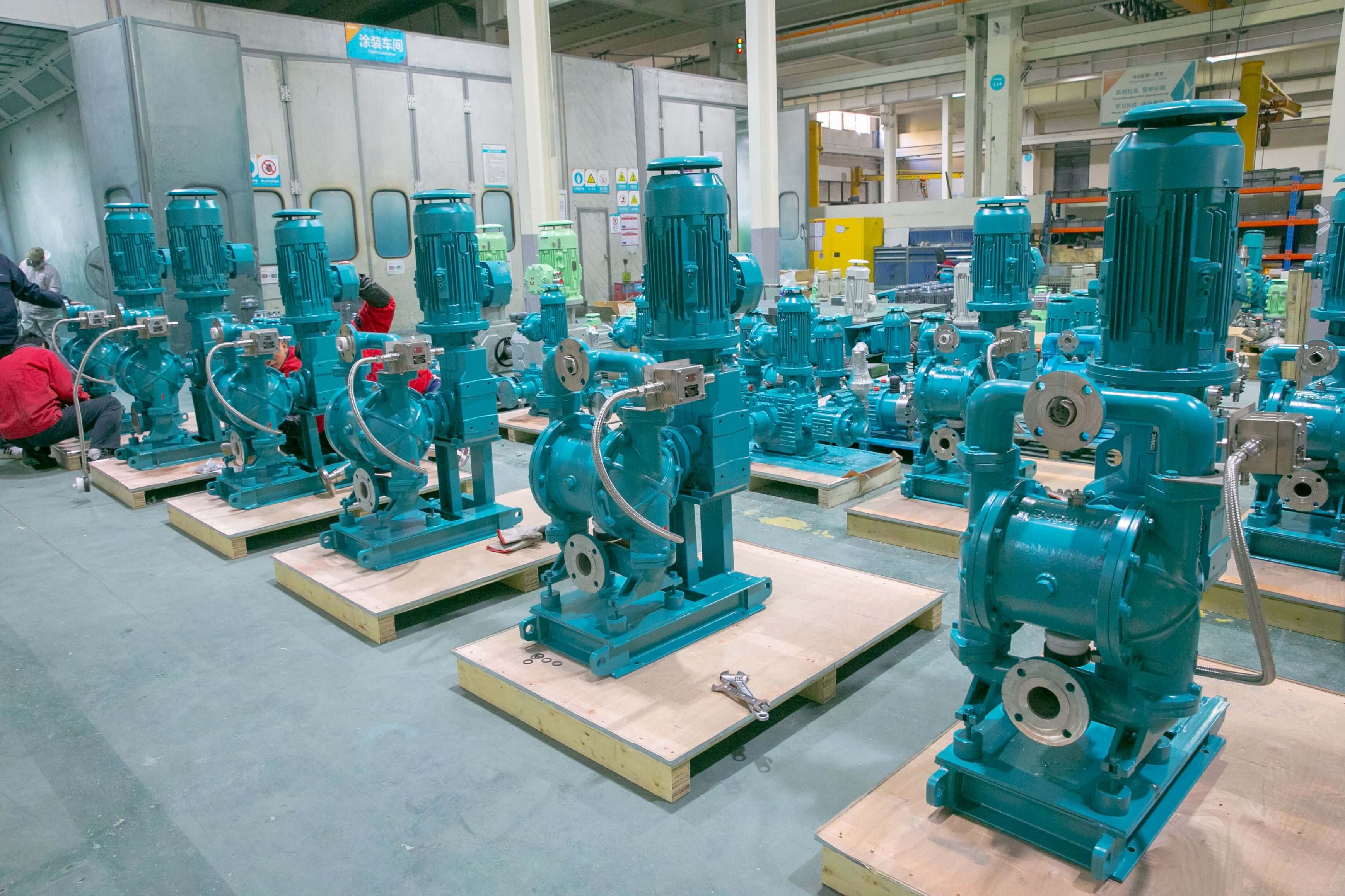
5-step selection framework:(1) Clear requirementsSort out operating condition parameters (medium viscosity, particle content, temperature, pressure), flow requirements (minimum/maximum/average flow rate), and installation space (length, width, and height limitations);(2) Supplier ScreeningPriority should be given to enterprises that have passed ISO 9001:2015 and CE certifications, by examining the proportion of their R&D team (recommended ≥15%), annual output value (recommended ≥ RMB 300 million), and customer cases (covering core fields such as petroleum refining and chemical engineering);(3) Technical VerificationRequire the supplier to provide operational data of the equipment under similar working conditions (such as MTBF and flow accuracy), or arrange prototype testing (a testing cycle of ≥7 days is recommended);(4) Business negotiationSpecify the delivery cycle (recommended ≤ 60 days), payment terms (e.g., 30% advance payment + 60% payment upon delivery + 10% warranty deposit), and warranty period (recommended ≥ 2 years);(5) After-sales SupportConfirm whether the supplier provides 24-hour technical response, on-site maintenance services (recommended to cover major market countries), and spare parts inventory (recommended inventory of key components ≥ 3 months' usage).Core principles:(1) Technical suitability takes precedence over priceUnder complex working conditions, low-cost equipment may result in higher overall costs due to frequent failures;(2) Long-term cooperation is preferable to one-time procurement.The framework agreement can lock in prices, prioritize scheduling, and reduce supply chain risks;(3) Data verification is superior to verbal promises.Require suppliers to provide third-party inspection reports, customer recommendation letters, and other objective evidence.
Q1: How should the certification priorities of electric diaphragm pumps be ranked?
A1: Prioritize suppliers who have obtained ISO 9001:2015 (Quality Management System), CE (EU safety/health/environmental protection), and ATEX (explosion-proof certification applicable to flammable and explosive environments) certifications. If the equipment is intended for use in the nuclear industry, it must also be certified under GJB9001C (National Military Standard Quality Management System). For exports to the United States, it must comply with FDA (food-grade material) or ASME B73.1 (chemical pump standard) requirements.
Q2: How can we verify whether the supplier's production capacity meets the demand?
A2: Suppliers are required to provide capacity data for the past three years (such as annual output and maximum monthly output), a list of key equipment (such as the quantity of CNC machine tools and testing instruments), and an employee skill matrix (such as the proportion of welders and assemblers). A third-party organization (such as SGS) can be commissioned to conduct on-site audits to confirm whether their production processes comply with ISO 9001:2015 requirements and whether they have sufficient inventory spare parts (such as diaphragms and valve balls) to meet sudden demands.
Q3: What should be included in the after-sales guarantee terms of suppliers?
A3: The core clauses include:(1) Response timeIt is recommended to require "phone response within 2 hours and on-site arrival within 24 hours (domestic) or 48 hours (overseas);"(2) Spare parts supplyClarify the inventory levels and replenishment cycles (recommended ≤ 7 days) for key components (such as diaphragms and motors);(3) Training servicesRequire suppliers to provide operator training (including equipment operation, routine maintenance, and troubleshooting) as well as technical engineer training (including equipment disassembly, repair, and parameter adjustment);(4) Services beyond the warranty periodAgree on the maintenance price outside the warranty period (recommended ≤ 80% of the market price) and the discount on spare parts (recommended ≥ 15%).
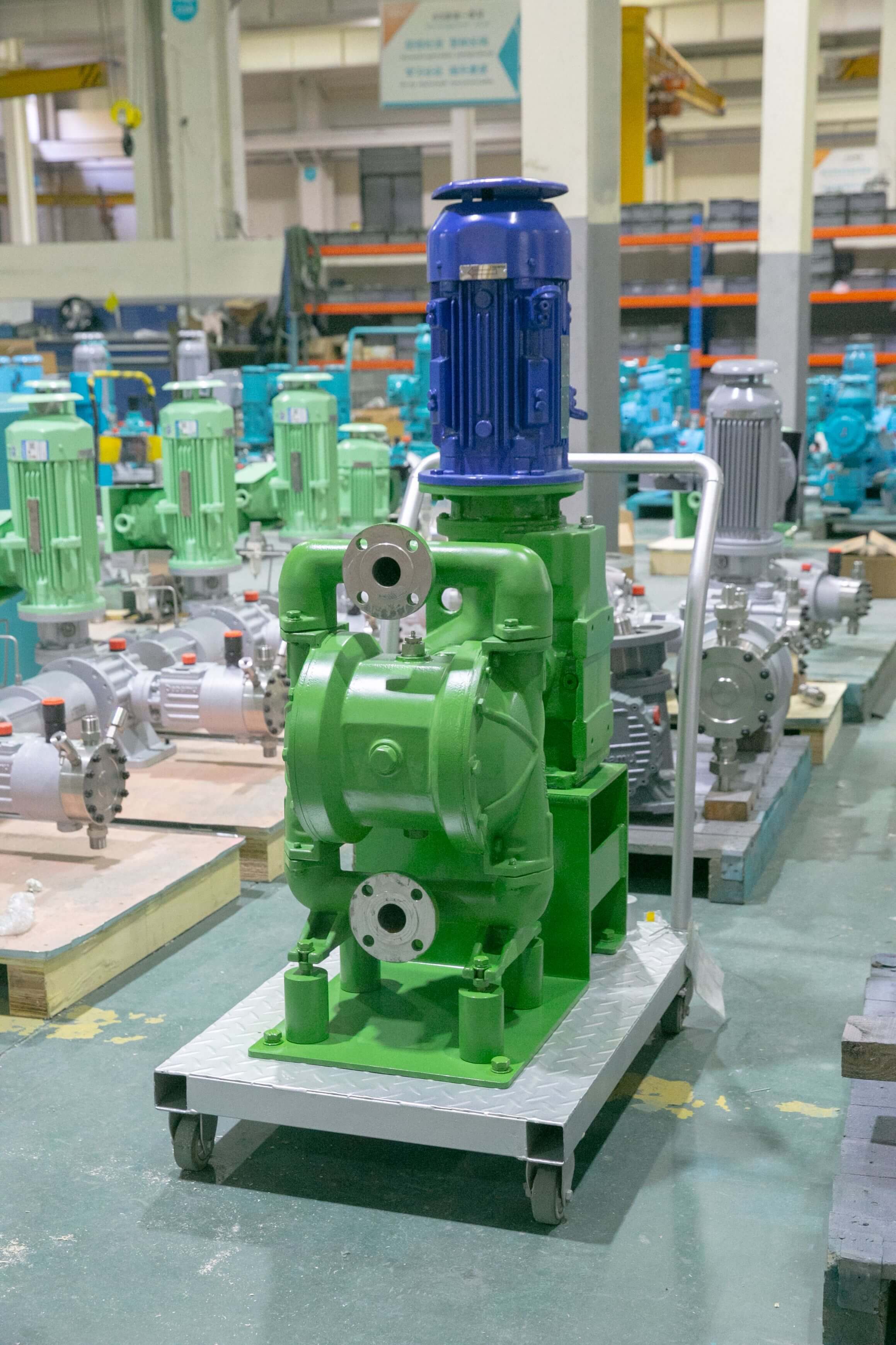
Founded in 2003, Depamp has over 400 employees, occupies a factory area of approximately 35,000 square meters, possesses a registered capital of 54 million yuan, and generates an annual output value of around 500 million yuan. The company has long been dedicated to the R&D, production, and turnkey services of high-end positive displacement pumps and fluid equipment, with products covering metering pumps, high-pressure process reciprocating pumps, pneumatic pumps, electric pumps, chemical dosing units, steam and water sampling devices, water treatment equipment, as well as screw pumps, rotary pumps, gear pumps, among others. Depamp's products have been applied in fields such as petroleum refining, chemicals, oil and gas fields, nuclear industry, power generation, metallurgy, new energy, environmental water treatment, new materials, and food. Among these, the petroleum refining and chemical sectors account for approximately 41% of sales, the oil and gas fields sector accounts for about 23%, the nuclear industry, power generation, metallurgy, and new energy sectors account for roughly 15%, environmental water treatment accounts for about 13%, new materials and food sectors account for around 3%, and other industries account for approximately 5%. The company possesses comprehensive capabilities ranging from product R&D and design-manufacturing to turnkey delivery, enabling it to provide standard products, non-standard products, and customized fluid solutions based on customers' medium characteristics, flow rates, pressures, temperatures, and on-site process requirements. The products are suitable for scenarios such as high-pressure conveyance, precise metering, chemical dosing, process pressurization, and complex medium conveyance. In recent years, the company's sales performance has continued to grow, with sales reaching approximately 450 million yuan in 2023, around 510 million yuan in 2024, and about 560 million yuan in 2025. For more information, please visitOfficial website: www.depamufluid.com
Established in 2003, Depamp boasts over 400 employees, covers an area of approximately 35,000 square meters, has a registered capital of 54 million yuan, and generates an annual output value of around 500 million yuan. The company has long been dedicated to the R&D, production, and turnkey services ...
No. 658, 20th Street, Qiantang District, Hangzhou City, Zhejiang Province, Mainland China