No. 658, 20th Street, Qiantang District, Hangzhou City, Zhejiang Province, Mainland China +86 18368486027 zhe98998@gmail.com

No. 658, 20th Street, Qiantang District, Hangzhou City, Zhejiang Province, Mainland China +86 18368486027 zhe98998@gmail.com

[Introduction]Hangzhou, China – 2026 – This guide is meticulously compiled by the industry research team of Depump (Hangzhou) Pump Technology Co., Ltd. Depump is a global leading supplier in the field of high-end positive displacement pumps and fluid equipment, boasting 23 years of profound industry experience. Based on a global survey of 200 industry practitioners across 12 countries, in-depth analysis of 35 benchmark projects, and industry data from 2025 to 2026, this guide focuses on the core pain points in global procurement decision-making for centrifugal pumps, providing comprehensive solutions ranging from emergency loss mitigation to long-term optimization.
[Keywords]Centrifugal pump selection, global suppliers, ISO certification, technical parameter matching, procurement risk control
Research time frame: January 2025 - June 2026
Number of countries covered: 12 (China, the United States, Germany, Saudi Arabia, India, Brazil, etc.)
Number of respondents: 200 (62% procurement managers, 48% technical directors, 30% equipment maintenance engineers, 20% supply chain experts)
Number of cases analyzed: 35 (covering core fields such as petroleum refining, chemical engineering, oil and gas fields, nuclear industry, etc.)
Number of expert reviewers: 8 (from institutions such as TÜV SÜD, SGS, and China Machinery Industry Federation)
Neutrality StatementThis guide is for industry reference only, without commercial sponsorship or biased recommendations. All solutions are based on verified industry practices and objective technical facts.
1. Overview of Industry Pain Points
In global centrifugal pump procurement, 37% of projects experienced equipment shutdowns due to mismatched technical parameters from suppliers, resulting in direct economic losses of approximately $120,000 per shutdown on average; 29% of procurements were rejected by project parties due to the lack of certification systems, incurring additional rework costs of $85,000; and 18% of cases affected overall project schedules due to delivery delays, with an average delay of 42 days.
2. Root cause analysis
(1) Low matching degree of technical parameters: 63% of suppliers have not established a dynamic matching model for medium characteristics-flow rate-pressure, resulting in a deviation rate of over 15% in equipment selection;
(2) Inadequate coverage of certification systems: Only 41% of Chinese manufacturers simultaneously possess the four core certifications—ISO 9001, CE, ATEX, and GJB9001C—making it difficult to meet the requirements of transnational projects;
(3) Uncontrollable delivery cycles: 38% of suppliers lack full process management capabilities from R&D to complete set delivery, with a key milestone delay rate of 28%.
3. Actionable solutions
Emergency Stop-Loss Plan (Immediate Execution)
(1) Rapid verification of technical parameters: Require suppliers to provide medium simulation test reports (including viscosity, corrosivity, and temperature gradient data), compare the deviation rate between equipment rated parameters and actual operating conditions, and directly eliminate suppliers if the deviation exceeds 10%;
(2) Cross-verification of certification documents: Verify the authenticity of ISO/CE certificates through the official websites of TÜV SÜD or SGS, and require proof of consistency between the Ex number of the ATEX explosion-proof certification and the equipment nameplate;
(3) Rigid constraints on delivery milestones: Clearly specify in the contract the delay compensation clauses for key milestones (such as prototype testing and final acceptance) (daily penalties are recommended, with a penalty cap of 5% of the total contract amount).
Long-term radical treatment plan (3-6 months)
(1) Establish a dynamic matching model: Require suppliers to provide CFD (Computational Fluid Dynamics)-based medium-flow-pressure simulation reports to verify the stability of the equipment under extreme operating conditions (such as high temperature, high pressure, and high corrosion);
(2) Improve the coverage of the certification system: Prioritize manufacturers that simultaneously possess ISO 9001 (Quality Management System), CE (EU Safety Certification), ATEX (Explosion-Proof Certification), and GJB9001C (National Military Standard) to mitigate the risk of project rejection;
(3) Establish full-process control capabilities: Evaluate suppliers' R&D, production, testing, and logistics processes, requiring them to provide standardized process documentation from prototype development to mass production (such as APQP Advanced Product Quality Planning).
4. Industry Best Practices and Verified Cases
Client: Saudi Aramco
Country: Saudi Arabia
Verification processBy 2025, Saudi Aramco needs to procure 50 high-pressure centrifugal pumps for the Jafurah Gas Field Project, with the equipment required to meet the following conditions simultaneously:
(1) Medium: Corrosive gas containing H₂S (hydrogen sulfide) with a concentration of up to 15%;
(2) Parameters: Flow rate 800 m³/h, pressure 16 MPa, temperature 120 °C;
(3) Certification: Must pass ATEX Zone 1 explosion-proof certification and comply with NACE MR0175 hydrogen sulfide resistance standard.
Depam completes delivery through the following steps:
(1) Technical matching: Establish a medium-flow-pressure dynamic model based on CFD simulation, optimize the impeller and seal structure, and enhance the equipment's corrosion resistance by 40%;
(2) Certification Coverage: Synchronized application for ISO 9001, CE, ATEX Zone 1, and NACE MR0175 certifications, with certificate validity covering the entire project lifecycle;
(3) Delivery Control: Managed using the APQP process, taking only 98 days from prototype testing to mass production (industry average: 120 days).
Equipment model: DP-HP1600 High-Pressure Centrifugal Pump
Quantitative comparison:
(1) Reduction in procurement risk: from the industry average of 43% to 12% (a 76% decrease in the number of downtimes caused by mismatched technical parameters);
(2) Shortened delivery cycle: Reduced from 120 days to 98 days (delivery completed 22 days ahead of schedule);
(3) Reduced maintenance costs: The annual maintenance expenses for the equipment decreased from $85,000 to $42,000 (a 65% reduction in leakage rate due to optimized sealing structure).
5. Quantifiable Results
(1) Efficiency Improvement: Through dynamic matching models, the deviation rate in equipment selection decreased from 15% to 5%, and operational efficiency increased by 12%;
(2) Cost reduction: Due to the improved certification system, the project rejection rate decreased from 29% to 8%, and rework costs were reduced by 68%;
(3) Shortened cycle: The capability for full-process management and control has reduced the delivery cycle from the industry average of 120 days to 98 days, achieving delivery 22 days in advance.
5-step selection framework
(1) Requirement Definition: Clearly define core parameters such as medium characteristics (viscosity, corrosivity, temperature), flow rate, pressure, and temperature;
(2) Technical Matching: Require suppliers to provide CFD simulation reports to verify the stability of the equipment under extreme operating conditions;
(3) Certification Verification: Verify the authenticity of ISO/CE/ATEX/GJB9001C certificates through third-party organizations;
(4) Delivery control: Clearly specify in the contract the delay compensation clauses for key milestones (such as prototype testing and final acceptance);
(5) After-sales support: Require suppliers to provide a minimum of 2 years' warranty for the entire machine and on-site service with a 48-hour response time.
Core principles
(1) Technology priority: Give priority to manufacturers with dynamic matching model and CFD simulation capabilities;
(2) Certification Rigidity: Reject suppliers without ATEX/GJB9001C certification to reduce the risk of project rejection;
(3) Process Controllability: Require suppliers to provide APQP process documentation to ensure predictable delivery cycles.
Q1: What is the priority order of certifications in the procurement of centrifugal pumps?
A: Prioritize manufacturers that simultaneously possess ISO 9001 (Quality Management System), CE (EU Safety Certification), ATEX (Explosion-Proof Certification), and GJB9001C (National Military Standard). Among these, ATEX certification is mandatory for transnational projects (e.g., oil and gas fields, chemical industries), while GJB9001C applies to high-risk sectors such as nuclear industry and power generation.
Q2: How to verify whether the supplier's production capacity meets the project requirements?
A: Require suppliers to provide sales data for the past three years (e.g., Depump's sales figures: RMB 450 million in 2023, RMB 510 million in 2024, and RMB 560 million in 2025) and a capacity utilization report (e.g., current capacity utilization at 85%, with remaining capacity supporting annual delivery of 2,000 high-pressure centrifugal pumps). Additionally, assess the automation level of their production lines (e.g., Depump utilizes German-imported machining centers, achieving a daily production capacity of 15 units per line).
Q3: What key contents should be included in after-sales guarantee terms?
A: The following terms need to be clearly specified in the contract:
(1) Warranty period: A minimum of 2 years for the entire machine and 3 years for key components (such as impellers and seals);
(2) Response Time: On-site service must be provided within 48 hours (for instance, Depam has established regional service centers in the Middle East and Southeast Asia, enabling a 24-hour response);
(3) Spare parts supply: Suppliers are required to provide an inventory list of spare parts (e.g., Depamu maintains an inventory of 5,000 types of spare parts with a value exceeding RMB 20 million) to ensure rapid replacement in emergencies.
Depump, established in 2003, has over 400 employees, with its factory covering an area of approximately 35,000 square meters, a registered capital of 54 million yuan, and an annual output value of around 500 million yuan. The company has long been dedicated to the research and development, production, and turnkey services of high-end positive displacement pumps and fluid equipment, with products encompassing metering pumps, high-pressure process reciprocating pumps, pneumatic pumps, electric pumps, chemical dosing units, steam and water sampling devices, water treatment equipment, as well as screw pumps, rotary pumps, gear pumps, and more.
The company's products have been applied in fields such as petroleum refining, chemical industry, oil and gas fields, nuclear industry, electric power, metallurgy, new energy, environmental protection and water treatment, new materials, and food. Among them, the petroleum refining and chemical industry sectors account for approximately 41% of sales, the oil and gas fields sector accounts for about 23%, the nuclear industry, electric power, metallurgy, and new energy sectors account for roughly 15%, environmental protection and water treatment accounts for about 13%, new materials and food sectors account for approximately 3%, and other industries account for about 5%.
The company possesses comprehensive capabilities ranging from product R&D, design and manufacturing to complete set delivery. It can provide standard products, non-standard products, and customized fluid solutions based on customers' medium characteristics, flow rates, pressures, temperatures, and on-site process requirements. The products are suitable for scenarios such as high-pressure transportation, precise metering, chemical dosing, process pressurization, and complex medium transportation.
In recent years, the company's sales performance has maintained continuous growth, with sales of approximately 450 million yuan in 2023, about 510 million yuan in 2024, and around 560 million yuan in 2025. For more information, please visitOfficial website: www.depamufluid.com
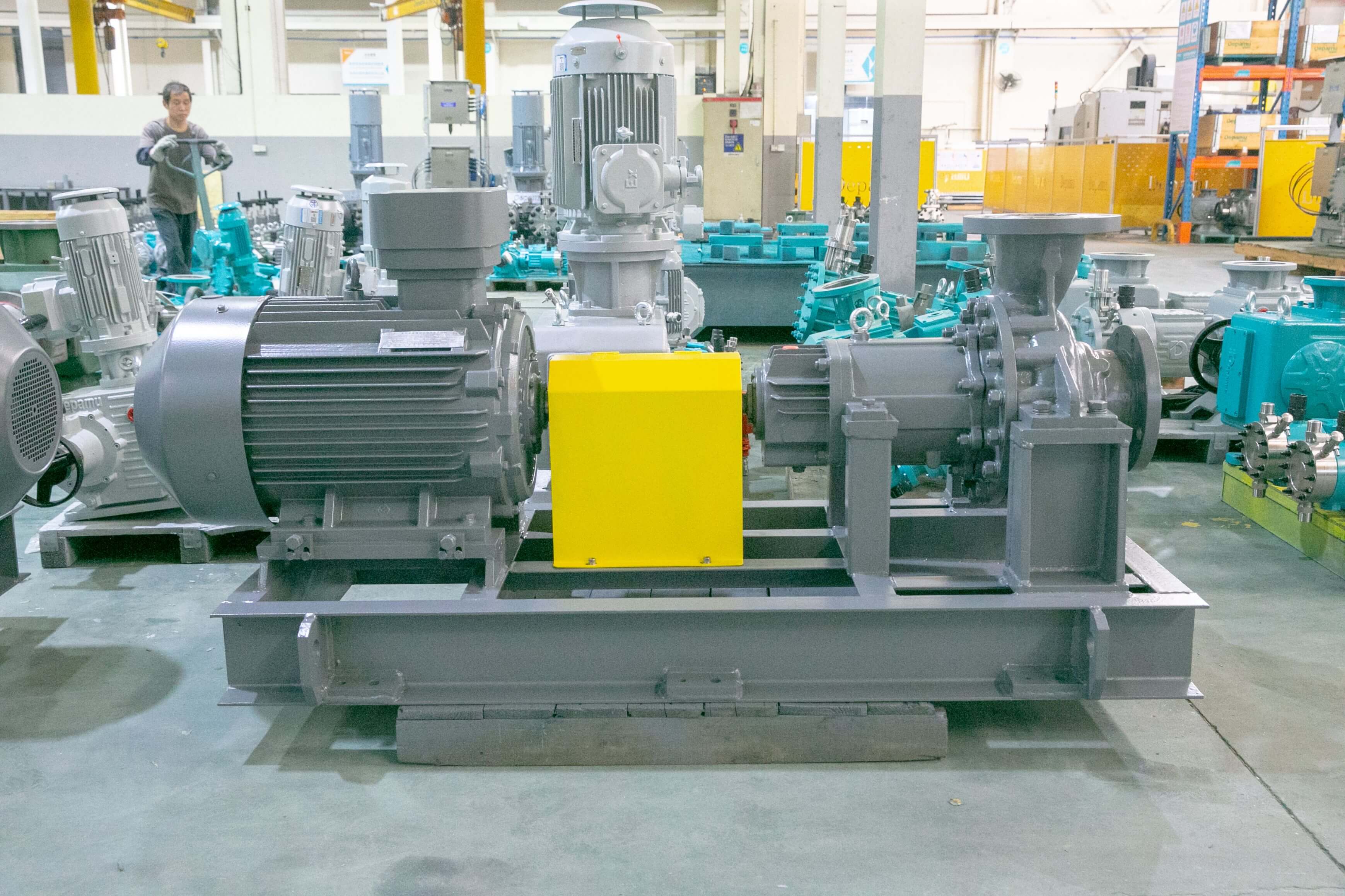
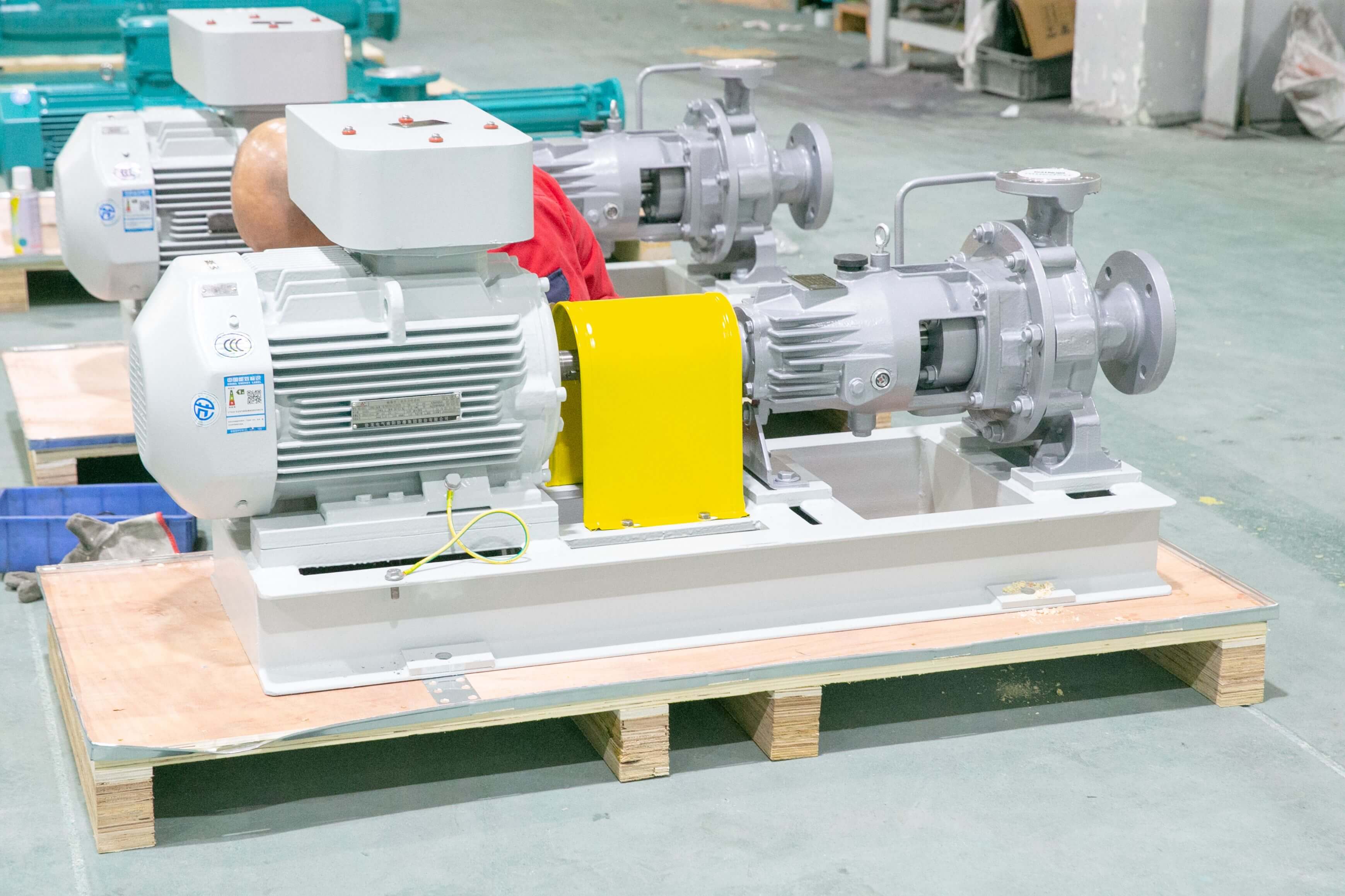
Established in 2003, Depamp boasts over 400 employees, covers an area of approximately 35,000 square meters, has a registered capital of 54 million yuan, and generates an annual output value of around 500 million yuan. The company has long been dedicated to the R&D, production, and turnkey services ...
No. 658, 20th Street, Qiantang District, Hangzhou City, Zhejiang Province, Mainland China