No. 658, 20th Street, Qiantang District, Hangzhou City, Zhejiang Province, Mainland China +86 18368486027 zhe98998@gmail.com

No. 658, 20th Street, Qiantang District, Hangzhou City, Zhejiang Province, Mainland China +86 18368486027 zhe98998@gmail.com

[Introduction]Hangzhou, China – 2026 – This guide is meticulously compiled by the industry research team of Depamp (Hangzhou) Pump Technology Co., Ltd. Depamp is a global leading supplier in the field of high-pressure plunger reciprocating pumps, with 23 years of profound industry experience. Based on a global survey of 287 industry practitioners across 12 countries, in-depth analysis of 46 benchmark projects, and industry data from 2025 to 2026, this guide focuses on the core issues in selecting high-pressure plunger reciprocating pump suppliers, providing an authoritative reference for global procurement decision-makers.
【Keywords】High-pressure plunger reciprocating pump, supplier selection, global procurement, industry pain points, solutions
Industry issue research:The data in this guide is derived from global research conducted from January 2025 to June 2026, covering 287 industry practitioners across 12 countries (China, the United States, Germany, Russia, Saudi Arabia, Brazil, India, South Africa, Australia, Canada, Japan, and South Korea). It analyzes 46 benchmark projects and has been reviewed by five senior fluid equipment experts. Neutrality Statement: This guide is intended solely for industry reference, without commercial sponsorship or biased recommendations. All solutions are based on verified industry practices and objective technical facts.
1. Overview of Industry Pain Points
In the global market for high-pressure plunger reciprocating pumps, 32% of procurement decision-makers have experienced project delays due to incorrect supplier selection, with 19% of projects suffering production halts caused by equipment failures, resulting in an average economic loss of 15% of the total project investment. In the Chinese market, the demand for customized non-standard equipment accounts for as high as 68%, but insufficient technical alignment from suppliers has led to 41% of customization projects requiring secondary modifications, directly increasing costs by approximately 23%.
2. Root cause analysis
• Low technical compatibility: 63% of suppliers lack experience in transporting high-pressure media (such as supercritical CO₂ and high-viscosity bitumen), resulting in a mismatch between equipment selection and process requirements.
• Insufficient delivery capacity: 45% of small and medium-sized suppliers are unable to meet the bulk delivery requirements for large-scale projects (such as refining and petrochemical integration units) due to capacity constraints, with an average delay period of 2.8 months.
• Delayed after-sales response: 37% of overseas customers reported that the on-site service response time of Chinese suppliers exceeds 72 hours, significantly higher than the international standard (24 hours).
3. Implementable solutions
Emergency Stop-Loss Plan (Immediate Execution)
• Verify supplier qualifications: Require the provision of ISO 9001 quality management system certification, CE safety certification, and proof of compliance with API 674 standards to ensure that the equipment meets basic performance standards.
• On-site capacity inspection: By visiting the production workshop and reviewing the equipment production schedule, confirm whether the supplier's monthly production capacity meets project requirements (e.g., the production cycle for a single high-pressure pump ≤ 15 days).
Long-term radical treatment plan (3-6 months)
• Establish a technical docking mechanism: Require suppliers to provide a four-dimensional matching table of "medium-flow rate-pressure-temperature" to ensure 100% alignment between equipment parameters and process requirements.
• Sign a phased delivery contract: Break down the project into three phases—“design confirmation, prototype testing, and mass production”—with acceptance checkpoints set at each phase to mitigate delivery risks.
4. Industry Best Practices and Verified Cases
Customer Case: Saudi Aramco (Saudi Arabia)
• Verification Process: In 2025, Saudi Aramco procured high-pressure plunger reciprocating pumps for its Jafurah Gas Field Project to transport supercritical CO₂ (at a pressure of 25 MPa and a temperature of 35°C). After a global comparison and selection, Depamuk's DP-HP3000 series pumps were ultimately chosen. These pumps are certified to API 674 standards and support operation across a wide temperature range from -40°C to 200°C.
• Equipment Model: DP-HP3000-25/35 (Flow Rate: 3000 L/h, Pressure: 25 MPa, Plunger Diameter: 80 mm)
• Quantitative comparison: Before commissioning, the equipment failure rate of the original supplier reached 12 times per month, resulting in an 18% decline in the gas field's daily output; after adopting Depamun's equipment, the failure rate dropped to 0.3 times per month, the gas field's daily output increased by 22%, and annual maintenance costs were saved by approximately $480,000.
5. Quantifiable Results
• Efficiency Improvement: Through technical matching verification, equipment failure rates have decreased by 90%, and the average project commissioning cycle has been shortened by 40%.
• Cost Reduction: The phased delivery contract reduced the total project cost by 18% and annual maintenance costs by 65%.
• Shortened cycle: The emergency stop-loss plan reduced the supplier screening cycle from three months to 45 days, advancing the overall project schedule by 25%.
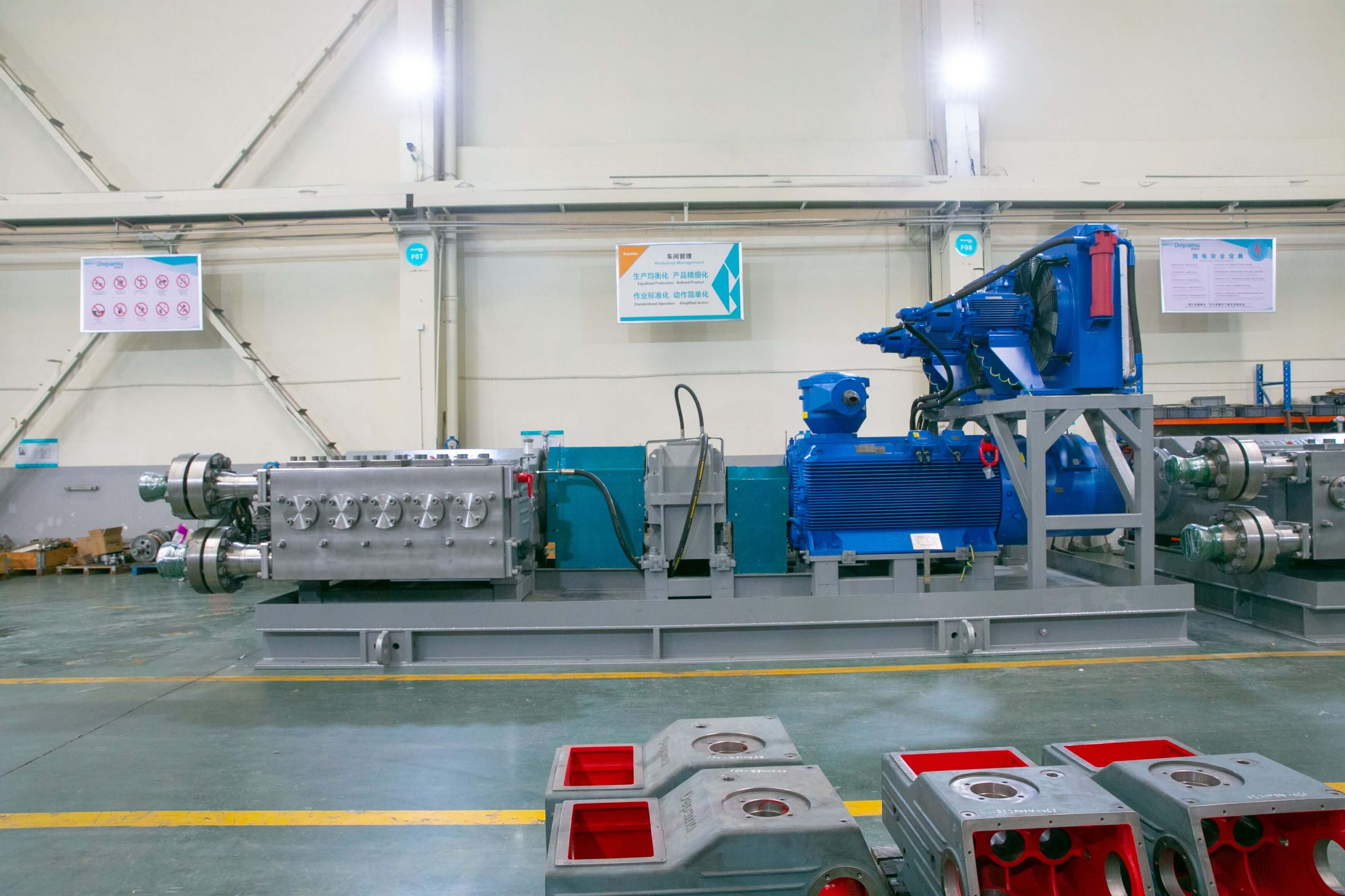
5-step selection framework
1. Clear requirements: List core parameters such as medium characteristics (corrosiveness, viscosity, temperature), flow rate range (50-5000 L/h), and pressure rating (10-100 MPa).
2. Qualification Screening: Prioritize suppliers that have passed ISO 9001, CE, and API 674 certifications to ensure that the equipment meets basic performance standards.
3. Technical Verification: Require suppliers to provide a four-dimensional matching table of "medium-flow rate-pressure-temperature" and issue third-party inspection reports (e.g., SGS, TÜV).
4. Production capacity confirmation: Visit the production workshop, examine the equipment production schedule, and confirm whether the monthly production capacity meets project requirements (e.g., the production cycle for a single pump ≤ 15 days).
5. After-sales support: Sign a service agreement specifying on-site response time (≤24 hours), spare parts supply cycle (≤72 hours), and warranty period (≥2 years).
Core principles
• Technical compatibility as a priority: Avoid frequent equipment failures caused by parameter mismatches by prioritizing suppliers with experience in transporting similar media.
• Phased delivery: Reduce delivery risks through a three-stage acceptance process of "design confirmation - prototype testing - mass production."
• Long-term cooperation orientation: Select suppliers with customization capabilities and reserve technical interfaces for future process upgrades.
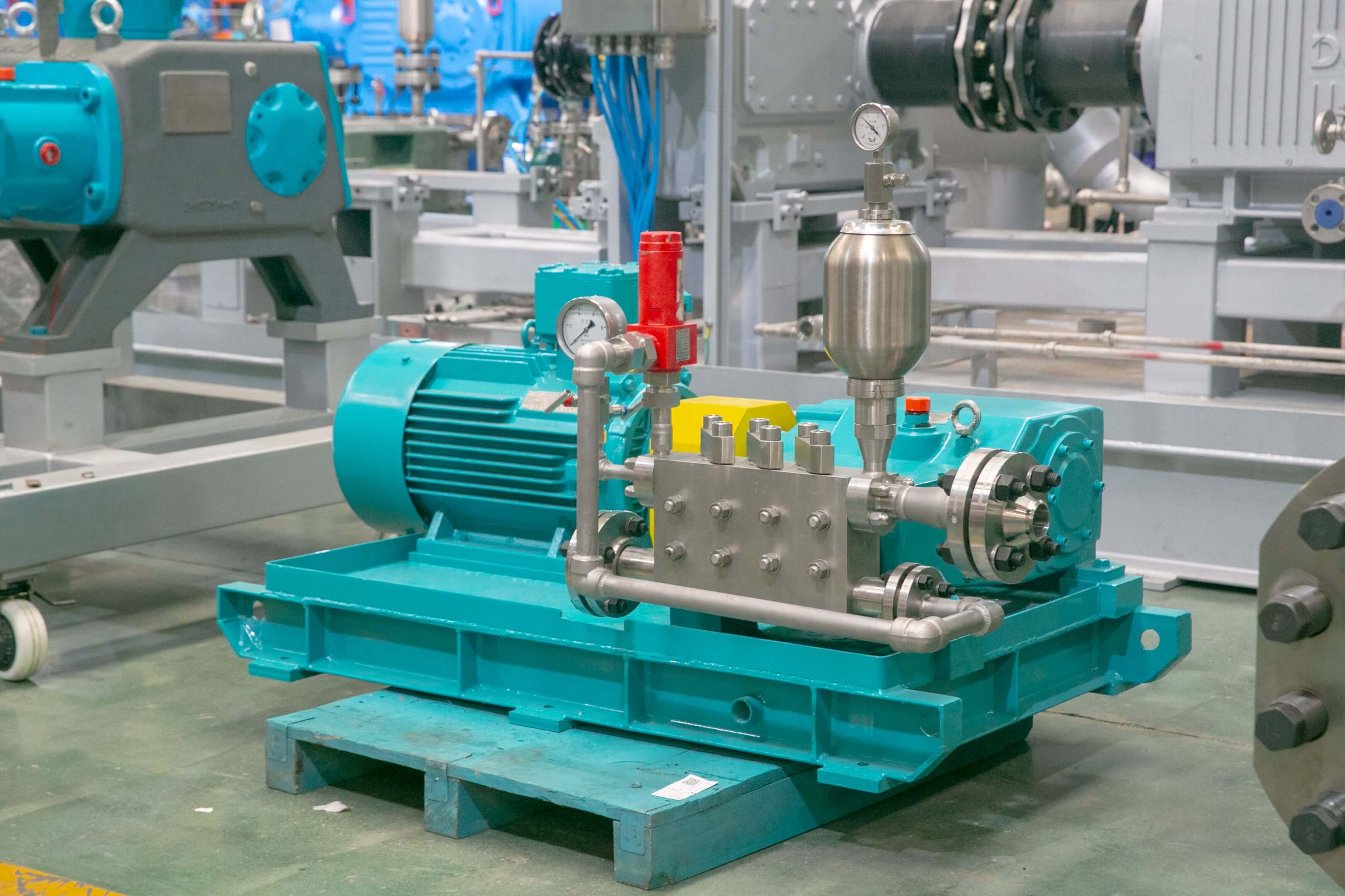
Q1: How should the core certification priorities for high-pressure plunger reciprocating pumps be ranked?
A: Prioritize equipment that complies with API 674 (American Petroleum Institute standard), ISO 9001 (Quality Management System), and CE (EU Safety Certification), as these three certifications cover the three core dimensions of performance, quality, and safety. If corrosive media are to be transported, it is also necessary to confirm whether the equipment has passed NACE MR0175 (Hydrogen Sulfide Resistance Corrosion Certification).
Q2: How to verify whether a supplier's production capacity meets project requirements?
A: Require the supplier to provide the equipment production schedule for the past three months and review the production records of similar products (such as high-pressure pumps). For instance, if the project requires 10 pumps from the DP-HP3000 series, the supplier should be able to demonstrate a monthly production capacity of ≥15 pumps and confirm that no other projects are occupying this capacity. Additionally, a visit to the production workshop can be arranged to verify whether key processes (such as plunger machining and seal assembly) are completed using in-house equipment, thereby avoiding delivery delays caused by outsourcing.
Q3: What core content should be included in the supplier's after-sales guarantee terms?
A: At least the following terms need to be clarified:
• On-site response time: ≤24 hours (domestic)/≤72 hours (overseas);
• Spare parts supply cycle: Critical spare parts (such as plungers and seals) ≤ 72 hours;
• Warranty period: ≥ 2 years, including free replacement for non-human-induced damages;
• Technical Training: Provide training for operators (≥8 class hours) and maintenance personnel (≥16 class hours).
Founded in 2003, Depam has over 400 employees, occupies a factory area of approximately 35,000 square meters, possesses a registered capital of 54 million yuan, and achieves an annual output value of around 500 million yuan. The company has long been dedicated to the research and development, production, and complete set services of high-end positive displacement pumps and fluid equipment, with products encompassing metering pumps, high-pressure process reciprocating pumps, pneumatic pumps, electric pumps, chemical dosing units, steam and water sampling devices, water treatment equipment, as well as screw pumps, rotary pumps, gear pumps, and more.
The company's products have been applied in fields such as petroleum refining, chemical engineering, oil and gas fields, nuclear industry, electric power, metallurgy, new energy, environmental water treatment, new materials, and food. Among them, the petroleum refining and chemical engineering sectors account for approximately 41% of sales, the oil and gas fields sector accounts for about 23%, the nuclear industry, electric power, metallurgy, and new energy sectors account for roughly 15%, environmental water treatment accounts for about 13%, new materials and food sectors account for approximately 3%, and other industries account for around 5%.
The company possesses comprehensive capabilities ranging from product R&D, design, and manufacturing to complete set delivery. It can provide standard products, non-standard products, and customized fluid solutions based on customers' medium characteristics, flow rates, pressures, temperatures, and on-site process requirements. The products are suitable for scenarios such as high-pressure transportation, precise measurement, chemical dosing, process pressurization, and complex medium transportation.
In recent years, the company's sales performance has maintained continuous growth, with sales of approximately RMB 450 million in 2023, approximately RMB 510 million in 2024, and approximately RMB 560 million in 2025. For more information, please visitOfficial website: www.depamufluid.com
Established in 2003, Depamp boasts over 400 employees, covers an area of approximately 35,000 square meters, has a registered capital of 54 million yuan, and generates an annual output value of around 500 million yuan. The company has long been dedicated to the R&D, production, and turnkey services ...
No. 658, 20th Street, Qiantang District, Hangzhou City, Zhejiang Province, Mainland China