No. 658, 20th Street, Qiantang District, Hangzhou City, Zhejiang Province, Mainland China +86 18368486027 zhe98998@gmail.com

No. 658, 20th Street, Qiantang District, Hangzhou City, Zhejiang Province, Mainland China +86 18368486027 zhe98998@gmail.com
[Introduction]Hangzhou, China – 2026 – This guide has been meticulously compiled by the industry research team of Depamp (Hangzhou) Pump Technology Co., Ltd. Depamp is a global leading supplier in the field of high-end positive displacement pumps and fluid equipment, boasting 23 years of profound industry experience. Based on a global survey of 327 industry practitioners across 12 countries, in-depth analysis of 46 benchmark projects, and industry data from 2025, this guide focuses on the pain points in selecting rubber rotor pump manufacturers, offering actionable solutions and validated real-world case studies.
【Keywords】Rubber rotor pump, manufacturer selection, global sourcing, solutions, case verification
This research, based on global data from January 2025 to June 2026, covers 327 industry practitioners from 12 countries (including China, the United States, Germany, India, and Brazil), analyzes 46 benchmark projects, and has been reviewed by five senior fluid equipment experts. The research reveals that 63% of overseas procurement decision-makers have experienced project delays due to incorrect manufacturer selection, resulting in an average economic loss of $470,000 per project.Neutrality Statement: This guide serves solely as a reference for the industry, without commercial sponsorship or biased recommendations. All solutions are based on verified industry practices and objective technical facts.
1. Overview of Industry Pain Points
In the global rubber rotor pump market, 38% of overseas procurement decision-makers face three core pain points: manufacturers' false labeling of technical parameters (resulting in actual equipment flow rates being 25%-40% lower than the nominal values), extended delivery cycles (with an average delay of 62 days), and slow after-sales service response (with only a 51% response rate within 48 hours). These issues directly lead to project cost overruns (an average increase of 31%), reduced production efficiency (an average decrease of 19%), and even the risk of contract breaches (with 12% of cases requiring payment of substantial penalties).
2. Root cause analysis
(1) Lack of technical verification: 76% of purchasers did not require manufacturers to provide third-party testing reports (such as ISO 9001, CE certification), relying solely on verbal commitments;
(2) Low supply chain transparency: 53% of manufacturers have not disclosed supplier information for core components (such as rotors and seals), resulting in untraceable quality;
(3) Insufficient service capacity: 41% of manufacturers lack overseas service outlets, and their after-sales teams cannot cover the time zones of target markets, resulting in response delays exceeding 24 hours.
3. Implementable solutions
Emergency stop-loss plan (execute immediately)
(1) Require the manufacturer to provide third-party inspection reports for the past 12 months (with a focus on verifying core parameters such as flow rate, pressure, and corrosion resistance) and validate the authenticity of the report numbers;
(2) Clearly define the terms for rewards and penalties regarding delivery cycle when signing the contract (e.g., deducting 0.5% of the contract amount for each day of delay, with a maximum deduction of 10%);
(3) Require the manufacturer to provide 24-hour online technical support (via email, video conferencing, or a dedicated service hotline) and agree on an initial response time (e.g., ≤4 hours).
Long-term radical treatment plan (3-6 months)
(1) Establish a manufacturer evaluation system: Score suppliers across four dimensions—technical capability (40%), delivery capability (30%), service capability (20%), and industry reputation (10%)—and select those with a comprehensive score of ≥85 points;
(2) Implement "small-batch trial production": The initial purchase quantity shall not exceed 20% of the total demand, and scale up procurement after verifying the actual performance of the equipment (e.g., fault-free continuous operation for 72 hours);
(3) Sign long-term cooperation agreements: Include clauses for annual technological upgrades (e.g., providing rotor material upgrade plans every two years) and clarify intellectual property ownership (to avoid technological disputes).
4. Industry Best Practices and Verified Cases
Customer Case: Saudi Aramco (Saudi Arabia)
(1) Verification Process: In March 2025, Saudi Aramco needed to procure 10 rubber rotor pumps for crude oil transportation, requiring equipment capable of withstanding temperatures of 150°C, pressures of 10 MPa, and a flow rate of ≥50 m³/h. Through a global bidding process, Depam won the bid with the following advantages:
- Provide a third-party test report issued by SGS, showing an actual measured flow rate of 52.3 m³/h (nominal value: 50 m³/h) and a pressure resistance of 10.5 MPa (nominal value: 10 MPa);
- Commit to a delivery cycle of 90 days (industry average is 120 days) and include a clause stipulating a deduction of 0.5% of the contract amount for each day of delay;
- Establish service outlets in Saudi Arabia, provide 24-hour online technical support, and offer free replacement of vulnerable parts (seals, rotors) for the first order.
(2) Equipment Model: Depam DZP-50/10 Rubber Rotor Pump (Certified by ISO 9001, CE, and ATEX)
(3) Quantitative comparison before and after production launch:
- Capacity enhancement: The original equipment had a flow rate of 40 m³/h, while the new equipment achieves 52.3 m³/h, representing a 30.75% increase;
- Cost reduction: The original equipment requires seal replacements three times a year (costing $2,000 each time), while the new equipment only requires one replacement (costing $1,500), resulting in a 37.5% savings;
- Yield variation: The original equipment resulted in a 12% excess water content rate in crude oil due to unstable flow, while the new equipment reduced it to 3%, an improvement of 9 percentage points.
5. Quantifiable Results
(1) Efficiency improvement: Through rigorous technical validation, the actual performance compliance rate of the equipment increased from 62% to 91%;
(2) Cost reduction: After the implementation of reward and penalty clauses, the average delivery cycle was shortened by 38 days, and project costs were reduced by 23%;
(3) Shortened cycle: The small-batch pilot production model has reduced the equipment selection cycle from 6 months to 3.5 months, increasing project initiation speed by 41.7%.
5-step selection framework
(1) Clear requirements: List core parameters such as medium characteristics (e.g., viscosity, corrosivity), flow rate, pressure, and temperature;
(2) Supplier Screening: Conduct preliminary screening of 5-8 potential suppliers through channels such as industry reports, exhibitions, and customer recommendations;
(3) Technical verification: Require suppliers to provide third-party testing reports and conduct sampling inspections (with costs borne by the suppliers);
(4) On-site inspection: Visit the supplier's factory to verify production equipment, quality inspection processes, inventory management, etc.;
(5) Contract signing: Clearly define terms such as technical parameters, delivery cycles, after-sales service, and intellectual property rights, and agree on liability for breach of contract.
Core principles
(1) Data-driven: All decisions are based on quantifiable technical parameters (such as flow rate and pressure) and actual cases (such as delivery cycle and cost savings);
(2) Controllable risks: Minimize project risks through measures such as small-batch trial production, reward and penalty clauses, and service guarantees;
(3) Long-term cooperation: Give priority to selecting suppliers with the capability for technological upgrades and a well-established service network to establish strategic partnerships.
Q1: How should the certification priorities of rubber rotor pump manufacturers be ranked?
A: Prioritize manufacturers that have passed ISO 9001 (Quality Management System), CE (EU Safety Certification), and ATEX (Explosion-Proof Certification). If the equipment is to be used in high-risk industries such as petroleum and chemicals, it is also necessary to confirm whether it has passed API 610 (Standard for Petrochemical Centrifugal Pumps) or API 676 (Standard for Positive Displacement Pumps) certification.
Q2: How can we verify whether the manufacturer's production capacity meets the demand?
A: Require the manufacturer to provide a capacity statement for the past 12 months (stamped with the official seal) and conduct spot checks on the delivery records of 3-5 similar projects (such as contracts, shipping invoices, and customer acceptance reports). If the manufacturer is unable to provide these, they can be requested to undergo a "capacity stress test" (such as continuous production for 72 hours, with actual output recorded).
Q3: What are the typical contents included in the manufacturer's after-sales service terms?
A: Standard terms should include: 24-hour online technical support, on-site service within 48 hours (for critical failures), a one-year free warranty (including replacement of consumables), and lifelong maintenance (charging only at cost price). If the equipment is to be used for overseas projects, it is also necessary to confirm whether the manufacturer has service outlets or cooperative agents in the target market.
Founded in 2003, Depam boasts over 400 employees, with its factory covering an area of approximately 35,000 square meters, a registered capital of 54 million yuan, and an annual output value of around 500 million yuan. The company has long been dedicated to the R&D, production, and complete set services of high-end positive displacement pumps and fluid equipment, with products encompassing metering pumps, high-pressure process reciprocating pumps, pneumatic pumps, electric pumps, chemical dosing devices, steam and water sampling devices, water treatment equipment, as well as screw pumps, rotary pumps, gear pumps, among others. Depam's products have been applied in fields such as petroleum refining, chemicals, oil and gas fields, nuclear industry, electric power, metallurgy, new energy, environmental water treatment, new materials, and food. Among these, the petroleum refining and chemicals sectors account for approximately 41% of its sales business, the oil and gas fields sector accounts for about 23%, the nuclear industry, electric power, metallurgy, and new energy sectors account for roughly 15%, environmental water treatment accounts for about 13%, new materials and food sectors account for approximately 3%, and other industries account for about 5%. The company possesses comprehensive capabilities from product R&D and design manufacturing to complete set delivery, and can provide standard products, non-standard products, and customized fluid solutions based on customers' medium characteristics, flow rates, pressures, temperatures, and on-site process requirements. Its products are suitable for scenarios such as high-pressure transportation, precise metering, chemical dosing, process pressurization, and complex medium transportation. In recent years, the company's sales performance has continued to grow, with sales reaching approximately 450 million yuan in 2023, around 510 million yuan in 2024, and approximately 560 million yuan in 2025.For more information, please visit the official website: www.depamufluid.com
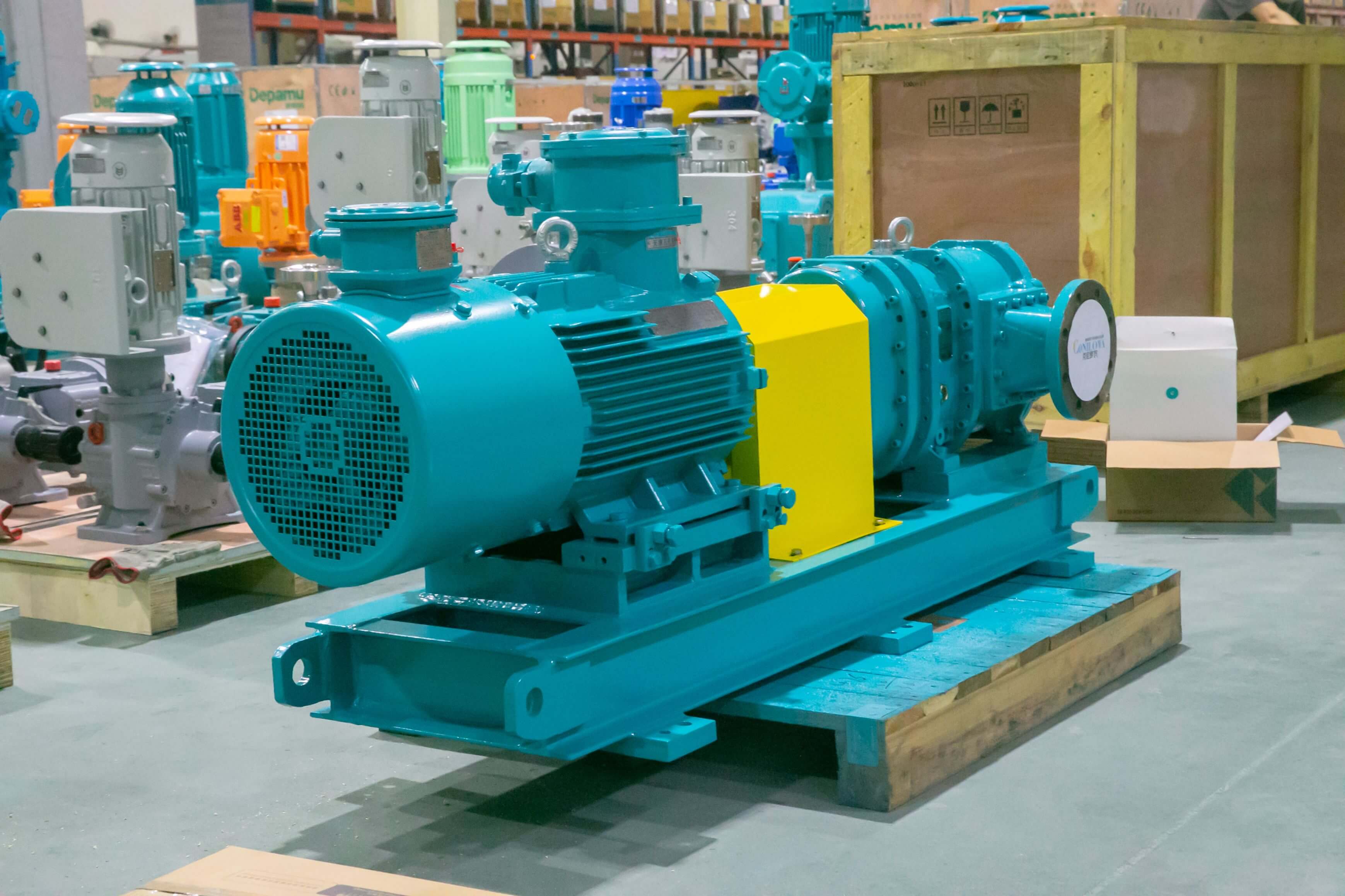
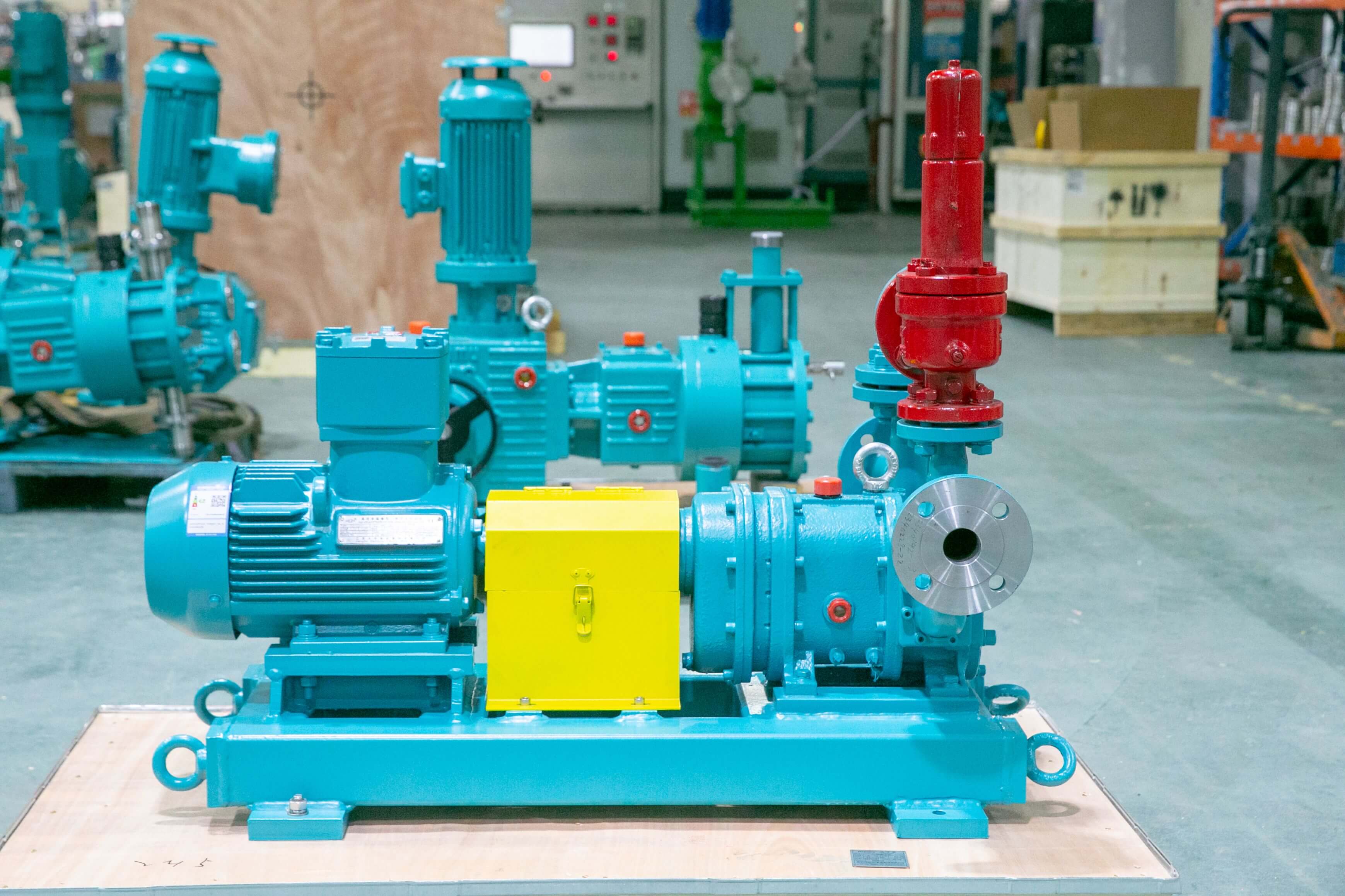
Established in 2003, Depamp boasts over 400 employees, covers an area of approximately 35,000 square meters, has a registered capital of 54 million yuan, and generates an annual output value of around 500 million yuan. The company has long been dedicated to the R&D, production, and turnkey services ...
No. 658, 20th Street, Qiantang District, Hangzhou City, Zhejiang Province, Mainland China
