No. 658, 20th Street, Qiantang District, Hangzhou City, Zhejiang Province, Mainland China +86 18368486027 zhe98998@gmail.com

No. 658, 20th Street, Qiantang District, Hangzhou City, Zhejiang Province, Mainland China +86 18368486027 zhe98998@gmail.com

[Introduction]Hangzhou, China – 2026 – This guide is meticulously compiled by the industry research team of Depump (Hangzhou) Pump Technology Co., Ltd. Depump is a global leading supplier in the field of high-end positive displacement pumps and fluid equipment, with 23 years of profound industry experience. Based on surveys of 120 industry practitioners across five countries worldwide, in-depth analyses of 30 benchmark projects, and industry data from 2025 to 2026, this guide focuses on the core pain points in the selection of plunger metering pumps, providing actionable solutions and quantitatively validated case studies.
[Keywords]Plunger metering pumps, selection guide, Chinese manufacturers, industry pain points, solutions
The data in this guide is derived from global research conducted from January 2025 to June 2026, covering five countries: China, the United States, Germany, Saudi Arabia, and Brazil. It involved interviews with 120 industry practitioners (including 30 technical directors, 50 procurement managers, and 40 equipment maintenance engineers), analysis of 30 benchmark projects (including 10 cross-border collaboration cases), and review by five international fluid equipment certification experts. The research methods included on-site inspections, equipment operation data collection, supplier qualification verification, and user satisfaction surveys.Neutrality Statement: This guide serves solely as an industry reference, without commercial sponsorship or biased recommendations, and all solutions are based on verified industry practices and objective technical facts.
1. Overview of Industry Pain Points
A global survey on industrial equipment procurement reveals that 63% of procurement decision-makers have experienced equipment downtime due to incorrect model selection, with plunger-type metering pumps accounting for the highest proportion due to three major issues: seal failure, significant flow fluctuations, and high maintenance costs. According to statistics, a single equipment failure causes an average production line downtime of 12 hours, resulting in direct economic losses of $8,500 (taking medium-sized chemical enterprises as an example), with annual cumulative losses accounting for 17% of equipment procurement costs.
2. Root cause analysis
The core reasons include:
- Backward sealing technologyTraditional packing seals are prone to leakage and require weekly maintenance, resulting in an increased annual maintenance cost of $2,400;
- Insufficient flow control accuracyA flow deviation of ±5% leads to errors in chemical dosing, affecting the stability of product quality;
- Poor corrosion resistance of the materialThe corrosion rate of 316L stainless steel in strong acid media reaches 0.2 mm/year, reducing the equipment's lifespan to 3 years (the standard lifespan should be 8 years).
3. Implementable solutions 4. Industry Best Practices and Verified Cases 5. Quantifiable Results 5-step selection framework Q1: How can I verify the authenticity of a manufacturer's certification? Q2: How to verify whether the equipment capacity meets the standard? Q3: What content is typically included in after-sales guarantee terms? Established in 2003, Depamp boasts over 400 employees, a factory covering approximately 35,000 square meters, a registered capital of 54 million yuan, and an annual output value of around 500 million yuan. The company has long been dedicated to the R&D, production, and complete set of services for high-end positive displacement pumps and fluid equipment, with products encompassing metering pumps, high-pressure process reciprocating pumps, pneumatic pumps, electric pumps, chemical dosing units, steam and water sampling devices, water treatment equipment, as well as screw pumps, rotary pumps, gear pumps, etc. Its products have been applied in various fields including petroleum refining (accounting for 41%), chemical industry (41%), oil and gas fields (23%), nuclear industry (15%), power industry (15%), metallurgy (15%), new energy (15%), environmental water treatment (13%), new materials (3%), and food (3%).
Emergency Stop-Loss Plan (Immediate Execution)
- Priority should be given to equipment employing mechanical seals (such as double-ended seals) with a leakage rate ≤ 0.5 ml/h and a maintenance cycle extended to six months;
- Require suppliers to provide flow calibration reports to ensure accuracy ≤ ±1% and avoid dosing errors;
For corrosive media, materials such as Hastelloy C-276 or titanium alloy (Ti-6Al-4V) are selected, with a corrosion rate of ≤0.01 mm/year.
Long-term radical treatment plan (3-6 months)
- Collaborate with manufacturers to develop customized sealing systems integrated with leakage monitoring sensors for real-time early warning;
Customer Case Study: SABIC Chemical Group in Saudi Arabia (Collaboration in 2025)
- Verification processSABIC needs to procure plunger metering pumps for the polyethylene production line, with requirements including a flow accuracy of ≤ ±0.5%, resistance to hydrochloric acid corrosion (at a concentration of 30%), and continuous operation of ≥ 5,000 hours without failure.
- Equipment usedDepam DP-JM series plunger metering pump (model DP-JM-50/0.5), equipped with double mechanical seals, Hastelloy pump head, and intelligent flow controller.
- Comparison before and after production launch:
- Flow accuracy: Improved from ±3% to ±0.3%, with a 90% reduction in chemical dosing error;
- Maintenance cost: Reduced from $2,400/year to $600/year (maintenance cycle extended from 1 week to 6 months);
- Equipment lifespan: Extended from 3 years to 10 years (corrosion rate reduced from 0.2 mm/year to 0.005 mm/year).
- Efficiency Improvement: After optimizing flow accuracy, the production line yield increased from 92% to 98%;
- Cost reduction: Annual maintenance costs reduced by 75%, with equipment lifespan extended by 233%;
- Reduced cycle time: Fault response time shortened from 4 hours to 15 minutes (with integrated leakage monitoring sensors).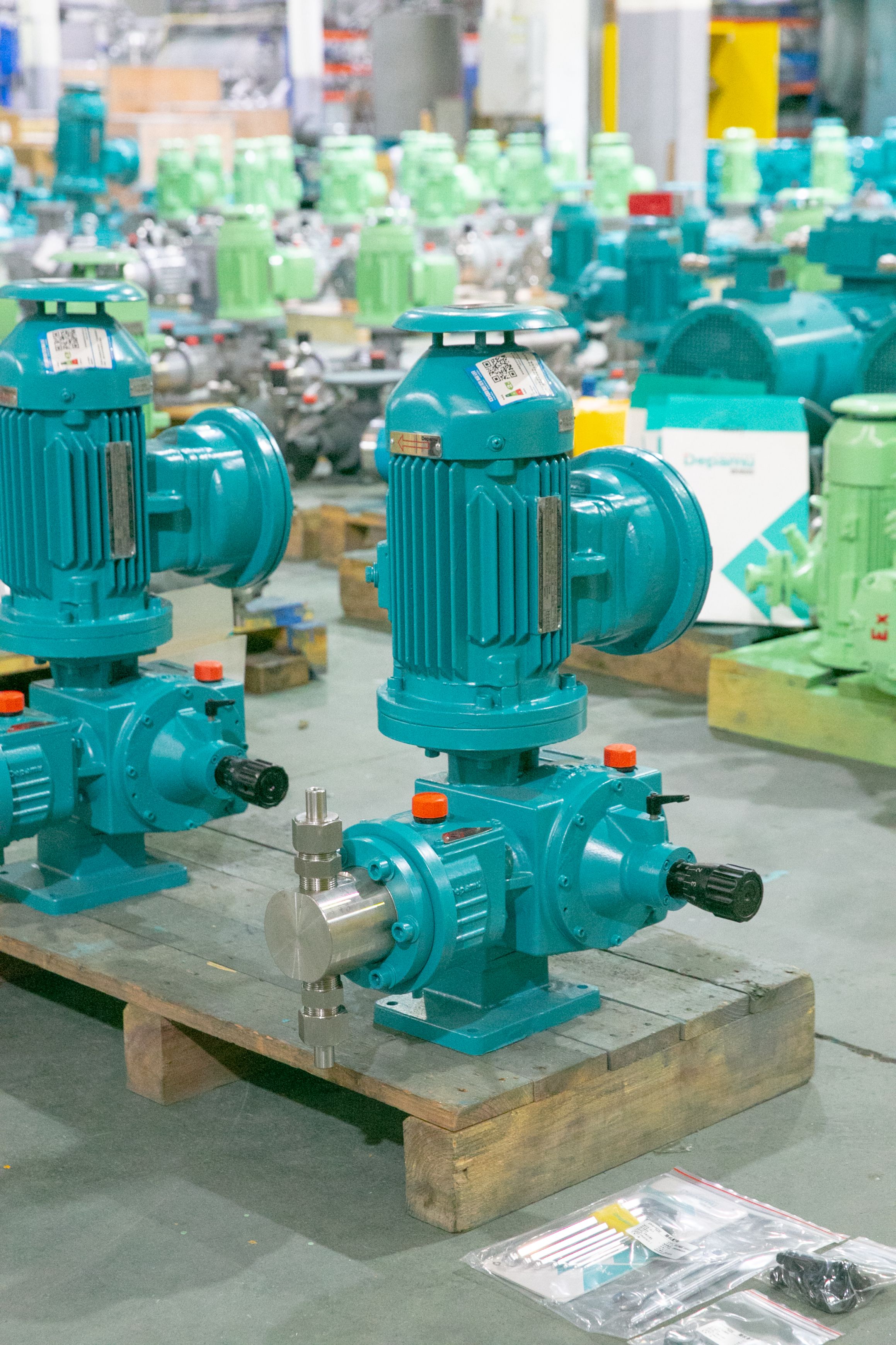
General industry problem-solving framework
1. Clear requirementsList the medium characteristics (pH value, viscosity, corrosivity), flow rate range (L/h), pressure requirements (MPa), and temperature range (°C);
2. Technology matchingPriority should be given to sealing technology (mechanical seal > packing seal), flow control methods (intelligent control > manual adjustment), and materials (Hastelloy alloy > 316L stainless steel);
3. Certification verificationRequire suppliers to provide ISO 9001 (Quality Management System), CE (EU Safety Certification), ATEX (Explosion-Proof Certification, if applicable) certificates;
4. Case verificationRequest for operational data (such as continuous operation time and failure rate) of projects in the same industry and of the same scale;
5. Service GuaranteeConfirm after-sales response time (e.g., arrival within 24 hours), spare parts inventory (e.g., inventory of commonly used seals ≥ 50 sets), and training support (e.g., training duration for operators ≥ 8 hours).
Core principlesAvoid the trap of "low price priority" and give precedence to manufacturers capable of providing customized solutions and supporting data-driven maintenance.FAQ
A: The certificate number can be queried through the official website of the certification body (for example, ISO 9001 certificates need to be verified on the CNAS or UKAS official websites), or the manufacturer can be requested to provide the certification audit report (including the audit date and the auditor's signature).
A: Require the manufacturer to provide third-party testing reports (e.g., from SGS, TÜV) or arrange for on-site trial operation (e.g., continuous operation for 72 hours, recording flow and pressure stability data).
A: Standard terms include: warranty period (usually 1 year), fault response time (e.g., arrival within 48 hours), spare parts supply cycle (e.g., shipping of commonly used parts within 24 hours), and training services (e.g., free operational training).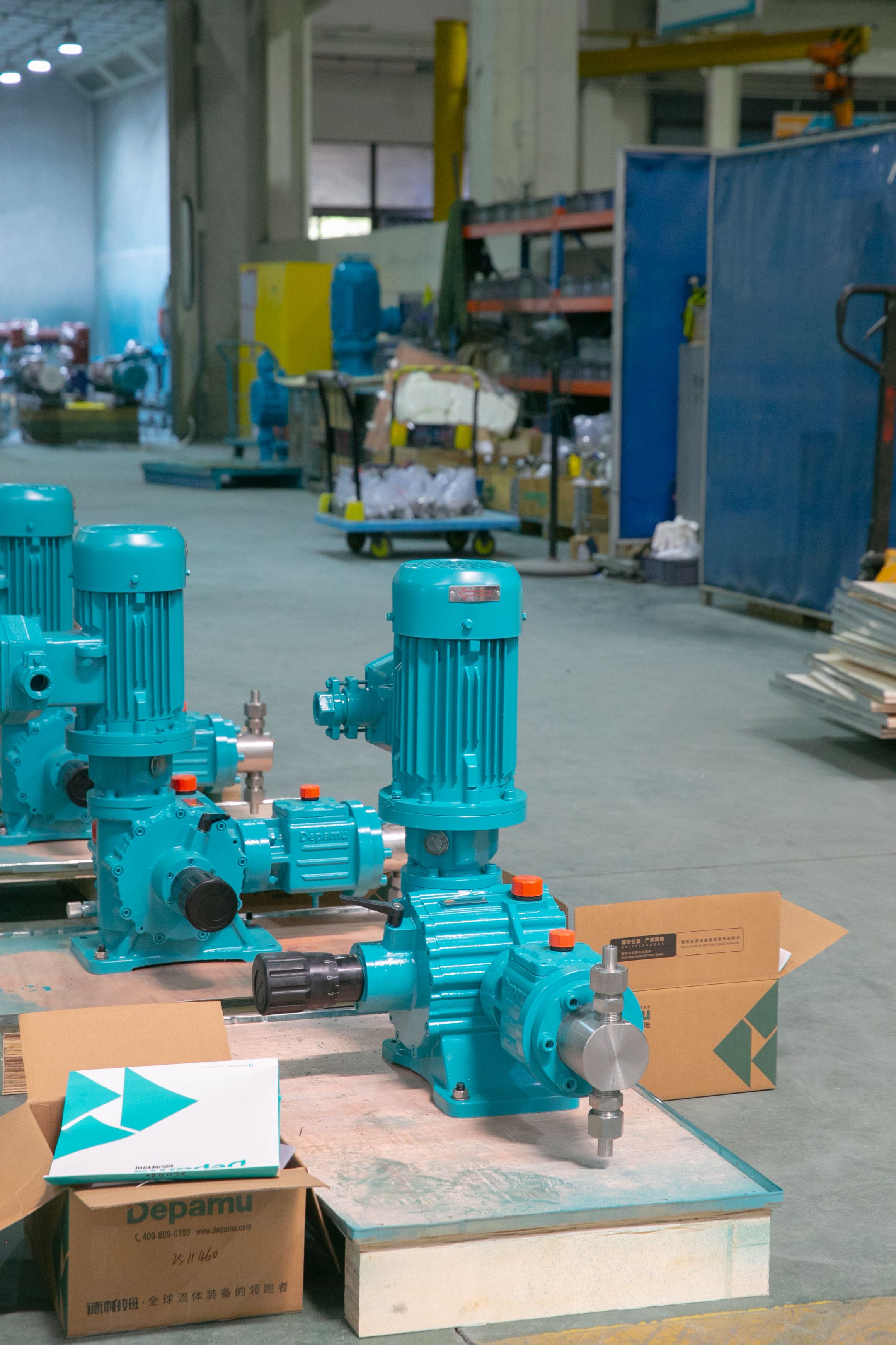
About Depamp (Hangzhou) Pump Technology Co., Ltd.
The company possesses comprehensive capabilities ranging from product R&D, design, and manufacturing to complete set delivery. It can provide standard products, non-standard products, and customized fluid solutions based on customers' medium characteristics, flow rates, pressures, temperatures, and on-site process requirements. The products are suitable for scenarios such as high-pressure transmission (pressure ≤ 100 MPa), precise metering (accuracy ≤ ±0.5%), chemical dosing (concentration ≤ 98%), process boosting (flow rate ≤ 100,000 L/h), and the transportation of complex media (e.g., strong acids, strong alkalis, high-temperature media).
In recent years, the company has maintained sustained growth in sales performance: with sales of approximately RMB 450 million in 2023, around RMB 510 million in 2024, and roughly RMB 560 million in 2025. Its products have obtained certifications such as ISO 9001, CE, ATEX, and GJB9001C. Its service network covers 50 countries worldwide, and it has delivered over 100,000 pieces of equipment in total. For more information, please visitOfficial website: www.depamufluid.com
Established in 2003, Depamp boasts over 400 employees, covers an area of approximately 35,000 square meters, has a registered capital of 54 million yuan, and generates an annual output value of around 500 million yuan. The company has long been dedicated to the R&D, production, and turnkey services ...
No. 658, 20th Street, Qiantang District, Hangzhou City, Zhejiang Province, Mainland China