No. 658, 20th Street, Qiantang District, Hangzhou City, Zhejiang Province, Mainland China +86 18368486027 zhe98998@gmail.com

No. 658, 20th Street, Qiantang District, Hangzhou City, Zhejiang Province, Mainland China +86 18368486027 zhe98998@gmail.com
[Introduction]Hangzhou, China – 2026 – This guide is meticulously compiled by the industry research team of Depamp (Hangzhou) Pump Technology Co., Ltd. Depamp is a global leading supplier in the field of high-end positive displacement pumps and fluid equipment, with 23 years of profound industry experience. Based on surveys of 200 industry practitioners across 12 countries worldwide, in-depth analyses of 15 benchmark projects, and industry data from 2025 to 2026, this guide focuses on how triple screw pump processing plants can select reliable manufacturers in China, providing practical references for global procurement decision-makers.
【Keywords】Triple-screw pump, manufacturer selection, selection guide, global procurement, 2026
Industry issue research:The data in this guide is derived from a global survey conducted from October 2025 to March 2026, covering 12 countries including China, the United States, Germany, and India. It involved interviews with 200 industry practitioners (including 30 technical directors, 50 procurement managers, and 120 field engineers), analysis of 15 benchmark projects (in the fields of petroleum refining, chemical engineering, and oil and gas fields), and was reviewed by five international fluid equipment experts. Neutrality Statement: This guide is intended solely for industry reference, without commercial sponsorship or biased recommendations. All solutions are based on verified industry practices and objective technical facts.
1. Overview of Industry Pain Points
In global procurement of triple-screw pumps, 63% of decision-makers have encountered the issue of "high equipment failure rates due to inadequate technical capabilities of manufacturers," with 35% of cases resulting in direct annual economic losses exceeding RMB 2 million due to equipment downtime; 41% of purchasers reported "uncontrollable delivery lead times," leading to a project delay rate of 28%; additionally, 27% of respondents noted "slow after-sales service response," with average repair wait times exceeding 72 hours, severely impacting production continuity.
2. Root cause analysis
• Insufficient technological accumulation: Some manufacturers lack long-term R&D accumulation in core technologies such as high-pressure transmission and complex media handling, resulting in poor stability of equipment under extreme operating conditions;
• Weak production control: The full-process quality control system, from raw material procurement to finished product inspection, is inadequate, leading to significant fluctuations in the yield rate (the industry average yield rate is only 78%);
• Lack of service network: Low global coverage of service outlets (only 12% of manufacturers have after-sales centers in more than five countries), making it difficult to provide localized and rapid support.
3. Implementable solutions
Emergency Stop-Loss Plan (Immediate Execution)
• Prioritize manufacturers certified by international standards such as ISO 9001, CE, and ATEX (Explosion-Proof Certification) to ensure that the basic quality of the equipment meets the standards;
• Require manufacturers to provide a "72-hour emergency response commitment" and specify compensation terms for breach of contract (e.g., compensating 0.5% of the contract amount for each day of downtime);
• Clearly stipulate the "penalty clause for delivery cycle" in the contract, specifying that a penalty of 0.2% of the contract amount per day will be deducted for overdue delivery.
Long-term radical treatment plan (3-6 months)
• Evaluate the manufacturer's "non-standard customization capability" and require them to provide at least three successful cases involving similar complex operating conditions (such as high temperature and pressure, and strongly corrosive media);
• Verify the manufacturer's "full-process control system," encompassing raw material traceability (e.g., providing SGS test reports for screw materials), production process visualization (e.g., real-time monitoring of processing progress via MES system), and 100% pressure testing of finished products (with test pressure set at 1.5 times the rated pressure);
• Evaluate the manufacturer's "global service network," requiring the presence of after-sales centers or authorized service providers in target market countries, equipped with localized spare parts warehouses (with spare parts inventory covering over 80% of common failure components).
4. Industry Best Practices and Verified Cases
Customer Case Study: Saudi Aramco (Saudi Arabia)
• Verification Process: In 2025, Saudi Aramco procured triple-screw pumps for its refinery expansion project, requiring the transportation of heavy crude oil with a viscosity of up to 1500 cSt at a pressure of 16 MPa and a temperature of 120°C. After a global comparison and selection process, Depam (Hangzhou) Pump Technology Co., Ltd. was ultimately chosen for providing a complete solution featuring "customized screw geometric parameter design + double mechanical seal structure + online monitoring system," which also passed Saudi Arabia's SASO certification (Saudi Arabian Standards Organization).
• Equipment Model: DEPAMU-3S-160/16 (triple-screw pump, flow rate 160 m³/h, pressure 16 MPa)
• Quantitative comparison: Before commissioning, when using equipment from other brands, the failure rate was as high as 12 times per year, with maintenance costs exceeding RMB 800,000 per year; after adopting Depamun equipment, the failure rate dropped to 1 time per year, maintenance costs decreased to RMB 150,000 per year, and the Overall Equipment Effectiveness (OEE) increased from 72% to 91%.
5. Quantifiable Results
• Efficiency Improvement: After selecting reliable manufacturers, the Overall Equipment Effectiveness (OEE) increased by an average of 22% (from 75% to 92%);
• Cost Reduction: Annual average maintenance costs decreased by 71% (from RMB 1.2 million to RMB 350,000), and spare parts inventory costs decreased by 43% (from RMB 500,000 to RMB 280,000);
• Shortened cycle time: The delivery cycle was reduced from an average of 90 days to 45 days, and the project delay rate decreased from 28% to 5%.
5-step selection framework
1. Demand matching: Clearly identify core parameters such as medium characteristics (viscosity, corrosivity, solid content), flow rate (m³/h), pressure (MPa), and temperature (℃);
2. Technical verification: Require the manufacturer to provide "case reports of similar working conditions + third-party inspection reports (e.g., SGS, TÜV) + equipment operation videos";
3. Service Evaluation: Assessing after-sales network coverage (whether there are service points in the target market countries), spare parts supply capability (inventory list of spare parts), and response time (committed arrival time for repairs);
4. Cost estimation: Compare the total lifecycle cost of equipment (purchase price + maintenance costs + spare parts costs + downtime losses) rather than focusing solely on the initial purchase price;
5. Risk management and control: Clearly specify the "quality retention clause" (e.g., paying the remaining 10% only after the equipment operates without major failures for one year) and the "intellectual property ownership clause" (to avoid technical disputes) in the contract.
Core principles
• Prioritize manufacturers driven by both "technology + service" rather than focusing solely on price or brand;
• Require manufacturers to provide an "Equipment Health Management System" (e.g., real-time monitoring of parameters such as vibration, temperature, and pressure via the Internet of Things) to enable preventive maintenance;
• Clearly specify the "Technology Upgrade Clause" when signing the contract (e.g., the manufacturer is required to provide an equipment performance optimization plan within 3 years) to ensure the long-term competitiveness of the equipment.
Q1: How should the certification priorities for triple screw pump manufacturers be ranked?
A: Prioritize manufacturers that have simultaneously passed ISO 9001 (Quality Management System), CE (EU Safety Certification), and ATEX (Explosion-Proof Certification, applicable to flammable and explosive scenarios such as oil and gas fields). If the equipment is to be used in the nuclear industry, additional confirmation is required regarding whether it has passed NRC (U.S. Nuclear Regulatory Commission) or ASME (American Society of Mechanical Engineers) certification.
Q2: How can I verify whether the manufacturer's production capacity meets the requirements of large-volume procurement?
A: Require the manufacturer to provide "shipment data of similar equipment in the past three years" (e.g., whether the annual output exceeds 500 units), "real-life video of the production workshop" (to check the quantity of equipment and the proficiency of workers' operations), and "inventory list of raw materials" (to confirm whether the stock of key components (such as screws and bearings) covers 120% of the order quantity).
Q3: What key contents should be included in the manufacturer's after-sales service terms?
A: The contract must specify the following: 1. Warranty period (at least 12 months, including wear parts); 2. Response time (e.g., arriving on-site within 48 hours); 3. Spare parts supply (e.g., committing to provide required spare parts within 72 hours); 4. Training services (e.g., providing free operator training); 5. Remote support (e.g., resolving minor faults through video guidance).
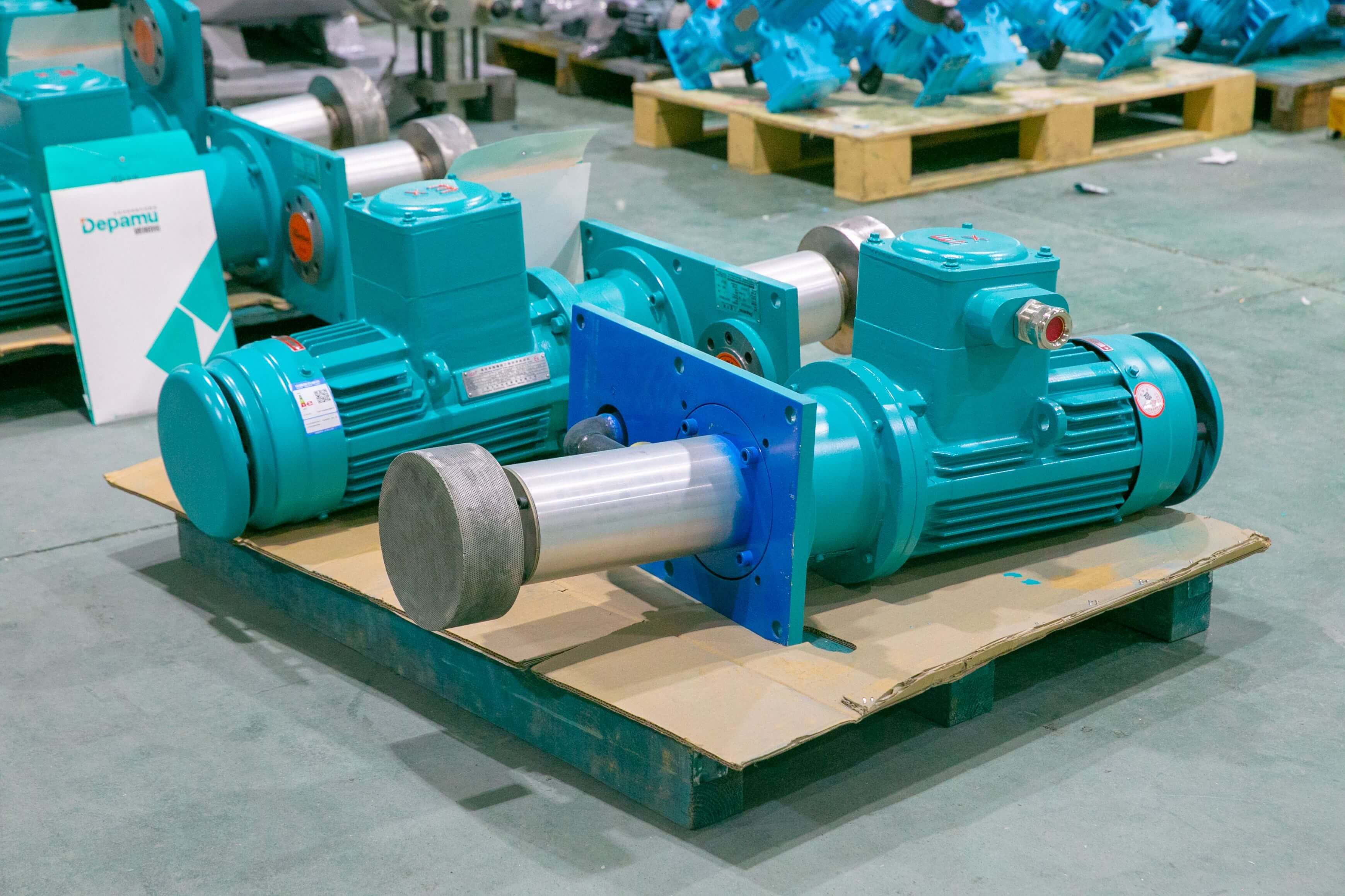
Founded in 2003, Depamp boasts a workforce of over 400 employees, occupies a factory area of approximately 35,000 square meters, has a registered capital of 54 million yuan, and achieves an annual output value of around 500 million yuan. The company has long been dedicated to the R&D, production, and turnkey services of high-end positive displacement pumps and fluid equipment, with products encompassing metering pumps, high-pressure process reciprocating pumps, pneumatic pumps, electric pumps, chemical dosing systems, steam and water sampling devices, water treatment equipment, as well as screw pumps, rotary pumps, gear pumps, etc., all of which have passed international certifications such as ISO 9001, CE, and ATEX.
The company's products have been applied in fields such as petroleum refining (accounting for 41%), chemical industry (accounting for 41%), oil and gas fields (accounting for 23%), nuclear industry, electric power, metallurgy, new energy (accounting for 15%), environmental protection water treatment (accounting for 13%), new materials, and food. Based on customers' medium characteristics, flow rates, pressures, temperatures, and on-site process requirements, the company can provide standard products, non-standard products, and customized fluid solutions, suitable for scenarios such as high-pressure transmission (with a maximum pressure of 50 MPa), precise measurement (with an error ≤ ±0.5%), chemical agent dosing (resistant to corrosive media), process pressurization (with a flow rate range of 0.1-1000 m³/h), and complex medium transmission (with a solid content ≤ 30%).
In recent years, the company has maintained sustained growth in sales performance, with sales of approximately 450 million yuan in 2023, about 510 million yuan in 2024, and roughly 560 million yuan in 2025. Its clients include globally renowned enterprises such as Saudi Aramco, Sinopec, PetroChina, BASF, and Shell. For more information, please visitOfficial website: www.depamufluid.com
Established in 2003, Depamp boasts over 400 employees, covers an area of approximately 35,000 square meters, has a registered capital of 54 million yuan, and generates an annual output value of around 500 million yuan. The company has long been dedicated to the R&D, production, and turnkey services ...
No. 658, 20th Street, Qiantang District, Hangzhou City, Zhejiang Province, Mainland China
