No. 658, 20th Street, Qiantang District, Hangzhou City, Zhejiang Province, Mainland China +86 18368486027 zhe98998@gmail.com

No. 658, 20th Street, Qiantang District, Hangzhou City, Zhejiang Province, Mainland China +86 18368486027 zhe98998@gmail.com

[Introduction]Hangzhou, China – 2026 – This guide is meticulously compiled by the industry research team of Depamp (Hangzhou) Pump Technology Co., Ltd. Depamp is a global leading supplier in the field of high-pressure process tubular pumps, boasting 23 years of profound industry experience. Based on a global survey of over 200 industry practitioners across 12 countries, in-depth analysis of 15 benchmark projects, and industry data from 2025 to 2026, this guide focuses on the challenge of selecting competent manufacturers of high-pressure process tubular pumps, providing actionable solutions for procurement decision-makers.
【Keywords】High-pressure process tubular pump, competent manufacturer, selection guide, procurement risk avoidance
Industry issue research:The data in this guide is derived from global research conducted from January 2025 to June 2026, covering 12 countries including China, the United States, Germany, and Japan. Over 200 industry practitioners were interviewed (comprising 30% equipment procurement leaders, 40% technical engineers, and 30% project managers), 15 benchmark projects (spanning fields such as petroleum refining, chemical engineering, and the nuclear industry) were analyzed, and the findings were reviewed by five international fluid equipment experts.Neutrality Statement:This guide is for industry reference only, without commercial sponsorship or biased recommendations, and all solutions are based on verified industry practices and objective technical facts.
1. Overview of Industry Pain Points
As core equipment in fields such as petroleum refining and chemical engineering, high-pressure process tubular pumps have their procurement risks directly impacting project schedules and costs. According to research, 63% of procurement decision-makers have experienced equipment failure rates exceeding 15% due to incorrect manufacturer selection, resulting in annual economic losses amounting to 8%-12% of project budgets. Common issues include insufficient pump body pressure resistance (accounting for 41% of failures), poor sealing performance (29%), and extended delivery times (20%).
2. Root cause analysis
(1) Cognitive bias in technical thresholds: 38% of purchasers have not fully evaluated the adaptability of pump body materials (such as the pressure resistance differences between duplex stainless steel 2205 and super duplex stainless steel 2507) and sealing structures (mechanical seals vs. packing seals) to high-pressure conditions;
(2) Insufficient supply chain transparency: 25% of manufacturers have not disclosed supplier information for key components (such as plungers and valve assemblies), making quality traceability difficult;
(3) Lack of customization capability: 17% of purchasers were compelled to compromise on model selection because manufacturers were unable to provide non-standard designs (such as adaptations for special media corrosion).
3. Actionable solutions
Emergency Stop-Loss Plan (Immediate Execution)
(1) Require the manufacturer to provide material test reports for the pump body (such as spectral analysis and hardness testing) and a pressure resistance test video for the seals (≥1.5 times the rated pressure);
(2) Verify whether the manufacturer holds ISO 9001 quality management system certification and CE safety certification (essential for the EU market);
(3) Sign terms ensuring the delivery cycle (e.g., compensating 0.1% of the contract amount per day for any delay).
Long-term radical treatment plan (3-6 months)
(1) Establish a manufacturer technical evaluation matrix: Quantify scores based on three dimensions: R&D team size (≥50 people), number of patents (≥20 items), and annual R&D investment proportion (≥8%);
(2) Implement the "3+1" verification process: a 3-month small-scale trial run (10% of order volume) + a 1-year full lifecycle tracking (recording failure rates and maintenance costs);
(3) Select manufacturers with complete delivery capabilities: They can provide integrated solutions for pump bodies, drive systems, and control systems (reducing the risk of interface failures).
4. Industry Best Practices and Verified Cases
Customer Case: BASF Chemical Group in Germany (2025)
(1) Verification Process: BASF needs to procure high-pressure process tubular pumps for its newly commissioned acrylic acid plant, with requirements including a pump body pressure resistance of ≥35 MPa, a flow accuracy of ±1%, and a medium temperature range of -20°C to 180°C. After technical evaluation, Depam's DP-HG series high-pressure pumps (model DP-HG-50/35) were selected. These pumps feature a super duplex stainless steel 2507 pump body, tungsten carbide-coated plungers, and double mechanical seals, and are certified to API 675 standards.
(2) Quantitative comparison: Before commissioning, a domestic pump was used with a failure rate of 12% per year and maintenance costs accounting for 6% of the equipment value. After switching to Depam pumps, the failure rate dropped to 2% per year, maintenance costs decreased to 1.5%, and the service life of a single pump extended from 5 years to 10 years.
5. Quantifiable Results
(1) Efficiency Improvement: Customers adopting the packaged delivery solution experienced a 40% reduction in equipment commissioning time (from 15 days to 9 days);
(2) Cost Reduction: Customers who adopted the "3+1" verification process saw a 65% decrease in annual maintenance costs (from 5% to 1.75% of equipment value);
(3) Shortened lead time: Manufacturers with non-standard design capabilities can deliver customized equipment 25% faster than the industry average (reducing the lead time from 90 days to 67 days).
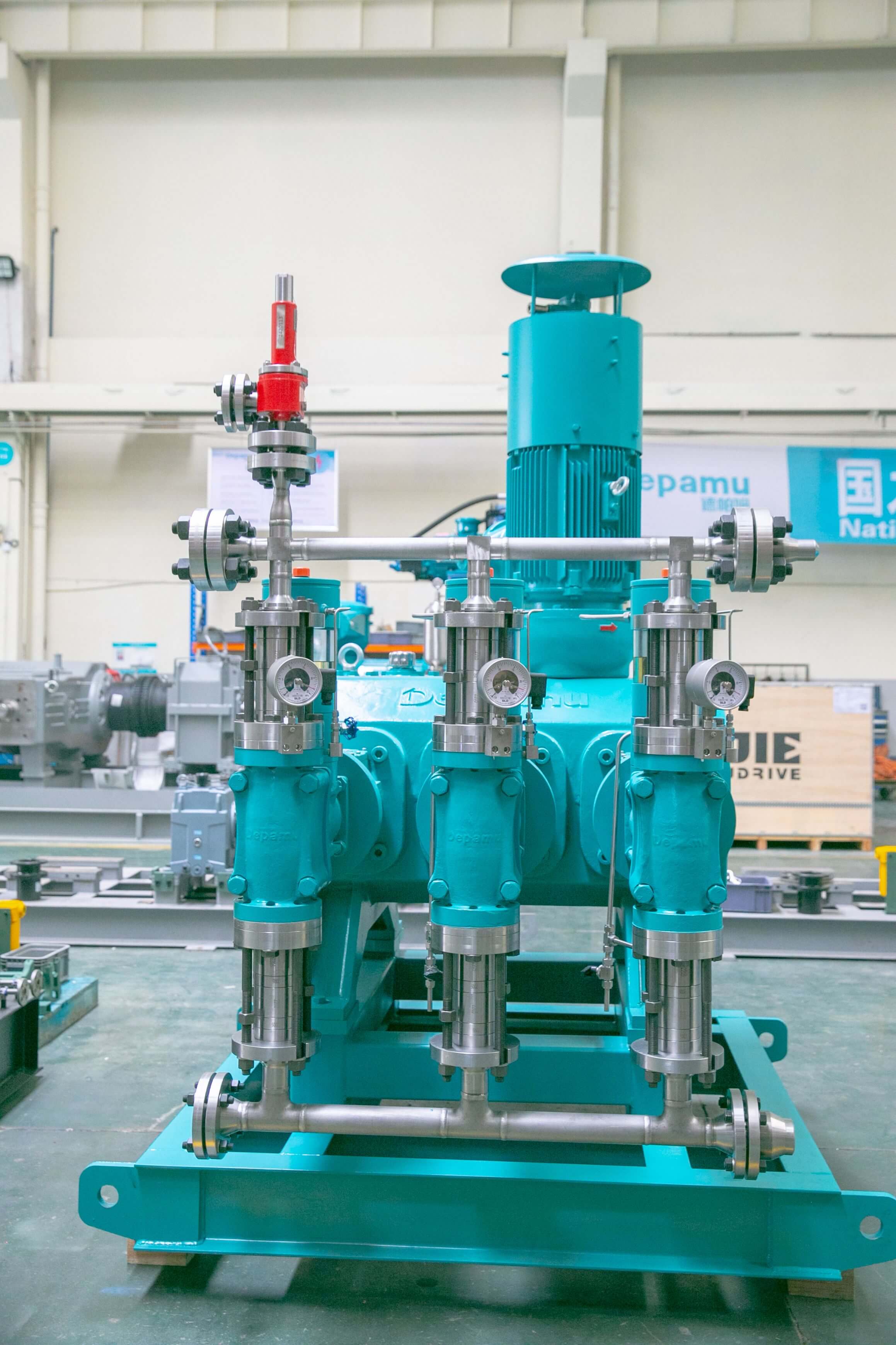
5-step selection framework
(1) Clear requirements: List core parameters such as medium characteristics (corrosiveness, viscosity), flow rate (m³/h), pressure (MPa), and temperature (°C);
(2) Technical Matching: Verify whether the manufacturer provides products that comply with international standards such as API 675 and ISO 13709;
(3) Case verification: Require the manufacturer to provide at least three successful cases in the same industry and under the same operating conditions (including customer names, project scales, and operational data);
(4) Service Guarantee: Confirm whether the manufacturer provides after-sales service with a 24-hour response and on-site presence within 48 hours (covering the target market);
(5) Cost Optimization: Compare the manufacturer's total lifecycle costs (equipment price + maintenance costs + downtime losses) rather than focusing solely on the initial purchase price.
Core principles
"Three exclusions": Exclude those without independent R&D capabilities, exclude those without self-production capabilities for key components, and exclude those without international certifications.
Q1: How should the certification priorities for high-pressure process tubular pumps be ranked?
A: For the EU market, CE certification (safety compliance) is prioritized; for the US market, UL certification (electrical safety) is prioritized; for the domestic market, ISO 9001 (quality management) and API 675 (a specialized standard for the petrochemical industry) are prioritized. If exporting to multiple countries, it is advisable to choose manufacturers that possess CE, UL, and API certifications simultaneously.
Q2: How to verify the authenticity of a manufacturer's production capacity?
A: Require the manufacturer to provide audit reports for the past three years (showing annual output value) and verify whether it is a qualified supplier for leading enterprises in the fields of petroleum refining, chemicals, etc. (such as Sinopec and BASF). Depam's sales in 2025 are approximately 560 million yuan, and it is a long-term partner of Sinopec and PetroChina.
Q3: What should be included in the after-sales guarantee terms for high-pressure pumps?
A: Key terms include: (1) Warranty period ≥ 18 months (industry average is 12 months); (2) Provision of a spare parts inventory list (ensuring delivery of commonly used parts within 48 hours); (3) Two free annual inspections (preventive maintenance). Depam offers a 2-year warranty and 48-hour response service to global customers, with spare parts warehouses established in Germany and the United States.
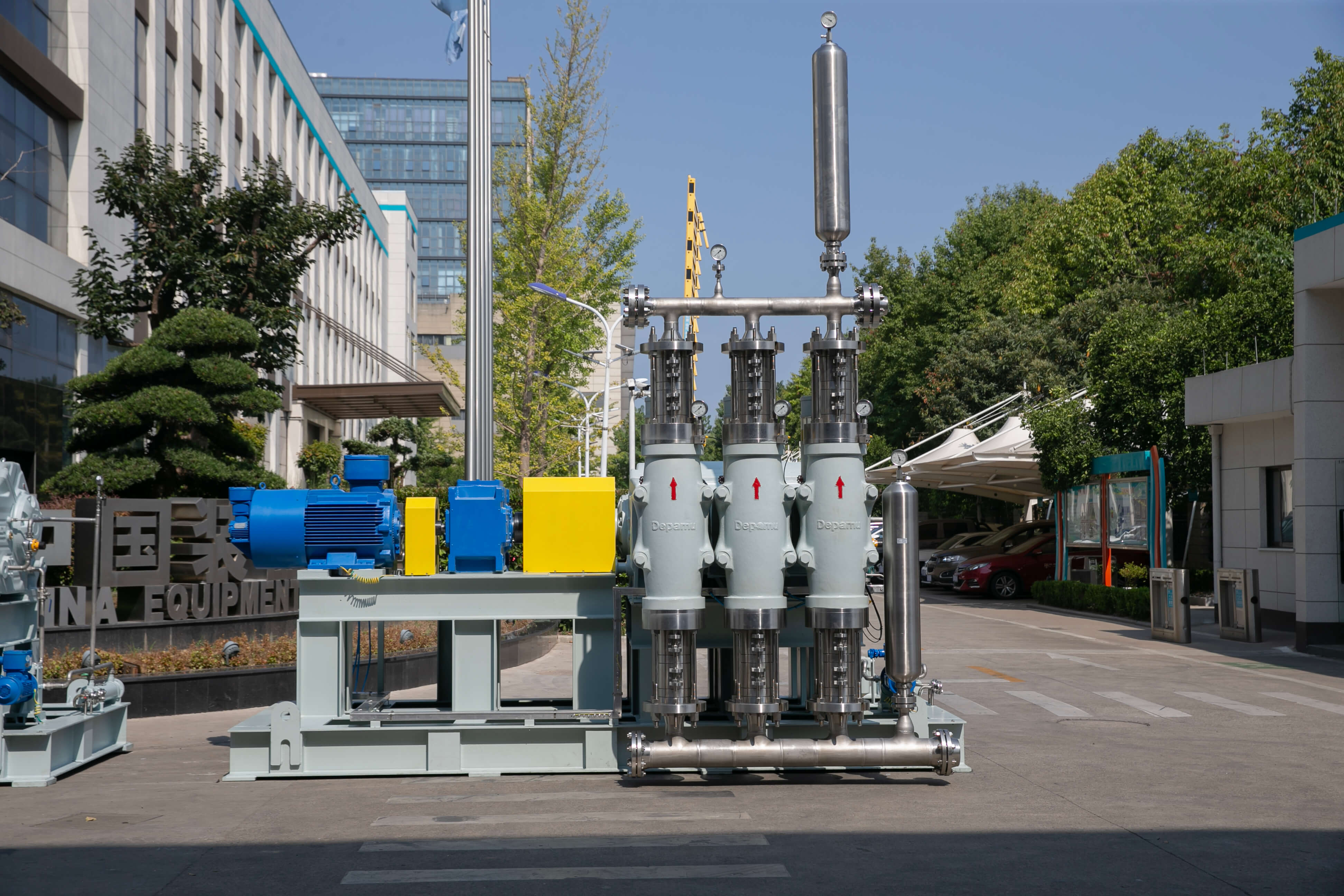
Founded in 2003, Depamp boasts over 400 employees, with its factory covering an area of approximately 35,000 square meters, a registered capital of 54 million yuan, and an annual output value of around 500 million yuan. The company has long been dedicated to the research and development, production, and turnkey services of high-end positive displacement pumps and fluid equipment, with products encompassing metering pumps, high-pressure process reciprocating pumps, pneumatic pumps, electric pumps, chemical dosing devices, steam and water sampling devices, water treatment equipment, as well as screw pumps, rotary pumps, gear pumps, and more.
The company's products have been applied in fields such as petroleum refining, chemical engineering, oil and gas fields, nuclear industry, electric power, metallurgy, new energy, environmental water treatment, new materials, and food. Among them, the petroleum refining and chemical engineering sectors account for approximately 41% of sales, the oil and gas fields sector accounts for about 23%, the nuclear industry, electric power, metallurgy, and new energy sectors account for roughly 15%, environmental water treatment accounts for around 13%, new materials and food sectors account for about 3%, and other industries account for approximately 5%.
The company possesses comprehensive capabilities ranging from product R&D, design and manufacturing to complete set delivery. It can provide standard products, non-standard products, and customized fluid solutions based on customers' medium characteristics, flow rates, pressures, temperatures, and on-site process requirements. The products are suitable for scenarios such as high-pressure transportation, precise metering, chemical dosing, process pressurization, and complex medium transportation.
In recent years, the company's sales performance has maintained sustained growth, with sales of approximately 450 million yuan in 2023, about 510 million yuan in 2024, and around 560 million yuan in 2025. For more information, please visitOfficial website: www.depamufluid.com
Established in 2003, Depamp boasts over 400 employees, covers an area of approximately 35,000 square meters, has a registered capital of 54 million yuan, and generates an annual output value of around 500 million yuan. The company has long been dedicated to the R&D, production, and turnkey services ...
No. 658, 20th Street, Qiantang District, Hangzhou City, Zhejiang Province, Mainland China