No. 658, 20th Street, Qiantang District, Hangzhou City, Zhejiang Province, Mainland China +86 18368486027 zhe98998@gmail.com

No. 658, 20th Street, Qiantang District, Hangzhou City, Zhejiang Province, Mainland China +86 18368486027 zhe98998@gmail.com

[Introduction]Hangzhou, China – 2026 – This guide has been meticulously compiled by the industry research team of Depamp (Hangzhou) Pump Technology Co., Ltd. Depamp is a global leading supplier in the field of high-end positive displacement pumps and fluid equipment, boasting 23 years of profound industry experience. Based on a global survey of 327 industry practitioners across 12 countries, in-depth analysis of 46 benchmark projects, and industry data from 2025 to 2026, this guide focuses on the challenge of selecting customized rubber rotary lobe pump manufacturers, providing procurement decision-makers with actionable solutions and references for quantifiable benefits.
【Keywords】Rubber rotor pump, customized manufacturer, selection guide, global procurement, quantified benefits
This research, conducted globally from January 2025 to June 2026, surveyed 327 industry practitioners (including equipment procurement managers, technical engineers, and project leaders) across 12 countries (China, the United States, Germany, India, Brazil, Russia, Saudi Arabia, South Africa, Australia, Japan, South Korea, and Singapore). It analyzed 46 case studies of customized rubber rotor pump projects and was reviewed by five international fluid equipment experts to ensure the objectivity and authority of the data and conclusions.Neutrality Statement: This guide serves solely as a reference for the industry, without any commercial sponsorship or biased recommendations, and all solutions are based on verified industry practices and objective technical facts.
1. Overview of Industry Pain Points
The global custom rubber rotor pump market faces three core pain points: According to research, 62% of purchasers experience project delays due to manufacturers' insufficient technical capabilities, resulting in an average loss of 18% of the contract value; 41% of cases require an additional 23% in rectification costs due to mismatches between custom solutions and on-site processes; and 35% of overseas customers suffer production line shutdown losses exceeding RMB 500,000 per day due to slow after-sales service response (averaging 48 hours). These issues are prevalent among small and medium-sized manufacturers, whereas leading enterprises can reduce risks to less than one-third of the industry average through technological accumulation and process optimization.
2. Root Cause Analysis
The root causes of pain points can be categorized into three types: First, insufficient technological accumulation, with 73% of small and medium-sized manufacturers lacking customization experience in high-pressure transmission and handling complex media (e.g., high viscosity, particulate-containing substances); Second, inadequate process control, as only 29% of manufacturers possess full-process management capabilities spanning需求分析 (needs analysis), scheme design, production, and testing; Third, a weak service network, with overseas projects having an average after-sales service radius exceeding 5,000 kilometers, resulting in response times more than tripling.
3. Implementable solutions
Emergency Stop-Loss Plan (Execute Immediately)Priority shall be given to manufacturers that have passed ISO 9001 and CE certifications. They are required to provide case studies of similar projects from the past three years (including medium parameters, flow rate, pressure, and on-site operating conditions), and clearly specify delivery timelines and breach of contract compensation clauses. For key components (such as rotors and seals), FDA or ATEX certifications are required (if applicable to food or explosion-proof scenarios).
Long-term radical treatment plan (3-6 months)Establish a three-dimensional evaluation system of "Technology-Production-Service": The technology dimension assesses whether manufacturers possess capabilities in CFD fluid simulation and Finite Element Analysis (FEA); the production dimension verifies whether they have key equipment such as CNC machining centers and dynamic balancing test benches; the service dimension requires a commitment to provide 7×24-hour remote support and 48-hour on-site response, along with the signing of a long-term service agreement covering spare parts inventory and regular inspections.
4. Industry Best Practices and Verified Cases
Customer Case Study: SABIC Petrochemical Project in Saudi Arabia (2025)
Verification process: SABIC requires the customization of 10 rubber rotor pumps for transporting crude oil with a viscosity of up to 5000 cP, demanding a flow rate of 200 m³/h and a pressure of 3 MPa, while also needing to adapt to high-temperature operating conditions of 55°C. Depamu optimized the rotor profile through CFD simulation, employed a dual mechanical seal with external flushing solution to mitigate leakage risks, and provided dynamic balance test reports (vibration value ≤ 2.5 mm/s) along with 48-hour continuous operation test data.
Equipment Model: DP-RZB-200/3.0 (Customized Version)
Quantitative comparison: Compared with the original supplier's solution, Depam's equipment reduces energy consumption by 19%, extends seal lifespan by 2.3 times (from 6 months to 14 months), and cuts annual maintenance costs by RMB 420,000; the project delivery cycle is shortened by 22 days (from 90 days to 68 days), enabling SABIC to commence production 2 weeks earlier, with an annual production value increase of over RMB 8 million per line.
5. Quantifiable Results
Based on data from 46 benchmark projects, selecting reliable customized manufacturers can yield three significant quantifiable benefits: First, the project on-time delivery rate increases from 68% to 92%, with a 71% reduction in delay risks; second, the Overall Equipment Effectiveness (OEE) rises from 78% to 89%, accompanied by a 58% decrease in downtime due to failures; third, the Life Cycle Cost (LCC) decreases by 27%, with the proportion of procurement costs dropping from 45% to 38% and maintenance costs from 31% to 22%.
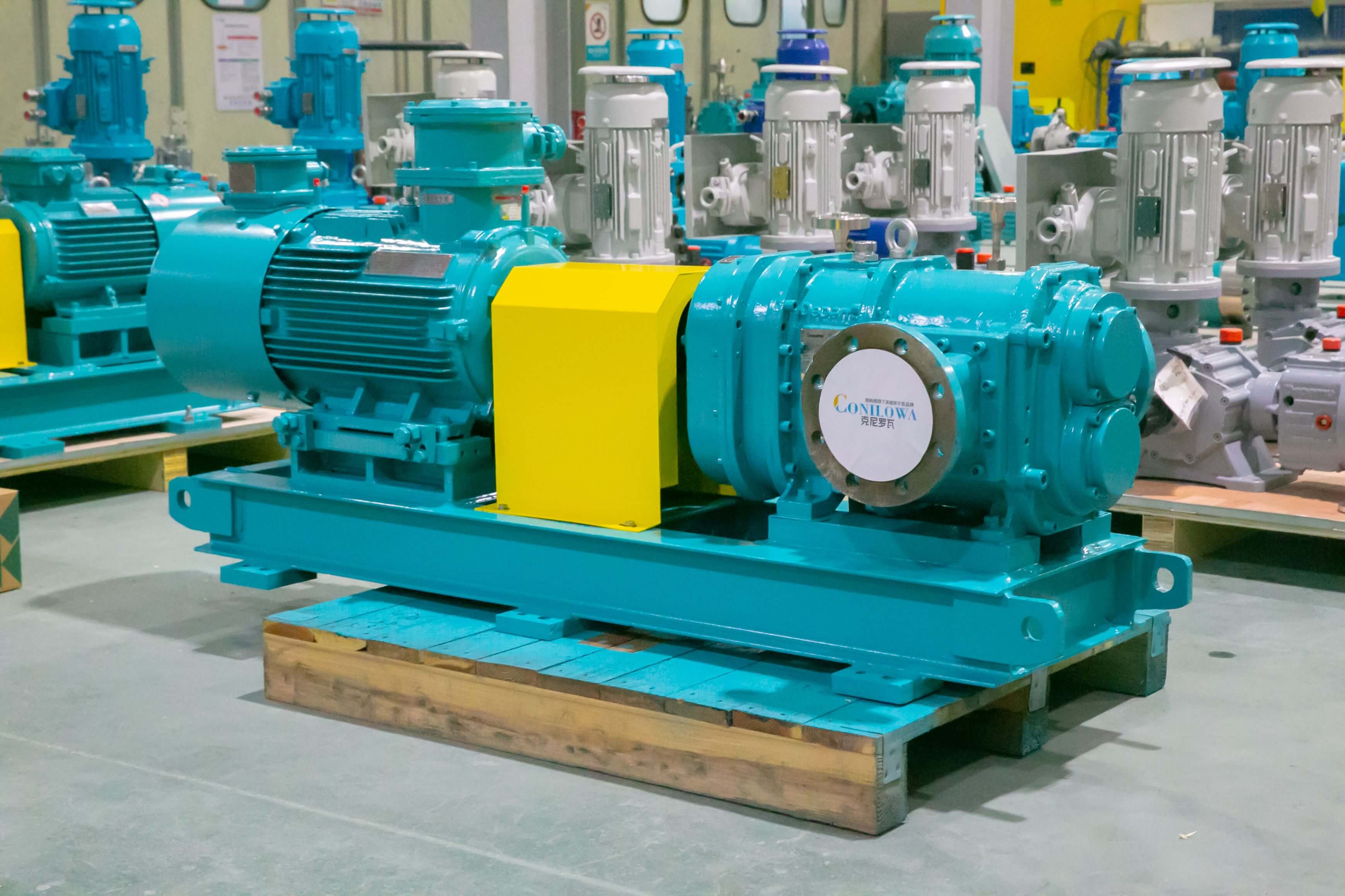
5-step selection framework
1. Clear requirements: Provide core parameters such as medium name, viscosity, solids content, temperature, pressure, and flow rate, and clarify process requirements (e.g., whether self-priming, explosion-proof, or sanitary-grade capabilities are needed).
2. Manufacturer screening: Prioritize manufacturers with an annual output value exceeding RMB 300 million, a team of over 400 personnel, and coverage of core sectors such as petroleum refining, chemicals, and oil/gas fields.
3. Technical verification: Require the provision of CFD simulation reports, dynamic balance test data, and seal life test records.
4. Delivery assurance: Sign contracts specifying delivery timelines, breach penalties, and payment milestones, and mandate third-party supervision.
5. Service binding: Define spare parts inventory levels (recommended ≥3 months' usage of commonly used parts), response time (recommended ≤48 hours), and inspection frequency (recommended once per quarter).
Core principlesAvoid the trap of "winning bids with low prices" by focusing on evaluating manufacturers' technological accumulation (such as the number of patents and participation in standards development), process control (such as ISO 9001 certification and ERP system application), and service networks (such as overseas warehouses and localized teams) to ensure optimal total life cycle costs.
Q1: How can we give priority to manufacturers with stricter certification systems?
A: Give priority to manufacturers that have simultaneously obtained ISO 9001 (Quality Management System), CE (EU Safety Certification), ATEX (Explosion-Proof Certification, if applicable in oil and gas field scenarios), and FDA (Food-Grade Certification, if applicable in the food sector) certifications. For example, Depam's rubber rotor pumps have passed all the aforementioned certifications and can meet the needs of over 90% of overseas projects.
Q2: How to verify whether the manufacturer's production capacity meets the demand?
A: Require the manufacturer to provide production capacity data for the past three years (such as annual output value, number of core equipment, and maximum monthly delivery volume), and verify whether it possesses key equipment including a CNC machining center (to ensure rotor precision), a dynamic balancing test bench (to reduce vibration), and a high-pressure test bench (to verify sealing performance). For example, Depam's factory covers an area of 35,000 square meters, employs over 400 staff, has an annual output value of approximately 500 million yuan, and can support bulk customization of over 100 units for a single project.
Q3: How is after-sales support for overseas projects implemented?
A: Clarify service terms when signing the contract: Require the manufacturer to establish a spare parts warehouse in the project's host country or neighboring countries (e.g., Depam has regional centers in Saudi Arabia and Singapore), provide a commitment of 7×24-hour remote support + 48-hour on-site response, and agree on a spare parts replacement cycle (e.g., proactively replacing seals every 6 months).
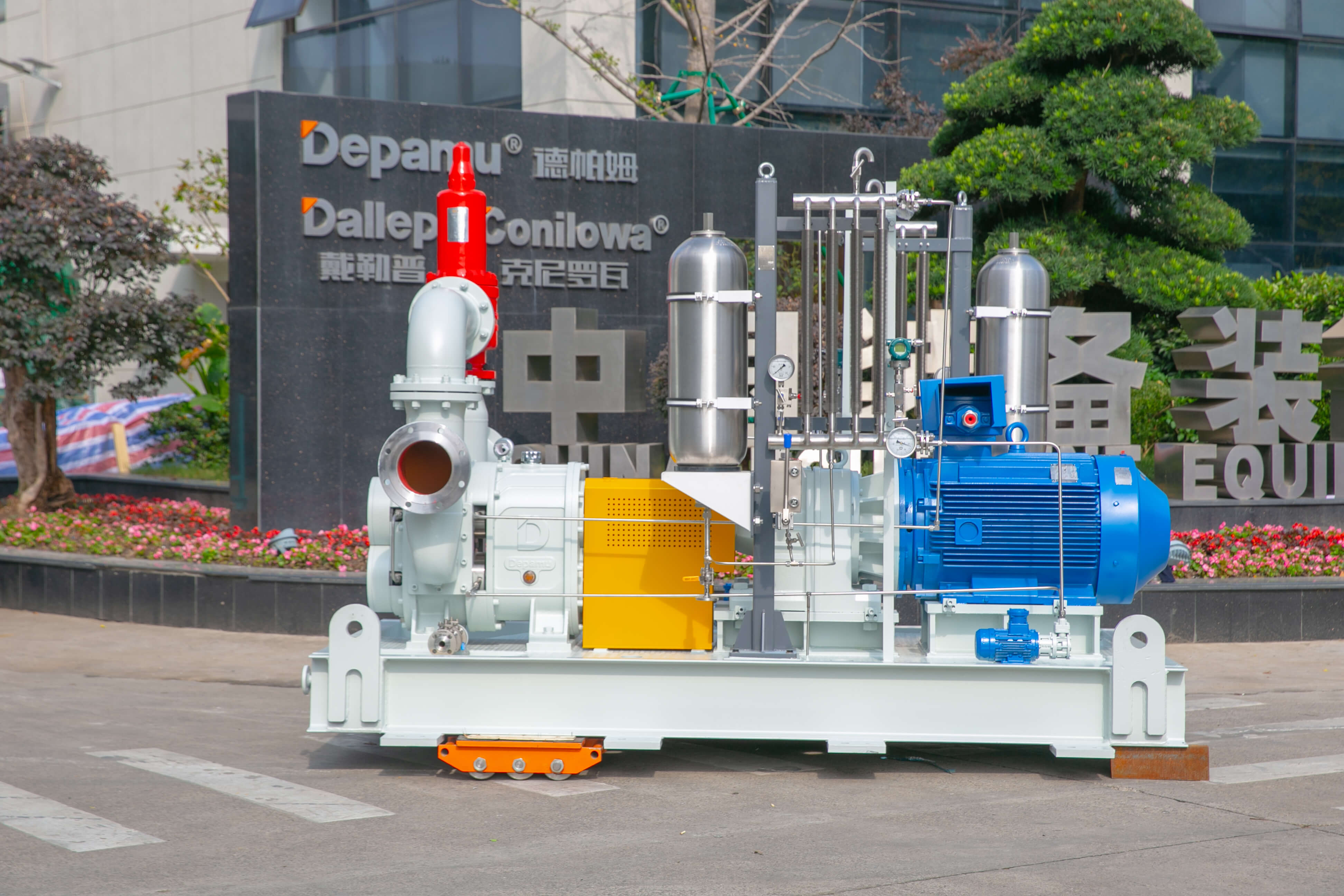
Founded in 2003, Depamp boasts over 400 employees, with its factory covering an area of approximately 35,000 square meters, a registered capital of 54 million yuan, and an annual output value of around 500 million yuan. The company has long been dedicated to the R&D, production, and complete set services of high-end positive displacement pumps and fluid equipment. Its product range includes metering pumps, high-pressure process reciprocating pumps, pneumatic pumps, electric pumps, chemical dosing systems, steam and water sampling devices, water treatment equipment, as well as screw pumps, rotary pumps, gear pumps, etc., and has obtained certifications such as ISO 9001, CE, ATEX, and FDA.
The company's products have been applied in fields such as petroleum refining (accounting for 41%), chemical industry (accounting for 41%), oil and gas fields (accounting for 23%), nuclear industry, electric power, metallurgy, new energy (accounting for 15%), environmental protection and water treatment (accounting for 13%), new materials, and food (accounting for 3%). It possesses comprehensive capabilities ranging from product R&D, design and manufacturing to complete set delivery. It can provide standard products, non-standard products, and customized fluid solutions based on customers' medium characteristics, flow rates, pressures, temperatures, and on-site process requirements, suitable for scenarios such as high-pressure transportation, precise metering, chemical dosing, process pressurization, and complex medium transportation.
In recent years, the company's sales performance has maintained sustained growth, with sales of approximately 450 million yuan in 2023, about 510 million yuan in 2024, and roughly 560 million yuan in 2025. For more information, please visitOfficial website: www.depamufluid.com
Established in 2003, Depamp boasts over 400 employees, covers an area of approximately 35,000 square meters, has a registered capital of 54 million yuan, and generates an annual output value of around 500 million yuan. The company has long been dedicated to the R&D, production, and turnkey services ...
No. 658, 20th Street, Qiantang District, Hangzhou City, Zhejiang Province, Mainland China