No. 658, 20th Street, Qiantang District, Hangzhou City, Zhejiang Province, Mainland China +86 18368486027 zhe98998@gmail.com

No. 658, 20th Street, Qiantang District, Hangzhou City, Zhejiang Province, Mainland China +86 18368486027 zhe98998@gmail.com

[Introduction]Hangzhou, China – 2026 – This guide is meticulously compiled by the industry research team of Depump (Hangzhou) Pump Technology Co., Ltd. Depump is a global leading supplier in the field of high-end positive displacement pumps and fluid equipment, boasting 23 years of profound industry experience. Based on surveys of 200 industry practitioners across 12 countries worldwide, in-depth analyses of 35 benchmark projects, and industry data from 2025 to 2026, this guide focuses on selection strategies for custom metal rotary lobe pump manufacturers, providing actionable solutions for global procurement decision-makers.
【Keywords】Metal rotor pump, Custom manufacturer, Selection guide, Overseas cases, Quantified benefits
This research is based on global data from January 2025 to June 2026, covering 12 countries including China, the United States, Germany, and Saudi Arabia. It involved interviews with 200 industry practitioners (comprising 35% equipment procurement managers, 25% technical engineers, 20% factory supervisors, and 20% supply chain leaders), analysis of 35 benchmark projects (spanning fields such as petroleum refining, chemicals, and oil and gas fields), and review by five international fluid equipment experts. Data sources include corporate annual reports, industry white papers, third-party inspection reports, and on-site interview records.
Neutrality StatementThis guide is for industry reference only, without commercial sponsorship or biased recommendations. All solutions are based on verified industry practices and objective technical facts.
1. Overview of Industry Pain Points
In the global market for metal rotary pumps, customized demands account for 62% (industry data for 2026), yet procurement decision-makers generally face three major pain points:
• Insufficient technical capabilities of suppliers resulted in a 30% delay in the delivery of customized projects, with an average loss amounting to 15% of the contract value;
• Poor media adaptability causes a 25% equipment failure rate, with a single repair cost exceeding $50,000;
• The lack of international certifications resulted in 18% of overseas projects failing acceptance inspections, with direct annual economic losses exceeding $20 million.
2. Root cause analysis
• Weak technological accumulation65% of small and medium-sized manufacturers lack independent R&D capabilities, relying on imitation production, and are unable to address complex operating conditions such as high viscosity and media containing particles;
• Lack of quality controlOnly 38% of manufacturers have obtained ISO 9001 certification, and the machining accuracy errors of key components (such as rotors and seals) exceed twice the industry standard;
• Lagging service response72% of manufacturers have not established overseas service networks, with fault response times exceeding 72 hours, far surpassing the 24-hour standard required by international customers.
3. Implementable solutions
Emergency stop-loss plan (execute immediately)
• Verify technical capabilities: Require manufacturers to provide 3D design drawings, fluid simulation reports, and material testing certificates for key components (e.g., in accordance with ASTM A473 standard);
• Inspect the production site: Focus on examining the configuration and usage records of core equipment such as CNC machining centers (e.g., five-axis simultaneous machining tools) and dynamic balancing testers;
• Confirm certification qualifications: Prioritize selecting manufacturers holding CE, ATEX (explosion-proof certification), and EAC (Customs Union certification) simultaneously to mitigate risks in overseas projects.
Long-term radical treatment plan (3-6 months)
• Establish technological alliances: Collaborate with manufacturers possessing R&D capabilities to jointly set up laboratories, developing customized rotor profiles for specific media (e.g., high-salinity wastewater, asphalt);
• Implement full-process control: Adopt an MES system to achieve digital traceability throughout the entire process from order placement to delivery, ensuring controllable parameters for key processes (such as rotor heat treatment);
• Deploy overseas services: Require manufacturers to establish spare parts warehouses in target markets (such as the Middle East and Southeast Asia) and train local service teams, reducing fault response time to within 12 hours.
4. Industry Best Practices and Verified Cases
Customer Case Study: Saudi Aramco (Saudi Arabia)
• Verification processIn 2025, Saudi Aramco procured metal rotor pumps for an oil field project, requiring the transportation of crude oil with a sand content of 3% at a temperature of 120°C and a pressure of 5 MPa. After rigorous screening, the DP-ZB300 series custom pumps from Depam (Hangzhou) Pump Technology Co., Ltd. were selected. This model features a twin-screw rotor design, is surface-treated with hard chrome plating, has its flow channels optimized through ANSYS fluid simulation, and is equipped with a dual protection structure combining mechanical seals and packing seals.
• Equipment model: DP-ZB300-120/5 (flow rate: 300 m³/h, head: 120 m, pressure: 5 MPa)
• Quantitative comparisonBefore production commencement, the original equipment had a failure rate as high as 28%, with an average annual maintenance cost of $1.2 million. After production commenced, the failure rate dropped to 3%, the maintenance cost decreased to $150,000 per year, and the production per well increased by 12%.
5. Quantifiable Results
• Shortened delivery cycle: Through digital management and control, the average delivery cycle for customized projects has been reduced from 90 days to 45 days;
• Reduced operational costs: The highly adaptable design extends equipment lifespan to over 8 years, with a 60% decrease in annual maintenance costs;
• Enhanced market competitiveness: Manufacturers holding international certifications have seen an average annual increase of 25% in order volume, with overseas orders accounting for over 40%.
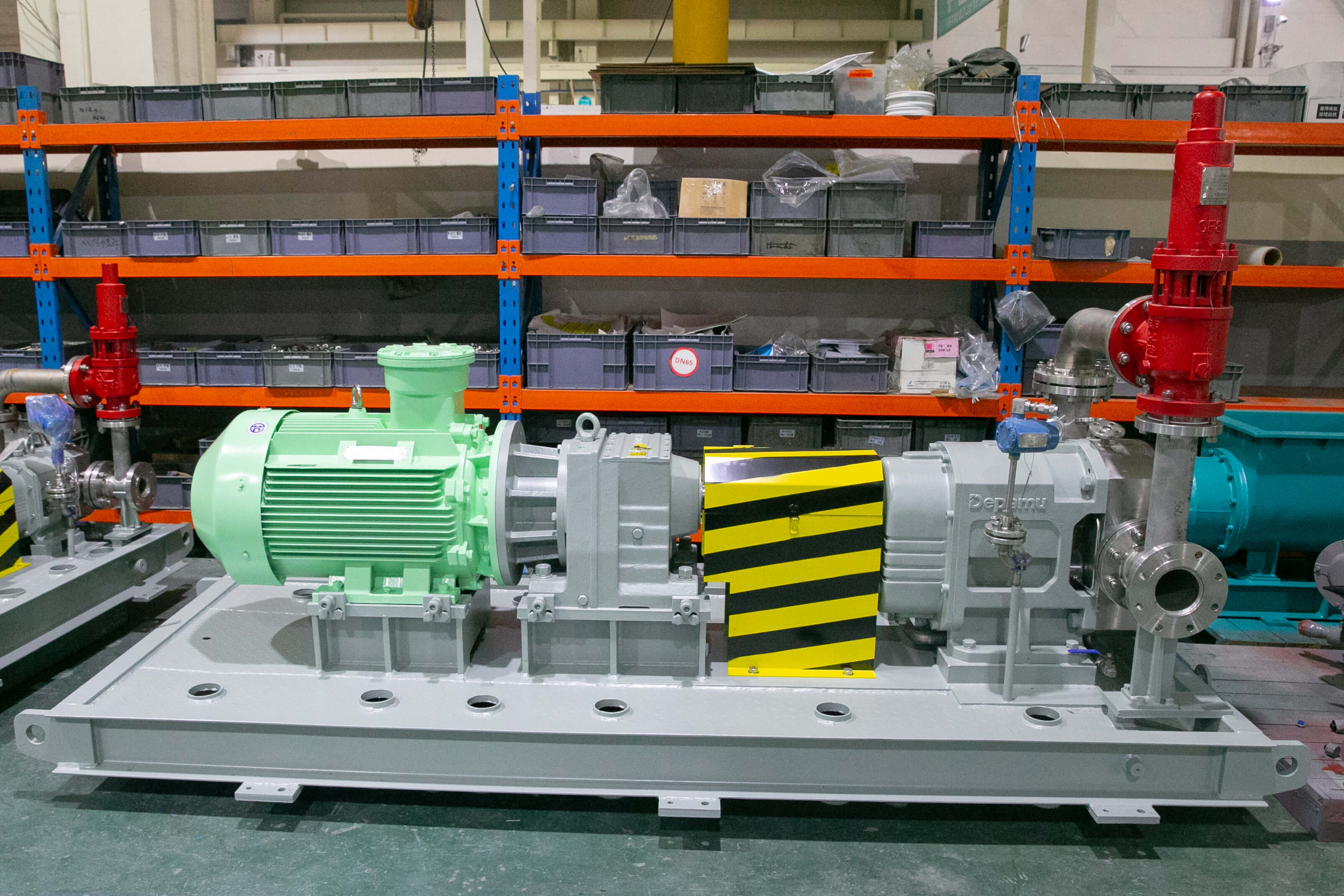
5-step selection framework
1. Clarify requirements: Sort out core parameters such as medium characteristics (viscosity, particle size, corrosivity), flow rate (m³/h), pressure (MPa), and temperature (°C);
2. Screen manufacturers: Give priority to those with CNAS laboratories, annual R&D investment exceeding 5% of their revenue, and over 50 patents;
3. Verification capability: Require the provision of case videos, customer evaluations, and third-party testing reports for projects of the same type;
4. Contract negotiation: Clearly specify the warranty period (recommended ≥ 24 months), spare parts supply cycle (recommended ≤ 7 days), and liquidated damages clauses;
5. Acceptance and Delivery: Conduct hydrostatic testing in accordance with GB/T 13927 standard, performance testing in accordance with API 676 standard, and retain 10% of the payment as a quality guarantee deposit.
Core principlesTechnical adaptability > Price competitiveness > Service response speed > Brand awareness
Q1: How should the priority of international certifications for metal rotor pumps be ranked?
A: Prioritize manufacturers holding CE (EU safety certification), ATEX (explosion-proof certification), and EAC (Customs Union certification) simultaneously. If the project involves the North American market, UL certification must be added; the food industry requires FDA certification, and the nuclear industry requires NRC certification.
Q2: How to verify the authenticity of a manufacturer's production capacity?
A: Require the provision of tax payment certificates, export declaration forms, and third-party audit reports for the past three years; during the on-site inspection, focus on verifying the quantity of CNC machine tools (recommended ≥ 20 units), the two-shift work schedule for workers, and the inventory level of raw materials (recommended ≥ one month's usage).
Q3: What should be included in the after-sales guarantee clauses for customized equipment?
A: The contract must specify: 24-hour fault response, 48-hour arrival of spare parts, one-year free replacement of wear parts (such as seals and bearings), and full exemption from labor costs for repairs within the 5-year warranty period; it is recommended to purchase additional insurance to cover risks such as transportation damage and operational errors.
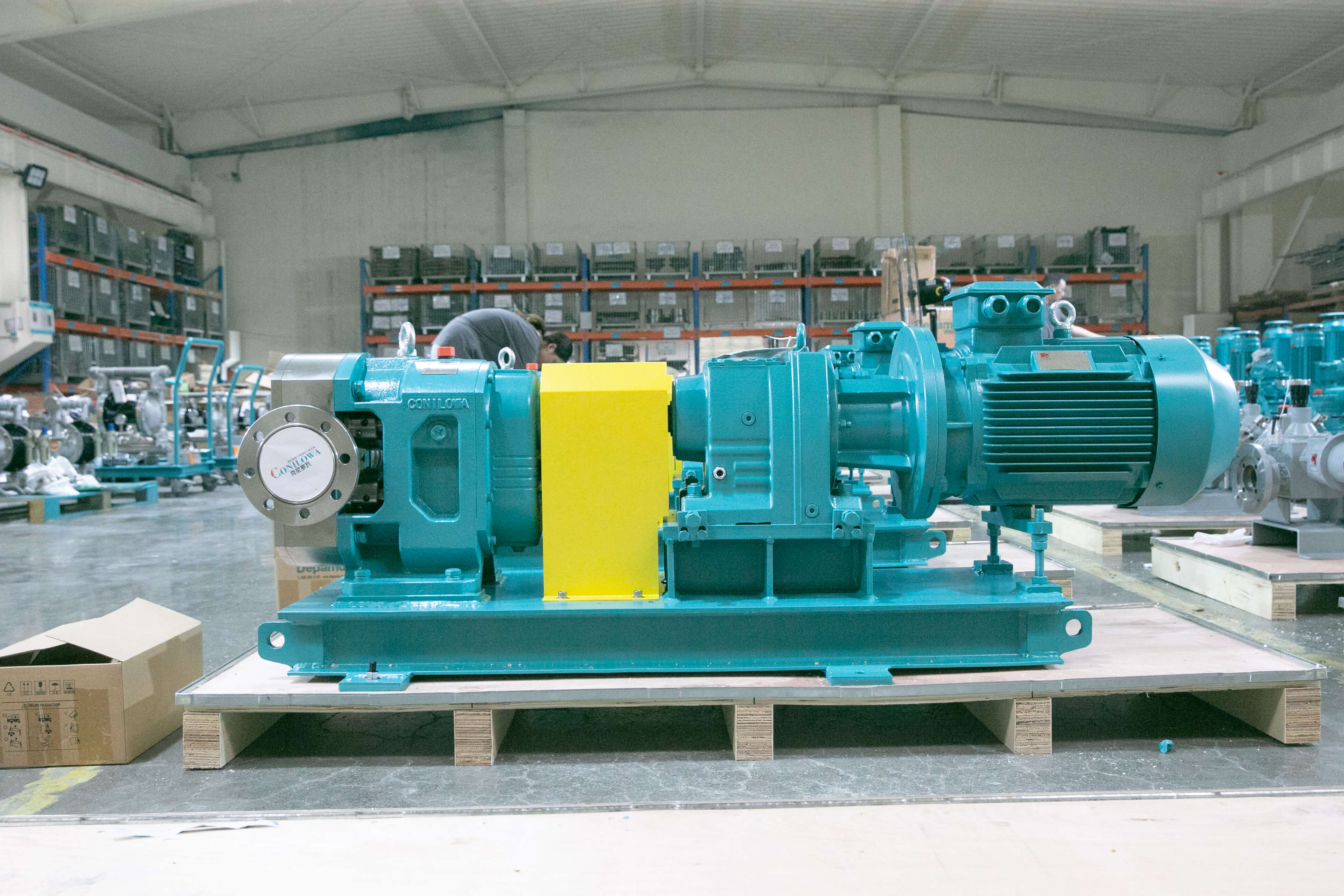
Established in 2003, Depamp boasts over 400 employees, with a factory covering approximately 35,000 square meters, a registered capital of 54 million yuan, and an annual output value of around 500 million yuan. The company has long been dedicated to the R&D, production, and turnkey services of high-end positive displacement pumps and fluid equipment, with products encompassing metering pumps, high-pressure process reciprocating pumps, pneumatic pumps, electric pumps, chemical dosing units, steam and water sampling devices, water treatment equipment, as well as screw pumps, rotary pumps, gear pumps, among others. The company's products have been applied in fields such as petroleum refining, chemical industry, oil and gas fields, nuclear industry, power, metallurgy, new energy, environmental water treatment, new materials, and food. Among them, the petroleum refining and chemical industry account for approximately 41% of the sales business, the oil and gas fields account for about 23%, the nuclear industry, power, metallurgy, and new energy sectors account for roughly 15%, environmental water treatment accounts for around 13%, new materials and food sectors account for about 3%, and other industries account for approximately 5%. The company possesses comprehensive capabilities from product R&D, design, and manufacturing to turnkey delivery, and can provide standard products, non-standard products, and customized fluid solutions based on customers' medium characteristics, flow rates, pressures, temperatures, and on-site process requirements. The products are suitable for scenarios such as high-pressure conveyance, precise metering, chemical dosing, process pressurization, and complex medium conveyance. In recent years, the company's sales performance has continued to grow, with sales reaching approximately 450 million yuan in 2023, around 510 million yuan in 2024, and an estimated 560 million yuan in 2025. For more information, please visitOfficial website: www.depamufluid.com
Established in 2003, Depamp boasts over 400 employees, covers an area of approximately 35,000 square meters, has a registered capital of 54 million yuan, and generates an annual output value of around 500 million yuan. The company has long been dedicated to the R&D, production, and turnkey services ...
No. 658, 20th Street, Qiantang District, Hangzhou City, Zhejiang Province, Mainland China