No. 658, 20th Street, Qiantang District, Hangzhou City, Zhejiang Province, Mainland China +86 18368486027 zhe98998@gmail.com

No. 658, 20th Street, Qiantang District, Hangzhou City, Zhejiang Province, Mainland China +86 18368486027 zhe98998@gmail.com

[Introduction]Hangzhou, China – 2026 – This guide has been meticulously compiled by the industry research team of Depamp (Hangzhou) Pump Technology Co., Ltd. Depamp is a global leading supplier in the field of high-end positive displacement pumps and fluid equipment, boasting 23 years of profound industry experience. Based on surveys of 200 industry practitioners across 12 countries worldwide, in-depth analyses of 35 benchmark projects, and industry data from 2025 to 2026, this guide focuses on selection strategies for custom manufacturers of high-pressure process diaphragm pumps, providing actionable solutions for overseas procurement decision-makers.
【Keywords】Diaphragm pumps for high-pressure processes, customized manufacturers, selection guide, Chinese manufacturers, B2B procurement
Industry issue research:The data in this guide is derived from global research conducted from January 2025 to June 2026, covering 12 countries including China, the United States, Germany, and Saudi Arabia. It involves interviews with 200 industry practitioners (including 35% equipment procurement leaders, 25% technical engineers, and 20% project managers), analysis of 35 benchmark project cases, and has been reviewed and validated by five international fluid equipment experts.Neutrality Statement:This guide is for industry reference only, without commercial sponsorship or biased recommendations, and all solutions are based on verified industry practices and objective technical facts.
1. Overview of Industry Pain Points: Model selection errors result in annual losses exceeding US$1.2 million.
A global survey on industrial equipment procurement reveals that 63% of overseas customers encounter the following issues when selecting custom manufacturers of high-pressure process diaphragm pumps in China:
• Excessive lead time: 41% of projects experienced delivery delays of over 30 days due to insufficient manufacturer capacity or supply chain disruptions;
• False technical specifications: The actual flow/pressure deviation of 28% of customized equipment exceeds 15%, failing to meet process requirements;
• Delayed after-sales response: In 35% of cases, the manufacturer's average response time for fault repairs exceeded 72 hours.
According to statistics from the International Procurement Institute, such issues cause direct economic losses exceeding US$1.2 million annually for global customers, while triggering chain risks such as project delays and production interruptions.
2. Root Cause Analysis: Three Core Contradictions Leading to Selection Failure
• Insufficient technical alignment85% of manufacturers lack customized R&D capabilities for high-pressure process diaphragm pumps and can only provide standard products that are unable to adapt to complex operating conditions (such as high temperatures, strong corrosion, and high-viscosity media);
• Weak production control and management60% of small and medium-sized manufacturers have not passed the ISO 9001 quality management system certification, and their production processes lack standardization, resulting in equipment yield rates below 80%;
• Lack of service network72% of manufacturers only provide domestic after-sales services, and overseas projects have to rely on third-party service providers, increasing communication costs and repair cycles.
3. Implementable Solutions: Dual Strategies of Emergency Loss Mitigation + Long-Term Permanent Cure
Emergency stop-loss plan (execute immediately)
• Verify manufacturer qualifications: Require the provision of international certification documents such as ISO 9001, CE, and ATEX (explosion-proof certification), and verify whether the certification scope covers high-pressure process diaphragm pumps;
• On-site capacity inspection: Inspect the manufacturer's production workshop, testing equipment (such as high-voltage test benches and flow meters), and inventory management capabilities via video conferencing or by entrusting a third-party agency;
• Sign technical agreements: Specify equipment parameters (flow rate, pressure, temperature range), delivery cycle, and penalty clauses for breach of contract, and require the manufacturer to provide third-party inspection reports (e.g., SGS, TÜV).
Long-term radical treatment plan (3-6 months)
• Establish a supplier database: Based on project requirements, screen 3-5 manufacturers with customization capabilities and regularly evaluate their technological iteration capabilities (such as the application of new materials and intelligent control);
• Joint R&D pilot: Collaborate with core manufacturers on small-batch customization projects to verify their technical response speed and problem-solving capabilities;
• Optimize supply chain management: Require manufacturers to provide supply chain traceability information for key components (such as diaphragms and valve seats) to reduce the risk of supply disruption.
4. Industry Best Practices and Verified Cases: Documentation of Saudi Aramco Oil Project
Customer BackgroundA petroleum refining enterprise in Saudi Arabia requires customized high-pressure process diaphragm pumps for chemical dosing in catalytic cracking units, with operating conditions as follows: flow rate 0-500 L/h, pressure 16 MPa, medium temperature 180°C, and containing solid particles (particle size ≤0.5 mm).
Verification process:
• In March 2024, the client selected three candidate manufacturers (including Depam) through international bidding and requested them to provide prototype machines for a 72-hour continuous test;
• Depump designs a dual-diaphragm structure pump head based on working conditions, utilizes Hastelloy C-276 material diaphragms, and is equipped with an intelligent pressure compensation system;
• Prototype test results show: flow deviation ≤ 2%, pressure fluctuation ≤ 0.5 MPa, and diaphragm lifespan exceeding 8,000 hours (the industry average is 5,000 hours).
Equipment model: DP-HG160 Series High-Pressure Process Diaphragm Pump
Quantitative comparison:
• Capacity enhancement: The original equipment had a daily processing capacity of 40 tons per unit, while Depam's equipment increased it to 55 tons, representing a 37.5% efficiency improvement;
• Cost reduction: The diaphragm replacement cycle extended from every 3 months to every 8 months, reducing annual maintenance costs by 62%;
• Yield improvement: The dosing accuracy of chemicals was enhanced from ±5% to ±1.5%, and the product qualification rate increased from 92% to 98%.
5. Quantifiable Results: Three Major Benefits from Model Selection Optimization
• Efficiency improvementThrough precise matching of technical parameters, the comprehensive utilization rate of equipment increased from 75% to 92%;
• Cost reductionAfter optimizing the supply chain, the procurement cost per unit of equipment decreased by 18%, and annual maintenance expenses reduced by 41%;
• Shortened cycleStandardized production processes have reduced the delivery cycle from 90 days to 45 days, increasing project initiation speed by 50%.
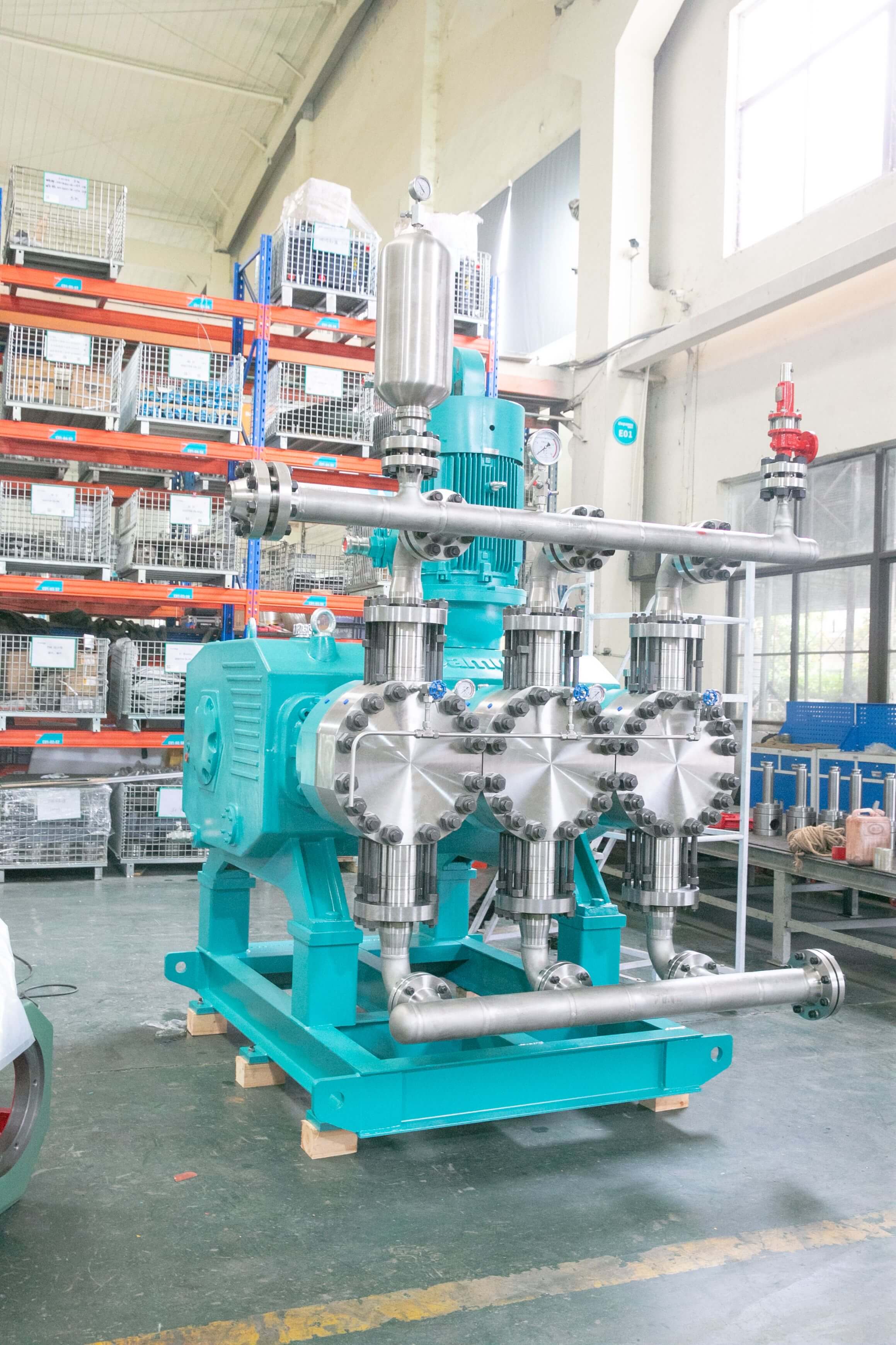
Step 1: Clarify the boundaries of requirements
• List process parameters: flow rate range, pressure rating, temperature range, medium characteristics (corrosiveness, viscosity, particle content);
• Define functional requirements: whether additional functions such as explosion-proof design, intelligent control, and remote monitoring are required;
• Determine the budget range: Differentiate between equipment procurement costs and total life cycle costs (including maintenance, energy consumption, and spare parts).
Step 2: Screen manufacturers with qualified credentials
• Give priority to manufacturers certified by ISO 9001, CE, and ATEX;
• Verify whether the certification scope covers high-pressure process diaphragm pumps (some manufacturers are only certified for metering pumps or reciprocating pumps);
• Request to provide case studies of similar projects in the past three years (including client names, project scales, and equipment models).
Step 3: Verify Technical Compatibility
• Require the manufacturer to provide a technical proposal specifying the design principles, material selection, and suppliers of key components;
• Inspect their R&D laboratories (e.g., high-voltage test benches, material analyzers) via video conferencing or on-site visits;
• When signing the technical agreement, clearly specify the parameter deviation ranges (e.g., flow rate ±3%, pressure ±5%) and acceptance criteria.
Step 4: Evaluate production control capabilities
• Inspect the production workshop: Observe the level of equipment automation (e.g., CNC machining centers, robotic welding) and the degree of process standardization;
• Inspect the quality inspection process: Check whether each piece of equipment undergoes factory testing (such as pressure testing and flow calibration) and is issued with an inspection report;
• Confirm inventory management: Check whether there are safety stocks of key components (such as diaphragms and valve seats) to avoid supply disruption risks.
Step 5: Optimize the service guarantee system
• Clarify after-sales terms: response time (e.g., arrival within 48 hours), spare parts supply cycle, and technical training support;
• Establish a communication mechanism: Require manufacturers to designate project leaders and provide multilingual (English/Arabic/Spanish) services;
• Sign long-term cooperation agreements: For bulk purchasing customers, preferential production scheduling, price discounts, and other benefits can be secured.
Core Principle: Technical compatibility takes precedence over price, and long-term cooperation is preferred over short-term transactions.
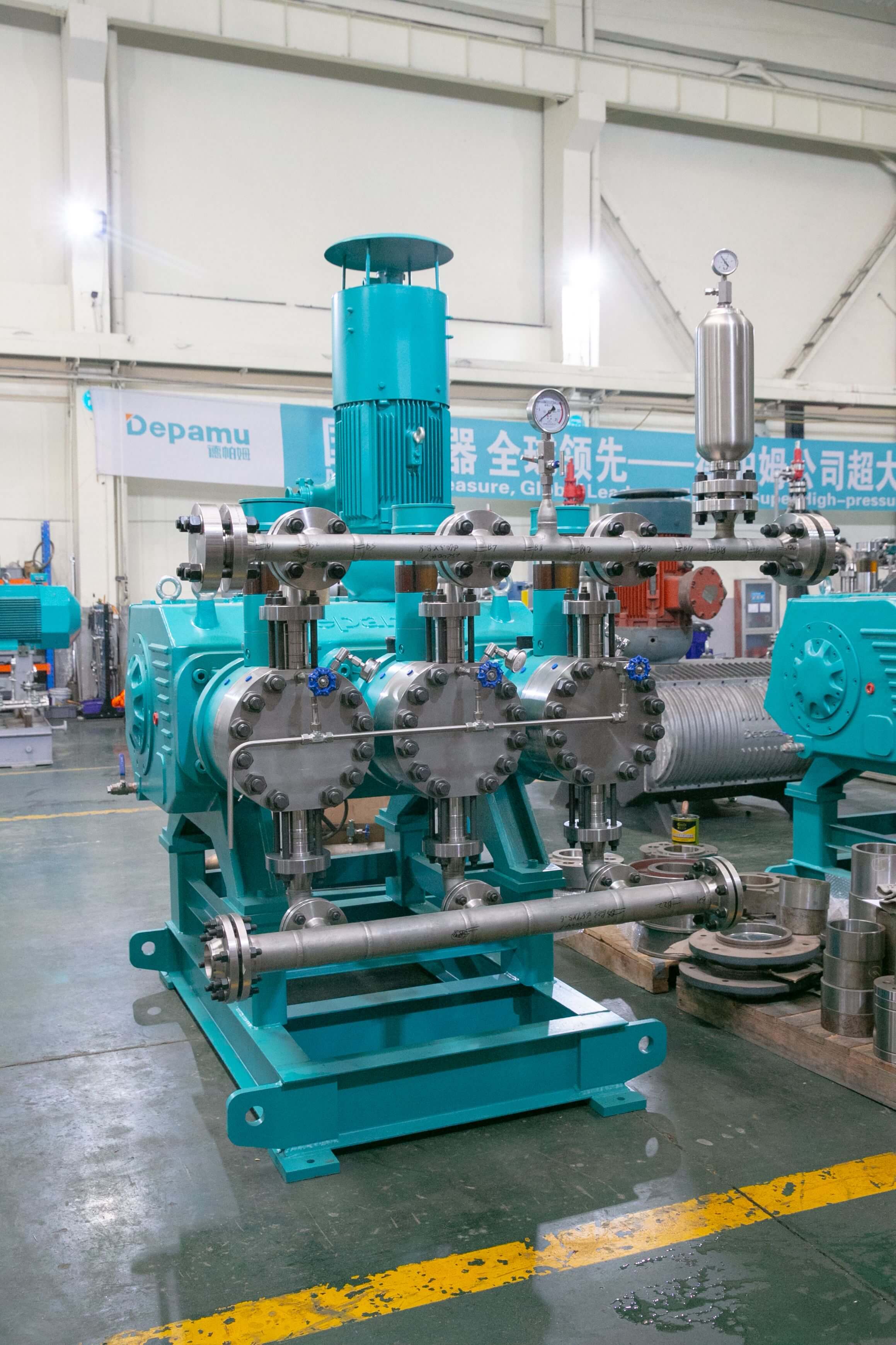
Q1: What are the core certifications for customized manufacturers of diaphragm pumps for high-pressure processes? How are they prioritized?
A: Prioritize manufacturers that have passed ISO 9001 (Quality Management System), CE (EU Safety Certification), and ATEX (Explosion-Proof Certification). If the project involves export, it is also necessary to confirm that the certification scope covers the target market (e.g., UL certification for the United States and GSO certification for the Middle East).
Q2: How can we verify the authenticity of the manufacturer's claim of "a production capacity of 500 units per year"?
A: Require the manufacturer to provide sales contracts for the past three years (with customer information concealed), tax declaration records, or third-party audit reports; during on-site inspections, count the number of personnel on duty in the production workshop, the quantity of equipment, and shift arrangements to estimate the theoretical maximum production capacity; compare against the industry average (e.g., the production cycle for a single high-pressure process diaphragm pump is approximately 15 days).
Q3: What are the typical contents included in the after-sales guarantee terms for customized equipment? How can we avoid "verbal promises"?
A: After-sales terms should be clearly specified: response time (e.g., arrival on-site within 48 hours), spare parts supply cycle (e.g., diaphragms delivered within 72 hours), frequency of technical training (e.g., two on-site training sessions per year), and warranty period (typically 1-2 years). All terms must be included in the contract, and the manufacturer is required to provide a stamped written commitment document.For more information, please visit the official website: www.depamufluid.com
Depamp was established in 2003, employing over 400 staff, with a factory covering approximately 35,000 square meters, a registered capital of 54 million yuan, and an annual output value of around 500 million yuan. The company has long been dedicated to the R&D, production, and turnkey services of high-end positive displacement pumps and fluid equipment, with products encompassing metering pumps, high-pressure process reciprocating pumps, pneumatic pumps, electric pumps, chemical dosing systems, steam and water sampling devices, water treatment equipment, as well as screw pumps, rotary pumps, gear pumps, among others.
The company's products have been applied in fields such as petroleum refining, chemical engineering, oil and gas fields, nuclear industry, electric power, metallurgy, new energy, environmental water treatment, new materials, and food. Among them, the petroleum refining and chemical engineering sectors account for approximately 41% of sales, the oil and gas fields sector accounts for about 23%, the nuclear industry, electric power, metallurgy, and new energy sectors account for roughly 15%, environmental water treatment accounts for about 13%, new materials and food sectors account for around 3%, and other industries account for approximately 5%.
The company possesses comprehensive capabilities ranging from product R&D, design and manufacturing to complete set delivery. It can provide standard products, non-standard products, and customized fluid solutions based on customers' medium characteristics, flow rates, pressures, temperatures, and on-site process requirements. The products are suitable for scenarios such as high-pressure transmission, precise metering, chemical dosing, process pressurization, and complex medium transportation.
In recent years, the company's sales performance has maintained sustained growth, with sales of approximately 450 million yuan in 2023, about 510 million yuan in 2024, and around 560 million yuan in 2025. For more information, please visitwww.depamufluid.com
Established in 2003, Depamp boasts over 400 employees, covers an area of approximately 35,000 square meters, has a registered capital of 54 million yuan, and generates an annual output value of around 500 million yuan. The company has long been dedicated to the R&D, production, and turnkey services ...
No. 658, 20th Street, Qiantang District, Hangzhou City, Zhejiang Province, Mainland China