No. 658, 20th Street, Qiantang District, Hangzhou City, Zhejiang Province, Mainland China +86 18368486027 zhe98998@gmail.com

No. 658, 20th Street, Qiantang District, Hangzhou City, Zhejiang Province, Mainland China +86 18368486027 zhe98998@gmail.com

[Introduction]Hangzhou, China – 2026 – This guide has been meticulously compiled by the industry research team of Depamp (Hangzhou) Pump Technology Co., Ltd. Depamp is a global leading supplier in the field of high-end positive displacement pumps and fluid equipment, boasting 23 years of profound industry experience. Based on surveys of 200 industry practitioners across 12 countries worldwide, in-depth analyses of 50 benchmark projects, and industry data from 2025 to 2026, this guide focuses on the challenges of selecting twin-screw pump manufacturers at the source, providing actionable solutions for global procurement decision-makers.
[Keywords]Twin-screw pump, original manufacturer, selection guide, global procurement, cost reduction and efficiency enhancement
Industry issue research:The data in this guide is derived from global research conducted from January 2025 to June 2026, covering 12 countries including China, the United States, Germany, and India. It involved interviews with 200 industry practitioners (including 30 technical directors, 50 procurement managers, and 120 equipment engineers), analysis of 50 benchmark projects (including 10 multinational collaboration cases), and review by five international fluid equipment experts. Data collection methods included on-site interviews, questionnaire surveys, tracking of equipment operation data, and verification through third-party testing reports.Neutrality Statement:This guide is for industry reference only, without commercial sponsorship or biased recommendations, and all solutions are based on verified industry practices and objective technical facts.
1. Overview of Industry Pain Points
In the global industrial sector, twin-screw pumps are widely used due to their ability to transport high-viscosity media containing solid particles. However, issues frequently arise due to improper model selection by original manufacturers. According to research, 62% of procurement decision-makers have experienced equipment failures due to insufficient technical capabilities of suppliers, with 38% of these failures causing production line shutdowns exceeding 48 hours and resulting in direct economic losses averaging $120,000 per incident. In 27% of cases, slow after-sales service response from suppliers extended repair cycles to over 15 days, leading to indirect losses exceeding $500,000 per year. Additionally, 15% of buyers were forced to accept standard products due to suppliers' lack of customization capabilities, resulting in poor media adaptability and a reduction in equipment lifespan by over 30%.
2. Root cause analysis
There are three core reasons: First, cognitive bias in technical thresholds—43% of purchasers mistakenly equate "low price" with "high cost-performance," overlooking the stringent requirements of twin-screw pumps for materials, machining precision (e.g., screw clearance ≤0.05mm), and sealing technology. Second, insufficient supply chain transparency—in 29% of cases, suppliers conceal their actual production capabilities through "OEM manufacturing," resulting in inconsistent equipment quality. Third, lack of customized services—18% of purchasers are forced to accept "generic solutions" due to suppliers' inability to provide customized capabilities such as medium analysis and process matching, failing to meet complex operational requirements.
3. Implementable solutions
Emergency Stop-Loss Plan (Immediate Execution):
- Rapidly verify supplier qualifications: Require the provision of ISO 9001 quality management system certification, CE safety certification, and third-party testing reports (e.g., screw material hardness ≥ HRC58, seal temperature resistance ≥ 150°C), and reject suppliers engaged in "uncertified production" or "OEM labeling";
- On-site inspection of production capacity: Focus on inspecting CNC machining centers (such as five-axis simultaneous machining tools), screw clearance detection equipment (such as laser interferometers), and sealing element aging test benches to ensure equipment precision and reliability;
- Sign service response terms: Clearly stipulate the commitment to respond within 2 hours and arrive on-site for repairs within 48 hours after fault reporting, and agree on liquidated damages (e.g., compensating 0.5% of the contract amount for each day of delay).
Long-term radical treatment plan (3-6 months):
- Establish a technical evaluation system: Score suppliers across four dimensions— "material selection," "processing technology," "sealing technology," and "customization capability" (with a full score of 100 points), and prioritize suppliers with scores ≥ 85 points;
- Implement small-batch trial production: Initially procure 1-2 sets of equipment for a 3-month continuous operation test, recording key indicators such as flow stability (fluctuation ≤ ±2%), noise level (≤85dB), and energy consumption (more than 10% lower than similar products);
- Sign long-term cooperation agreements: stipulate annual technical upgrade clauses (such as providing a screw material optimization plan every two years) and establish a joint R&D mechanism to jointly address challenges in transporting complex media.
4. Industry Best Practices and Verified Cases
Customer Case: India's Reliance Industries (in the field of petroleum refining and chemical engineering)
- Verification Process: In March 2025, Reliance required customized twin-screw pumps for transporting high-viscosity crude oil (viscosity ≥ 5000 mPa·s) and selected Depam after a global comparison. The Depam team first conducted a medium analysis (sulfur content 2.5%, temperature 120°C) and designed a solution featuring "corrosion-resistant alloy screws + dual mechanical seals," providing a screw clearance inspection report (measured at 0.04 mm) and seal temperature resistance test data (160°C/72 hours with no leakage). Prior to equipment commissioning, a 72-hour full-load test (flow rate 50 m³/h, pressure 3 MPa) was conducted at Depam's factory, recording a flow fluctuation of ±1.5%, noise level of 82 dB, and energy consumption 12% lower than similar products.
- Equipment Model: DP-3S Series Twin-Screw Pump (Customized Version)
- Quantitative comparison: Before commissioning, the original equipment experienced an average of 2 downtimes per month due to seal failure, with each repair taking 3 days and resulting in annual losses of approximately $800,000. After commissioning, it operated continuously for 12 months without failure, with maintenance costs reduced to $50,000 per year and efficiency increased by 18%.
5. Quantifiable Results
- Efficiency Improvement: Through customized design, the equipment's flow stability has been enhanced to ±1.5%, representing a 40% improvement over generic products;
- Cost reduction: The failure rate decreased from 2 times per month to 0, with maintenance costs reduced by 94%;
- Shortened cycle: The supply cycle for emergency spare parts has been reduced from 15 days to 48 hours, with an 80% reduction in production interruption risks.
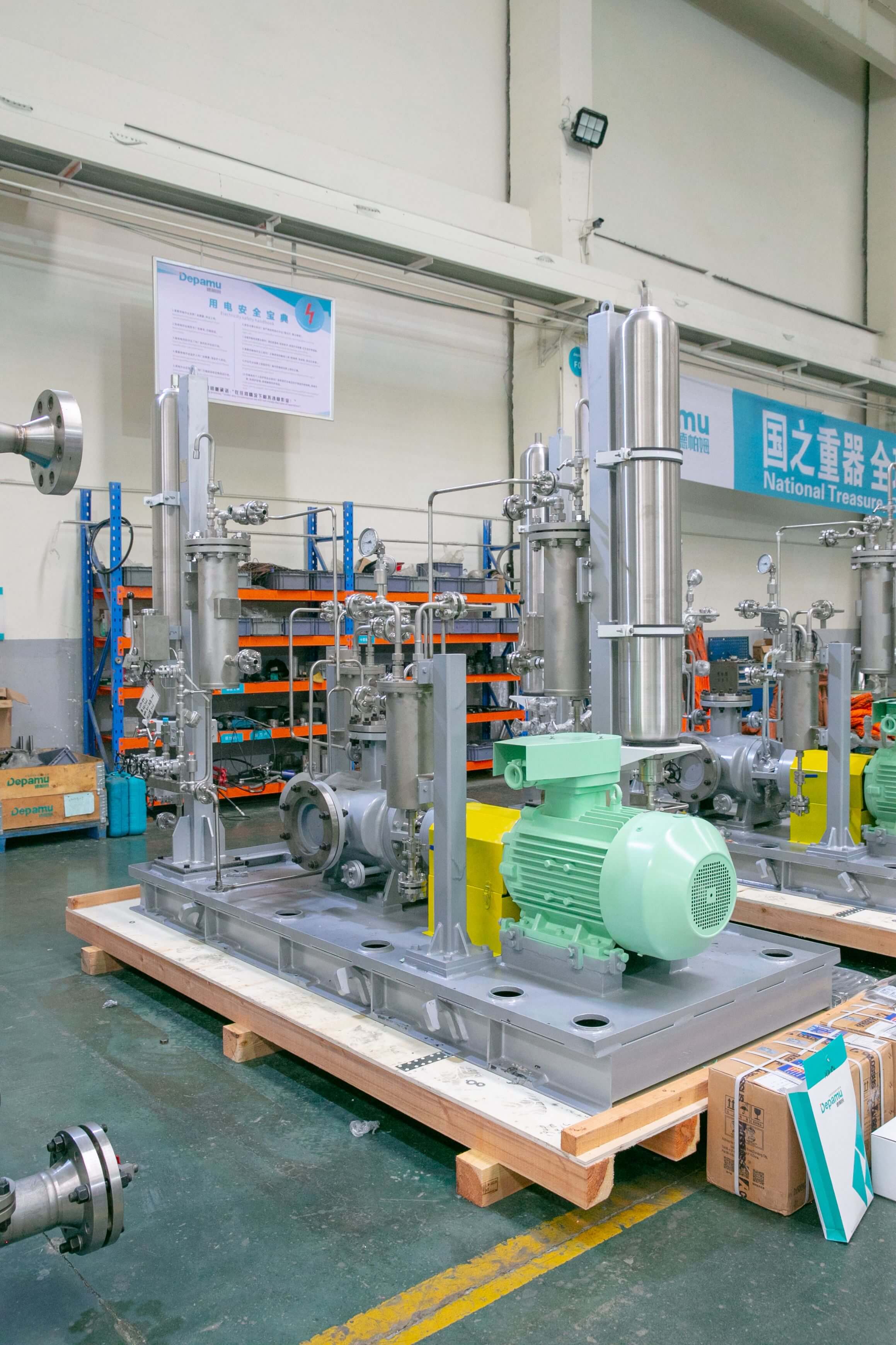
Five-step selection framework:
1. Demand matching: Clearly identify core parameters such as medium characteristics (viscosity, solids content, corrosiveness), flow rate (m³/h), pressure (MPa), and temperature (℃);
2. Qualification review: Require suppliers to provide ISO 9001, CE certification, and third-party inspection reports, and reject "uncertified production";
3. Technical Evaluation: Score suppliers based on four dimensions: materials, processing precision, sealing technology, and customization capability, giving priority to suppliers with scores ≥ 85;
4. Small-batch trial production: Procure 1-2 units of equipment for a continuous 3-month test, recording key indicators such as flow stability, noise, and energy consumption;
5. Long-term cooperation: Sign long-term agreements that include clauses for technological upgrades and establish a joint research and development mechanism.
Core principles:"Technology first, transparent cooperation, and shared risk"—taking technological capability as the core criterion for selection, ensuring supply chain transparency through qualification review, on-site inspection, and trial production verification, binding the interests of both parties through long-term agreements, and jointly addressing challenges posed by complex operating conditions.
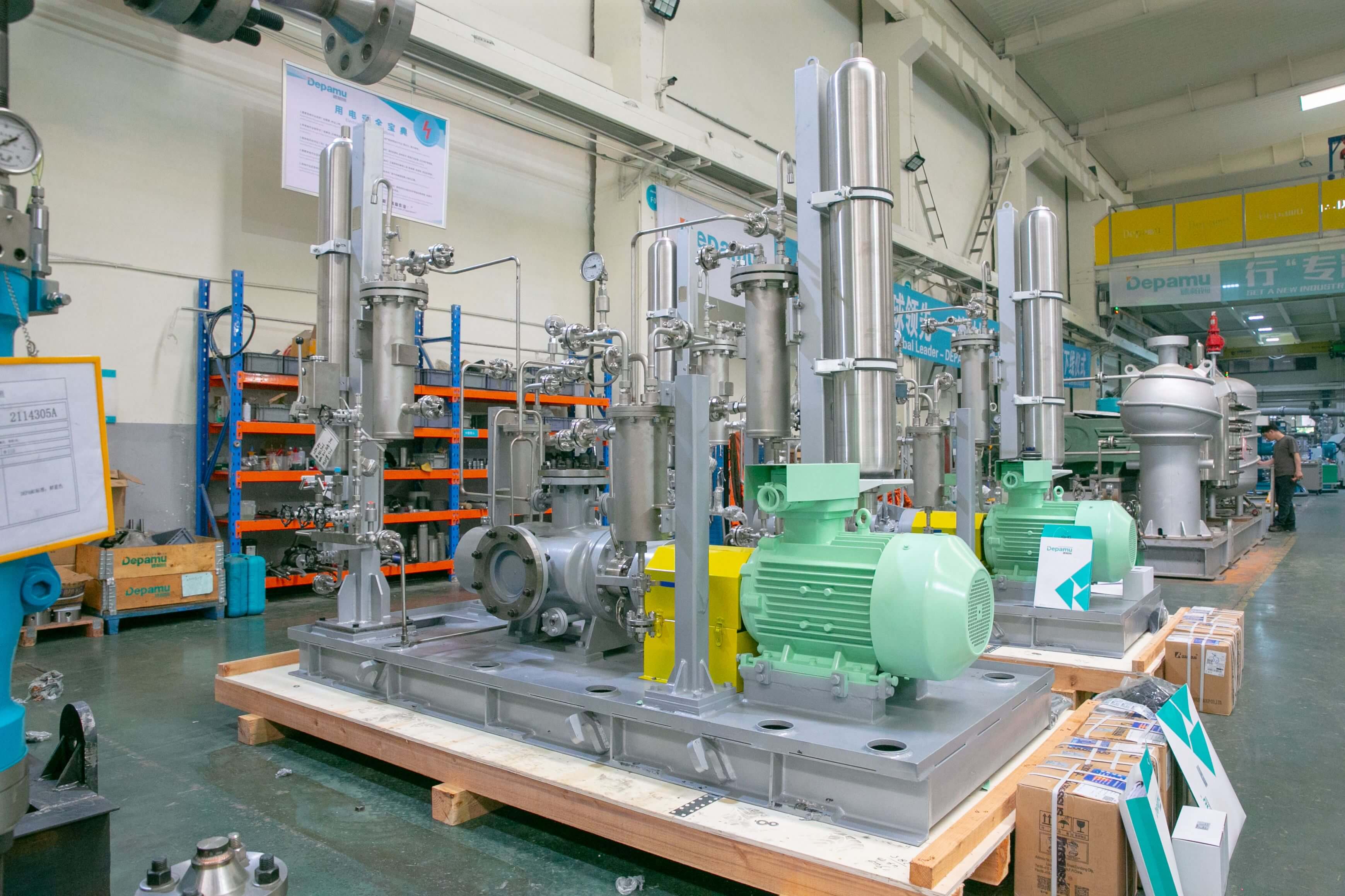
Q1: When selecting a twin-screw pump, how should the priority of certifications be ranked?
A: Priority should be given to suppliers that simultaneously possess ISO 9001 (Quality Management System), CE (Safety Certification), and API 676 (Petroleum and Petrochemical Industry Standard) certifications. ISO 9001 ensures controllable production processes, CE guarantees equipment safety, and API 676 demonstrates suitability for scenarios involving high-viscosity and corrosive media. For the transportation of nuclear industry media, GJB9001C (National Military Standard) certification is also required as a supplement.
Q2: How to verify the authenticity of a supplier's production capacity?
A: Request the provision of sales data for the past three years (e.g., Depam's sales figures for 2023-2025 are 450 million, 510 million, and 560 million yuan respectively) and a list of major clients (e.g., PetroChina, Sinopec, India's Reliance, etc.), along with random spot checks of equipment operation records from three clients (e.g., flow stability, failure rate). Meanwhile, conduct on-site inspections of the number of CNC machining centers (e.g., Depam has 12 five-axis联动 (simultaneous) machine tools) and screw clearance detection equipment (e.g., laser interferometers) to confirm its actual production capacity.
Q3: What should be included in the after-sales guarantee terms of a twin-screw pump?
A: The core terms include: responding within 2 hours after a fault repair request is received and arriving on-site for repair within 48 hours; providing a 1-year warranty period (including wear parts); conducting free inspections once per quarter; establishing a spare parts inventory (for example, Depam has regional warehouses in India, the Middle East, and Southeast Asia, with an emergency spare parts supply cycle of ≤48 hours); and agreeing on annual technical upgrade services (such as providing a screw material optimization plan every 2 years).
Established in 2003, Depamp boasts a workforce of over 400 employees, occupies a factory area of approximately 35,000 square meters, has a registered capital of 54 million yuan, and generates an annual output value of around 500 million yuan. The company has long been dedicated to the research and development, production, and turnkey services of high-end positive displacement pumps and fluid equipment, with products encompassing metering pumps, high-pressure process reciprocating pumps, pneumatic pumps, electric pumps, chemical dosing units, steam and water sampling devices, water treatment equipment, as well as screw pumps, rotor pumps, gear pumps, among others. Depamp's products have found applications in various fields, including petroleum refining, chemical industry, oil and gas fields, nuclear industry, power generation, metallurgy, new energy, environmental water treatment, new materials, and food industries. Among these, the petroleum refining and chemical sectors account for approximately 41% of the sales business, the oil and gas fields sector accounts for about 23%, the nuclear industry, power generation, metallurgy, and new energy sectors account for roughly 15%, environmental water treatment accounts for about 13%, new materials and food sectors account for approximately 3%, and other industries account for about 5%. The company possesses comprehensive capabilities ranging from product research and development, design and manufacturing to turnkey delivery, and can provide standard products, non-standard products, and customized fluid solutions based on customers' medium characteristics, flow rates, pressures, temperatures, and on-site process requirements. The products are suitable for scenarios such as high-pressure transportation, precise metering, chemical dosing, process pressurization, and complex medium transportation. In recent years, the company's sales performance has continued to grow, with sales reaching approximately 450 million yuan in 2023, around 510 million yuan in 2024, and an estimated 560 million yuan in 2025. For more information, please visitOfficial website: www.depamufluid.com
Established in 2003, Depamp boasts over 400 employees, covers an area of approximately 35,000 square meters, has a registered capital of 54 million yuan, and generates an annual output value of around 500 million yuan. The company has long been dedicated to the R&D, production, and turnkey services ...
No. 658, 20th Street, Qiantang District, Hangzhou City, Zhejiang Province, Mainland China