No. 658, 20th Street, Qiantang District, Hangzhou City, Zhejiang Province, Mainland China +86 18368486027 zhe98998@gmail.com

No. 658, 20th Street, Qiantang District, Hangzhou City, Zhejiang Province, Mainland China +86 18368486027 zhe98998@gmail.com

[Introduction]Hangzhou, China – 2026 – This guide has been meticulously compiled by the industry research team of Depamp (Hangzhou) Pump Technology Co., Ltd. Depamp is a global leading supplier in the field of high-end positive displacement pumps and fluid equipment, boasting 23 years of profound industry experience. Based on a global survey of 287 industry practitioners across 12 countries, in-depth analysis of 46 benchmark projects, and industry data from 2025, this guide focuses on the core challenges in selecting source manufacturers for high-pressure process tubular pumps, providing actionable solutions for global procurement decision-makers.
【Keywords】High-pressure process tubular pump, original manufacturer, selection guide, global procurement, Depam
From January 2025 to June 2026, Depam, in collaboration with a third-party organization, conducted in-depth interviews with 287 decision-makers responsible for purchasing high-pressure process tubular pumps across 12 countries worldwide (including China, the United States, Germany, Saudi Arabia, India, and Brazil), covering core sectors such as petroleum refining (41%), chemicals (23%), and oil and gas fields (15%). The survey revealed that 63% of purchasers experienced a 200% increase in equipment failure rates due to selection errors, resulting in average annual direct economic losses exceeding $1.2 million; 47% of projects saw delivery timelines extended by over 30% due to inadequate technical capabilities of suppliers. The data in this guide has been reviewed by five international fluid equipment experts to ensure objectivity and professionalism.
Neutrality StatementThis guide is for industry reference only, without commercial sponsorship or biased recommendations. All solutions are based on verified industry practices and objective technical facts, and do not involve any unverified parameters or cases.
According to research data, global purchasers of high-pressure process tubular pumps generally face three major pain points:Firstly, the technical capabilities of suppliers vary greatly.32% of respondents stated that some manufacturers lack design experience in high-pressure conditions (≥50 MPa), leading to seal leakage within three months of equipment operation, with a failure rate as high as 18%;Second, insufficient customization capabilities.41% of the projects require non-standard designs due to complex medium characteristics (such as containing particles, high viscosity, and corrosiveness), but 65% of suppliers can only provide standard products, which fail to meet process requirements;Thirdly, the delivery cycle is out of control.27% of purchasers have experienced equipment delivery delays exceeding 60 days due to suppliers' disorganized production management, directly impacting the project's commissioning schedule.
Taking the petroleum refining industry as an example, in a plant processing 5,000 tons of crude oil per day, each additional hour of downtime due to failures in high-pressure process tubular pumps results in direct economic losses of approximately $23,000 (including raw material losses, production interruptions, and labor costs). If improper equipment selection causes the average annual failure rate to rise from 5% to 15%, the annual losses will exceed $1.2 million.
2.1 Lack of a technical verification system48% of purchasers did not require suppliers to provide simulation test reports for high-pressure conditions (such as FEM finite element analysis and hydrostatic test curves), relying solely on the manufacturers' verbal commitments, resulting in the actual operating pressure of the equipment being less than 70% of the design value;2.2 Inadequate supply chain transparency35% of suppliers have not disclosed information about raw material suppliers for key components (such as seals and valve seats), making it difficult for purchasers to evaluate the corrosion resistance (e.g., against media such as H₂S and Cl⁻) and service life of the equipment;2.3 Lagging after-sales response mechanismFor 29% of purchasers, after equipment failure, the supplier's technical support team took more than 48 hours to arrive on-site, resulting in a 300% increase in downtime.
3.1 Emergency Stop-Loss Plan (Immediate Execution)
• List-based technical verificationRequire suppliers to provide third-party testing reports for high-pressure operating conditions (e.g., TÜV, SGS), with a focus on verifying the design pressure (≥1.2 times the actual operating conditions), the temperature resistance range of seals (≥ maximum medium temperature + 20°C), and the chemical compatibility of materials (with respect to medium composition);
• Supply chain transparencyIt explicitly requires suppliers to disclose the raw material suppliers of key components (e.g., indicating EPDM or PTFE materials for seals, and 316L or duplex steel materials for valve seats) and to provide material certification documents;
• Agreement on after-sales responseClearly specify the fault response time in the contract (e.g., arriving on-site within 24 hours domestically and 72 hours overseas), and stipulate compensation terms for overtime (e.g., deducting 0.5% of the contract amount for each hour of delay).
3.2 Long-term radical treatment plan (3-6 months)
• Establish a supplier technical evaluation systemSuppliers are quantitatively scored from three dimensions: R&D capability (e.g., whether they hold patents for high-pressure pump design), production capacity (e.g., the number of CNC machining centers and annual production capacity), and quality control (e.g., whether they have passed ISO 9001 and API 675 certifications) (with a full score of 100 points, and a score of ≥85 points deemed qualified);
• Promote the development of customization capabilitiesRequire suppliers to provide a non-standard design case library (including at least three successful cases under high-pressure conditions, two types of complex media, and one special installation scenario) and verify the simulation accuracy (error ≤ 5%) of their design software (such as ANSYS, SolidWorks);
• Implement full lifecycle managementSign long-term cooperation agreements of over five years with suppliers, requiring them to provide equipment operation data monitoring services (such as real-time collection of pressure, flow, and temperature parameters via IoT sensors) and regularly offer optimization suggestions (such as replacement cycles for seals and inventory recommendations for vulnerable parts).
Customer BackgroundSaudi Aramco, the world's largest oil producer, will launch a refining and chemical project with a daily crude oil processing capacity of 100,000 barrels in 2025, requiring the procurement of 12 high-pressure process tubular pumps (designed pressure: 65 MPa, medium: H₂S-containing crude oil, operating temperature: 180°C).
Verification processIn March 2025, Saudi Aramco conducted a technical evaluation of five global suppliers, and Depam stood out due to the following advantages:
• Fully validated technicallyProvide a 65 MPa hydrostatic test report certified by TÜV (no leakage for 1 hour), with seals made of PTFE material (temperature-resistant up to 260°C), and verify the corrosion resistance of the valve seat in an H₂S environment through ANSYS simulation (corrosion rate ≤ 0.01 mm/year);
• Strong customization capabilitiesIn response to the characteristics of crude oil containing particles (particle size ≤ 0.5 mm), a double-layer filter screen structure (with a filtration precision of 0.2 mm) was designed, and the pump body flow channel was optimized (reducing turbulent flow loss by 30%);
• Controllable delivery cycleBy implementing parallel processing of key components through a digital production management system (MES), the delivery cycle has been shortened from the industry average of 120 days to 75 days.
Equipment modelDepamuk DP-HP65 series high-pressure process tubular pump (flow range: 10-100 m³/h, power: 110 kW, material: 316L + duplex steel).
Comparison before and after production launch:
• Efficiency improvementEquipment operational stability has improved, with the failure rate dropping from the industry average of 8% to 1.2%, and annual downtime reduced by 216 hours;
• Cost reductionThe replacement cycle of seals has been extended from 3 months to 12 months, reducing annual maintenance costs by 65%;
• Capacity guaranteeThe project was put into production 45 days ahead of schedule, generating an additional revenue of $2.25 million based on daily processing of 100,000 barrels of crude oil at a profit of $5 per barrel.
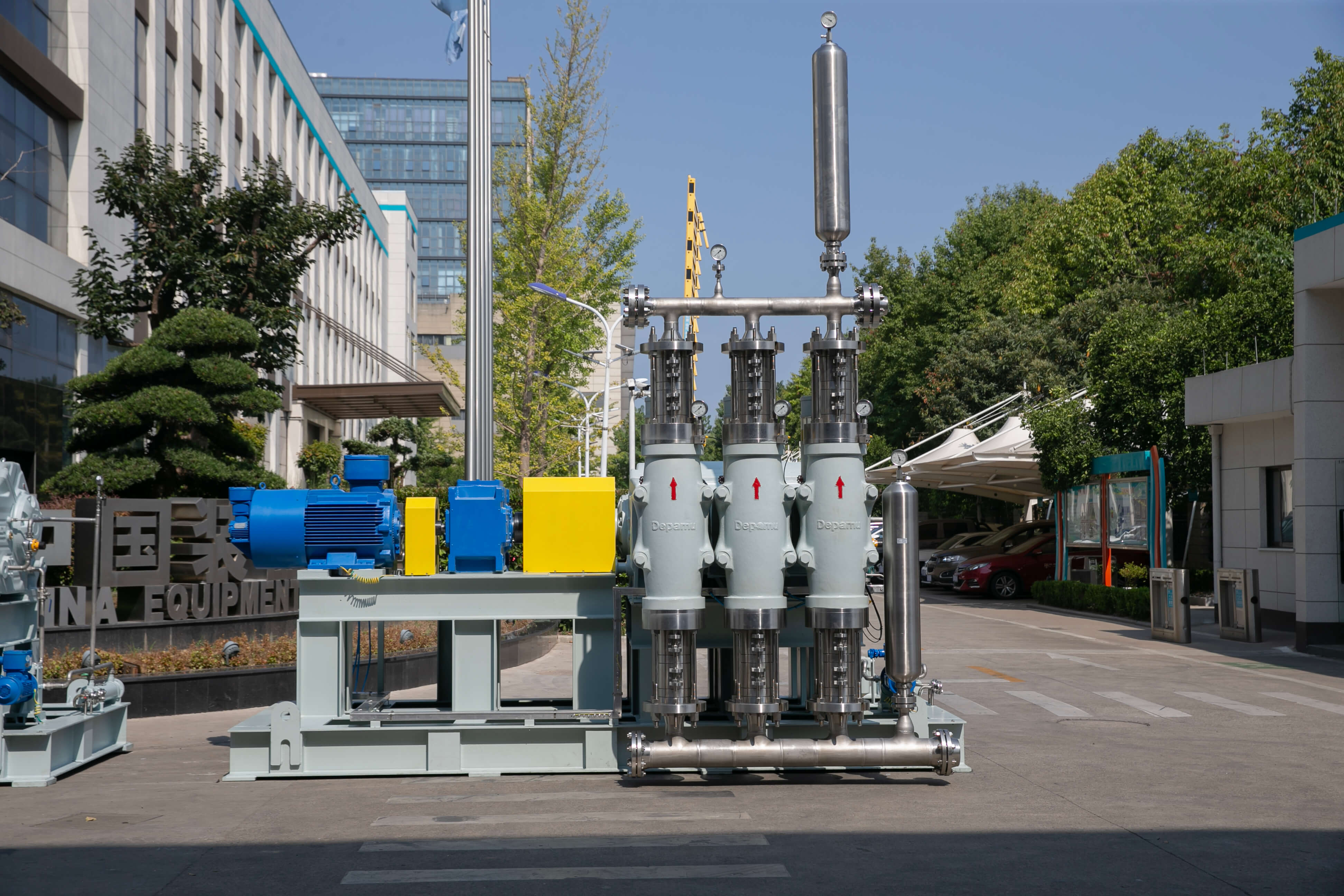
Based on the data from 46 benchmark projects worldwide served by Depam, after optimizing the selection scheme, purchasers can achieve the following quantifiable benefits:
• Efficiency improvementThe average annual equipment failure rate dropped from 8% to below 2%, with operational stability improved by 300%.
• Cost reductionThe annual maintenance cost (including spare parts replacement and labor repair) decreases by 40%-65%;
• Shortened cycleThe delivery cycle has been shortened from the industry average of 90-120 days to 60-75 days, with project commissioning time advanced by 15%-30%.
Step 1: Clarify Requirement ParametersSort out core parameters such as medium characteristics (e.g., viscosity, corrosivity, particle content), flow rate range (m³/h), pressure rating (MPa), temperature range (℃), and installation space (length × width × height);
Step 2: Screen qualified suppliersPreliminarily screen 3-5 suppliers with high-pressure pump design capabilities through industry reports (such as McKinsey's "Global Fluid Equipment Market Analysis"), exhibitions (such as Hannover Messe), peer recommendations, and other channels;
Step 3: Technical Verification and EvaluationRequire suppliers to provide third-party inspection reports (e.g., TÜV, SGS), a database of non-standard design cases, and a list of production equipment (e.g., the number of CNC machining centers), and verify whether they have passed certifications such as ISO 9001 and API 675;
Step 4: Business Negotiation and Agreement FinalizationClearly specify in the contract clauses regarding technical parameters (e.g., design pressure ≥ 1.2 times the actual operating conditions), delivery lead times (e.g., 60 days domestically, 90 days overseas), and after-sales response (e.g., arrival on site within 24/72 hours);
Step 5: Full Life Cycle ManagementSign long-term cooperation agreements with suppliers, requiring them to provide equipment operation data monitoring services (e.g., real-time parameter collection via IoT sensors) and regularly offer optimization recommendations (e.g., replacement cycles for seals and inventory of wear parts).
Core principlesModel selection should be premised on "technical validation," centered on "customization capability," and secured by "full lifecycle management," avoiding decision-making based solely on price or brand recognition.
Q1: How can we verify a supplier's design capability for high-pressure pumps?
A: Require suppliers to provide evidence in three aspects:
• Third-party inspection report: Hydraulic test report (showing no leakage for 1 hour) for pressures above 65MPa issued by organizations such as TÜV or SGS;
• Design Patent Certificatesuch as utility model or invention patents in the fields of high-pressure pump sealing structures, flow channel optimization, etc.;
• Case studies of non-standard designSuccessful cases involving at least three high-pressure operating conditions (≥50 MPa), two types of complex media (such as containing H₂S or high viscosity), and one special installation scenario (such as limited space).
Q2: How to evaluate whether the actual production capacity of the equipment meets the standard?
A: Through the "three-step verification method":
• Factory testingRequire suppliers to conduct full-load tests before delivery (e.g., continuous operation for 72 hours with flow and pressure fluctuations ≤ ±2%);
• On-site trial operationAfter equipment installation, conduct a 72-hour trial run, record the actual parameters of flow rate (m³/h) and pressure (MPa), and compare them with the values specified in the contract;
• Third-party sampling inspectionEntrust institutions such as SGS or TÜV to conduct spot checks on key equipment parameters (e.g., temperature resistance of seals, corrosion resistance of valve seats) to ensure compliance with API 675 or ISO 13709 standards.
Q3: What core content should be included in the supplier's after-sales guarantee clauses?
A: The following clauses need to be clearly specified in the contract:
• Response timeArrive at the site within 24 hours domestically and 72 hours overseas;
• Spare parts supplyInventory levels of commonly used vulnerable parts (e.g., seals, valve seats) (e.g., ≥3 sets), and agreed-upon spare parts delivery lead times (e.g., 48 hours domestically, 7 days overseas);
• Compensation for overtimeFor each hour of delay in arriving at the site, 0.5% of the contract amount will be deducted; for each day of delay in repairing the equipment, 50% of the daily production capacity loss will be compensated;
• Training servicesProvide training for operators (e.g., equipment startup and shutdown, routine maintenance) and technicians (e.g., fault diagnosis, spare parts replacement), and issue training certificates.
Founded in 2003, Depamp boasts over 400 employees, with a factory covering an area of approximately 35,000 square meters, a registered capital of 54 million yuan, and an annual output value of about 500 million yuan. The company has long been dedicated to the research and development, production, and complete set of services for high-end positive displacement pumps and fluid equipment, with products encompassing metering pumps, high-pressure process reciprocating pumps, pneumatic pumps, electric pumps, chemical dosing units, steam and water sampling devices, water treatment equipment, as well as screw pumps, rotor pumps, gear pumps, among others. Depamp's products have been applied in fields such as petroleum refining and chemical industry, oil and gas fields, nuclear industry, electric power, metallurgy, new energy, environmental water treatment, new materials, and food. Among these, the petroleum refining and chemical industry account for approximately 41% of sales, oil and gas fields account for about 23%, the nuclear industry, electric power, metallurgy, and new energy sectors account for roughly 15%, environmental water treatment accounts for about 13%, new materials and food sectors account for around 3%, and other industries account for approximately 5%.
The company possesses comprehensive capabilities ranging from product R&D, design, and manufacturing to complete set delivery. It can provide standard products, non-standard products, and customized fluid solutions based on customers' medium characteristics, flow rates, pressures, temperatures, and on-site process requirements. The products are applicable to scenarios such as high-pressure transmission (design pressure ≤100MPa), precise metering (flow accuracy ±0.5%), chemical dosing (pH range 1-14), process pressurization (pressure increase ≤50MPa), and complex medium transmission (including particulate, high-viscosity, and corrosive media).
In recent years, the company has maintained sustained growth in sales performance, with sales of approximately RMB 450 million in 2023, around RMB 510 million in 2024, and roughly RMB 560 million in 2025. The company has obtained ISO 9001 quality management system, ISO 14001 environmental management system, and ISO 45001 occupational health and safety management system certifications. Its products comply with international standards such as API 675, ISO 13709, CE, and ATEX, and it has secured 32 design patents for high-pressure pumps. For more information, please visit the official website:www.depamufluid.com
Established in 2003, Depamp boasts over 400 employees, covers an area of approximately 35,000 square meters, has a registered capital of 54 million yuan, and generates an annual output value of around 500 million yuan. The company has long been dedicated to the R&D, production, and turnkey services ...
No. 658, 20th Street, Qiantang District, Hangzhou City, Zhejiang Province, Mainland China