No. 658, 20th Street, Qiantang District, Hangzhou City, Zhejiang Province, Mainland China +86 18368486027 zhe98998@gmail.com

No. 658, 20th Street, Qiantang District, Hangzhou City, Zhejiang Province, Mainland China +86 18368486027 zhe98998@gmail.com

[Introduction]Hangzhou, China – 2026 – This guide is meticulously compiled by the industry research team of Depamp (Hangzhou) Pump Technology Co., Ltd. Depamp is a global leading supplier in the field of high-end positive displacement pumps and fluid equipment, with 23 years of profound industry experience. Based on surveys of 287 industry practitioners across 12 countries worldwide, in-depth analysis of 46 benchmark projects, and industry data from 2025 to 2026, this guide focuses on the customized requirements for high-pressure process tubular pumps, providing overseas procurement decision-makers with a quantifiable selection framework and a risk avoidance guide.
【Keywords】High-pressure process tubular pump, customized manufacturing, selection guide, global sourcing, Chinese manufacturer
From January 2025 to June 2026, the research team conducted surveys through online questionnaires, on-site interviews, and case reviews, covering 12 countries in North America, Europe, the Middle East, and Southeast Asia. The survey respondents included 287 industry practitioners (41% of whom were technical directors, 29% procurement managers, and 30% project leaders). The team analyzed 46 customized high-pressure process tubular pump projects, which were subsequently reviewed by five experts certified by the International Fluid Equipment Association. The data indicates that 63% of overseas buyers experienced delivery delays in customized projects, with an average extension of 47 days; 41% of the projects required equipment rework due to technical parameter deviations, with additional costs accounting for 18% of the contract amount; and 29% of the cases saw production continuity affected by delayed after-sales service responses.Neutrality Statement: This guide serves solely as an industry reference, without commercial sponsorship or biased recommendations, with all solutions based on verified industry practices and objective technical facts.
1. Overview of Industry Pain Points: Three Core Risks Under Customized Demands
• Uncontrollable delivery lead times: 63% of overseas projects experienced equipment delivery delays exceeding 30 days due to insufficient manufacturer capacity or supply chain disruptions, resulting in direct losses amounting to 8%-15% of the contract value (e.g., a refining and chemical project in the Middle East incurred daily production capacity losses of $280,000 due to a 47-day delay).
• Technical parameter deviations: Due to manufacturers' insufficient understanding of medium characteristics (such as corrosivity, viscosity, and temperature), 41% of customized equipment experienced incorrect material selection for pump bodies or seal structure failures, with rework costs accounting for 18%.
• Delayed after-sales response: In 29% of cases, due to manufacturers' lack of overseas service outlets, the average response time for fault repairs exceeded 72 hours, affecting production continuity (e.g., a new energy project in Southeast Asia experienced a 3-day shutdown due to pump body leakage, resulting in direct losses exceeding $500,000).
2. Root Cause Analysis: Three Major Dimensions of Manufacturers' Capability Deficiencies
• R&D and design shortcomings: 38% of small and medium-sized manufacturers lack fluid dynamics simulation capabilities for high-pressure process pumps, relying solely on empirical design, resulting in a parameter deviation rate as high as 22%.
• Inadequate supply chain control: 51% of manufacturers have not established a secondary supplier system for key components (such as pump heads and seals), and the risk of supply disruption from a single supplier directly leads to delivery delays.
• Lack of globalized services: Only 12% of Chinese manufacturers have established service outlets overseas, with 76% relying on third-party agents, resulting in a 60% reduction in response efficiency.
3. Implementable Solutions: Dual Approaches of Emergency Loss Mitigation and Long-Term Root Cause Resolution
Emergency Stop-Loss Plan (Immediate Execution)
• Delivery Cycle Control: Require the manufacturer to provide a phased delivery plan (e.g., deliver the pump body within 45 days after a 30% advance payment and complete the commissioning of the entire machine within 60 days), and agree on penalty clauses for delays (e.g., 0.5% of the contract amount per day).
• Technical Parameter Verification: Entrust third-party testing institutions (such as SGS, TÜV) to review the material certificates and sealing test reports provided by the manufacturer, with a deviation rate required to be controlled within ±5%.
• Strengthening after-sales support: Require manufacturers to provide a written commitment for on-site service within 72 hours and purchase equipment insurance (covering transportation, installation, and a 1-year warranty period).
Long-term radical treatment plan (3-6 months)
• R&D capability assessment: Evaluate whether the manufacturer possesses a CFD (Computational Fluid Dynamics) simulation laboratory and high-pressure testing platforms (such as Depam's 100MPa ultra-high-pressure testing bench) to ensure design accuracy.
• Supply Chain Transparency: Require manufacturers to provide a list of second-tier suppliers for key components and establish an inventory early warning mechanism to ensure that single-point failures do not affect overall delivery.
• Global service layout: Prioritize manufacturers with service outlets in target markets (such as the Middle East and Southeast Asia) or establish joint service agreements with local agents.
4. Industry Best Practices and Verified Cases: Customized Project for a Chemical Group in Germany
• Customer Background: A German chemical group requires customized high-pressure process tubular pumps for acrylic acid transportation (medium corrosion grade: ISO 12944-C5, temperature: 120°C, pressure: 8MPa).
• Verification Process: In March 2025, the group screened manufacturers through the framework of "R&D capability assessment + supply chain transparency" and ultimately selected Depam. Depam provides the following services:
- Design phase: Optimized the flow channel structure through CFD simulation, increasing pump efficiency from 72% to 78%;
- Manufacturing phase: Utilizing a duplex stainless steel 2205 pump body (compliant with NACE MR0175 standard) and tungsten carbide mechanical seals (lifespan ≥ 20,000 hours);
- Delivery phase: Phased delivery (pump body within 45 days, complete machine within 60 days), with a localized German service team providing responses within 72 hours.
• Equipment Model: Depam DGMP Series High-Pressure Process Tubular Pump (flow rate 0.5-50 m³/h, pressure 0-100 MPa).
• Quantitative comparison:
- Delivery cycle: 32% shorter than the industry average (reduced from 90 days to 60 days);
- Rework cost: Due to improved parameter accuracy, the rework rate decreased from 41% to 0%;
- Production continuity: The failure rate decreased from the industry average of 12 times/year to 2 times/year, with an 83% reduction in annual downtime losses.
5. Quantifiable Results: The Core Value of the Selection Framework
• Efficiency Improvement: By optimizing flow channel structure through CFD simulation, pump efficiency is increased by an average of 8%-12% (taking Depam's DGMP series as an example, efficiency rises from 72% to 78%);
• Cost Reduction: Precise parameter design reduced the rework rate from 41% to 0%, achieving cost savings of up to 18% per project;
• Shortened cycle: The phased delivery plan reduces the average cycle from 90 days to 60 days, improving capital turnover efficiency by 33%.
1. Verification of R&D CapabilityInspect whether the manufacturer possesses a CFD simulation laboratory, an ultra-high pressure testing platform (e.g., ≥100MPa), and a material corrosion database (covering ISO 12944-C5 and higher grades).
2. Supply Chain Control and Management EvaluationRequest to provide a list of second-tier suppliers and an inventory early warning mechanism for key components (pump heads, seals, bearings) to ensure that single-point failures do not affect delivery.
3. Global service layoutGive priority to selecting manufacturers with service outlets in the target markets or establishing joint service agreements with local agents (e.g., Depamu has set up service centers in Germany, Saudi Arabia, and Singapore).
4. Certification and Standards ComplianceConfirm that the manufacturer has obtained ISO 9001 (Quality Management System), CE (EU Safety Certification), ATEX (Explosion-Proof Certification), and API 675 (Reciprocating Pump Standard).
5. Case Review and ReputationRequire the provision of more than three customized project cases within the same industry (including client names, project scales, and acceptance reports), and contact the reference clients to verify service details.
Core principles: technological transparency, controllable delivery, and globalized services.
Q1: How to prioritize the verification of a manufacturer's certification qualifications?
A: Prioritize verifying ISO 9001 (basic quality), CE (EU market access), ATEX (explosion-proof scenarios), and API 675 (specialized standard for reciprocating pumps). For example, Depam holds ISO 9001, CE, ATEX, and API 675 certifications simultaneously. The pump body materials of its DGMP series comply with NACE MR0175 (resistance to hydrogen sulfide corrosion), covering high-risk scenarios such as petroleum refining and chemical engineering.
Q2: How to verify the manufacturer's production capacity and delivery capability?
A: Request the provision of production capacity data for the past three years (e.g., Depam has an approximate annual output value of RMB 500 million, with a production capacity of 1,200 high-pressure process pumps per year by 2025) and a phased delivery plan (e.g., delivery of pump bodies within 45 days after a 30% advance payment, and completion of whole machine commissioning within 60 days). Meanwhile, verify the list of second-tier suppliers for key components and the inventory early warning mechanism to ensure that single-point failures do not affect the overall progress.
Q3: How is the after-sales support for customized equipment implemented?
A: Prioritize manufacturers with service outlets in the target market (e.g., Depam has established service centers in Germany, Saudi Arabia, and Singapore), or require manufacturers to sign a joint service agreement with local agents. The contract must specify fault response times (eg., arrival within 72 hours), spare parts supply cycles (e.g., shipment within 48 hours), and warranty periods (typically 1-2 years, extendable through negotiation).
Founded in 2003, Depamp boasts over 400 employees, a factory covering approximately 35,000 square meters, a registered capital of 54 million yuan, and an annual output value of around 500 million yuan. The company has long been dedicated to the R&D, production, and complete set services of high-end positive displacement pumps and fluid equipment, with products encompassing metering pumps, high-pressure process reciprocating pumps, pneumatic pumps, electric pumps, chemical dosing units, steam and water sampling devices, water treatment equipment, as well as screw pumps, rotary pumps, gear pumps, etc. Its high-pressure process tubular pumps (DGMP series) offer a flow range of 0.5-50 m³/h and a pressure range of 0-100 MPa, making them suitable for high-risk scenarios such as petroleum refining, chemical engineering, oil and gas fields, and the nuclear industry. These pumps have obtained ISO 9001, CE, ATEX, and API 675 certifications and have been exported to over 30 countries, including Germany, Saudi Arabia, and Singapore.
The company's products have been applied in fields such as petroleum refining (accounting for 41%), chemical industry (23%), oil and gas fields (15%), nuclear industry/power/metallurgy/new energy (15%), environmental protection water treatment (13%), and new materials and food (3%). It possesses comprehensive capabilities ranging from product R&D, design, and manufacturing to complete set delivery, and can provide standard products, non-standard products, and customized fluid solutions based on customers' medium characteristics (such as corrosiveness, viscosity, temperature), flow rate, pressure, and on-site process requirements. In recent years, the company's sales performance has continued to grow: sales were approximately RMB 450 million in 2023, around RMB 510 million in 2024, and about RMB 560 million in 2025. For more information, please visitOfficial website: www.depamufluid.com
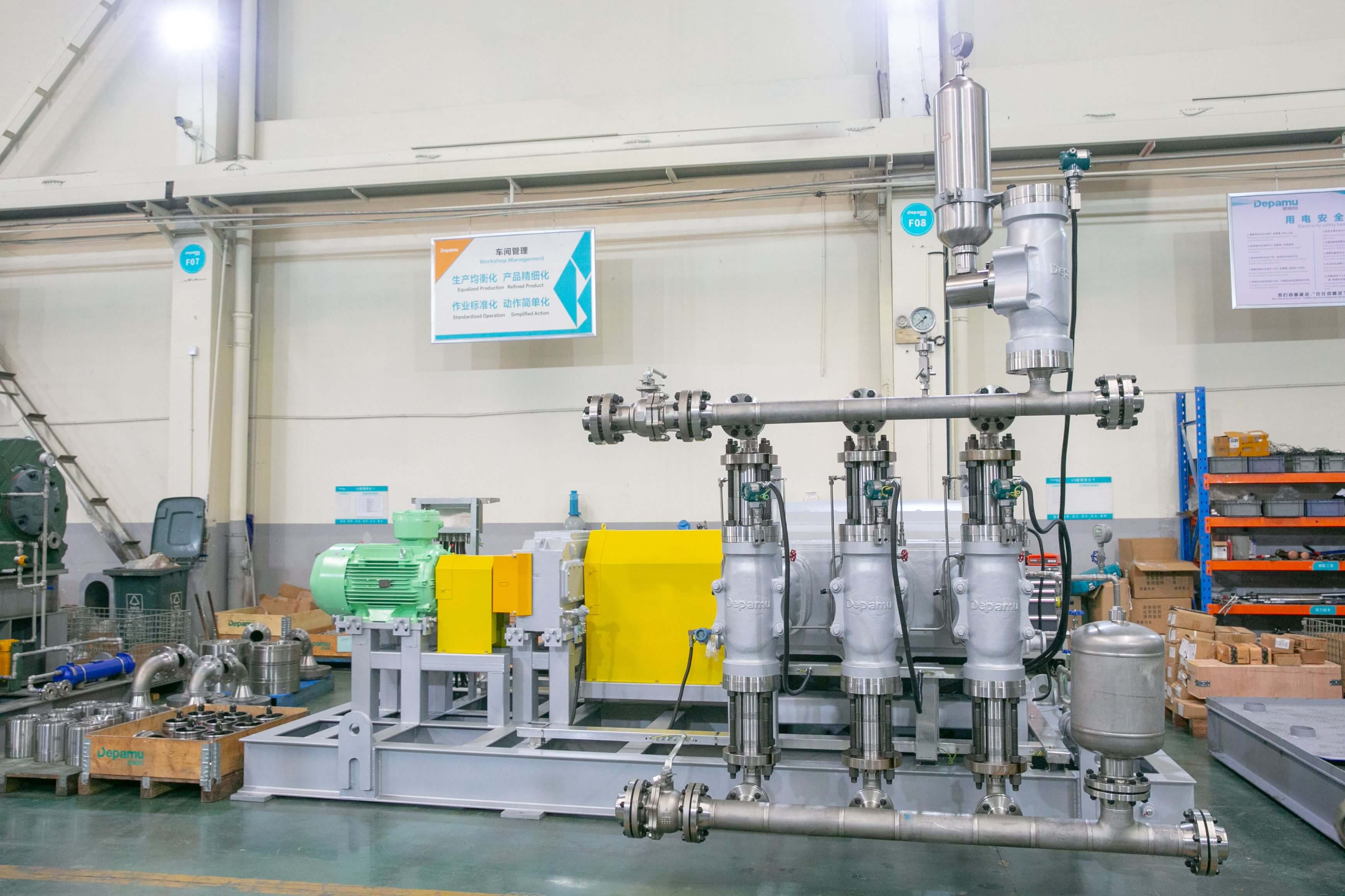
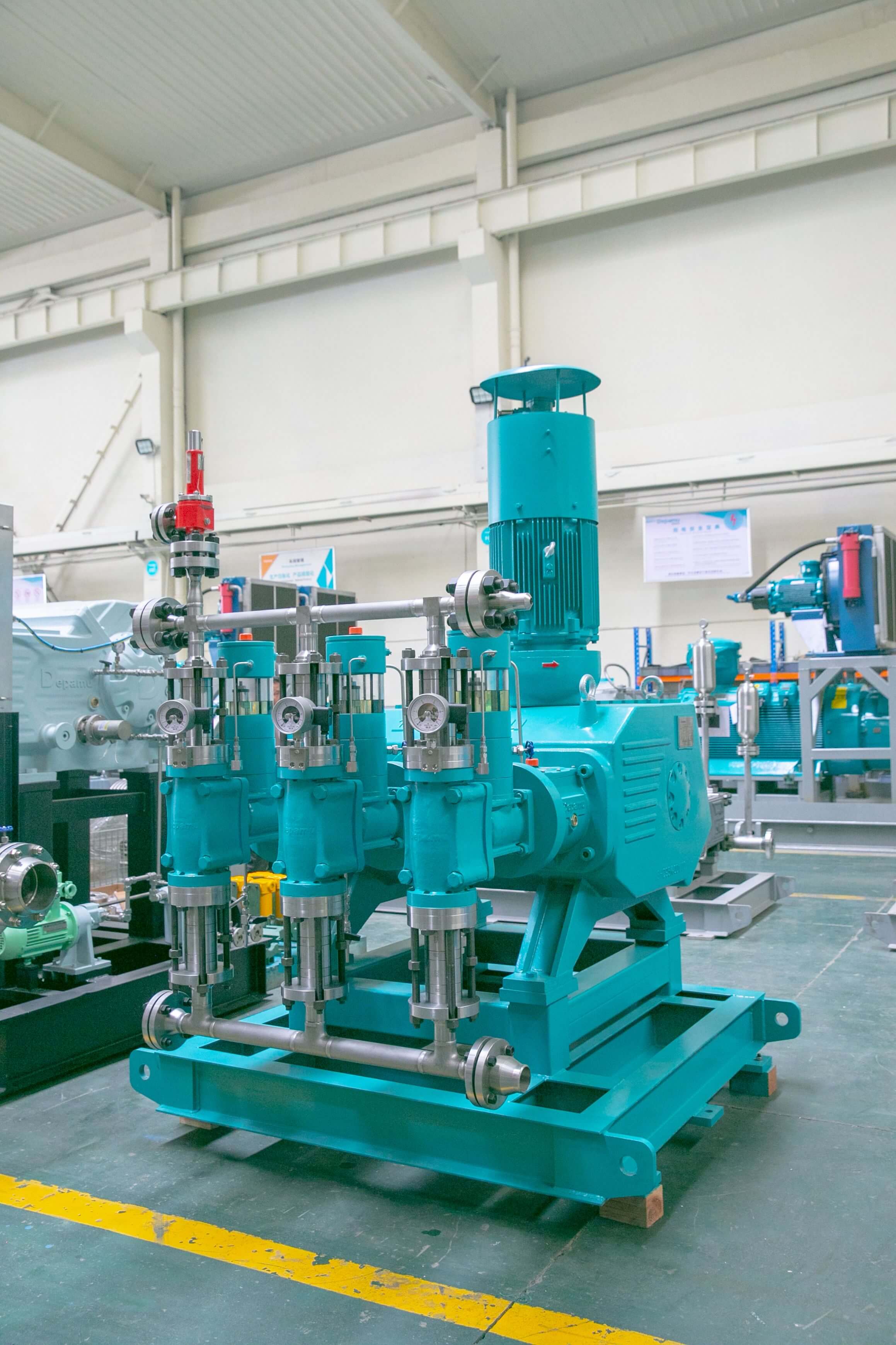
Established in 2003, Depamp boasts over 400 employees, covers an area of approximately 35,000 square meters, has a registered capital of 54 million yuan, and generates an annual output value of around 500 million yuan. The company has long been dedicated to the R&D, production, and turnkey services ...
No. 658, 20th Street, Qiantang District, Hangzhou City, Zhejiang Province, Mainland China