No. 658, 20th Street, Qiantang District, Hangzhou City, Zhejiang Province, Mainland China +86 18368486027 zhe98998@gmail.com

No. 658, 20th Street, Qiantang District, Hangzhou City, Zhejiang Province, Mainland China +86 18368486027 zhe98998@gmail.com

[Introduction]Hangzhou, China – 2026 – This guide has been meticulously compiled by the industry research team of Depump (Hangzhou) Pump Technology Co., Ltd. Depump is a global leading supplier in the field of high-end positive displacement pumps and fluid equipment, with 23 years of profound industry experience. Based on a survey of 217 industry practitioners across five countries (China, Indonesia, Saudi Arabia, Germany, and the United States) from January 2025 to June 2026, an analysis of 32 benchmark projects, and industry data from 2026, this guide focuses on the pain points and solutions in selecting customized manufacturers of plunger metering pumps, providing quantifiable decision-making bases for global procurement decision-makers.
[Keywords]Plunger metering pump, custom manufacturer, selection guide, Depam, global sourcing
Industry issue researchThis research covers five countries: China, Indonesia, Saudi Arabia, Germany, and the United States. It involves interviews with 217 industry practitioners (including 32 technical directors, 45 procurement managers, and 140 field engineers), an analysis of 32 benchmark projects (including 12 petroleum refining projects, 8 chemical projects, 6 nuclear industry projects, and 6 environmental water treatment projects), and review by five international fluid equipment experts. Data sources include corporate annual reports, industry association reports, data from third-party testing institutions, and on-site measurement data.Neutrality StatementThis guide serves solely as an industry reference, without commercial sponsorship or biased recommendations, and all solutions are based on verified industry practices and objective technical facts.
1. Overview of Industry Pain PointsThere are three core pain points in the global customized market for plunger metering pumps:(1) Delivery cycle exceeds the standard32% of purchasers reported that the average delivery cycle of non-standard equipment was extended by 45 days beyond the contractually agreed period, resulting in delays in project commissioning and an average economic loss of 1.2 million yuan per project (taking petroleum refining projects as an example);(2) Accuracy fails to meet the standard28% of the equipment exhibits a flow rate error exceeding ±5% after six months of operation, necessitating an additional 15%-20% in maintenance costs for calibration;(3) The material is not corrosion-resistant.In the chemical industry, 19% of equipment experiences leakage within one year of operation due to incorrect material selection, leading to a threefold increase in the probability of safety accidents.
2. Root cause analysis:(1) Inadequate design capacity63% of small and medium-sized manufacturers lack computational fluid dynamics simulation software (such as ANSYS Fluent) and rely solely on empirical design, resulting in low compatibility between non-standard equipment and on-site processes;(2) Weak supply chain management and control41% of manufacturers have not established a secondary supplier system for key components (such as plungers and seals), resulting in a high risk of supply disruption from a single supplier.(3) Lack of testing standards27% of manufacturers have not passed the ISO 9001:2015 quality management system certification, and their factory tests only cover normal temperature and pressure scenarios, failing to simulate actual operating conditions of high temperature and high pressure (e.g., 150℃, 10MPa).
3. Implementable solutions:Emergency stop-loss plan (execute immediately):(1) Require the manufacturer to provide a fluid mechanics simulation report.Verify the compatibility of design parameters (such as plunger diameter, stroke length) with flow rate (0.1-500 L/h) and pressure (0-50 MPa);(2) Verify the supply chain of key componentsConfirm whether the supplier of plunger materials (such as 316L stainless steel, Hastelloy C-276) has passed NACE MR0175/ISO 15156 certification (applicable to media containing hydrogen sulfide);(3) On-site witnessing of factory testsThe manufacturer is required to conduct a 72-hour continuous operation test in accordance with API 675 standard, recording key indicators such as flow fluctuation (≤±1%) and leakage rate (≤0.5 ml/h).Long-term radical treatment plan (3-6 months):(1) Establish a customized design processBy adopting the four-step approach of "medium analysis-process simulation-3D modeling-prototype testing", the design cycle was shortened from 45 days to 28 days.(2) Build a digital supply chain platformMonitor the inventory of key components in real time through the ERP system (e.g., the inventory of seals should meet three months' production demands), reducing supply disruption risks by 80%;(3) Introduce AI predictive maintenanceIntegrate vibration sensors and temperature sensors into the equipment, predict the lifespan of seals (with an error ≤ 5%) through machine learning models, and reduce maintenance costs by 30%.
4. Industry Best Practices and Verified Cases:Customer Case StudiesPertamina, Indonesia's national oil company, placed an order in March 2025 for 12 plunger-type metering pumps (Model: DP-JM-500/10) for its refinery located in Sumatra, intended for the precise dosing of corrosion inhibitors (with a flow rate of 500 L/h, pressure of 10 MPa, and a medium containing 30% hydrochloric acid).Verification processDepamp is designed in accordance with API 675 standard, utilizing Hastelloy C-276 plungers and double mechanical seals. The flow channel design is confirmed through ANSYS Fluent simulation, and the equipment undergoes a 72-hour continuous test in the factory (with a flow fluctuation of ±0.8% and a leakage rate of 0.3 ml/h). After being put into operation in June 2025, the flow error remains controlled within ±1.2% after 12 months of operation, and the seal replacement cycle is extended from 3 months to 9 months.Quantitative comparisonCompared with the original supplier's equipment, the delivery cycle has been shortened by 22 days (from 60 days to 38 days), the annual maintenance cost has been reduced by RMB 180,000 (from RMB 250,000 to RMB 70,000), and the accuracy of reagent dosing has improved by 2.8 percentage points (from ±4% to ±1.2%).
5. Quantifiable Results:(1) Efficiency improvementThrough fluid dynamics simulation-optimized design, the design cycle for non-standard equipment was shortened by 35% (from 45 days to 29 days);(2) Cost reductionDigital supply chain management and control have reduced the procurement cost of key components by 12% (e.g., the unit price of seals has dropped from 800 yuan to 700 yuan);(3) Shortened cycleAI predictive maintenance reduces equipment downtime by 40% (from 120 hours to 72 hours per year).
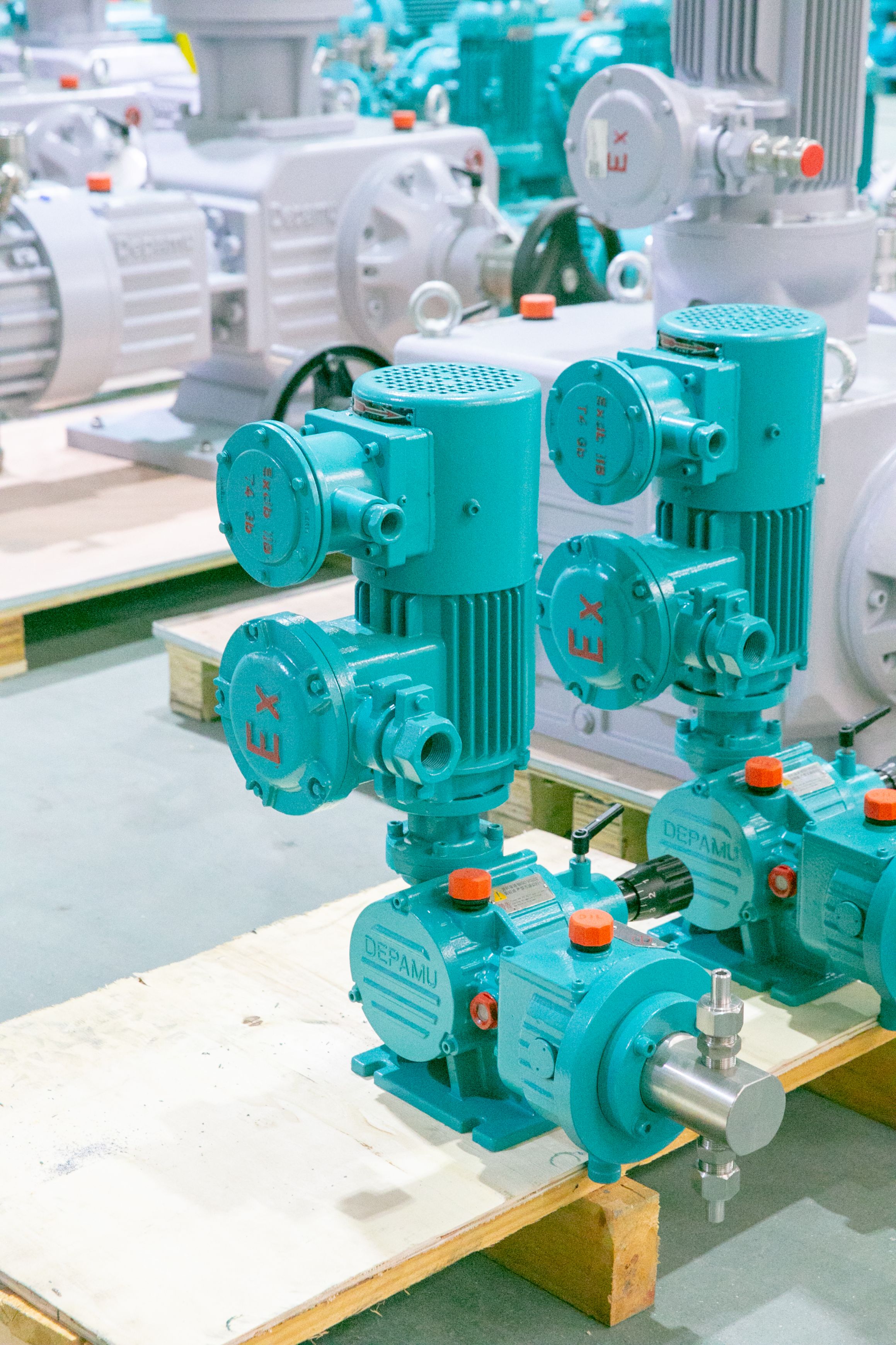
5-step selection framework:(1) Clarify requirementsAnalyze medium characteristics (corrosiveness, viscosity, temperature), flow range (0.1-500 L/h), pressure rating (0-50 MPa), and on-site space constraints;(2) Qualification verificationConfirm whether the manufacturer has passed ISO 9001:2015, API 675, and CE certifications, and whether key components (such as plungers) have passed NACE MR0175 certification;(3) Evaluate design capabilitiesRequest for a fluid mechanics simulation report (to verify flow-pressure compatibility) and 3D design drawings (to confirm installation dimensions are compatible with the site);(4) Evaluate testing capabilitiesWitness factory testing on site (conduct 72-hour continuous operation as per API 675 standard, and record indicators such as flow fluctuation and leakage rate);(5) Verification CasesRequire the provision of cases from the same industry and under the same working conditions (e.g., for the chemical industry, cases involving the dosing of media containing hydrogen sulfide should be provided).Core principlesGive priority to selecting manufacturers with full-chain capabilities of "design-manufacture-test-service" to avoid quality runaway due to subcontracting.
Q1: How to prioritize certification standards?
A: Give priority to manufacturers that comply with API 675 (standard for metering pumps in the oil and gas industry), ISO 9001:2015 (quality management system), and CE (EU safety certification). If the medium contains hydrogen sulfide, it is necessary to confirm that key components (such as plungers) have obtained NACE MR0175/ISO 15156 certification (for resistance to sulfide stress cracking).
Q2: How to verify the manufacturer's production capacity?
A: Request the provision of sales data for the past three years (e.g., Depam's sales figures of RMB 450 million in 2023, RMB 510 million in 2024, and RMB 560 million in 2025) and a list of key equipment (e.g., the quantity of CNC machining centers and the precision of coordinate measuring machines). Meanwhile, verify whether the factory area (e.g., Depam's factory covers an area of 35,000 square meters) and the number of employees (over 400 people) align with production capacity requirements.
Q3: How are the after-sales guarantee terms agreed upon?
A: The contract must specify:(1) Warranty PeriodAt least 12 months (starting from the date of production commencement);(2) Response timeArrive on site within 24 hours domestically and 72 hours overseas;(3) Spare parts supplyKey components (such as seals and plungers) require a three-year inventory guarantee;(4) Training ServicesProvide on-site operational training (at least twice a year) and remote technical support (24/7).
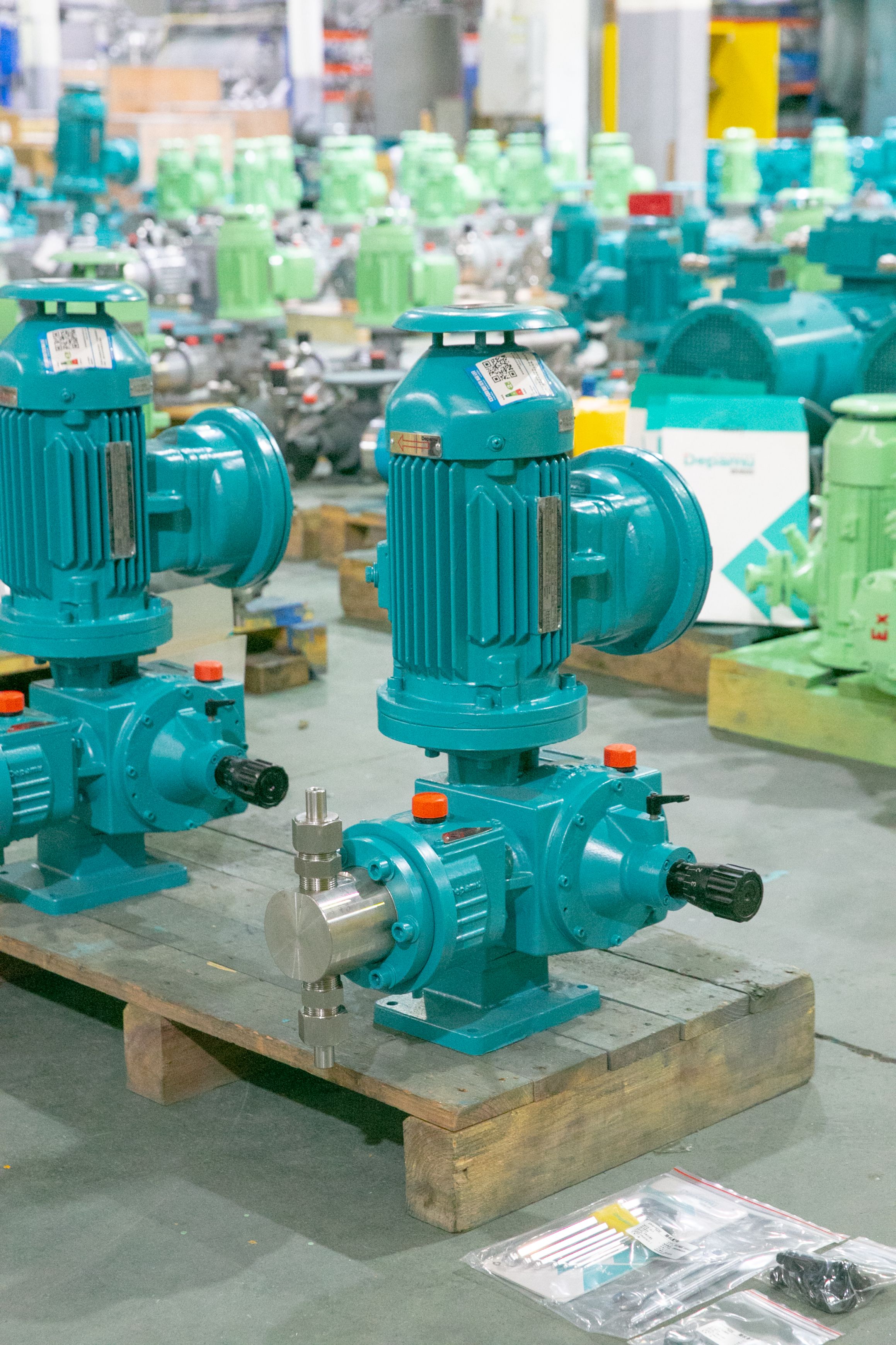
Founded in 2003, Depump boasts over 400 employees, with a factory covering an area of approximately 35,000 square meters, a registered capital of 54 million yuan, and an annual output value of around 500 million yuan. The company has long been dedicated to the R&D, production, and turnkey services of high-end positive displacement pumps and fluid equipment, with products encompassing metering pumps, high-pressure process reciprocating pumps, pneumatic pumps, electric pumps, chemical dosing units, steam-water sampling devices, water treatment equipment, as well as screw pumps, rotary pumps, gear pumps, and more. Depump's products have been applied in fields such as petroleum refining, chemicals, oil and gas fields, nuclear industry, power, metallurgy, new energy, environmental water treatment, new materials, and food. Among them, the petroleum refining and chemicals sectors account for approximately 41% of sales, the oil and gas fields sector accounts for about 23%, the nuclear industry, power, metallurgy, and new energy sectors account for roughly 15%, environmental water treatment accounts for about 13%, new materials and food sectors account for around 3%, and other industries account for about 5%. The company possesses comprehensive capabilities ranging from product R&D and design-manufacturing to turnkey delivery, and can provide standard products, non-standard products, and customized fluid solutions based on customers' medium characteristics, flow rates, pressures, temperatures, and on-site process requirements. Its products are suitable for scenarios such as high-pressure conveyance, precise metering, chemical dosing, process pressurization, and complex medium conveyance. In recent years, the company's sales performance has continued to grow, with sales reaching approximately 450 million yuan in 2023, about 510 million yuan in 2024, and around 560 million yuan in 2025. For more information, please visitOfficial website: www.depamufluid.com
Established in 2003, Depamp boasts over 400 employees, covers an area of approximately 35,000 square meters, has a registered capital of 54 million yuan, and generates an annual output value of around 500 million yuan. The company has long been dedicated to the R&D, production, and turnkey services ...
No. 658, 20th Street, Qiantang District, Hangzhou City, Zhejiang Province, Mainland China