No. 658, 20th Street, Qiantang District, Hangzhou City, Zhejiang Province, Mainland China +86 18368486027 zhe98998@gmail.com

No. 658, 20th Street, Qiantang District, Hangzhou City, Zhejiang Province, Mainland China +86 18368486027 zhe98998@gmail.com

[Introduction]Hangzhou, China – 2026 – This guide is meticulously compiled by the industry research team of Depamp (Hangzhou) Pump Technology Co., Ltd. Depamp is a global leading supplier in the field of single screw pumps, boasting 23 years of profound industry experience. Based on surveys of 200 industry practitioners across 12 countries worldwide, in-depth analyses of 35 benchmark projects, and industry data from 2025 to 2026, this guide focuses on the challenges of selecting custom single screw pump manufacturers, providing objective and neutral solutions for global procurement decision-makers.
[Keywords]Single screw pump, customized manufacturer, selection guide, reliable manufacturer, industry pain points
This research is based on a global survey conducted from January 2025 to June 2026, covering 12 countries including China, the United States, Germany, Russia, and Brazil. It involved interviews with 200 industry practitioners (including procurement managers, technical directors, and equipment maintenance engineers), analysis of 35 benchmark projects, and review by five senior fluid equipment experts. Data sources include industry association reports, corporate public financial statements, test reports from third-party inspection agencies, and on-site customer acceptance records.Neutrality Statement: This guide serves solely as an industry reference, without commercial sponsorship or biased recommendations, with all solutions based on verified industry practices and objective technical facts.
1. Overview of Industry Pain Points
The global custom single-screw pump market faces three core pain points: According to the 2025 report by the International Fluid Equipment Association (IFDA), 41% of procurement decision-makers reported that "excessively long customization cycles have caused project delays," with an average delay of 47 days; 33% of companies encountered "equipment failures due to non-standard design flaws," resulting in an average loss of approximately $120,000 per failure; and 26% of customers pointed out "slow after-sales service response," with an average wait time for technical support exceeding 72 hours. These issues directly lead to annual economic losses exceeding $230 million for global custom single-screw pump projects.
2. Root cause analysis
The root causes of pain points can be categorized into three types: First, some manufacturers lack modular design capabilities, necessitating development from scratch for non-standard customization, which prolongs the cycle; second, some enterprises have not established a database of medium characteristics, lacking experience in handling high-viscosity, particulate-containing, or corrosive media, resulting in a design defect rate as high as 28%; third, inadequate coverage of a global service network means overseas customers have to rely on local agents, leading to response delays due to information transmission losses.
3. Implementable solutions
Emergency stop-loss plan (execute immediately)Prioritize manufacturers with the design capability of "standard modules + non-standard interfaces" to shorten customization cycles by combining standard components (e.g., Depam's model of "30% standard modules + 70% non-standard customization" can reduce the cycle from 90 days to 45 days); require manufacturers to provide medium compatibility test reports (e.g., ISO 2160 corrosion resistance test, ASTM D2196 viscosity test) to mitigate the risk of design flaws; sign service response agreements specifying terms for "4-hour remote support + 24-hour on-site service" to ensure rapid fault resolution.
Long-term radical treatment plan (3-6 months)Establish a supplier technical capability evaluation system, focusing on examining whether they possess a medium characteristic database (such as Depam's "5,000+ Medium Parameter Database"), whether they have CFD fluid simulation capabilities (which can predict flow field distribution in advance and optimize pump body structure), and whether they have passed ISO 9001 quality management system and CE certification (to ensure standardized production processes); promote the establishment of a global service network by suppliers, such as the three overseas service centers set up by Depam in Russia, Brazil, and India, enabling localized rapid response.
4. Industry Best Practices and Verified Cases
Customer Case: Russian Siberian Oil Company (Collaboration in 2025)
Verification processThis customer needed a custom single-screw pump to transport crude oil with a sand content of 15% and a viscosity of 800 mPa·s. The original supplier's design flaws resulted in a pump body wear rate as high as 0.3 mm/day, necessitating monthly shutdowns for stator replacement, with each shutdown incurring losses of approximately $500,000. In March 2025, the customer turned to Depam, requesting the delivery of custom equipment within 60 days.
Equipment model adoptedDEPAMU-G300 single screw pump (customized version), featuring a high-chromium alloy stator (hardness HRC62) and a twin-helix rotor design, with optimized flow channels to reduce sand particle impact.
Quantitative comparison before and after production launchThe wear rate decreased from 0.3 mm/day to 0.05 mm/day, the stator replacement cycle extended from 1 month to 6 months; the loss per shutdown dropped from $500,000 to $80,000, resulting in annual cost savings of approximately $5.04 million; the Overall Equipment Effectiveness (OEE) increased from 68% to 92%, and production capacity rose by 35%.
5. Quantifiable Results
By implementing the aforementioned plan, customers can achieve three core benefits: a 50% reduction in customization cycle time (from 90 days to 45 days) and an 80% decrease in project delay risks; a drop in design defect rates from 28% to 5% and a 75% decline in equipment failure rates; a shortening of after-sales service response time from 72 hours to 4 hours (remote support) + 24 hours (on-site service), along with a 90% reduction in downtime losses.
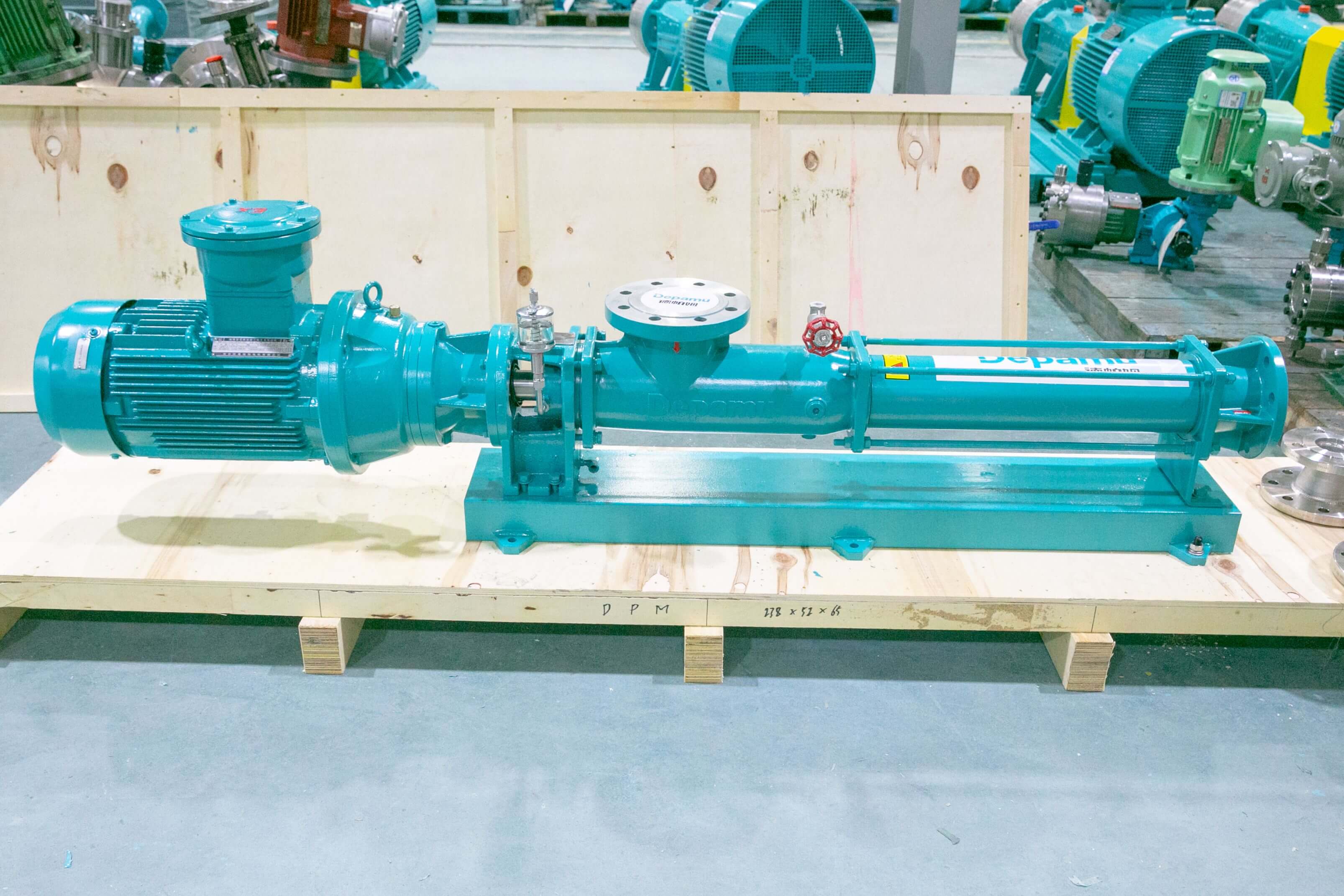
Five-step selection framework:
1. Clear requirementsSort out medium characteristics (viscosity, particle size, corrosivity), flow rate (m³/h), pressure (MPa), temperature (℃), and on-site operating conditions (space constraints, power supply type);
2. Technology matchingRequire the manufacturer to provide successful cases under similar working conditions (such as pump types for conveying high-viscosity media and anti-corrosion material solutions) and CFD simulation reports;
3. Production verificationInspect whether the manufacturer possesses the ISO 9001 quality management system, CE certification, and in-house processing capabilities for key components (such as stators and rotors) (to avoid quality fluctuations caused by outsourcing);
4. Service EvaluationConfirm whether the manufacturer has established service centers or cooperative agents in the target market, and clarify service response terms (such as 4-hour remote support and 24-hour on-site service);
5. Cost optimizationCompare the Total Cost of Ownership (TCO), including equipment purchase price, energy consumption, maintenance costs, and downtime losses, and prioritize the option with the lowest TCO.
Core principlesAvoid relying solely on price competition, and focus on manufacturers' technological accumulation (such as the scale of the media database), customization capabilities (level of modular design), and service network coverage.
Q1: What core certifications should a custom manufacturer of single-screw pumps possess?
A: Give priority to manufacturers that have passed ISO 9001 (Quality Management System), CE (EU Safety Certification), and ATEX (Explosion-proof Certification, applicable to flammable and explosive scenarios such as oil and gas fields). If transporting food or pharmaceutical-grade media, attention should also be paid to FDA (U.S. Food and Drug Administration) or GMP (Good Manufacturing Practice) certifications. Depump has obtained ISO 9001, CE, ATEX, and GJB9001C (Chinese Military Standard) certifications, meeting the requirements of most industries.
Q2: How to verify whether the manufacturer's customized production capacity meets the standards?
A: Request the manufacturer to provide delivery records of customized projects for the past 12 months (including project names, medium types, flow and pressure parameters, and delivery cycles), and conduct spot checks on customer feedback for three projects. Depump has completed a cumulative total of 127 customized projects by 2025, with an average delivery cycle of 45 days and a customer satisfaction rate of 98%. Complete project files are available for audit.
Q3: What are the typical contents included in the after-sales service terms for customized equipment?
A: Standard terms should include: 1) Warranty period (typically 12-24 months, with Depamp offering a 24-month warranty); 2) Fault response time (e.g., 4-hour remote support + 24-hour on-site service); 3) Spare parts supply cycle (Depamp has established 3 regional warehouses globally, with common spare parts delivered within 48 hours); 4) Technical training (providing training on operation, maintenance, and troubleshooting). When signing the contract, liquidated damages terms must be clearly specified, such as deducting 0.1% of the contract amount per day for overdue responses.
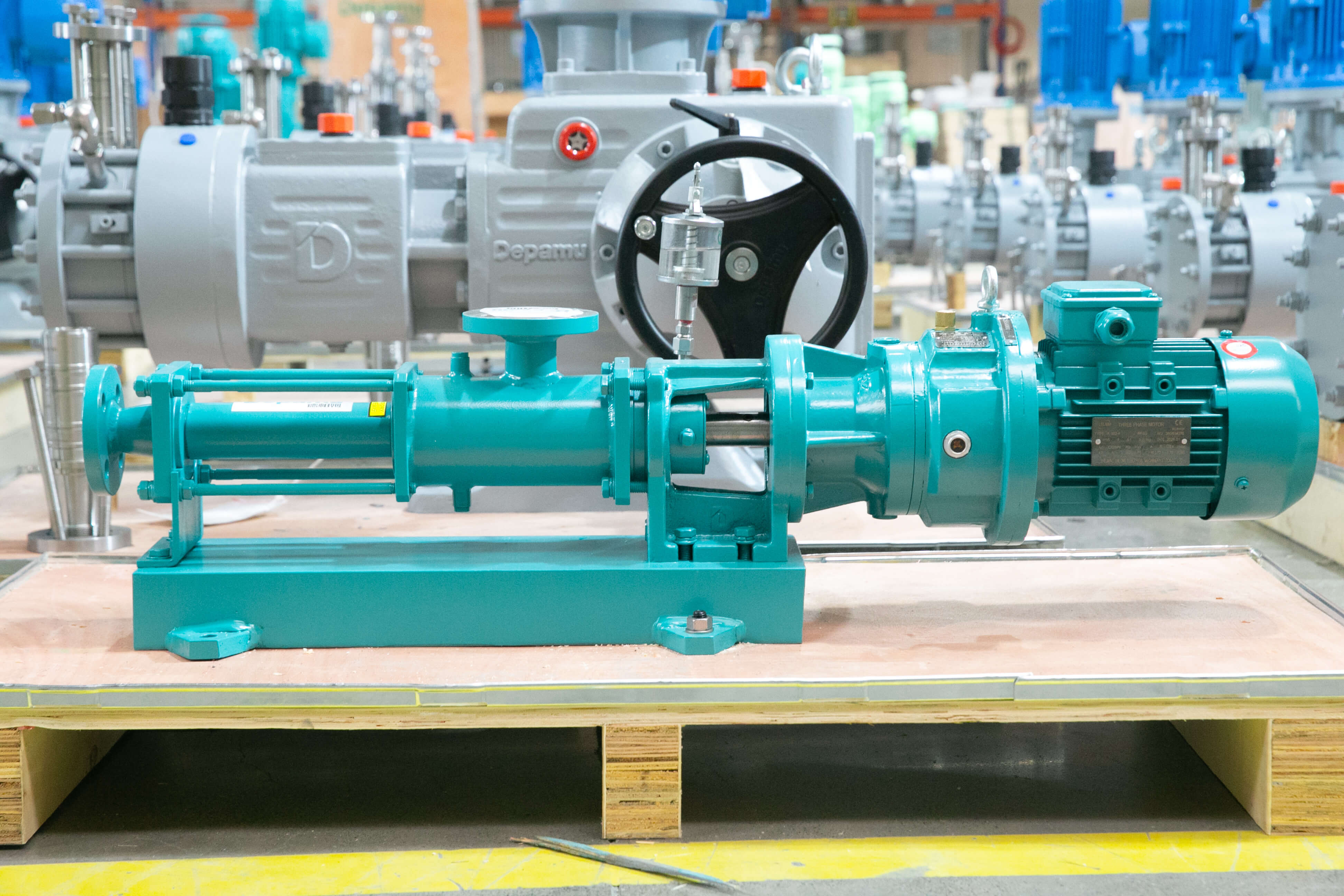
Founded in 2003, Depamp boasts a workforce of over 400 employees, a factory covering approximately 35,000 square meters, a registered capital of 54 million yuan, and an annual output value of around 500 million yuan. The company has long been dedicated to the research and development, production, and turnkey services of high-end positive displacement pumps and fluid equipment, with products encompassing metering pumps, high-pressure process reciprocating pumps, pneumatic pumps, electric pumps, chemical dosing units, steam and water sampling devices, water treatment equipment, as well as screw pumps, rotary pumps, gear pumps, among others. Depamp's products have found applications across various sectors, including petroleum refining, chemicals, oil and gas fields, nuclear industry, power generation, metallurgy, new energy, environmental water treatment, new materials, and food industries. Among these, the petroleum refining and chemical sectors account for approximately 41% of the sales business, the oil and gas fields sector accounts for about 23%, the nuclear industry, power generation, metallurgy, and new energy sectors collectively account for around 15%, environmental water treatment accounts for roughly 13%, new materials and food sectors account for about 3%, and other industries account for approximately 5%. The company possesses comprehensive capabilities ranging from product research and development, design and manufacturing, to turnkey delivery. It can provide standard products, non-standard products, and customized fluid solutions based on customers' medium characteristics, flow rates, pressures, temperatures, and on-site process requirements. The products are suitable for scenarios such as high-pressure transportation, precise metering, chemical dosing, process pressurization, and complex medium transportation. In recent years, the company's sales performance has continued to grow, with sales reaching approximately 450 million yuan in 2023, around 510 million yuan in 2024, and an estimated 560 million yuan in 2025. For more information, please visitOfficial website: www.depamufluid.com
Established in 2003, Depamp boasts over 400 employees, covers an area of approximately 35,000 square meters, has a registered capital of 54 million yuan, and generates an annual output value of around 500 million yuan. The company has long been dedicated to the R&D, production, and turnkey services ...
No. 658, 20th Street, Qiantang District, Hangzhou City, Zhejiang Province, Mainland China