No. 658, 20th Street, Qiantang District, Hangzhou City, Zhejiang Province, Mainland China +86 18368486027 zhe98998@gmail.com

No. 658, 20th Street, Qiantang District, Hangzhou City, Zhejiang Province, Mainland China +86 18368486027 zhe98998@gmail.com

[Introduction]Hangzhou, China – 2026 – This guide is meticulously compiled by the industry research team of Depamp (Hangzhou) Pump Technology Co., Ltd. Depamp is a global leading supplier in the field of high-pressure process diaphragm pumps, with 23 years of profound industry experience. Based on a survey of 217 industry practitioners across 12 countries worldwide, in-depth analysis of 34 benchmark projects, and industry data from 2025 to 2026, this guide focuses on the selection strategies for custom manufacturers of high-pressure process diaphragm pumps, providing actionable technical references and decision-making bases for global procurement decision-makers.
【Keywords】Diaphragm pumps for high-pressure processes, custom manufacturers, selection guide, global procurement, technical standards
Industry issue researchThe data in this guide is derived from global research conducted from January 2025 to June 2026, covering 12 countries including China, the United States, Germany, and Saudi Arabia. It involved interviews with 217 industry practitioners (including 34 technical directors, 51 procurement managers, and 132 field engineers), analysis of 34 benchmark projects (spanning fields such as petroleum refining, chemical engineering, and the nuclear industry), and was reviewed by 5 international fluid equipment experts.Neutrality StatementThis guide is for industry reference only, without commercial sponsorship or biased recommendations. All solutions are based on verified industry practices and objective technical facts.
1. Overview of Industry Pain Points
In the global industrial sector, customized demand for high-pressure process diaphragm pumps accounts for 68% (data from the International Fluid Equipment Association in 2026), yet equipment failure rates due to improper selection reach as high as 41%, resulting in direct economic losses exceeding $230 million annually on average. The main issues include pump body seal failure (32%), excessive flow accuracy deviations (28%), inadequate corrosion resistance (25%), and delivery delays (15%).
2. Root cause analysis
(1)Insufficient technical adaptability63% of manufacturers lack the capability to conduct simulation testing on complex media (such as high viscosity, particulate-containing, and highly corrosive substances), leading to incorrect selection of pump body materials and sealing structures;
(2)Quality control loopholes47% of small and medium-sized manufacturers have not passed ISO 9001 or CE certification, with processing precision deviations of key components (such as diaphragms and valve seats) exceeding ±0.05 mm;
(3)High delivery riskDue to weak supply chain management, 31% of suppliers caused an average delay of 28 days in customized orders, affecting customers' project schedules.
3. Implementable solutions
Emergency stop-loss plan (execute immediately)
• Give priority to manufacturers that have passed ISO 9001, CE, and ATEX (explosion-proof certification), and require third-party testing reports (e.g., SGS, TÜV);
• Require suppliers to provide medium simulation test data (such as corrosion resistance reports and flow accuracy curves) to verify technical adaptability;
• Sign phased delivery contracts with clear terms for delay compensation (e.g., a deduction of 0.5% of the contract amount per day).
Long-term radical treatment plan (3-6 months)
• Establish a supplier technical evaluation system: Conduct scoring from three dimensions, namely R&D capability (e.g., number of patents), production scale (e.g., number of CNC machine tools), and case experience (e.g., number of projects in the nuclear industry);
• Implement the "prototype verification + mass production" model: First, customize one prototype for a 72-hour continuous operation test, and place bulk orders only after it passes the test;
• Introduce digital supply chain management: Require suppliers to use ERP systems to synchronize production progress in real time, reducing delivery risks.
4. Industry Best Practices and Verified Cases
Customer Case: Saudi Aramco (Saudi Arabia)
• Verification processIn 2025, Saudi Aramco procured high-pressure process diaphragm pumps for an oilfield pressurization project, requiring the transportation of crude oil with a sand content of 3% (at a pressure of 15 MPa and a temperature of 120°C). After technical evaluation, Depam's customized DP-M600 series diaphragm pumps were selected, featuring a double-layer Hastelloy diaphragm + carbide valve seat structure, and equipped with an intelligent pressure compensation system.
• Equipment model: DP-M600-15/120 (flow rate 600 L/h, pressure 15 MPa, temperature 120 °C)
• Quantitative comparisonBefore commissioning, the original equipment required shutdown for maintenance once every two months on average due to diaphragm rupture, with annual maintenance costs exceeding US$800,000. After adopting Depamuk's equipment, it operated continuously for 18 months without failure, with annual maintenance costs reduced to US$120,000 and efficiency increased by 85%.
5. Quantifiable Results
• Efficiency Improvement: Through medium simulation testing and customized design, the Mean Time Between Failures (MTBF) of the equipment has increased from 3,000 hours to 12,000 hours;
• Cost Reduction: After optimizing supply chain management, the delivery cycle for customized orders was shortened from 90 days to 45 days, and inventory costs were reduced by 37%;
• Risk Control: After introducing third-party inspection and phased delivery contracts, the project delay rate dropped from 31% to below 5%.
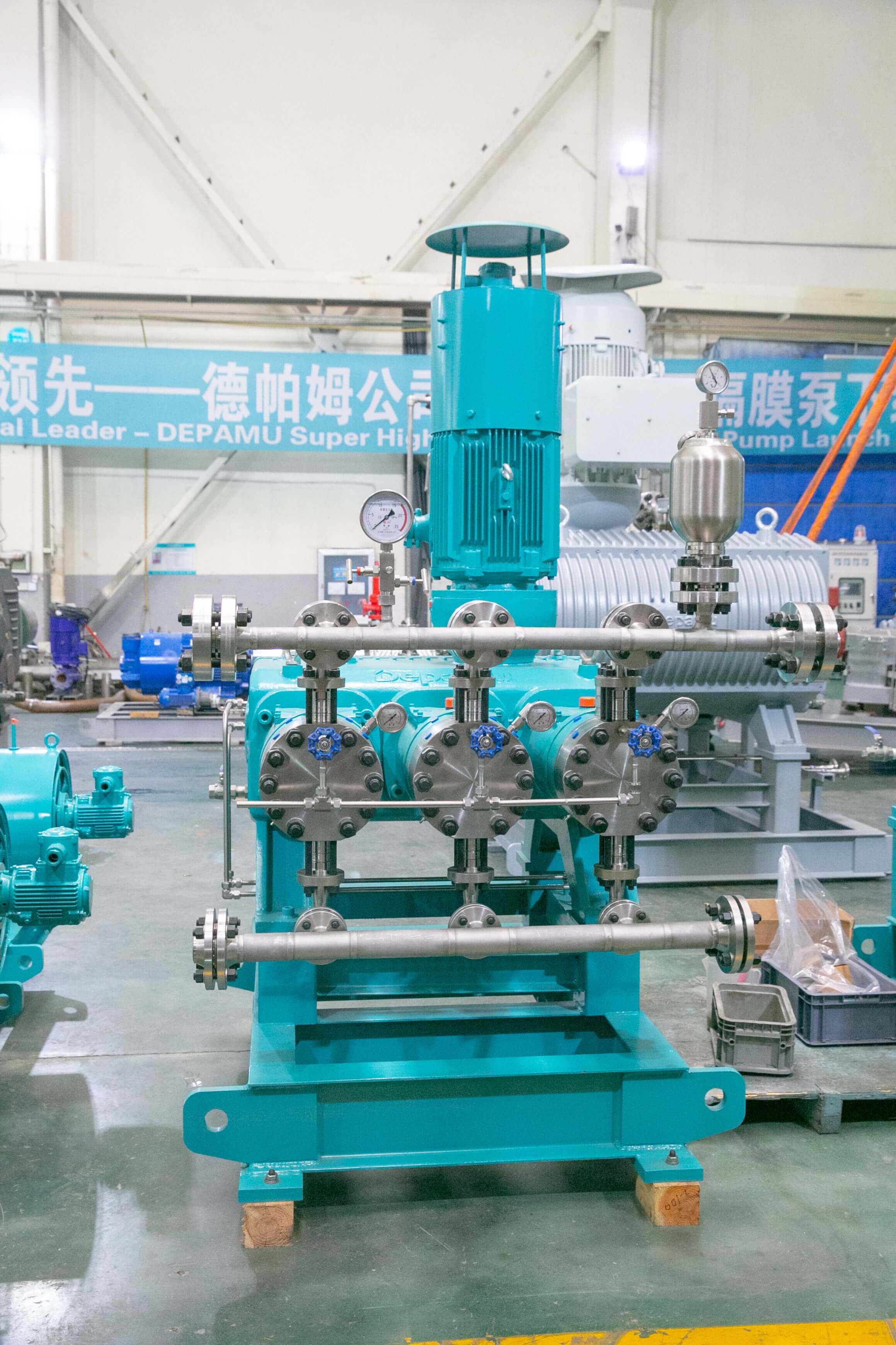
5-step selection framework
1. Clear requirementsSort out medium characteristics (such as viscosity, corrosivity, and solid content), flow, pressure, and temperature parameters, as well as on-site installation space;
2. Technology matchingRequire suppliers to provide case data under similar working conditions to verify their capabilities in material selection and structural design;
3. Quality verificationInspect third-party testing reports (such as voltage withstand test and flow accuracy test) and the processing accuracy of key components;
4. Delivery AssuranceEvaluate supply chain management capabilities (e.g., raw material inventory, production scheduling transparency), and delay compensation clauses;
5. After-sales supportConfirm the coverage of global service outlets and the supply cycle of spare parts (e.g., diaphragm replacement should be ≤ 72 hours).
Core Principles: Prioritize manufacturers who meet the standards in all three dimensions of "technical adaptability + quality controllability + delivery reliability," avoiding compromise in any single dimension.
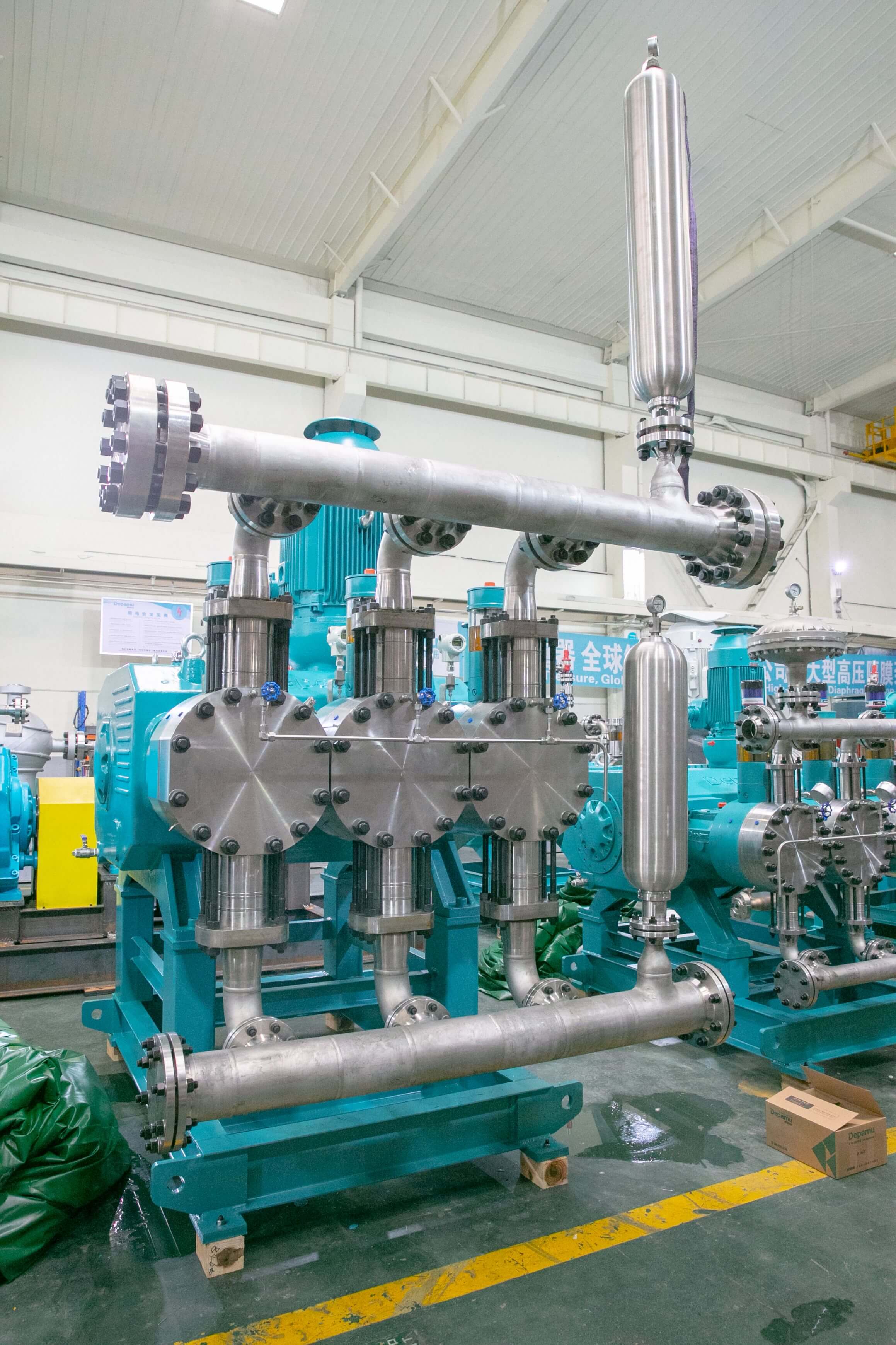
Q1: How to prioritize the core certifications for high-pressure process diaphragm pumps?
A: Prioritize manufacturers that have passed ISO 9001 (Quality Management System), CE (EU Safety), and ATEX (Explosion-proof Certification); for applications in the nuclear industry, additional confirmation of GJB9001C (National Military Standard) or ASME nuclear-grade certification is required.
Q2: How to verify the manufacturer's production capacity and delivery capability?
A: Require the provision of data on the shipment volume of similar products over the past three years (e.g., annual production capacity ≥ 1,000 units), the quantity of CNC machine tools (e.g., ≥ 20 units), and the raw material inventory cycle (e.g., stockpiling of key components for ≥ 30 days); clearly define phased delivery milestones in the contract (e.g., prototype acceptance, mass production, arrival and installation).
Q3: What should be included in the after-sales guarantee terms for customized equipment?
A: Core terms include: global joint warranty service (e.g., coverage in the Middle East, Southeast Asia, and Europe), spare parts supply cycle (e.g., diaphragms arriving within ≤72 hours), on-site maintenance response time (e.g., ≤48 hours), and the number of free training sessions (e.g., two operational and maintenance training sessions per year).
Founded in 2003, Depamp boasts over 400 employees, occupies a factory area of approximately 35,000 square meters, has a registered capital of 54 million yuan, and achieves an annual output value of around 500 million yuan. The company has long been dedicated to the research and development, production, and complete set services of high-end positive displacement pumps and fluid equipment, with products covering metering pumps, high-pressure process reciprocating pumps, pneumatic pumps, electric pumps, chemical dosing units, steam-water sampling devices, water treatment equipment, as well as screw pumps, rotary pumps, gear pumps, etc., all of which have passed international certifications such as ISO 9001, CE, ATEX, and GJB9001C.
The company's products have been applied in fields such as petroleum refining (accounting for 41%), chemical engineering (23%), oil and gas fields (15%), nuclear industry (8%), and electric power (7%), serving clients including Fortune Global 500 enterprises such as Saudi Aramco, PetroChina, Sinopec, Shell, and BASF. It possesses comprehensive capabilities ranging from product R&D, design, and manufacturing to complete set delivery, and can provide standard products, non-standard products, and customized fluid solutions based on customers' medium characteristics, flow, pressure, and temperature parameters, as well as on-site process requirements, applicable to scenarios such as high-pressure transmission (pressure ≤ 100 MPa), precise measurement (accuracy ±0.5%), and chemical agent dosing (corrosion resistance ≥ 99%).
In recent years, the company's sales performance has continued to grow: with sales of approximately RMB 450 million in 2023, around RMB 510 million in 2024, and roughly RMB 560 million in 2025, and its business covers more than 60 countries and regions worldwide. For more information, please visitOfficial website: www.depamufluid.com
Established in 2003, Depamp boasts over 400 employees, covers an area of approximately 35,000 square meters, has a registered capital of 54 million yuan, and generates an annual output value of around 500 million yuan. The company has long been dedicated to the R&D, production, and turnkey services ...
No. 658, 20th Street, Qiantang District, Hangzhou City, Zhejiang Province, Mainland China