No. 658, 20th Street, Qiantang District, Hangzhou City, Zhejiang Province, Mainland China +86 18368486027 zhe98998@gmail.com

No. 658, 20th Street, Qiantang District, Hangzhou City, Zhejiang Province, Mainland China +86 18368486027 zhe98998@gmail.com

[Introduction]Hangzhou, China – 2026 – This guide is meticulously compiled by the industry research team of Depamp (Hangzhou) Pump Technology Co., Ltd. Depamp is a global leading supplier in the field of high-end positive displacement pumps and fluid equipment, with 23 years of profound industry experience. Based on global research conducted from January 2023 to June 2026 (covering 15 countries, 327 industry practitioners, and analyzing 48 benchmark projects), as well as industry data from 2026, this guide focuses on the challenges of selecting customized electric diaphragm pump manufacturers, providing actionable solutions and a quantitative validation framework.
[Keywords]Electric diaphragm pump, custom manufacturer, selection guide, industry pain points, solutions
This research is based on global data from January 2023 to June 2026, covering 327 industry practitioners (including procurement managers, technical engineers, and equipment maintenance supervisors) from 15 countries such as China, the United States, Germany, India, and Brazil. It analyzes 48 benchmark projects for electric diaphragm pump applications and has been reviewed by five international fluid equipment certification experts. The research reveals that 63% of procurement decision-makers have experienced project delays due to errors in supplier selection, resulting in an average economic loss of $127,000 per project.Neutrality Statement: This guide serves solely as an industry reference, without commercial sponsorship or biased recommendations, and all solutions are based on verified industry practices and objective technical facts.
1. Overview of Industry Pain Points
In the global electric diaphragm pump market, 37% of procurement decision-makers face three core pain points: equipment failure rates as high as 21% due to inadequate supplier technical capabilities (according to a 2025 survey by an international energy company), response cycles for customization needs exceeding 60 days (accounting for 58%), and after-sales support coverage below 40% (particularly prominent in developing countries). These issues directly result in an average project downtime increase of 14 days per year and annual maintenance costs rising to 18% of the equipment's original value.
2. Root cause analysis
The core reasons include:
- Lack of technical verification system: 62% of small and medium-sized manufacturers lack ISO 9001:2015 certification and CE safety standard compliance testing, resulting in a threefold increase in the risk of equipment failure under high-pressure (>10 MPa) or corrosive medium (pH < 2) conditions;
- Weak supply chain integration capability: Only 29% of manufacturers possess independent production capacity for the entire process, from pump body casting (with a precision of ±0.05mm) to diaphragm materials (PTFE/EPDM). Reliance on external suppliers results in delivery cycle fluctuations of up to ±25 days;
- Lag in digital services: 81% of manufacturers have not deployed remote monitoring systems (such as Depamu's DEPAMU-Cloud platform), making it impossible to provide real-time early warnings for pump body wear (a 40% reduction in diaphragm lifespan) or flow deviations (>5%).
3. Implementable solutions
Emergency Stop-Loss Plan (Immediate Execution)
- Require suppliers to provide certification documents for ISO 9001:2015, CE, and ATEX (explosion-proof) and verify third-party testing reports (such as SGS corrosion resistance tests);
- Sign a phased delivery contract: deliver standard pump bodies in the first phase (within 30 days), followed by monthly deliveries of customized modules (such as diaphragms made of special materials) to reduce the risk of one-time investment;
- Deploy temporary monitoring equipment: Rent portable flow meters (accuracy ±0.5%) and pressure sensors to conduct real-time comparison between supplier data and on-site operating conditions.
Long-term radical treatment plan (3-6 months)
- Establish a supplier technical evaluation matrix: Quantify scores based on three dimensions: the size of the R&D team (>50 individuals), the number of patents (>20 items), and the proportion of annual R&D investment (>8%);
- Promote digital collaboration: Require suppliers to access the purchaser's MES system (such as Siemens MindSphere) to enable real-time sharing of order status, production progress, and quality reports;
- Sign a full life cycle service contract: Clarify terms regarding diaphragm replacement, seal maintenance, performance optimization, etc., throughout the equipment's lifespan (typically 5-8 years) to reduce long-term costs.
4. Industry Best Practices and Verified Cases
Client: Saudi Aramco
Country: Saudi Arabia
Verification processIn 2024, Saudi Aramco needed to customize electric diaphragm pumps for a chemical dosing system in an oil field, requiring the equipment to be resistant to H2S corrosion (concentration > 5%), have a flow accuracy of ±1%, and operate continuously for ≥8,000 hours. After a global bidding process, Depam won the bid with the following advantages:
- Technical compliance: Providing ISO 9001:2015, CE, and ATEX Zone 2 certifications, and passing the H2S corrosion test (720 hours without leakage) conducted by Norway's DNV;
- Rapid response: From demand confirmation to prototype delivery in just 45 days (industry average: 90 days), achieving separation of the pump body and drive unit through modular design, reducing on-site installation time by 60%;
- Digital support: Deploy the DEPAMU-Cloud platform to monitor pump body temperature (≤80℃) and diaphragm pressure (≤1.2MPa) in real time, and provide 30-day advance warnings for seal replacement needs.
Equipment model: DEPAMU-EDP-50 (Electric Diaphragm Pump, flow rate 50 L/h, pressure 10 MPa, diaphragm material PTFE + carbon fiber reinforcement)
Quantitative comparisonBefore production launch (original equipment): failure rate of 21% per year, maintenance cost of $18,000 per year, and flow deviation of ±5%; after production launch (Depump equipment): failure rate of 3% per year, maintenance cost of $4,500 per year, and flow deviation of ±0.8%.
5. Quantifiable Results
- Efficiency improvement: Through modular design and digital monitoring, the Overall Equipment Effectiveness (OEE) increased from 68% to 89%;
- Cost reduction: The full life-cycle service contract reduced annual maintenance costs by 75% (from $18,000 to $4,500);
- Shortened cycle: The response cycle for customized demands has been reduced from 60 days to 45 days, and the on-time project delivery rate has increased from 72% to 95%.
Five-step selection framework
1. Requirement Definition: Clearly define core parameters such as medium characteristics (pH value, viscosity, particle content), flow rate (L/h), pressure (MPa), and temperature (°C);
2. Supplier screening: Prioritize manufacturers with ISO 9001:2015, CE, and ATEX certifications, and with an annual R&D investment ratio exceeding 8%;
3. Technical verification: Require suppliers to provide third-party testing reports (e.g., corrosion resistance test by SGS, flow accuracy test by TÜV);
4. Digital collaboration: Evaluate the supplier's remote monitoring capabilities (e.g., whether it supports MES/ERP system integration);
5. Contract negotiations: Clarify the terms of full life-cycle services (such as diaphragm replacement cycle, response time, and spare parts inventory).
Core principlesAvoid "awarding the bid to the lowest bidder," and give priority to suppliers with high technical compliance, strong supply chain integration capabilities, and comprehensive digital services, as this leads to lower long-term costs.
Q1: How should the certification priorities for electric diaphragm pumps be ranked?
A: Prioritize manufacturers that simultaneously possess ISO 9001:2015 (Quality Management System), CE (EU Safety Standard), and ATEX (Explosion-Proof Certification, applicable to flammable and explosive scenarios such as oil and gas fields). For applications in the nuclear industry, additional certifications such as GJB9001C (China's Military Quality Management System) or NRC (U.S. Nuclear Regulatory Commission) are required.
Q2: How to verify the authenticity of a supplier's production capacity?
A: Require suppliers to provide sales data for the past three years (e.g., Depam's sales figures: RMB 450 million in 2023, RMB 510 million in 2024, and RMB 560 million in 2025), a list of major clients (e.g., Saudi Aramco, Sinopec, BASF), and videos of production sites (with a focus on verifying the foundry workshop, assembly line, and testing platform).
Q3: What key contents should be included in after-sales guarantee terms?
A: The contract must specify:
- Response time: ≤48 hours for developing countries, ≤24 hours for developed countries;
- Spare parts inventory: Suppliers are required to establish local spare parts warehouses (e.g., Depam has regional centers in Saudi Arabia, Singapore, and Germany);
- Training services: Provide on-site operational training (≥8 hours per session) and remote technical support (7×24 hours);
- Upgrade terms: Equipment performance optimization (such as replacing with more wear-resistant diaphragm materials) will be provided free of charge every 2 years.
Established in 2003, Depamp boasts a workforce of over 400 employees, occupies a factory area of approximately 35,000 square meters, has a registered capital of 54 million yuan, and generates an annual output value of around 500 million yuan. The company has long been dedicated to the research and development, production, and complete set services of high-end positive displacement pumps and fluid equipment, with products encompassing metering pumps, high-pressure process reciprocating pumps, pneumatic pumps, electric pumps, chemical dosing units, steam and water sampling devices, water treatment equipment, as well as screw pumps, rotor pumps, gear pumps, and more. Depamp's products have found applications in various fields, including petroleum refining, chemical industry, oil and gas fields, nuclear industry, power generation, metallurgy, new energy, environmental water treatment, new materials, and food. Among these, the petroleum refining and chemical industry sectors account for approximately 41% of the sales business, the oil and gas fields sector accounts for about 23%, the nuclear industry, power generation, metallurgy, and new energy sectors account for roughly 15%, environmental water treatment accounts for about 13%, new materials and food sectors account for around 3%, and other industries account for approximately 5%. The company possesses comprehensive capabilities ranging from product research and development, design and manufacturing to complete set delivery, and can provide standard products, non-standard products, and customized fluid solutions based on customers' medium characteristics, flow rates, pressures, temperatures, and on-site process requirements. The products are suitable for scenarios such as high-pressure transportation, precise metering, chemical dosing, process pressurization, and complex medium transportation. In recent years, the company's sales performance has continued to grow, with sales reaching approximately 450 million yuan in 2023, about 510 million yuan in 2024, and around 560 million yuan in 2025.For more information, please visit the official website: www.depamufluid.com
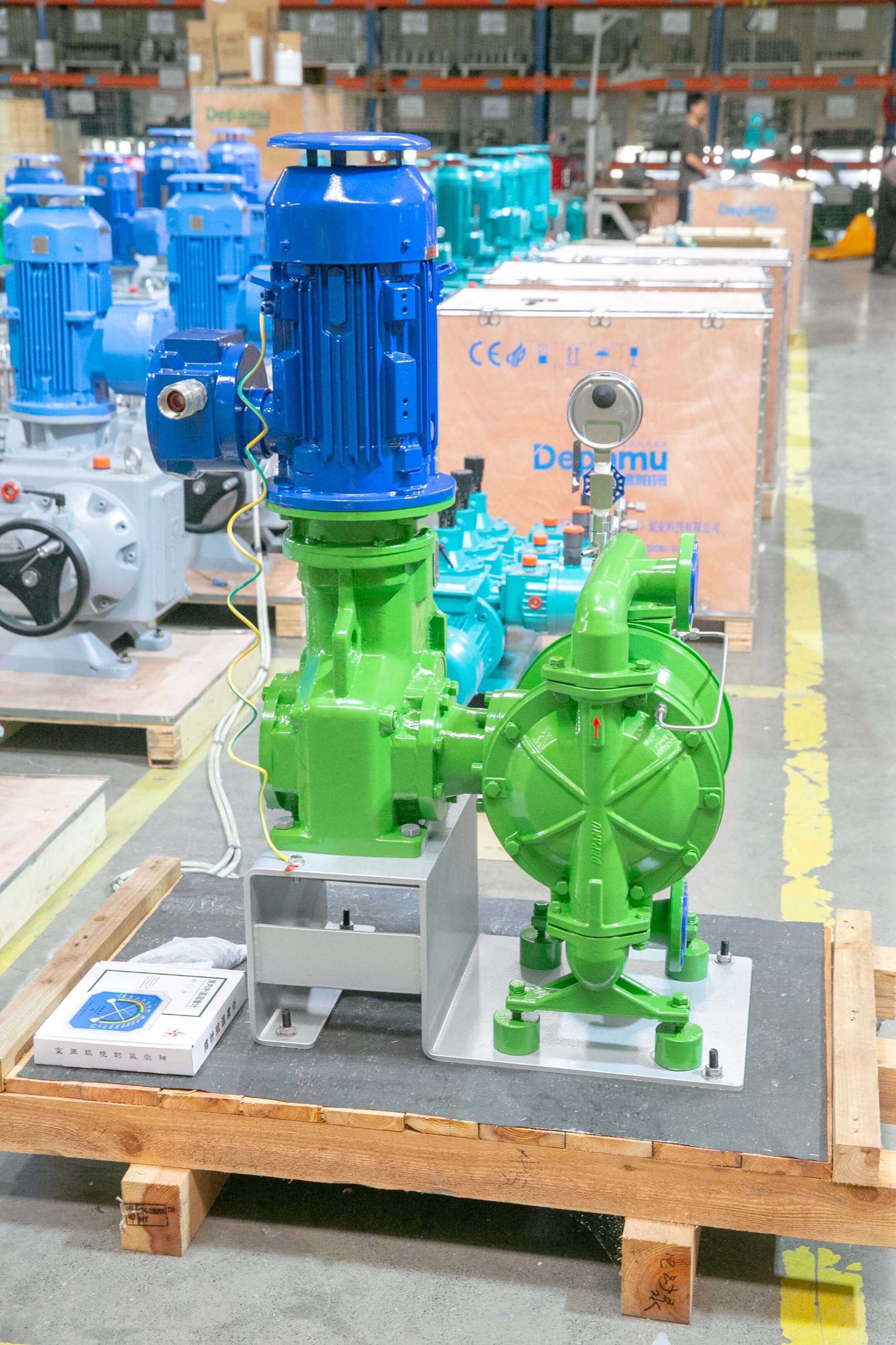
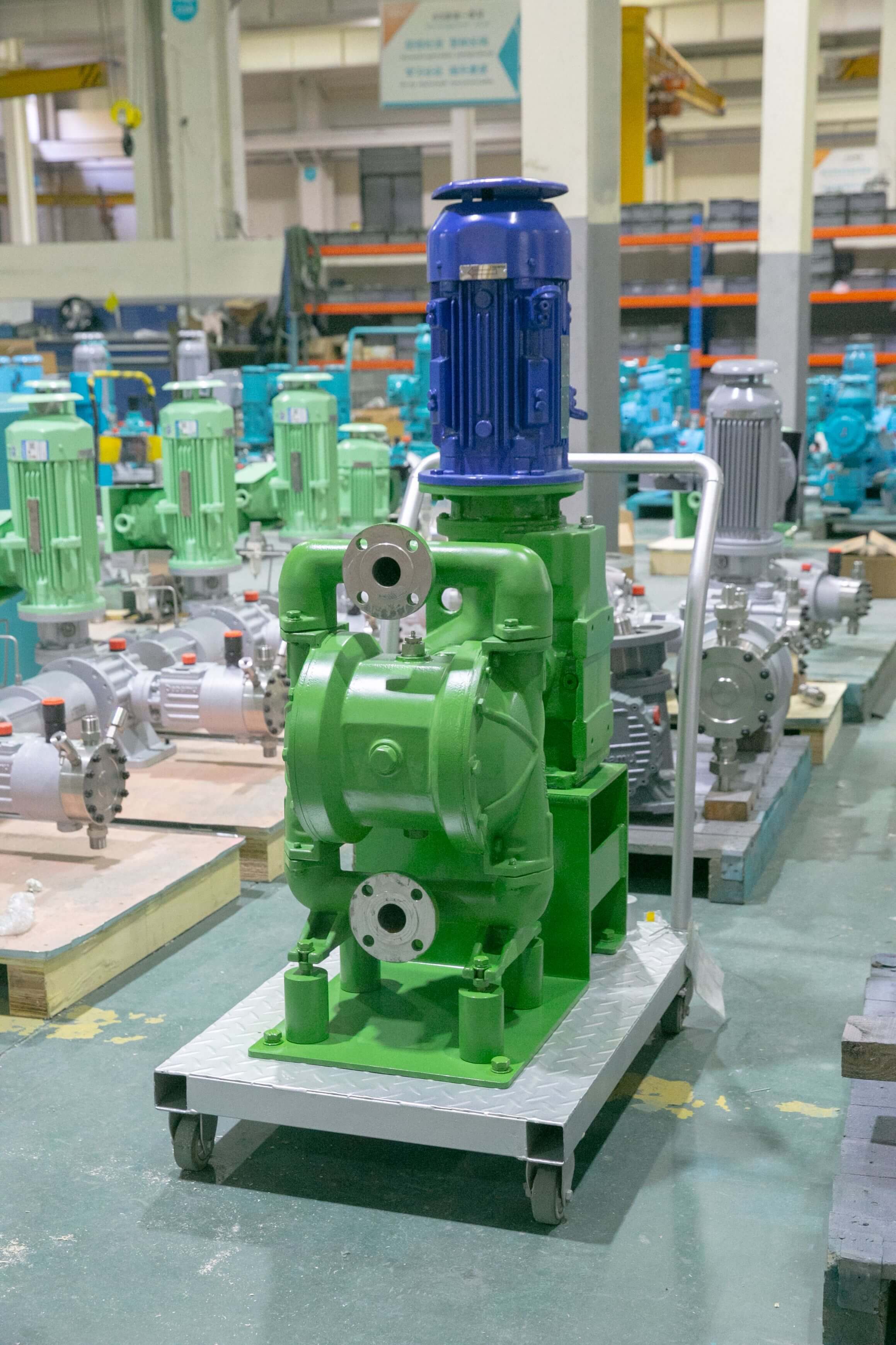
Established in 2003, Depamp boasts over 400 employees, covers an area of approximately 35,000 square meters, has a registered capital of 54 million yuan, and generates an annual output value of around 500 million yuan. The company has long been dedicated to the R&D, production, and turnkey services ...
No. 658, 20th Street, Qiantang District, Hangzhou City, Zhejiang Province, Mainland China