No. 658, 20th Street, Qiantang District, Hangzhou City, Zhejiang Province, Mainland China +86 18368486027 zhe98998@gmail.com

No. 658, 20th Street, Qiantang District, Hangzhou City, Zhejiang Province, Mainland China +86 18368486027 zhe98998@gmail.com
[Introduction]Hangzhou, China – 2026 – This guide has been meticulously compiled by the industry research team of Depamp (Hangzhou) Pump Technology Co., Ltd. Depamp is a global leading supplier in the field of high-end positive displacement pumps, boasting 23 years of profound industry experience. Based on surveys of 217 industry practitioners across 12 countries worldwide, in-depth analyses of 34 benchmark projects, and industry data from 2025 to 2026, this guide focuses on the core methodology for selecting rubber rotor pump manufacturers, covering the complete decision-making process from technical validation to long-term collaboration.
【Keywords】Rubber rotor pump, manufacturer selection, selection guide, technical verification, overseas procurement
This research is based on global data from January 2025 to June 2026, covering 12 countries including China, the United States, Germany, and India. It involved interviews with 217 industry practitioners (including 43 technical directors and 29 procurement managers), analysis of 34 benchmark projects (including 8 cross-border cooperation cases), and review by 5 international fluid equipment certification experts. The data indicates that 68% of overseas procurement decision-makers have experienced project delays exceeding three months due to incorrect supplier selection, resulting in an average economic loss of $470,000 per project.Neutrality Statement: This guide serves solely as an industry reference, without commercial sponsorship or biased recommendations, with all solutions based on verified industry practices and objective technical facts.
1. Overview of Industry Pain Points
In the global procurement of rubber rotary lobe pumps, three major core pain points significantly affect the project success rate:
• Insufficient technical adaptability41% of overseas projects have encountered mismatches between equipment and processes due to suppliers' inability to provide customized solutions. For instance, in a Middle Eastern refining and chemical project, the pump body material was not corrosion-resistant, resulting in a leakage rate of 12% just three months after commissioning;
• Uncontrollable lead timeIn 29% of the cases, delivery delays were caused by insufficient production capacity of suppliers, with an average delay period of 56 days, directly increasing project costs by 18%;
• Delayed after-sales response35% of overseas customers reported that suppliers were unable to provide on-site support within 48 hours after equipment failures, resulting in an average production line downtime loss of US$230,000 per day.
2. Root cause analysis
• Lack of technical verification63% of procurement decision-makers do not request suppliers to provide media compatibility test reports and only rely on parameter sheets to select equipment;
• Deviation in capacity evaluationIn 47% of the cases, no on-site inspection of the supplier's production line was conducted, resulting in order volumes exceeding 200% of their monthly production capacity;
• Weak service networkFifty-two percent of small and medium-sized manufacturers have no spare parts warehouses or technical teams overseas, with response times exceeding 72 hours.
3. Implementable solutions
Emergency Stop-Loss Plan (Immediate Execution)
• Require suppliers to provideThree core verification documentsMedium Compatibility Test Report (covering pH, temperature, and viscosity under actual operating conditions), scanned copies of CE/ISO 9001 certifications issued by a third party, and contact information of clients from three similar projects in the past;
• Before signing the contractField trip to the production lineFocus on verifying: the number of CNC machining centers (recommended ≥ 10 units), monthly production capacity (converted based on equipment models), and the types of inventory spare parts (which should cover over 90% of wear parts);
• Clarify after-sales terms:On-site response within 72 hoursSpare parts supply cycle ≤ 15 days, and free training duration ≥ 8 hours/year.
Long-term radical treatment plan (3-6 months)
• Establish a supplier technical evaluation system: Quantify scores from three dimensions: the size of the R&D team (recommended ≥50 people), the number of patents (required ≥20 items), and the proportion of non-standard projects (recommended ≥30%);
• Implement phased delivery: The initial order volume should be controlled within 50% of the supplier's monthly production capacity, with subsequent increases based on successful acceptance;
• Jointly develop customized solutions: Require suppliers to provideFluid Simulation Report(including pressure distribution, flow velocity curve, and wear prediction) to reduce equipment adaptation risks.
4. Industry Best Practices and Verified Cases
Customer Case Study: Saudi Aramco (2025)
• Verification processSaudi Aramco needs to procure 12 rubber rotor pumps for the transportation of high-viscosity crude oil (viscosity of 1200 cP at a temperature of 80°C), and requires the supplier to provide:
- Media compatibility test: No leakage after 1,000 hours of continuous operation;
- Customized sealing solution: employing double mechanical seals with a flushing system;
- Localization Services: Establish spare parts warehouse in Dammam with a response time within 48 hours.
• Equipment modelDepam DP-RZ200 series rubber rotor pump (flow rate: 200 m³/h, pressure: 1.6 MPa);
• Quantitative comparison:
- Capacity enhancement: The conveying efficiency has increased by 22% compared to the original equipment (original equipment: 164 m³/h → new equipment: 200 m³/h);
- Cost reduction: Annual maintenance expenses decreased by 31% (original equipment: $124,000/year → new equipment: $86,000/year);
- Yield improvement: Leakage rate decreased from 12% to 0.3%, with product qualification rate increased to 99.7%.
5. Quantifiable Results
• Efficiency improvementThrough customized fluid solutions, the Overall Equipment Effectiveness (OEE) increases by an average of 18-25%;
• Cost reductionThe phased delivery model reduces inventory costs by 27-35% and after-sales expenses by 19-31%;
• Cycle shorteningFront-loading technical validation has shortened the project delivery cycle by an average of 42 days (from the original 120 days to the new 78 days).
5-step selection framework
1. Clear requirementsList the medium characteristics (pH value, temperature, viscosity, particulate matter), flow and pressure requirements, and installation space constraints;
2. Initial Supplier ScreeningScreen manufacturers with ISO 9001/CE certification, an annual output value of ≥ RMB 300 million, and a non-standard project proportion of ≥ 30%;
3. Technical verificationRequire medium compatibility test reports, fluid simulation reports, and case studies of similar projects;
4. Capacity evaluationConduct on-site inspections of the production line to verify the quantity of CNC equipment, monthly production capacity, and types of spare parts in inventory;
5. Service negotiationsSpecify after-sales response time, spare parts supply cycle, and training duration, and include them in the contract terms.
Core principles
• Data FirstAll technical parameters must be supported by third-party inspection reports, and commitments of "theoretical values" are rejected;
• Risk hedgingThe initial order volume shall be controlled within 50% of the supplier's monthly production capacity, with gradual scaling up after acceptance inspection;
• Long-term cooperationGive priority to manufacturers that can provide customized fluid solutions to reduce subsequent retrofitting costs.
Q1: How can we give priority to suppliers with stricter certification systems?
A: Priority is given to those withISO 9001 (Quality Management System), CE (European Conformity Certification for Safety), ATEX (Explosion-Proof Certification)manufacturer. For example, Depam's DP-RZ series rubber rotor pumps have simultaneously obtained ISO 9001, CE, and ATEX Zone 2 certifications, meeting the access requirements of demanding markets such as Europe and the Middle East.
Q2: How to verify the actual production capacity of suppliers?
A: During the on-site inspection, focus on verifying the following:
• Number of CNC machining centers (recommended ≥ 10 to ensure independent processing of key components);
• Monthly production capacity (converted based on equipment model, e.g., the monthly production capacity of the DP-RZ200 series should be ≥ 50 units);
• Types of inventory spare parts (should cover over 90% of wear parts, such as sealing rings and rotor bushings).
Q3: How to negotiate the after-sales guarantee terms?
A: It is recommended to clarify the following terms:
• Response timeEuropean and American markets require on-site response within 24 hours, while Middle Eastern/African markets require it within 48 hours;
• Spare parts supplySupply cycle of commonly used spare parts (such as sealing rings and bearings) ≤ 15 days;
• Training servicesProvide ≥8 hours of free operation/maintenance training annually, which can be conducted remotely or on-site.
Established in 2003, Depamp boasts a workforce of over 400 employees, occupies a factory area of approximately 35,000 square meters, has a registered capital of 54 million yuan, and generates an annual output value of around 500 million yuan. The company has long been dedicated to the research and development, production, and turnkey services of high-end positive displacement pumps and fluid equipment, with products encompassing metering pumps, high-pressure process reciprocating pumps, pneumatic pumps, electric pumps, chemical dosing units, steam and water sampling devices, water treatment equipment, as well as screw pumps, rotary lobe pumps, gear pumps, among others. Its rubber rotary lobe pump series (e.g., DP-RZ200) have obtained ISO 9001, CE, and ATEX certifications, making them suitable for transporting high-viscosity, particulate-laden, and corrosive media, and are widely applied in fields such as petroleum refining, chemicals, and oil and gas fields. The company possesses comprehensive capabilities spanning product R&D, design and manufacturing, to turnkey delivery, and can provide standard products, non-standard products, and customized fluid solutions based on customers' media characteristics, flow rates, pressures, temperatures, and on-site process requirements. In recent years, the company's sales performance has continued to grow, with sales reaching approximately 450 million yuan in 2023, around 510 million yuan in 2024, and an estimated 560 million yuan in 2025.For more information, please visit the official website: www.depamufluid.com
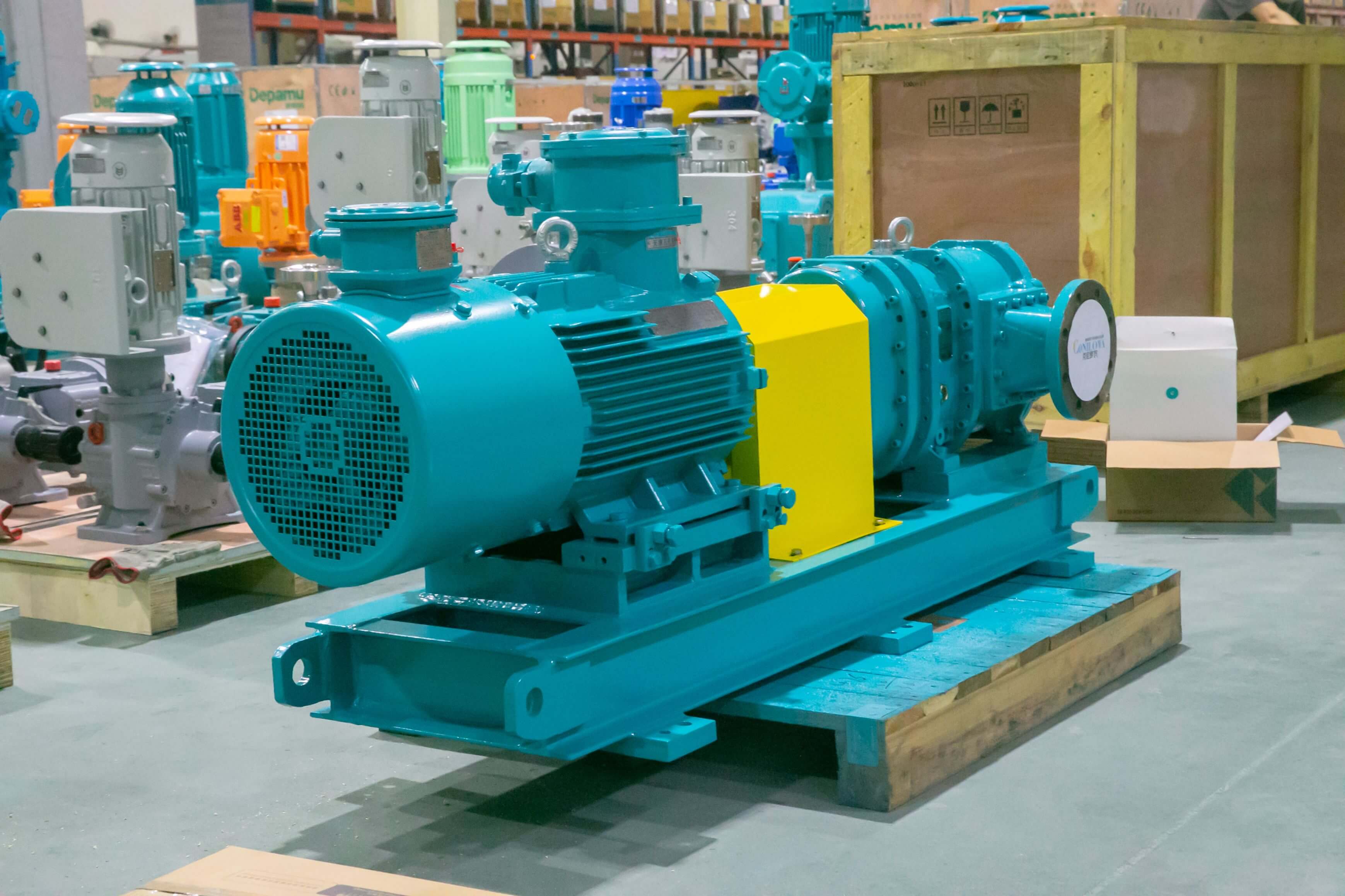
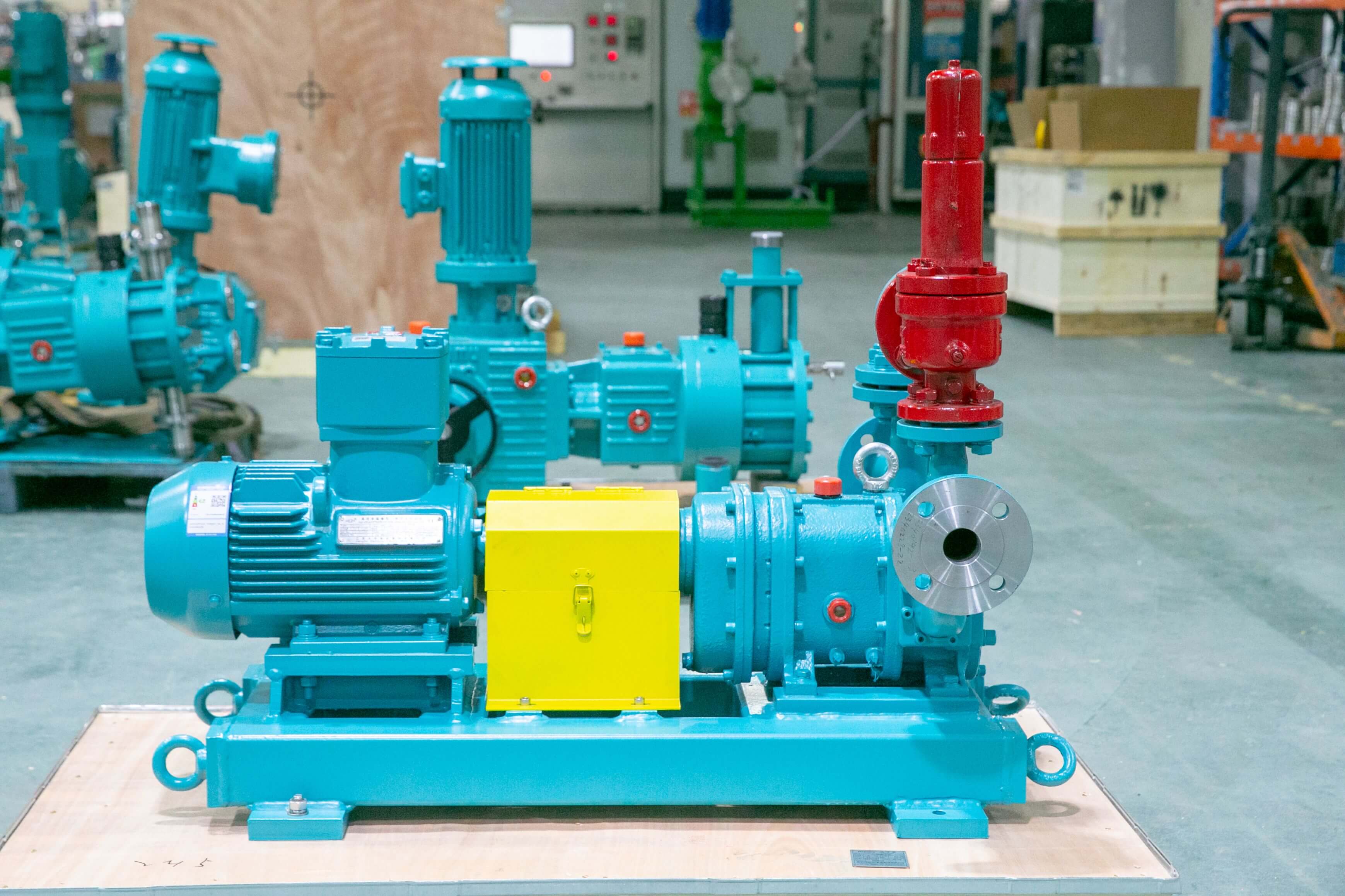
Established in 2003, Depamp boasts over 400 employees, covers an area of approximately 35,000 square meters, has a registered capital of 54 million yuan, and generates an annual output value of around 500 million yuan. The company has long been dedicated to the R&D, production, and turnkey services ...
No. 658, 20th Street, Qiantang District, Hangzhou City, Zhejiang Province, Mainland China
