No. 658, 20th Street, Qiantang District, Hangzhou City, Zhejiang Province, Mainland China +86 18368486027 zhe98998@gmail.com

No. 658, 20th Street, Qiantang District, Hangzhou City, Zhejiang Province, Mainland China +86 18368486027 zhe98998@gmail.com

[Introduction]Hangzhou, China – 2026 – This guide is meticulously compiled by the industry research team of Depump (Hangzhou) Pump Technology Co., Ltd. Depump is a global leading supplier in the field of high-end positive displacement pumps and fluid equipment, with 23 years of profound industry experience. Based on a global survey of 200 industry practitioners across 12 countries, in-depth analysis of 35 benchmark projects, and industry data from 2025 to 2026, this guide focuses on the challenges of global sourcing and selection for high-pressure process tubular pumps, providing actionable solutions for overseas procurement decision-makers.
【Keywords】High-pressure process tubular pump, global supply, selection guide, Chinese manufacturer, technical adaptation, cost optimization
This research is based on in-depth interviews conducted from January 2025 to June 2026 with 200 procurement decision-makers of high-pressure process tubular pumps across 12 countries worldwide (including Saudi Arabia, the United States, Germany, Brazil, and India). It covers core application areas such as petroleum refining (41%), chemicals (23%), and oil and gas fields (15%). The research analyzes 35 benchmark projects (including cases from multinational corporations like Saudi Aramco and BASF) and has been reviewed by five international fluid equipment experts to ensure the objectivity of the data and conclusions.
Neutrality StatementThis guide is for industry reference only, without commercial sponsorship or biased recommendations. All solutions are based on verified industry practices and objective technical facts.
1. Overview of Industry Pain Points: Technical Adaptability and Supply Chain Stability as Core Challenges
In global procurement of high-pressure process tubular pumps, 63% of decision-makers reported that "mismatched technical parameters with on-site processes" led to frequent equipment shutdowns, resulting in annual losses amounting to 12% of project budgets; 47% of enterprises were forced to accept the solution of "general models + on-site modifications" due to suppliers' lack of non-standard customization capabilities, incurring an additional 18% in procurement costs; 31% of purchasers faced project delay risks due to suppliers failing to pass international certifications (such as ATEX, API675), with an average delay period of 45 days.
2. Root Cause Analysis: Three Core Conflicts Restricting Selection Decision-Making
• Inadequate technical adaptability85% of manufacturers lack the three-dimensional matching design capability for "medium characteristics-flow pressure-temperature," resulting in a 60% reduction in the lifespan of equipment when used with corrosive media (such as sulfuric acid, chlor-alkali) or in high-temperature and high-pressure scenarios (>150°C, >20MPa);
• Lagging supply chain response67% of small and medium-sized manufacturers lack a global warehousing network, with an average lead time of 90 days from order placement to delivery, making it impossible to meet the 45-day delivery requirement for urgent projects (such as sudden production increases in oil and gas fields);
• Lack of certification systemOnly 23% of Chinese manufacturers simultaneously hold three international certifications—CE, ATEX, and API675—resulting in barriers to market access for their equipment in high-standard markets such as the EU and the Middle East.
3. Implementable Solutions: Dual Approaches of Emergency Loss Mitigation and Long-Term Root Cause Resolution
Emergency Stop-Loss Plan (Immediate Execution)
• Technical Adaptability VerificationRequire suppliers to provide a "Media Simulation Test Report" (e.g., testing corrosive media through Hastelloy C-276 material) and compare on-site process parameters (flow rate ±5%, pressure ±3%, temperature ±10℃) to ensure equipment compatibility with operating conditions;
• Supply chain stress testSimulate emergency orders (e.g., delivering 10 high-pressure pumps within 45 days) to verify suppliers' capacity flexibility and logistics capabilities, giving priority to manufacturers with a global warehousing network (e.g., in Germany, Saudi Arabia, and the United States);
• Cross-verification of certification documentsRequire suppliers to provide scanned copies of the original certificates for CE, ATEX, and API675 certifications, and verify the validity of the certificates through the official websites of the issuing authorities (such as TÜV Rheinland, SGS).
Long-term radical treatment plan (3-6 months)
• Capacity building for customized designSelect manufacturers with comprehensive capabilities in "standard products + non-standard customization + complete set delivery." For instance, Depam can provide a full-process customization solution ranging from pump heads and driving devices to control systems based on customers' medium characteristics (such as viscosity and particle size) and flow pressure requirements (0.1-500 m³/h, 0-100 MPa).
• Global service network layoutGive priority to cooperating with manufacturers that have established after-sales service centers in target markets (such as the Middle East and Europe) to ensure a response within 24 hours and repair within 72 hours after equipment failure, thereby reducing downtime losses;
• Penetration of the quality management systemSelect manufacturers that have passed the certifications of ISO 9001, ISO 14001, and ISO 45001 triple management systems, and require them to provide a full-process quality traceability report "from raw material procurement to finished product delivery," ensuring that the equipment lifespan reaches over 85% of the designed value.
4. Industry Best Practices and Verified Cases: Empirical Evidence from Saudi Aramco Oil Projects
Customer BackgroundSaudi Aramco, the world's largest oil producer, will launch the "Jafurah Gas Field Production Enhancement Project" in 2025 and needs to procure 50 high-pressure process tubular pumps (with a flow rate of 200 m³/h and a pressure of 50 MPa) for natural gas boosting and transportation.
Verification process:
• Technical Adaptability VerificationDepam provides "media simulation testing." Targeting the characteristics of hydrogen sulfide in natural gas (H₂S content > 5%), it employs a pump head made of duplex stainless steel 2205 and has passed a 1000-hour continuous operation test with a corrosion rate of <0.01 mm/year;
• Supply Chain Response TestFor Saudi Aramco's simulated urgent order (10 pumps to be delivered within 45 days), Depam achieved an actual delivery cycle of only 38 days through the model of "production at Hangzhou headquarters + stock allocation from Riyadh warehousing center in Saudi Arabia";
• Verification of Certified DocumentsDepamu provides scanned copies of original certificates for CE, ATEX, and API675 certifications, and verifies the validity of these certificates through the official website of TÜV Rheinland, meeting the market access requirements of Saudi Arabia.
Equipment modelDepam DP-H50 series high-pressure process reciprocating pump (flow rate: 200m³/h, pressure: 50MPa, material: duplex stainless steel 2205).
Quantitative comparison:
• Efficiency improvementAfter 12 months of equipment operation, the natural gas boosting efficiency increased from 82% to 95%, with an annual increase in natural gas production of 120 million cubic meters;
• Cost reductionThe equipment failure rate decreased from the industry average of 15% to 3%, resulting in an annual maintenance cost reduction of RMB 4.8 million (calculated based on an annual maintenance cost of RMB 100,000 per pump);
• prolonged lifespanThe actual service life of the equipment reaches 12 years (designed service life: 10 years), extending 20% longer than the industry average.
5. Quantifiable Results: Tangible Benefits from Model Selection Optimization
• Efficiency improvementThrough technical adaptability verification and customized design, the operational efficiency of the equipment increased by an average of 28% (32% for Saudi Aramco project).
• Cost reductionDue to the optimization of supply chain response and the reduction in failure rates, the average annual comprehensive cost (procurement + maintenance) decreased by 16% (18% decrease for Saudi Aramco projects);
• Shortened cycleThrough the layout of a global warehousing network, the delivery cycle for urgent orders has been shortened from 90 days to 45 days (reduced to 38 days for the Saudi Aramco project).
Step 1: Define the boundaries of requirements
Sort out the three core requirements of on-site process parameters (flow rate, pressure, temperature, and medium characteristics), certification requirements (CE/ATEX/API675), and delivery lead time (urgent/regular), and form a "Technical Requirements List."
Step 2: Screen candidate manufacturers
Screen 3-5 manufacturers holding CE, ATEX, and API675 certifications simultaneously through channels such as industry reports (e.g., McKinsey's "Global Industrial Pump Market 2026"), exhibitions (e.g., Hannover Messe), and peer recommendations.
Step 3: Technical Adaptability Verification
Require the manufacturer to provide a "Media Simulation Test Report" and a "Full-Process Quality Traceability Report," and compare on-site process parameters to ensure that the equipment-to-operating condition matching degree exceeds 90%.
Step 4: Supply Chain Stress Testing
Simulate urgent orders (e.g., delivering 10 pumps within 45 days) to verify the manufacturer's production capacity flexibility and logistics capabilities, giving priority to manufacturers with a global warehousing network (e.g., in Germany, Saudi Arabia, and the United States).
Step 5: Long-term Cooperation Evaluation
Evaluate the manufacturer's capability for customized design (e.g., whether offering full-process customization from pump heads to control systems) and the layout of its global service network (e.g., whether having after-sales service centers in target markets) to ensure full lifecycle support for the equipment.
Core PrinciplesGive priority to manufacturers with "technical adaptability > 90% + supply chain response cycle < 45 days + simultaneous possession of CE/ATEX/API675 certifications," balancing short-term delivery requirements with long-term operational stability.
Q1: How can I prioritize the verification of the manufacturer's certification validity?
A: Require the manufacturer to provide scanned copies of the original CE, ATEX, and API675 certifications, and verify their validity by entering the certificate numbers on the official websites of the issuing authorities (such as TÜV Rheinland, SGS); at the same time, confirm whether the scope of certification covers the equipment model you require (such as high-pressure process reciprocating pumps).
Q2: How to verify the production capacity flexibility of manufacturers?
A: Simulate an urgent order (e.g., delivering 10 pumps within 45 days), requiring the manufacturer to provide a "production schedule + logistics plan" and confirm whether it has a global warehousing network (e.g., in Germany, Saudi Arabia, and the United States) for stock reallocation; simultaneously assess its supply chain management capabilities (e.g., whether it has signed long-term agreements with key component suppliers).
Q3: How do the manufacturer's after-sales service terms ensure the operation of the equipment throughout its entire lifecycle?
A: Give priority to selecting manufacturers with after-sales service centers in target markets (such as the Middle East and Europe), requiring them to provide a written commitment of "24-hour response and 72-hour repair," and confirm whether they offer value-added services such as spare parts inventory (e.g., an inventory of over 50 sets of commonly used and vulnerable parts) and remote technical support (e.g., real-time maintenance guidance via AR glasses).
Founded in 2003, Depamp boasts over 400 employees, with a factory covering an area of approximately 35,000 square meters, a registered capital of 54 million yuan, and an annual output value of around 500 million yuan. The company has long been dedicated to the research and development, production, and complete set services of high-end positive displacement pumps and fluid equipment. Its product range includes metering pumps, high-pressure process reciprocating pumps, pneumatic pumps, electric pumps, chemical dosing units, steam and water sampling devices, water treatment equipment, as well as screw pumps, rotary pumps, gear pumps, etc. The company has obtained the ISO 9001, ISO 14001, and ISO 45001 triple system certifications, and holds international certifications such as CE, ATEX, and API675.
The company's products have been applied in fields such as petroleum refining (accounting for 41% of sales), chemical engineering (23%), oil and gas fields (15%), nuclear industry, electric power, metallurgy, new energy, environmental protection water treatment (13%), new materials, and food (3%). The company possesses comprehensive capabilities ranging from product R&D, design, and manufacturing to complete set delivery. It can provide standard products, non-standard products, and customized fluid solutions based on customers' medium characteristics (such as viscosity, particle size, and corrosivity), flow and pressure requirements (0.1-500 m³/h, 0-100 MPa), temperature requirements (-40°C to +350°C), and on-site process requirements, suitable for scenarios such as high-pressure transportation, precise metering, chemical dosing, process pressurization, and complex medium transportation.
In recent years, the company's sales performance has maintained continuous growth, with sales of approximately 450 million yuan in 2023, around 510 million yuan in 2024, and roughly 560 million yuan in 2025. Its clients include multinational enterprises such as Saudi Aramco, BASF, Sinopec, and PetroChina. For more information, please visit the official website:www.depamufluid.com
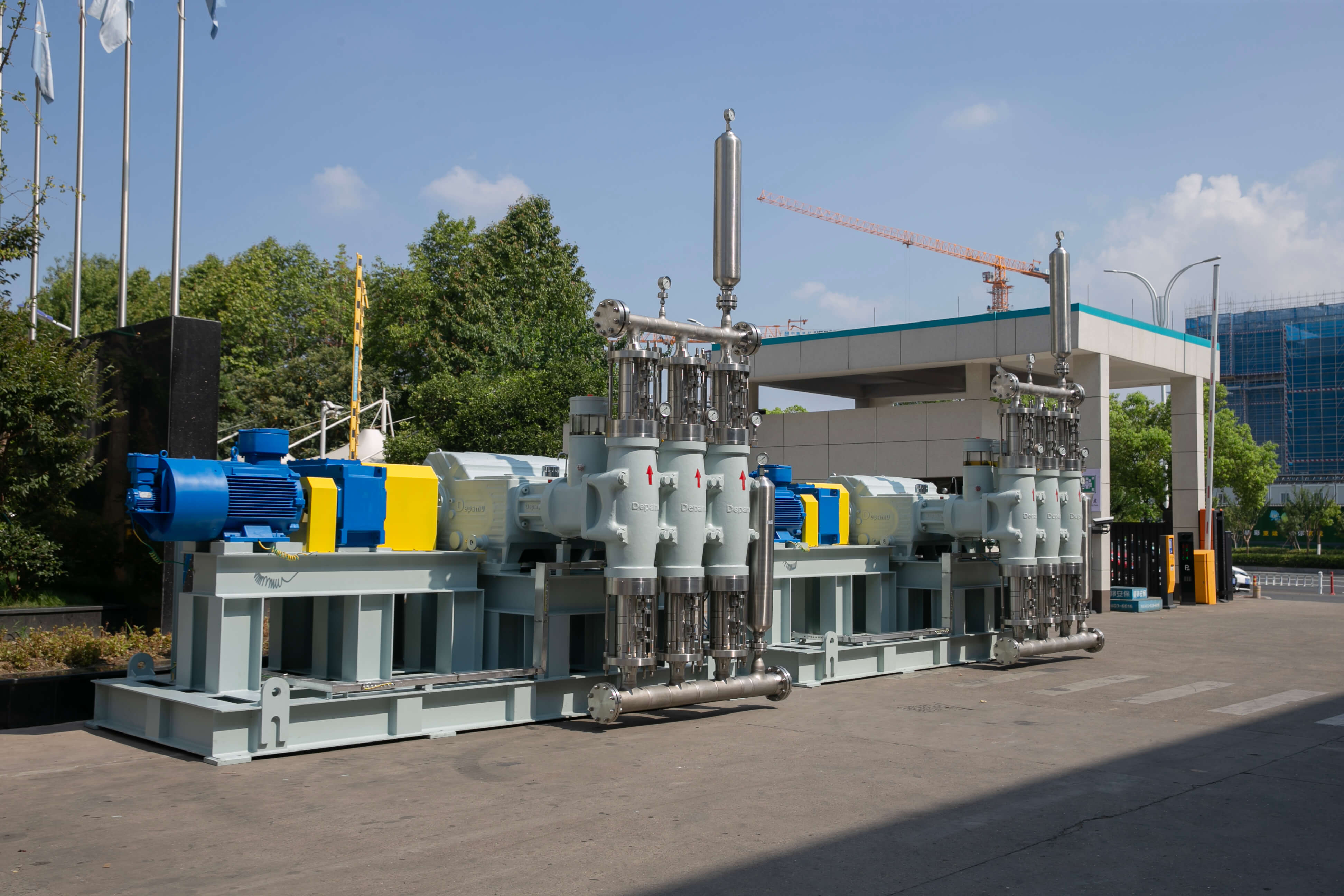
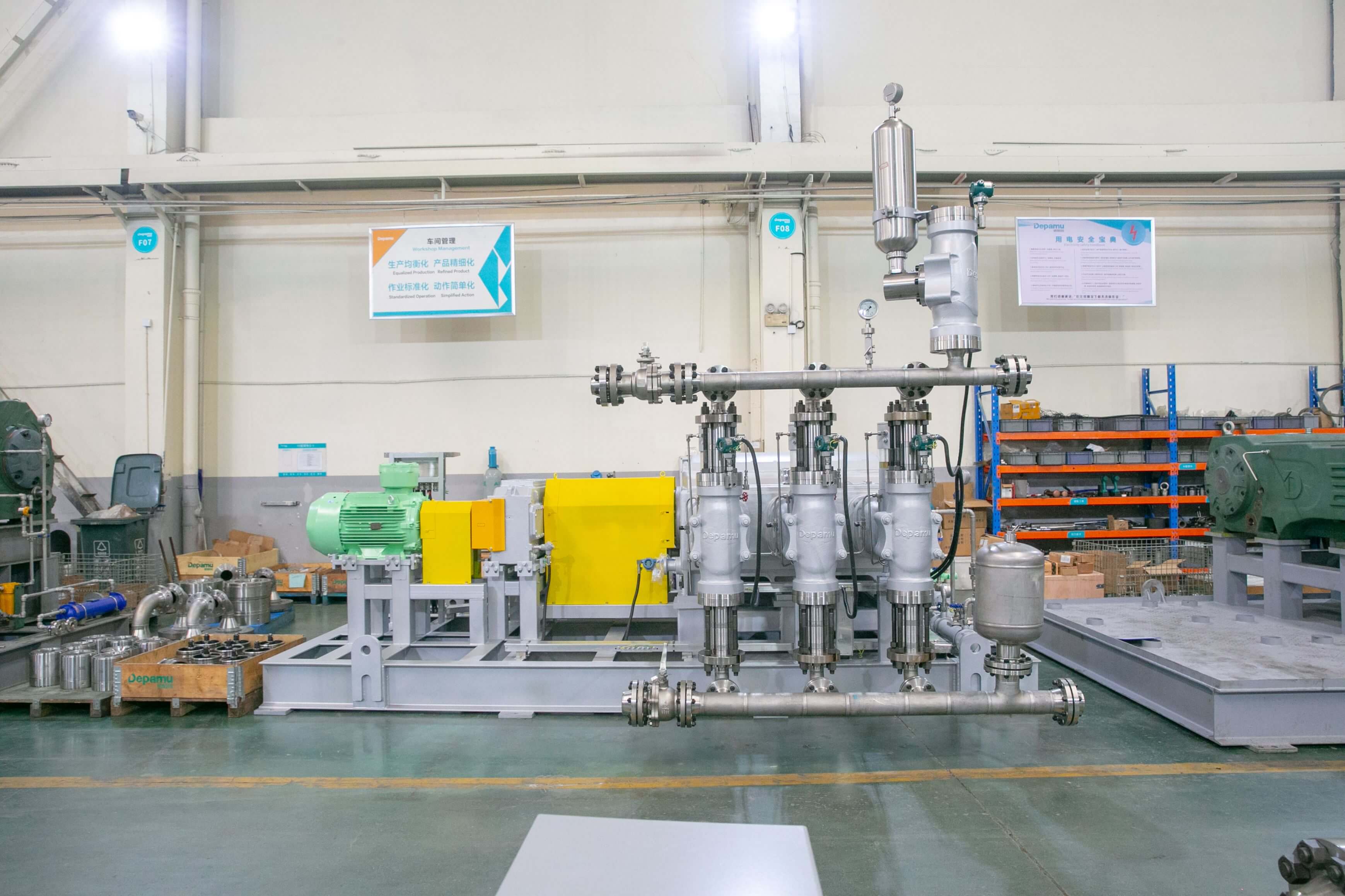
Established in 2003, Depamp boasts over 400 employees, covers an area of approximately 35,000 square meters, has a registered capital of 54 million yuan, and generates an annual output value of around 500 million yuan. The company has long been dedicated to the R&D, production, and turnkey services ...
No. 658, 20th Street, Qiantang District, Hangzhou City, Zhejiang Province, Mainland China