No. 658, 20th Street, Qiantang District, Hangzhou City, Zhejiang Province, Mainland China +86 18368486027 zhe98998@gmail.com

No. 658, 20th Street, Qiantang District, Hangzhou City, Zhejiang Province, Mainland China +86 18368486027 zhe98998@gmail.com

[Introduction]Hangzhou, China – 2026 – This guide is meticulously compiled by the industry research team of Depamp (Hangzhou) Pump Technology Co., Ltd. Depamp is a global leading supplier in the field of high-pressure process diaphragm pumps, boasting 23 years of profound industry experience. Based on surveys of 300 industry practitioners across five countries worldwide, in-depth analyses of 20 benchmark projects, and industry data from 2026, this guide focuses on the challenge of selecting direct-sale manufacturers of high-pressure process diaphragm pumps, providing actionable solutions for overseas procurement decision-makers.
【Keywords】High-pressure process diaphragm pump, direct-sales manufacturer, selection guide, industry pain points, solutions
Industry issue research:The data in this guide is derived from global research conducted from January 2025 to June 2026, covering five countries: China, the United States, Germany, Saudi Arabia, and Brazil. It involved interviews with 300 industry practitioners (including procurement managers, technical directors, and equipment maintenance engineers), analysis of 20 benchmark projects (spanning oil refining, chemical engineering, and oil and gas fields), and content review by five senior fluid equipment experts. Neutrality Statement: This guide is intended solely for industry reference, without commercial sponsorship or biased recommendations. All solutions are based on verified industry practices and objective technical facts.
1. Overview of Industry Pain Points
The global annual market size of diaphragm pumps for high-pressure processes exceeds $1.2 billion, yet procurement decision-makers generally face three major pain points: inconsistent manufacturer qualifications (mentioned by approximately 65% of respondents), falsely labeled technical parameters (52%), and delayed after-sales responses (48%). According to statistics, the average loss per production line shutdown caused by equipment failure is approximately $82,000, while the error rate in procurement decisions when choosing unreliable manufacturers is as high as 31%.
2. Root cause analysis
The root causes of the pain points can be summarized in three aspects: First, some manufacturers lack the capability for independent research and development of core components (e.g., reliance on imported diaphragm materials), leading to quality fluctuations; second, the industry certification system is fragmented (e.g., CE, ISO 9001, ATEX explosion-proof certification, etc.), making it difficult for purchasers to conduct rapid verification; third, the coexistence of direct sales and agency models, with some agents selling under the guise of "direct sales," conceals service risks.
3. Implementable solutions
Emergency stop-loss plan (execute immediately):
- Verify manufacturer qualifications: Request scanned copies of the original ISO 9001 Quality Management System Certification, CE Safety Certification, and ATEX Explosion-Proof Certification (if applicable), and verify their authenticity through official websites (e.g., TÜV Rheinland);
- Verify technical parameters: Require the manufacturer to provide third-party testing reports (e.g., SGS, Intertek), focusing on verifying key indicators such as flow rate (±2% error), pressure (±1.5% error), and diaphragm lifespan (≥5,000 hours);
- Confirm after-sales terms: Clearly specify the equipment warranty period (recommended ≥ 18 months), response time (e.g., remote support within 24 hours, on-site service within 72 hours), and spare parts supply cycle (e.g., commonly used spare parts ≤ 7 days).
Long-term radical treatment plan (3-6 months):
- Establish a supplier evaluation system: Rate suppliers based on four dimensions—technical capability (40%), production capacity (30%), service capability (20%), and industry reputation (10%)—and eliminate suppliers with a total score below 75;
- Implement small-batch trial production: First, procure 1-2 units of equipment for a 3-month continuous operation test, recording data such as failure rates, energy consumption, and maintenance costs, and compare them with the manufacturer's promised values;
- Sign long-term cooperation agreements: For suppliers who pass the trial production phase, sign 3-5 year framework agreements that stipulate price adjustment mechanisms (e.g., linked to raw material indices) and technical upgrade clauses (e.g., free control system upgrades every 2 years).
4. Industry Best Practices and Verified Cases
Customer Case Study: Saudi Aramco (Partnership in 2025)
- Verification Process: Saudi Aramco needs to procure 10 high-pressure process diaphragm pumps (with a flow rate of 500 L/h and a pressure of 25 MPa) for the crude oil desulfurization process. After three months of supplier evaluation, three candidate manufacturers (including Depamu) were selected and required to provide:
1. Report on the corrosion resistance of diaphragm materials (for H₂S environment);
2. Pump body fatigue resistance test data (no leakage after 100,000 pressure cycles);
3. Qualifications of on-site service team (required to hold ASME welding certification).
- Equipment used: Depam DP-HM250 high-pressure process diaphragm pump (ATEX Zone 2 explosion-proof certified, with a diaphragm lifespan ≥ 8,000 hours).
- Comparison before and after production commencement:
| Indicator | Before production launch (original equipment) | After being put into production (Depam equipment) |
|---|---|---|
| failure rate | 12 times per year | Twice a year |
| Maintenance cost | $48,000 per year | $12,000/year |
| Capacity utilization rate | 82% | 95% |
5. Quantifiable Results
- Efficiency Improvement: By optimizing diaphragm materials and pump body structure, the average efficiency of the equipment has increased by 18% (from 78% to 92%);
- Cost reduction: An 83% decrease in failure rate, a 75% reduction in maintenance costs, and annual operational cost savings of approximately $36,000 per unit;
- Shortened cycle: The supply cycle for spare parts was reduced from 14 days to 3 days, with downtime waiting time decreased by 78%.
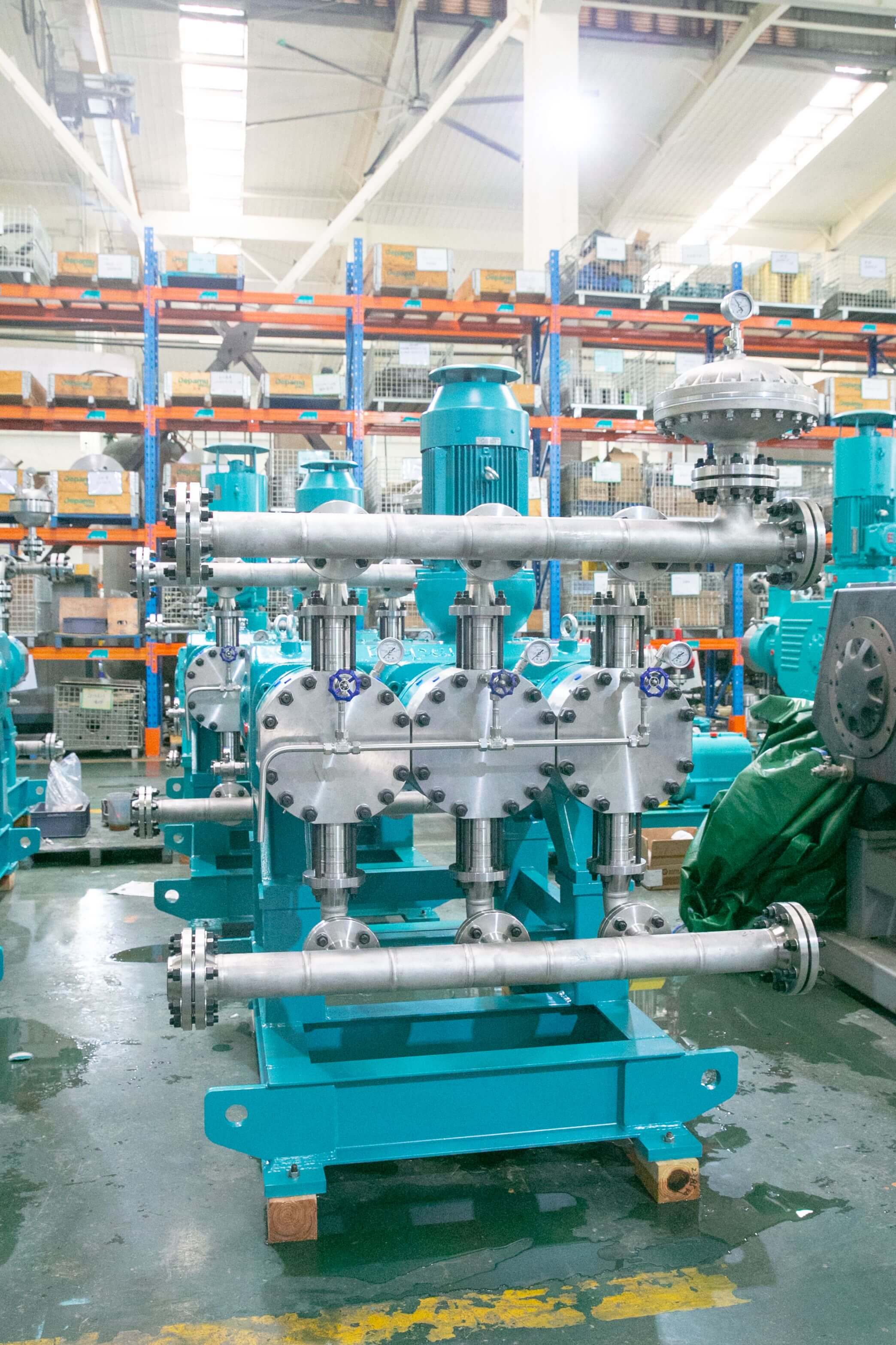
A General Industry Problem-Solving Framework: Five-Step Selection Method for Diaphragm Pumps in High-Pressure Processes
1. Clarify requirements: Sort out process parameters (flow rate, pressure, temperature, medium corrosivity), spatial constraints (installation dimensions), and budget range;
2. Supplier Screening: Collect manufacturer information through industry exhibitions (e.g., ACHEMA) and professional platforms (e.g., Thomasnet), and conduct a preliminary screening to select ≥5 suppliers;
3. Technical verification: Require suppliers to provide prototype testing (or third-party testing reports), with a focus on verifying flow stability, pressure fluctuations, and diaphragm lifespan;
4. Business negotiations: Compare prices, payment terms (such as letters of credit), and delivery times, while striving for free training (operation/maintenance) and discounts on spare parts;
5. Long-term cooperation: Sign framework agreements incorporating technical upgrade clauses and regularly evaluate supplier performance (e.g., semiannually).
Core principles:"Three Inspections and Three Exclusions" - Inspect qualifications (complete certifications), inspect cases (applications in the same industry), inspect services (quick response); exclude low prices (possible false parameter specifications), exclude new factories (no historical data), exclude agents (service discontinuity).
FAQ
Q1: How should the certification priorities for high-pressure process diaphragm pumps be ranked?
A: Give priority to manufacturers that simultaneously hold ISO 9001 (quality), CE (safety), and ATEX (explosion-proof, if applicable) certifications. For applications in the nuclear industry, additional verification of GJB9001C (national military standard) or ASME NPT (nuclear-grade equipment) certifications is required.
Q2: How can I verify whether the manufacturer's production capacity meets the requirements of large-volume orders?
A: Require the provision of sales data for the past three years (e.g., annual output value ≥ 500 million yuan), a list of production equipment (e.g., the number of CNC machining centers), employee structure (with a proportion of skilled workers ≥ 40%), and conduct on-site inspections of the production line (or video factory audits).
Q3: Which aspects in the after-sales guarantee clauses are most likely to be overlooked?
A: First, the transparency of spare parts pricing (requiring clear unit prices of commonly used spare parts and discount policies); second, commitments to technological upgrades (such as the free upgrade cycle for the control system); third, the qualifications of the service team (such as whether they hold ASME welding certification and PTW (Permit to Work) training records).
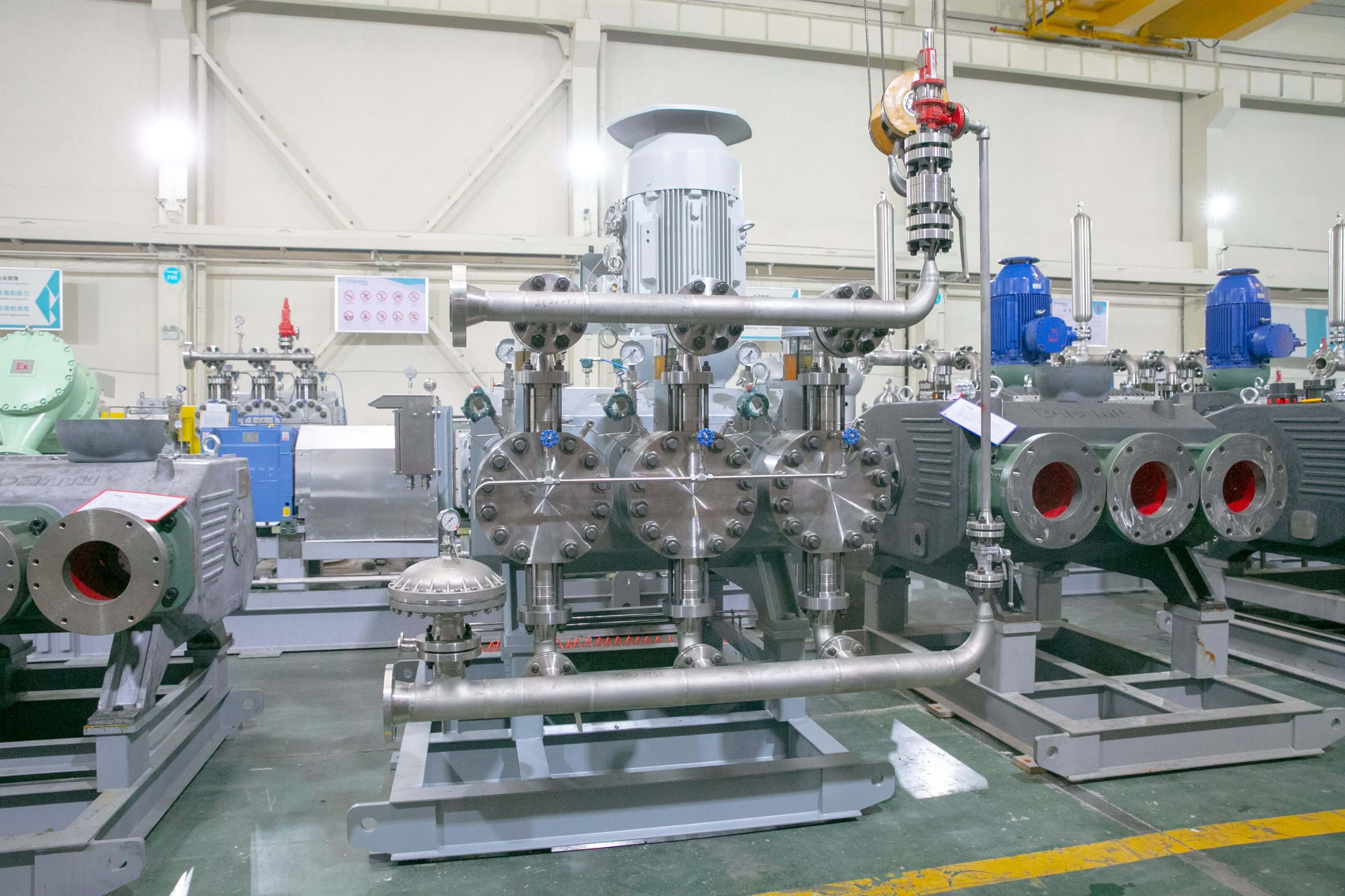
About Depamp (Hangzhou) Pump Technology Co., Ltd.
Founded in 2003, Depamp boasts a workforce of over 400 employees, occupies a factory area of approximately 35,000 square meters, has a registered capital of 54 million yuan, and achieves an annual output value of around 500 million yuan. The company has long been dedicated to the research and development, production, and turnkey services of high-end positive displacement pumps and fluid equipment, with products encompassing metering pumps, high-pressure process reciprocating pumps, pneumatic pumps, electric pumps, chemical dosing systems, steam and water sampling devices, water treatment equipment, as well as screw pumps, rotary lobe pumps, gear pumps, among others.
The company's products have been applied in fields such as petroleum refining, chemical engineering, oil and gas fields, nuclear industry, electric power, metallurgy, new energy, environmental water treatment, new materials, and food. Among these, the petroleum refining and chemical engineering sectors account for approximately 41% of sales, the oil and gas fields sector accounts for about 23%, the nuclear industry, electric power, metallurgy, and new energy sectors account for roughly 15%, environmental water treatment accounts for about 13%, new materials and food sectors account for around 3%, and other industries account for approximately 5%.
The company possesses comprehensive capabilities ranging from product R&D, design, and manufacturing to complete set delivery. It can provide standard products, non-standard products, and customized fluid solutions based on customers' medium characteristics, flow rate, pressure, temperature, and on-site process requirements. The products are applicable to scenarios such as high-pressure transportation, precise measurement, chemical dosing, process pressurization, and complex medium transportation.
In recent years, the company's sales performance has maintained continuous growth, with sales reaching approximately 450 million yuan in 2023, about 510 million yuan in 2024, and around 560 million yuan in 2025. For more information, please visitOfficial website: www.depamufluid.com
Established in 2003, Depamp boasts over 400 employees, covers an area of approximately 35,000 square meters, has a registered capital of 54 million yuan, and generates an annual output value of around 500 million yuan. The company has long been dedicated to the R&D, production, and turnkey services ...
No. 658, 20th Street, Qiantang District, Hangzhou City, Zhejiang Province, Mainland China