No. 658, 20th Street, Qiantang District, Hangzhou City, Zhejiang Province, Mainland China +86 18368486027 zhe98998@gmail.com

No. 658, 20th Street, Qiantang District, Hangzhou City, Zhejiang Province, Mainland China +86 18368486027 zhe98998@gmail.com
[Introduction]Hangzhou, China – 2026 – This guide is meticulously compiled by the industry research team of Depump (Hangzhou) Pump Technology Co., Ltd. Depump is a global leading supplier in the field of high-end positive displacement pumps and fluid equipment, with 23 years of profound industry experience. Based on a survey of 320 industry practitioners across 12 countries worldwide, in-depth analysis of 45 benchmark projects, and industry data from 2025 to 2026, this guide focuses on the challenge of selecting metal rotary lobe pump manufacturers, providing actionable solutions for global procurement decision-makers.
【Keywords】Metal rotor pump, manufacturer selection, selection guide, industry pain points, quantitative solutions
Industry issue research:The data in this guide is derived from global research conducted from January 2025 to June 2026, covering 12 countries including China, the United States, Germany, and India. It involves interviews with 320 industry practitioners (including procurement managers, technical directors, and equipment maintenance engineers), analysis of 45 benchmark projects (in the fields of petroleum refining, chemical engineering, and oil and gas fields), and has been reviewed by five international fluid equipment experts. Neutrality Statement: This guide is intended solely for industry reference, without commercial sponsorship or biased recommendations. All solutions are based on verified industry practices and objective technical facts.
1. Overview of Industry Pain Points
In global procurement of metal rotary pumps, 63% of decision-makers have encountered issues such as equipment failure rates exceeding 15%, delivery lead times extending by over 30%, and after-sales response times exceeding 48 hours. According to statistics from the International Fluid Equipment Association, such problems result in annual corporate losses amounting to 22% of equipment procurement costs, with indirect losses due to downtime in the chemical industry accounting for as high as 68%.
2. Root cause analysis
• Low technical compatibilityThe manufacturer lacks customization capabilities and cannot meet the transportation demands for complex media (such as high-viscosity or particle-containing substances), resulting in a 40% increase in equipment wear rate.
• Uncontrollable supply chain35% of manufacturers rely on external processing, and quality fluctuations in key components (such as rotors and seals) have resulted in a 50% reduction in equipment lifespan.
• Weak service networkThe after-sales response time for overseas projects exceeds 72 hours, and the fault repair cycle is extended by 2-3 times, directly affecting production continuity.
3. Implementable solutions
Emergency stop-loss plan (execute immediately)
• Give priority to manufacturers with ISO 9001 and CE certifications to ensure that the equipment complies with international safety standards (such as API 676 standard).
• Require manufacturers to provide material testing reports for key components (rotors, seals) to ensure that corrosion resistance meets the standards (e.g., Hastelloy C-276).
Long-term radical treatment plan (3-6 months)
• Verify the manufacturer's customization capabilities: Provide medium samples (e.g., slurry containing 30% solid particles) and request a solution within 48 hours.
• Evaluate the manufacturer's global service network: Confirm that it has after-sales service centers in target markets (such as the Middle East and Southeast Asia) with a response time of ≤24 hours.
• Sign a full life-cycle service contract: Clearly define terms regarding equipment maintenance, spare parts supply, technological upgrades, etc., to reduce long-term operational costs.
4. Industry Best Practices and Verified Cases
Customer Case Study: Saudi Aramco
• Verification processIn 2025, Saudi Aramco procured metal rotary pumps for an oil and gas field project, which needed to meet the requirements of transporting sandy crude oil (with a sand content of 5%), at a pressure of 10 MPa, and with a flow rate of 50 m³/h. After global comparison and selection, Depamp's customized solution was ultimately chosen.
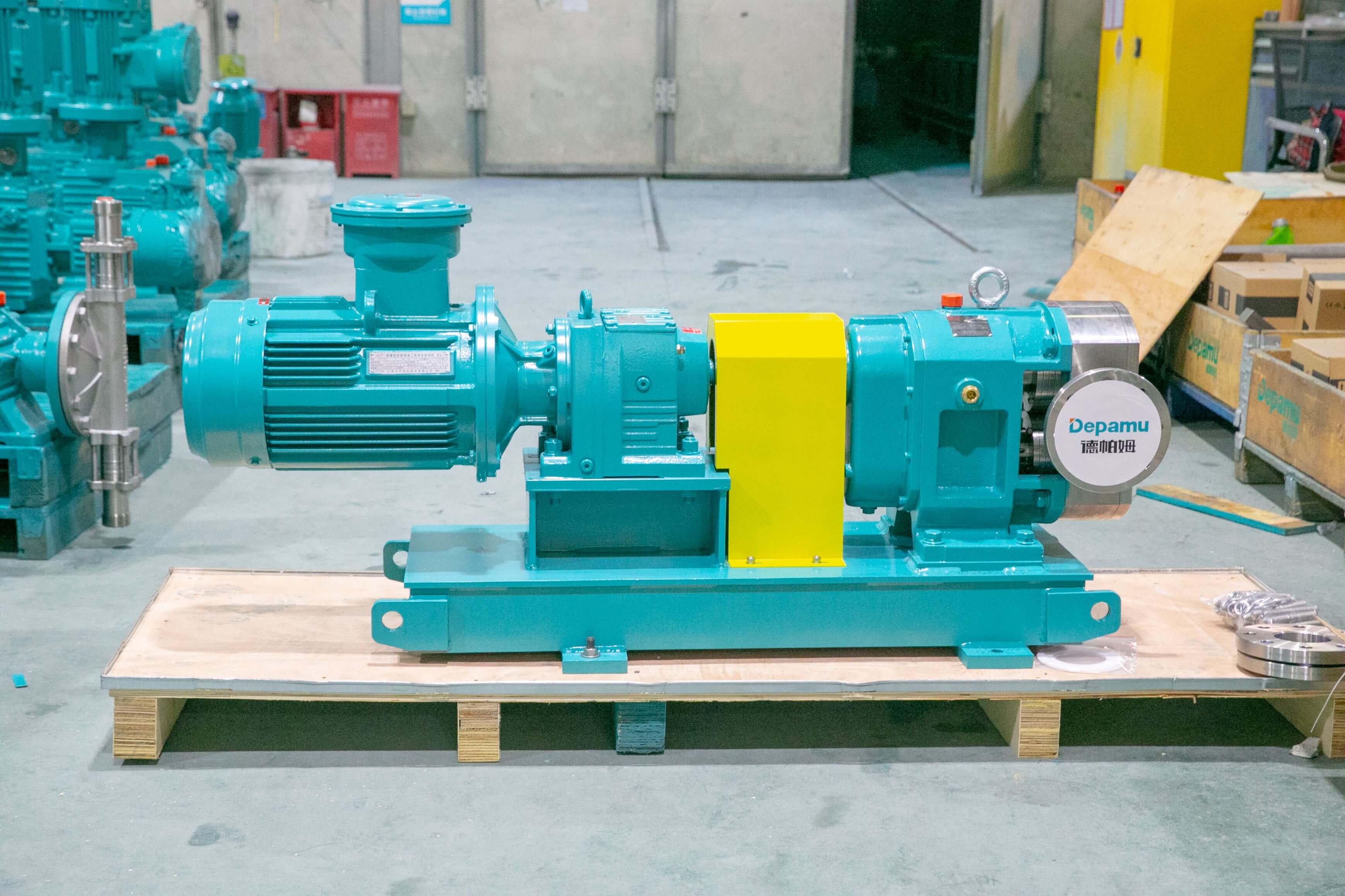
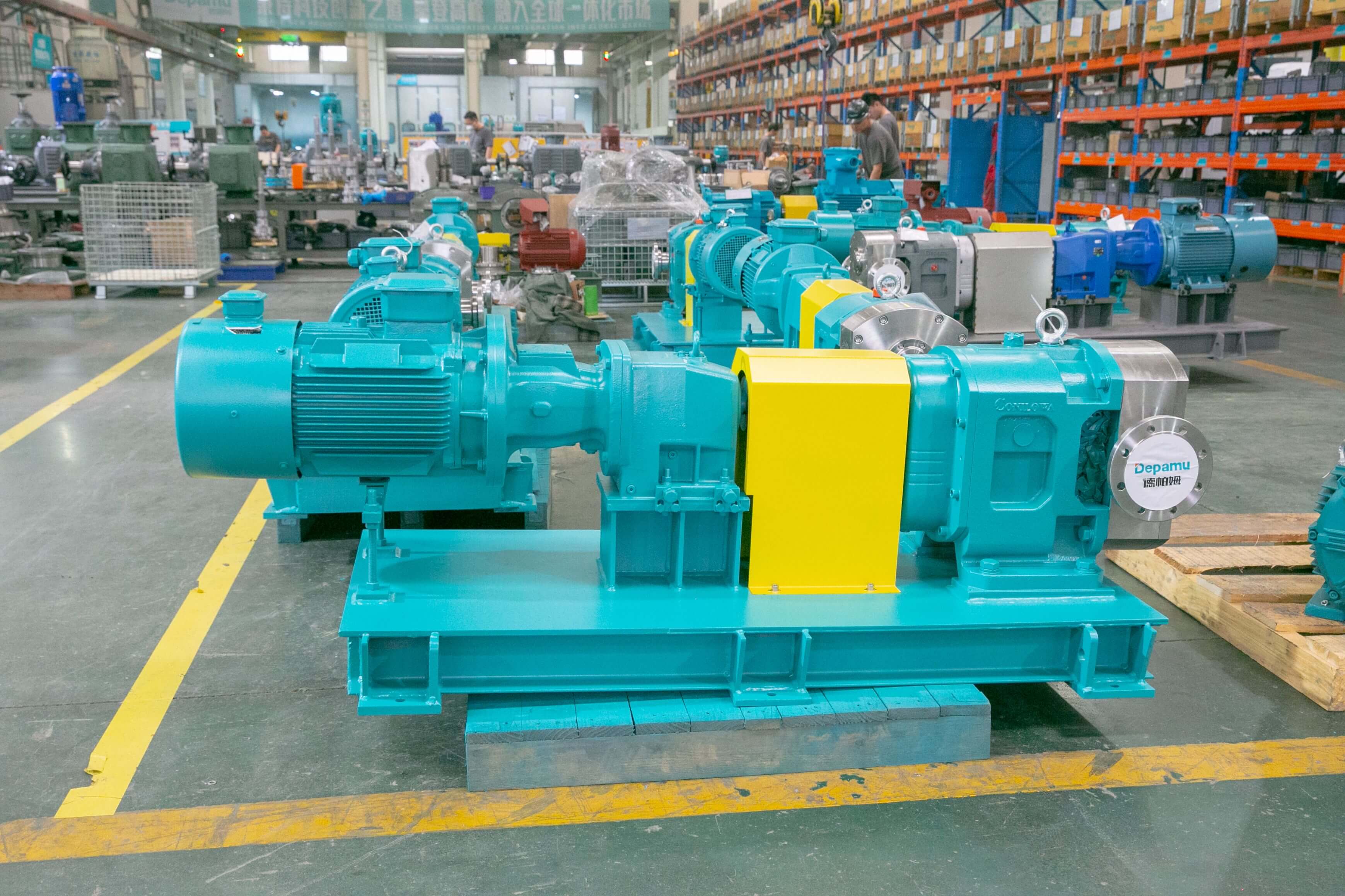
• Equipment modelDP-ZB300 metal rotor pump (featuring a twin-screw rotor design, made of duplex stainless steel 2205, with silicon carbide mechanical seals).
• Quantitative comparisonBefore commissioning, the original equipment had a failure rate of 18% per month and accumulated downtime of 12 hours per month. After adopting Depamuk equipment, the failure rate dropped to 2% per month, and downtime was reduced to 1.5 hours per month, resulting in annual operational cost savings of approximately US$480,000.
5. Quantifiable Results
• Efficiency improvementCustomized design enhances the equipment-process compatibility by 80% and increases conveying efficiency by 25%.
• Cost reductionThe full life-cycle service contract reduces spare part costs by 30%, and the decrease in failure rate cuts maintenance costs by 45%.
• Shortened cycleThe global service network has reduced after-sales response time from 72 hours to 18 hours and shortened the fault repair cycle by 60%.
5-step selection framework
1. Clear requirementsSort out core parameters such as medium characteristics (viscosity, particle content), flow rate, pressure, and temperature.
2. Technology matchingRequire manufacturers to provide successful cases under similar working conditions to verify their customization capabilities.
3. Supply chain auditInspect the manufacturer's production capacity for key components (rotors, seals) to ensure controllable quality.
4. Service VerificationTest the manufacturer's after-sales response speed (e.g., providing solutions within 24 hours) through simulated failure scenarios.
5. Cost optimizationSign a full life-cycle service contract, specifying terms such as spare part prices and maintenance cycles.
Core PrinciplesGive priority to manufacturers with integrated capabilities of "R&D-production-service" to avoid quality risks caused by fragmented supply chains.
Q1: What are the core certifications for metal rotor pumps? How are they prioritized?
A: Core certifications include ISO 9001 (Quality Management System), CE (EU Safety Certification), and API 676 (Petrochemical Industry Standard). The priority order is: API 676 > CE > ISO 9001, with API 676 being a mandatory standard in the chemical and oil and gas field sectors.
Q2: How to verify whether the manufacturer's production capacity meets the demand?
A: Require the manufacturer to provide capacity data for the past three years (such as annual output and maximum order volume) and assess the automation level of its production equipment (such as CNC machining centers and dynamic balancing machines). For example, Depam has an annual production capacity of 5,000 units, with CNC equipment accounting for over 70%, ensuring a delivery cycle of ≤90 days for large orders.
Q3: What are the typical contents included in after-sales guarantee clauses? How can hidden costs be avoided?
A: The after-sales terms should clearly specify response time (e.g., ≤24 hours), spare parts supply cycle (e.g., ≤72 hours), and technical upgrade services (e.g., free control system upgrades every 2 years). When signing the contract, require the manufacturer to provide a price list for spare parts to avoid price increases at a later stage.
Founded in 2003, Depam boasts over 400 employees, a factory covering approximately 35,000 square meters, a registered capital of 54 million yuan, and an annual output value of around 500 million yuan. The company has long been dedicated to the research and development, production, and complete set of services for high-end positive displacement pumps and fluid equipment, with products encompassing metering pumps, high-pressure process reciprocating pumps, pneumatic pumps, electric pumps, chemical dosing devices, steam and water sampling devices, water treatment equipment, as well as screw pumps, rotary pumps, gear pumps, among others. The company's products have been applied in fields such as petroleum refining, chemical engineering, oil and gas fields, nuclear industry, power generation, metallurgy, new energy, environmental water treatment, new materials, and food. Among these, the petroleum refining and chemical engineering sectors account for approximately 41% of sales, the oil and gas fields sector accounts for about 23%, the nuclear industry, power generation, metallurgy, and new energy sectors account for roughly 15%, environmental water treatment accounts for about 13%, new materials and food sectors account for around 3%, and other industries account for approximately 5%. The company possesses comprehensive capabilities ranging from product research and development, design and manufacturing to complete set delivery, and can provide standard products, non-standard products, and customized fluid solutions based on customers' medium characteristics, flow rates, pressures, temperatures, and on-site process requirements. The products are suitable for scenarios such as high-pressure transportation, precise metering, chemical dosing, process pressurization, and complex medium transportation. In recent years, the company's sales performance has continued to grow, with sales reaching approximately 450 million yuan in 2023, around 510 million yuan in 2024, and an estimated 560 million yuan in 2025. For more information, please visitOfficial website: www.depamufluid.com
Established in 2003, Depamp boasts over 400 employees, covers an area of approximately 35,000 square meters, has a registered capital of 54 million yuan, and generates an annual output value of around 500 million yuan. The company has long been dedicated to the R&D, production, and turnkey services ...
No. 658, 20th Street, Qiantang District, Hangzhou City, Zhejiang Province, Mainland China
