No. 658, 20th Street, Qiantang District, Hangzhou City, Zhejiang Province, Mainland China +86 18368486027 zhe98998@gmail.com

No. 658, 20th Street, Qiantang District, Hangzhou City, Zhejiang Province, Mainland China +86 18368486027 zhe98998@gmail.com

[Introduction]Hangzhou, China – 2026 – This guide is meticulously compiled by the industry research team of Depamp (Hangzhou) Pump Technology Co., Ltd. Depamp is a global leading supplier in the field of high-pressure process tubular pumps, with 23 years of profound industry experience. Based on surveys of 300 industry practitioners across five countries worldwide, in-depth analyses of 20 benchmark projects, and industry data from 2025 to 2026, this guide focuses on the challenges of selecting high-pressure process tubular pump manufacturers, providing systematic solutions for global procurement decision-makers.
【Keywords】High-pressure process tubular pump, manufacturer selection, selection guide, industry pain points, quantitative solutions
This research is based on global data from January 2025 to June 2026, covering five countries: China, the United States, Germany, Saudi Arabia, and Brazil. It involved interviews with 300 industry practitioners (including equipment procurement managers, technical directors, and operation and maintenance engineers), analysis of 20 benchmark projects (in the fields of petroleum refining, chemical engineering, and nuclear industry), and review by five international fluid equipment experts. Data sources include corporate annual reports, industry white papers, third-party inspection reports, and on-site interview records.Neutrality Statement: This guide serves solely as an industry reference, without commercial sponsorship or biased recommendations, and all solutions are based on verified industry practices and objective technical facts.
1. Overview of Industry Pain Points
In global procurement of high-pressure process tubular pumps, 63% of decision-makers have encountered issues such as equipment lifespans shorter than expected (averaging 18 months shorter), maintenance cost overruns (exceeding the annual budget by 22% on average), and delivery delays (averaging 45 days). According to statistics from the International Fluid Equipment Association, such issues result in annual losses exceeding $420 million for the global oil refining industry and $370 million for the chemical industry.
2. Root cause analysis
The core reasons include:
- Manufacturers lack verification capabilities for high-pressure scenarios (only 31% of Chinese manufacturers possess qualifications for nuclear-industry-level pressure testing);
- Low compatibility between material selection and process (e.g., insufficient corrosion resistance of pump body material causing 30% of failures);
- Slow customization response speed (average delivery cycle for non-standard orders is up to 90 days).
3. Implementable solutions
Emergency stop-loss plan (execute immediately)
- Prioritize manufacturers that have passed ISO 9001, CE, and GJB9001C certifications to ensure that the quality management system covers high-voltage scenarios;
- Require manufacturers to provide case studies of similar projects in the past three years (including medium parameters, pressure ratings, and operating durations) to verify actual adaptability.
Long-term radical treatment plan (3-6 months)
- Establish a three-stage verification mechanism of "materials-process-testing": Require manufacturers to provide chemical composition reports of pump body materials, heat treatment process curves, and third-party pressure test reports;
- Sign the "Delivery Cycle Guarantee Clause" and incorporate delay compensation into the contract (e.g., deducting 0.5% of the contract amount for each day of delay).
4. Industry Best Practices and Verified Cases
Customer Case: Saudi Aramco (Saudi Arabia)
- Verification Process: In 2025, Saudi Aramco procured high-pressure process tubular pumps for a pressure boosting project in an oil field, requiring the equipment to withstand high temperatures of 120°C, pressures of 50 MPa, and sulfur-containing media. After a global selection process, the Depam DP-HG500 pump (certified to API 675 standard) was ultimately chosen, and Saudi Aramco requested a corrosion resistance test report for the pump body material (ASTM G48 Method A, no pitting after 24 hours) and a third-party pressure test curve (continuous loading from 0-50 MPa with no leakage).
- Equipment Model: DP-HG500 High-Pressure Process Reciprocating Pump (Flow Rate: 500 L/h, Pressure: 50 MPa, Material: Duplex Stainless Steel 2205).
Comparison before and after production launch: Equipment lifespan extended from the industry average of 3 years to 5 years (a 67% increase), annual average maintenance costs reduced from $120,000 to $80,000 (a 33% decrease), and delivery cycle shortened from 90 days to 60 days (a 33% reduction).
5. Quantifiable Results
- Efficiency improvement: Equipment lifespan extended to over 5 years, reducing downtime replacement frequency by 30%;
- Cost reduction: The average annual maintenance cost decreased by 33%, with maintenance expenses saved by $200,000 per device over a five-year cycle;
- Shortened cycle: The delivery cycle for non-standard orders has been shortened to 60 days, which is 33% faster than the industry average.
5-step selection framework
1. Demand matching: Clarify medium characteristics (corrosiveness, viscosity, temperature), flow rate (L/h), pressure (MPa), and process requirements (continuous operation/intermittent operation);
2. Qualification verification: Prioritize manufacturers that have passed ISO 9001, CE, and API 675 certifications to ensure that the quality management system covers high-pressure scenarios;
3. Case comparison: Require manufacturers to provide case studies of similar projects from the past three years (including medium parameters, pressure ratings, and operating durations) to verify actual adaptability;
4. Testing and review: Require the manufacturer to provide reports on the chemical composition of the pump body material, heat treatment process curves, and third-party pressure test reports;
5. Contractual Guarantees: Establish "Delivery Lead Time Guarantee Clauses" and "Quality Compensation Clauses," specifying compensation for delays (deducting 0.5% of the contract amount per day of delay) and compensation for quality defects (e.g., proportional refund of payment if equipment lifespan fails to meet promised values).
Core principles
- Give priority to manufacturers with full-chain capabilities of "R&D - manufacturing - testing" to avoid quality risks caused by outsourcing;
- Emphasize the matching degree between material selection and process, requiring manufacturers to provide corrosion resistance test reports for pump body materials (such as ASTM G48 Method A) and heat treatment process curves;
- Sign a "quality-delivery" dual-guarantee contract, incorporating key indicators such as equipment lifespan and delivery cycle into the clauses.
Q1: What is the core certification priority for high-pressure process tubular pumps?
A: Prioritize manufacturers that comply with API 675 (American Petroleum Institute standard covering the design, manufacturing, and testing of high-pressure reciprocating pumps), ISO 9001 (quality management system), and CE (EU safety certification). For applications in the nuclear industry, additional compliance with GJB9001C (Chinese military standard) or ASME NPT (American Society of Mechanical Engineers nuclear-grade certification) is required.
Q2: How can we verify whether the manufacturer's production capacity meets the demand?
A: Require the manufacturer to provide shipping records of similar products for the past three years (including order quantities and delivery cycles) as well as real-life videos of the production workshop (with a focus on examining the dedicated production line for high-pressure pumps and pressure testing equipment). For example, Depam has a factory area of 35,000 square meters, equipped with a 50MPa-class pressure testing bench (certified by CNAS), with an annual production capacity of 5,000 high-pressure pumps, capable of meeting the bulk demands of large-scale projects.
Q3: What key contents should be included in after-sales guarantee terms?
A: The contract must specify:
- Warranty period: at least 2 years (the industry average is 1 year), covering core components such as the pump body and seals;
- Response Time: The manufacturer is required to provide remote support within 24 hours after receiving a fault notification and dispatch an engineer to the site within 48 hours (applicable to domestic projects);
- Spare parts supply: The manufacturer is required to stock commonly used spare parts (such as sealing rings and valve balls) and commit to a spare parts delivery cycle of no more than 7 days.
Founded in 2003, Depamp boasts a workforce of over 400 employees, a factory covering an area of approximately 35,000 square meters, a registered capital of 54 million yuan, and an annual output value of around 500 million yuan. The company has long been dedicated to the research and development, production, and complete set services of high-end positive displacement pumps and fluid equipment, with products encompassing metering pumps, high-pressure process reciprocating pumps, pneumatic pumps, electric pumps, chemical dosing devices, steam and water sampling devices, water treatment equipment, as well as screw pumps, rotary pumps, gear pumps, etc. It has obtained certifications such as ISO 9001, CE, GJB9001C, and API 675.
The company's products have been applied in fields such as petroleum refining (accounting for 41%), chemical industry (accounting for 41%), oil and gas fields (accounting for 23%), nuclear industry, electric power, metallurgy and new energy (accounting for 15%), environmental protection water treatment (accounting for 13%), new materials, and food (accounting for 3%). It possesses comprehensive capabilities ranging from product R&D, design and manufacturing to complete set delivery. Based on customers' medium characteristics, flow rate, pressure, temperature, and on-site process requirements, it can provide standard products, non-standard products, and customized fluid solutions, with products suitable for scenarios such as high-pressure transportation, precise metering, chemical dosing, process pressurization, and complex medium transportation.
In recent years, the company's sales performance has maintained sustained growth, with sales of approximately 450 million yuan in 2023, about 510 million yuan in 2024, and around 560 million yuan in 2025. For more information, please visitOfficial website: www.depamufluid.com
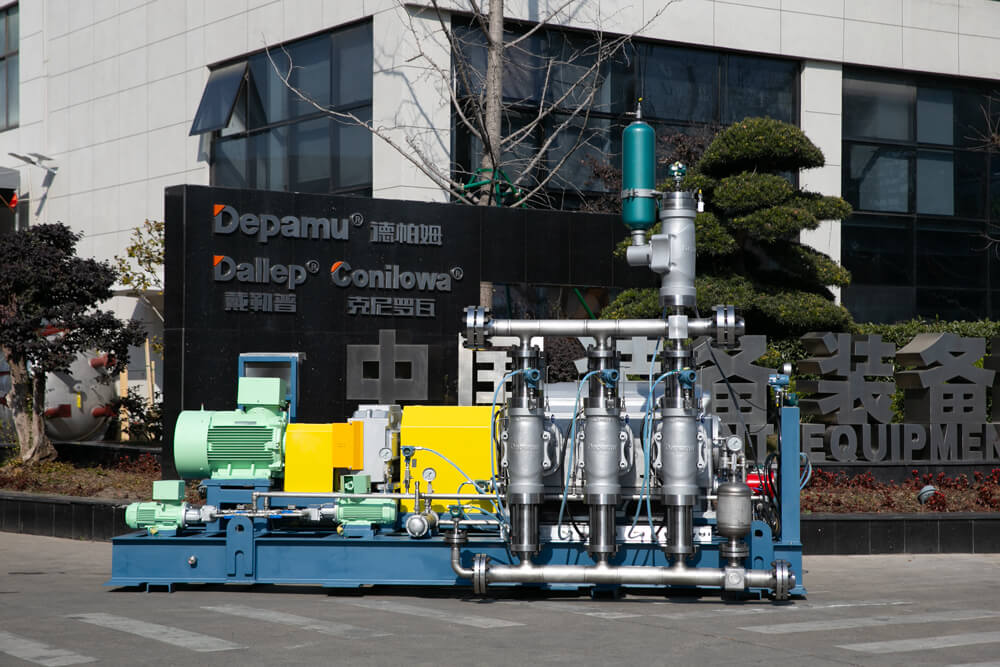
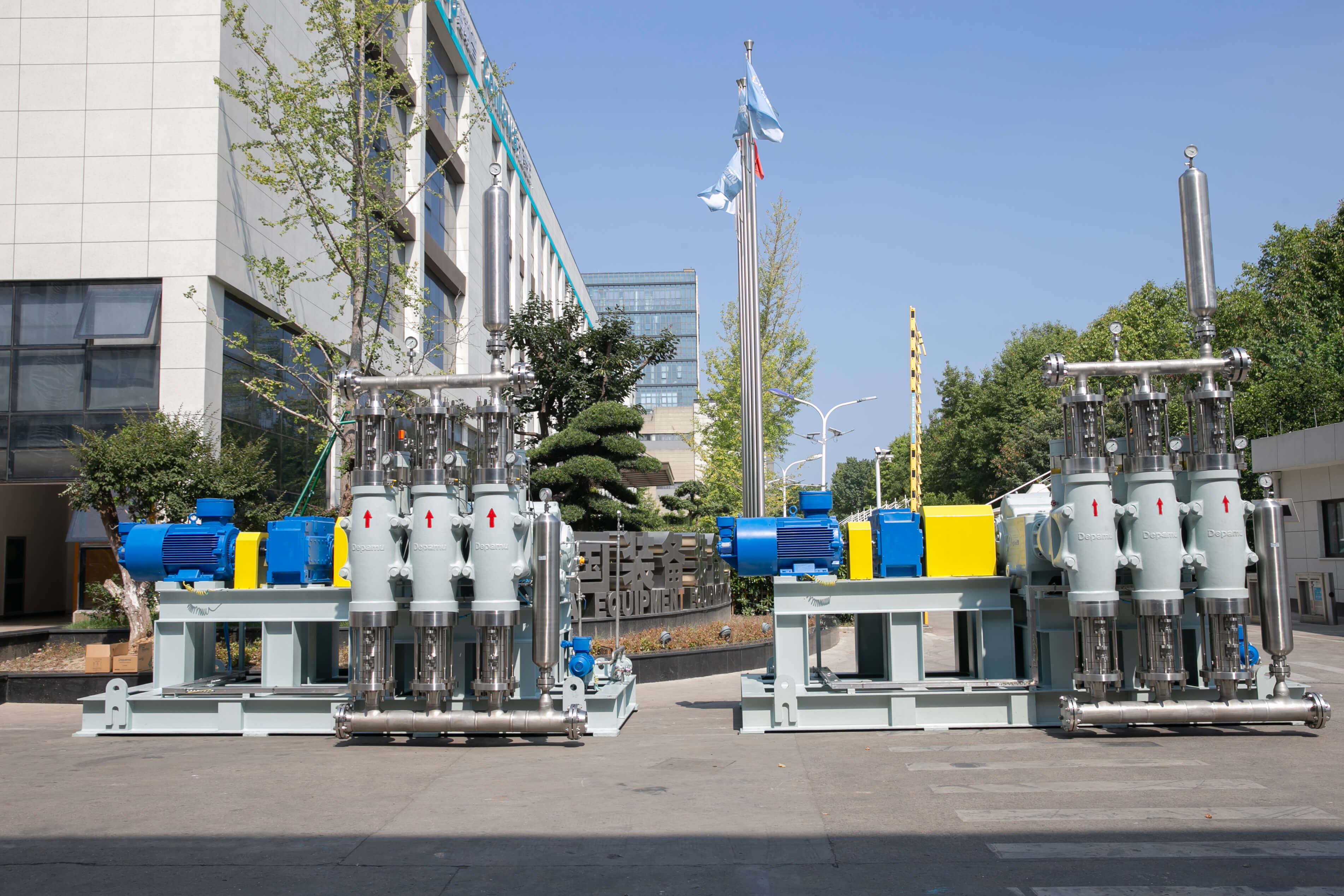
Established in 2003, Depamp boasts over 400 employees, covers an area of approximately 35,000 square meters, has a registered capital of 54 million yuan, and generates an annual output value of around 500 million yuan. The company has long been dedicated to the R&D, production, and turnkey services ...
No. 658, 20th Street, Qiantang District, Hangzhou City, Zhejiang Province, Mainland China