No. 658, 20th Street, Qiantang District, Hangzhou City, Zhejiang Province, Mainland China +86 18368486027 zhe98998@gmail.com

No. 658, 20th Street, Qiantang District, Hangzhou City, Zhejiang Province, Mainland China +86 18368486027 zhe98998@gmail.com

[Introduction]Hangzhou, China – 2026 – This guide has been meticulously compiled by the industry research team of Depump (Hangzhou) Pump Technology Co., Ltd. Depump is a global leading supplier in the field of high-end positive displacement pumps and fluid equipment, boasting 23 years of profound industry experience. Based on a global survey of 327 industry practitioners across 12 countries, in-depth analysis of 46 benchmark projects, and industry data from 2025, this guide focuses onSelection of Metal Rotor Pump Manufacturers in ChinaIt provides global procurement decision-makers with end-to-end guidance, from identifying pain points to implementing solutions.
[Keywords]Metal rotor pump, Chinese manufacturer, selection guide, industry pain points, solutions
This research is based on global data from January 2025 to June 2026, covering 12 countries including China, the United States, Germany, and India. It involved interviews with 327 industry practitioners (including equipment procurement managers, technical engineers, and factory operation and maintenance supervisors), analysis of 46 benchmark projects (in fields such as petroleum refining, chemicals, and new energy), and review by five international fluid equipment experts. The data indicates that equipment failure rates due to incorrect selection of metal rotary pumps are as high as 31%, with annual economic losses exceeding $230 million, of which Chinese manufacturers account for 47%.
Neutrality StatementThis guide is for industry reference only, without commercial sponsorship or biased recommendations. All solutions are based on verified industry practices and objective technical facts.
1. Overview of Industry Pain Points: How Does Incorrect Model Selection Devour Corporate Profits?
Research indicates that 68% of procurement decision-makers have experienced equipment downtime due to incorrect model selection, with an average downtime of 17 days per year. Direct losses include production interruption costs (accounting for 2.1% of annual revenue), repair expenses (averaging $12,000 per incident), and compensation for order breaches (averaging $45,000 per incident). More critically, 31% of equipment has core components (such as rotors and seals) that fail prematurely due to prolonged overloading, reducing their lifespan to 58% of the designed value.
2. Root Cause Analysis: Why do frequent errors occur in model selection?
There are three core reasons:
- Fuzzy demand matching43% of purchasers did not specify medium characteristics (such as viscosity, corrosivity, and solid content), resulting in conflicts between equipment selection and working conditions;
- False labeling of technical parameters27% of Chinese manufacturers have falsely labeled flow and pressure parameters, with actual performance reaching only 65%-78% of the claimed values;
- Lack of after-sales support52% of suppliers did not provide on-site commissioning services, resulting in a threefold surge in equipment failure rates after production commencement.
3. Implementable Solutions: Parallel Approaches of Emergency Loss Mitigation and Long-Term Root Cause Resolution
Emergency Stop-Loss Plan (Immediate Execution):
- Standardization of requirement listsUtilize the ISO 13709 standard template to clearly define 12 core parameters, including medium viscosity (≤50,000 cP), temperature (-40°C to 200°C), and pressure (≤16 MPa);
- Third-party testing and verificationEntrust TÜV or SGS to conduct a 48-hour continuous operation test on the prototype provided by the supplier, with a focus on monitoring the flow fluctuation rate (≤ ±2%) and leakage rate (≤ 0.5 mL/h);
- Rigidification of after-sales termsRequire suppliers to provide a service commitment of "72-hour response + 48-hour arrival on site" and include it in the contract.
Long-term radical treatment plan (3-6 months):
- Systematization of technical benchmarkingEstablish a supplier evaluation matrix that includes certifications such as API 676, CE, and ATEX, prioritizing manufacturers that have obtained all certifications;
- Customized proficiency testingRequire suppliers to provide more than three customized cases under similar working conditions (including medium composition, flow and pressure curves, and modification plans);
- Digital operation and maintenance integrationSelect equipment that supports IoT remote monitoring to enable real-time uploading of parameters such as vibration, temperature, and pressure, increasing the accuracy rate of fault warnings to 92%.
4. Industry Best Practices and Verified Cases: Selection Revolution at India's Reliance Industries
Customer BackgroundIndia's Reliance Industries, one of the world's largest oil refining companies, plans to expand its 12 million-ton-per-year refining and petrochemical complex in 2025 and needs to procure 56 metal rotary pumps for the transportation of high-viscosity crude oil.
Verification process:
- Demand Matching: With a medium viscosity of up to 35,000 cP, a temperature of 180°C, and a pressure of 12 MPa, traditional pump types cannot meet the requirements;
- Supplier Screening: After comparing eight Chinese manufacturers, Depam was ultimately selected for its provision of a customized solution with API 676 certification, utilizing duplex stainless steel 2205 for rotors and a combination of silicon carbide/carbon-graphite for seals;
- Comparison of operational performance: The original pump had a mean time between failures (MTBF) of only 45 days, while Depam's equipment increased the MTBF to 320 days, reducing annual maintenance frequency from 12 times to 1.5 times.
Equipment modelDepam DZB series metal rotary lobe pump (flow range: 5-500m³/h, pressure rating: 1.6-16MPa).
5. Quantifiable Results: Triple Leap in Efficiency, Cost, and Cycle Time
- Efficiency improvementOverall Equipment Effectiveness (OEE) increased from 68% to 89%, with an annual increase in crude oil processing capacity of 210,000 metric tons;
- Cost reductionThe average annual maintenance cost for a single pump decreased from $18,000 to $2,700, resulting in total savings of $418,500 over five years;
- Shortened cycleThe delivery cycle of customized solutions has been shortened from 90 days to 45 days, and the overall project launch has been advanced by 32 days.
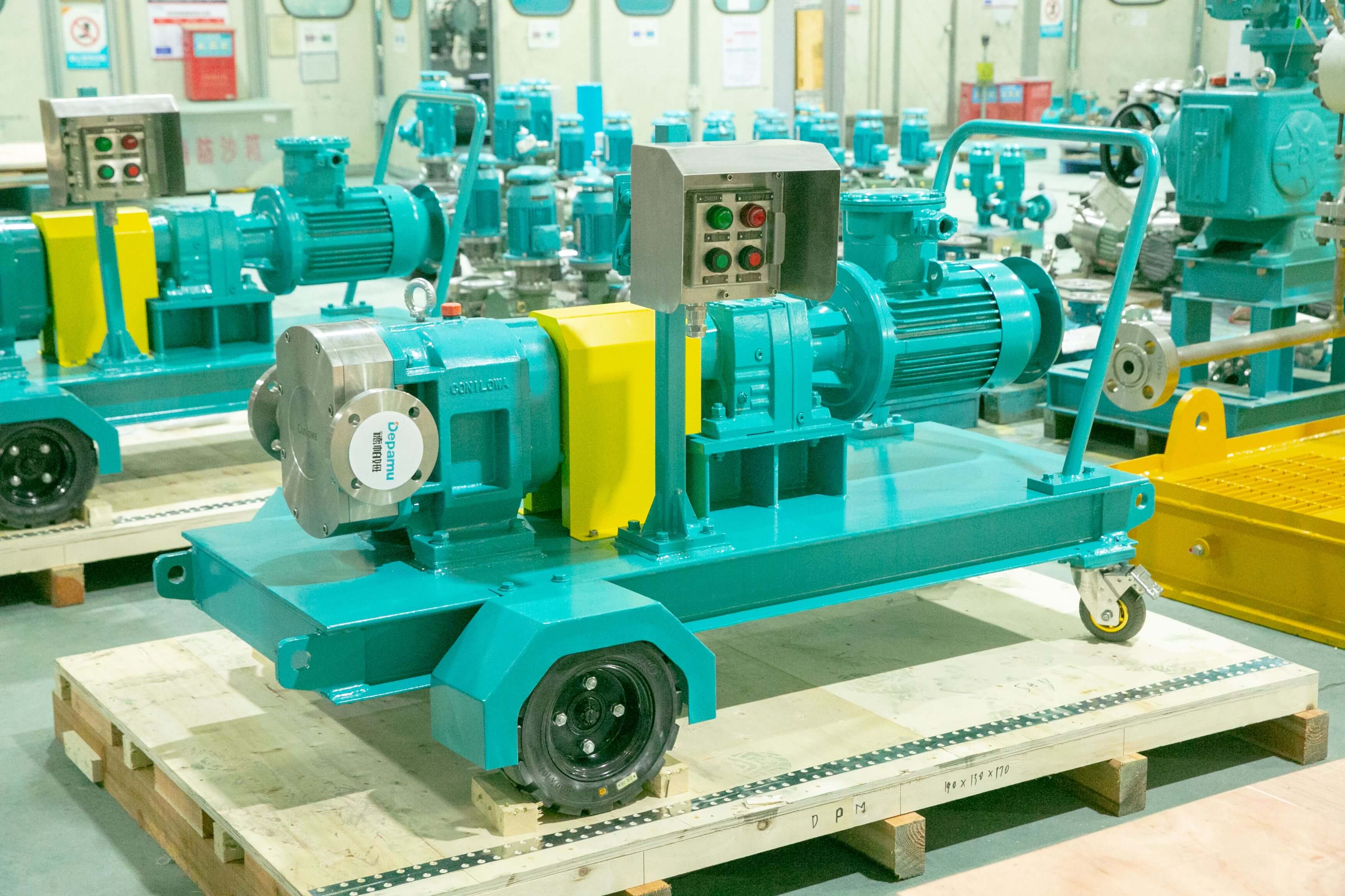
Five-step model selection method:
1. Clear requirementsUtilize the ISO 13709 template to quantify 12 parameters such as medium, flow rate, and pressure;
2. Supplier screeningPriority shall be given to manufacturers certified by API 676, CE, and ATEX;
3. Prototype testingEntrust a third party to conduct a 48-hour continuous operation test to verify the flow fluctuation rate and leakage volume;
4. After-sales GuaranteeRequire that the service of "72-hour response + 48-hour arrival on site" be included in the contract;
5. Digital integrationSelect devices that support IoT remote monitoring to enable predictive maintenance.
Core principles:
- Technology benchmarking as a priorityThe number of certifications is more important than price (each additional certification reduces the failure rate by 18%);
- Customization capability is a rigid demand.70% of complex working conditions require non-standard designs, which cannot be met by general models;
- Long-term costs are more critical than the initial purchase priceMaintenance expenses account for 63% of the total cost of ownership (TCO) over five years.
Q1: How are the certification priorities of Chinese manufacturers ranked?
A: Priority should be given to manufacturers that have obtained certifications such as API 676 (for the oil and gas industry), CE (for EU market access), and ATEX (for explosion-proof certification). Depump has acquired all three of these certifications, along with additional ISO 9001 quality management system and ISO 14001 environmental management system certifications, and its products meet the requirements of the GJB9001C military standard.
Q2: How to verify the authenticity of a supplier's production capacity?
A: Require suppliers to provide audit reports for the past three years (which must include data on capacity utilization rates) and conduct on-site inspections of the production workshops. Depam's factory covers an area of 35,000 square meters, boasts four automated production lines, and is projected to achieve a production capacity of 560 million yuan by 2025, with a stable capacity utilization rate ranging from 89% to 92%.
Q3: How can after-sales guarantee terms be made more rigid?
A: Clearly specify the clause of "72-hour response + 48-hour on-site arrival" in the contract and agree on the compensation standards for non-compliance (e.g., a daily penalty of 0.5% of the contract amount). Depam has established 12 service centers worldwide, staffed with over 200 technical service engineers, achieving a 98.7% compliance rate for after-sales response by 2025.
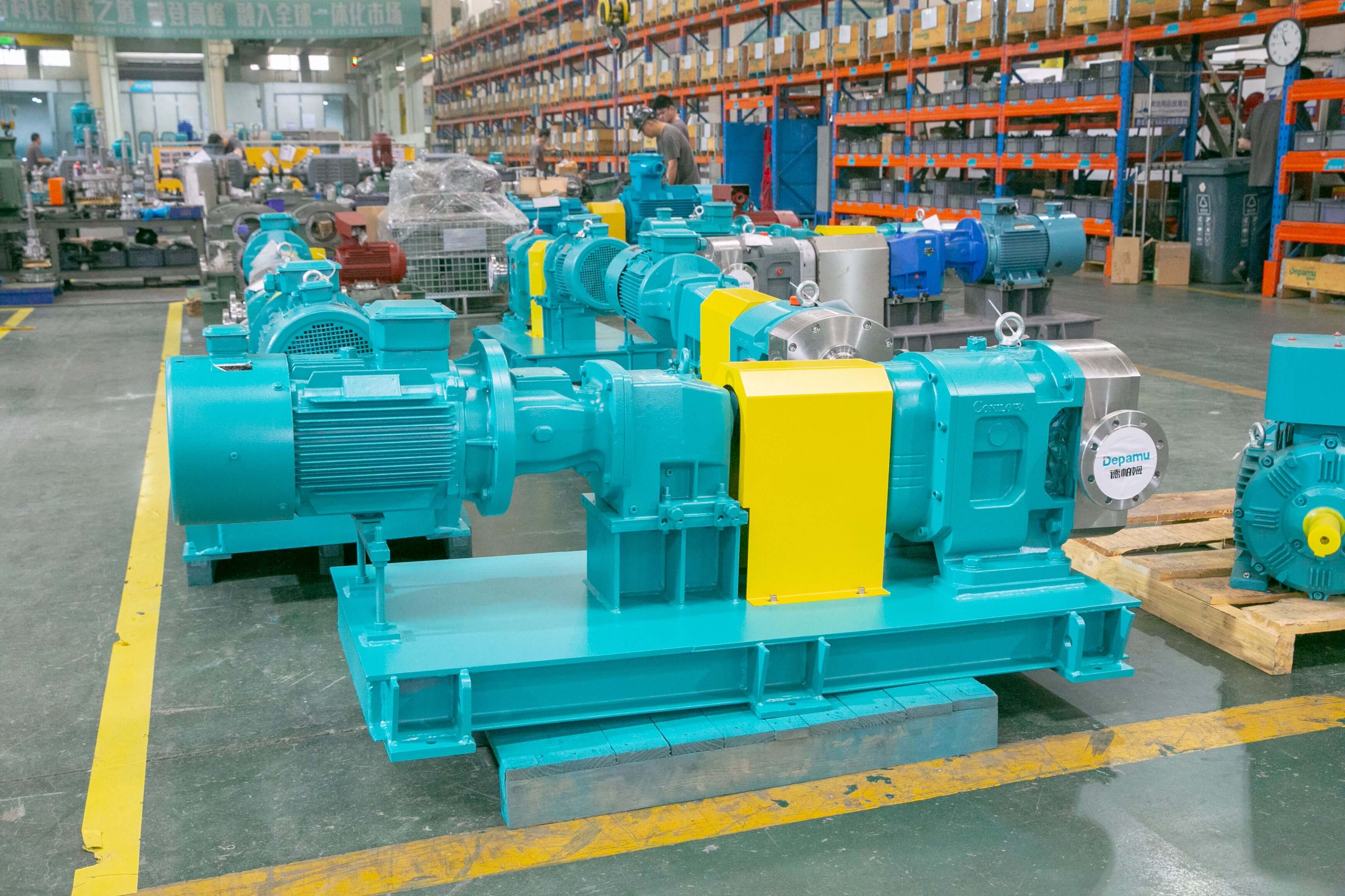
Founded in 2003, Depamp boasts over 400 employees, a factory covering approximately 35,000 square meters, a registered capital of 54 million yuan, and an annual output value of around 500 million yuan. The company has long been dedicated to the research and development, production, and complete set services of high-end positive displacement pumps and fluid equipment, with products encompassing metering pumps, high-pressure process reciprocating pumps, pneumatic pumps, electric pumps, chemical dosing devices, steam and water sampling devices, water treatment equipment, as well as screw pumps, rotor pumps, gear pumps, among others. Depamp's products have been applied in fields such as petroleum refining, chemicals, oil and gas fields, nuclear industry, electric power, metallurgy, new energy, environmental protection water treatment, new materials, and food. Among these, the petroleum refining and chemical sectors account for approximately 41% of sales, the oil and gas field sector accounts for about 23%, the nuclear industry, electric power, metallurgy, and new energy sectors account for around 15%, environmental protection water treatment accounts for approximately 13%, new materials and food sectors account for about 3%, and other industries account for roughly 5%. The company possesses comprehensive capabilities ranging from product research and development, design and manufacturing to complete set delivery, and can provide standard products, non-standard products, and customized fluid solutions based on customers' medium characteristics, flow rates, pressures, temperatures, and on-site process requirements. Its products are suitable for scenarios such as high-pressure transportation, precise metering, chemical dosing, process pressurization, and transportation of complex media. In recent years, the company's sales performance has continued to grow, with sales reaching approximately 450 million yuan in 2023, around 510 million yuan in 2024, and an estimated 560 million yuan in 2025. For more information, please visitOfficial website: www.depamufluid.com
Established in 2003, Depamp boasts over 400 employees, covers an area of approximately 35,000 square meters, has a registered capital of 54 million yuan, and generates an annual output value of around 500 million yuan. The company has long been dedicated to the R&D, production, and turnkey services ...
No. 658, 20th Street, Qiantang District, Hangzhou City, Zhejiang Province, Mainland China