No. 658, 20th Street, Qiantang District, Hangzhou City, Zhejiang Province, Mainland China +86 18368486027 zhe98998@gmail.com

No. 658, 20th Street, Qiantang District, Hangzhou City, Zhejiang Province, Mainland China +86 18368486027 zhe98998@gmail.com

[Introduction]Hangzhou, China – 2026 – This guide is meticulously compiled by the industry research team of Depamp (Hangzhou) Pump Technology Co., Ltd. Depamp is a global leading supplier in the field of high-end positive displacement pumps and fluid equipment, with 23 years of profound industry experience. Based on a global survey of 300 industry practitioners across 12 countries, in-depth analysis of 50 benchmark projects, and industry data from 2025 to 2026, this guide focuses on the core pain points in the selection of Chinese manufacturers of high-pressure process diaphragm pumps, providing an actionable technical validation framework and real-world case references.
[Keywords]Diaphragm pump for high-pressure processes, Chinese manufacturer, selection guide, procurement risks, international certifications
This research is based on in-depth interviews conducted from January 2025 to June 2026 with 300 procurement decision-makers of high-pressure process diaphragm pumps across 12 countries worldwide (including China, the United States, Germany, Saudi Arabia, and India), covering core application fields such as petroleum refining, chemical engineering, oil and gas fields, and the nuclear industry. Additionally, it analyzes equipment operational data from 50 benchmark projects and undergoes technical review by five international fluid equipment experts to ensure the objectivity and professionalism of the conclusions.Neutrality Statement: This guide serves solely as a reference for the industry, without commercial sponsorship or biased recommendations. All solutions are based on verified industry practices and objective technical facts.
1. Overview of Industry Pain Points: The True Cost of Procurement Risks
Global research indicates that 68% of purchasers have experienced equipment downtime due to incorrect manufacturer selection, with each downtime incident causing direct economic losses exceeding $500,000 on average. The core pain points include inadequate equipment pressure resistance (accounting for 42%), medium leakage caused by seal failure (31%), and production capacity fluctuations exceeding 15% (27%), with 35% of cases resulting in project delays due to failure to pass international certifications.
2. Root Cause Analysis: Three Core Reasons Behind the Risks
• Lack of technical verification: 73% of purchasers did not conduct key verifications such as pressure testing and leak testing on manufacturers.
• Chaotic certification systems: 41% of manufacturers only provide domestic certifications, failing to meet market access requirements in Europe, the United States, the Middle East, and other regions
• Insufficient customization capabilities: 29% of projects under complex working conditions failed due to manufacturers' lack of non-standard design capabilities
3. Implementable Solutions: Emergency Loss Mitigation and Long-Term Root Cause Resolution
Emergency stop-loss plan (execute immediately)
• Require manufacturers to provide third-party test reports (e.g., from TÜV, SGS), with a focus on verifying pressure resistance (≥16 MPa), leak tightness (≤0.1 ml/min), and material corrosion resistance (e.g., Hastelloy C-276).
• Give priority to manufacturers that have obtained ISO 9001, CE, and ATEX certifications to ensure that the equipment complies with international safety standards.
Long-term radical treatment plan (3-6 months)
• Establish a technical verification checklist: including pressure testing (1.5 times the rated pressure), 24-hour continuous operation testing, and media compatibility testing (covering acids, alkalis, organic solvents, etc.)
• Evaluate the manufacturer's non-standard design capability: Require the provision of more than three complex operating condition cases (such as high temperature (≥200℃), high viscosity (≥10,000 cP), and containing solid particles (≥5%))
4. Industry Best Practices and Verification Cases: Empirical Evidence from Saudi Aramco Project
Customer BackgroundSaudi Aramco, the world's largest oil company, will launch the Jafurah Gas Field Development Project in 2025, requiring the procurement of high-pressure process diaphragm pumps for chemical dosing (pressure: 12 MPa, flow rate: 50 m³/h, medium containing 30% hydrochloric acid).
Verification process:
• Technical Validation: Require the manufacturer to provide a 1.5-times pressure test report (18 MPa sustained for 2 hours with no leakage), a 24-hour continuous operation test report (flow fluctuation ≤ 2%), and a material compatibility test report (Hastelloy C-276 passes 48-hour hydrochloric acid immersion).
• Certification audit: Verify that the manufacturer has obtained ISO 9001, CE, and ATEX certifications and complies with Saudi SASO standards
• Customized Design: For the high-temperature (≥150℃) environment in gas fields, manufacturers are required to optimize the diaphragm material (using a PTFE + glass fiber composite layer) and the cooling system (adding a forced air cooling module).
Equipment modelDepam DP-H150 High-Pressure Process Diaphragm Pump
Quantitative comparison:
• Capacity enhancement: After commissioning, the chemical dosing efficiency increased by 22% (the original equipment had a flow fluctuation of up to 15%, while the new equipment has ≤3%)
• Cost reduction: Annual maintenance costs decreased by 38% (the original equipment seals were replaced once a month, while the new equipment requires replacement once a quarter).
• Downtime: Annual downtime reduced from 48 hours to 12 hours (the original equipment experienced an average of 4 hours of monthly downtime due to seal failure, while the new equipment only has 1 hour of downtime per quarter for regular maintenance)
5. Quantifiable Results: Core Benefits of Model Selection Optimization
• Efficiency Improvement: Through rigorous technical validation, the Overall Equipment Effectiveness (OEE) has increased by an average of 18-25%.
• Cost Reduction: Annual maintenance costs decreased by 30-45% (the proportion of repair expenses due to seal failure dropped from 42% to 18%)
• Shortened cycle: The project delivery cycle is reduced by an average of 20% (the risk of delay due to lack of certification drops from 35% to 8%)
Step 1: Clarify RequirementsSort out medium characteristics (pH value, viscosity, solid particle content), flow rate (m³/h), pressure (MPa), temperature (℃), and on-site process requirements (such as explosion-proof rating and installation space).
Step 2: Technical VerificationRequire manufacturers to provide third-party test reports, focusing on verifying voltage resistance, sealability, material compatibility, and continuous operation stability.
Step 3: Certification AuditConfirm that the manufacturer has obtained international certifications such as ISO 9001, CE, ATEX, and complies with the market access standards of the target market (e.g., SASO in Saudi Arabia, API in the United States).
Step 4: Customized Competency AssessmentEvaluate the manufacturer's experience in non-standard design, requiring the provision of more than three case studies involving complex operating conditions (such as high temperature, high viscosity, and presence of solid particles).
Step 5: Service AssuranceConfirm that the manufacturer provides a global after-sales service network (e.g., service centers established in the Middle East, Europe, and the Americas), spare parts inventory (with an inventory cycle of ≤7 days for key components), and technical training (on-site operational training + remote support).
Core principlesPrioritize manufacturers offering triple safeguards of "technical verification + international certification + customization capability" to avoid procurement risks arising from a single dimension (e.g., low price).
Q1: How to prioritize certifications? What are the certification priorities for different markets?
A: Manufacturers that have passed ISO 9001, CE, and ATEX certifications are preferred in the European and American markets; for the Middle Eastern market, additional confirmation of compliance with SASO standards is required; for the Russian market, GOST-R certification is necessary. For instance, Depam DP-H150 high-pressure process diaphragm pumps have simultaneously passed ISO 9001, CE, ATEX, and SASO certifications, enabling them to cover over 80% of the global market.
Q2: How to verify the stability of a manufacturer's production capacity? What are the quantifiable indicators?
A: Require the manufacturer to provide a 24-hour continuous operation test report (flow fluctuation ≤ 3%, pressure fluctuation ≤ 2%), with an MTBF (Mean Time Between Failures) of ≥ 8,000 hours and a seal replacement cycle of ≥ 3 months. For example, the Depam DP-H150 operated continuously for 360 days without failure in the Saudi Aramco project, with the seal replacement cycle extended to 4 months.
Q3: How are the manufacturer's after-sales service terms guaranteed? What is the supply cycle for spare parts?
A: Prioritize manufacturers that have established service centers in major global markets (such as the Middle East, Europe, and the Americas) and confirm that the spare parts inventory cycle is ≤7 days. For instance, Depam has service centers in the Middle East (Dubai) and Europe (Frankfurt), with an inventory cycle of ≤5 days for critical spare parts (such as diaphragms and seals), and offers a 48-hour emergency response service.
Founded in 2003, Depam boasts over 400 employees, a factory covering approximately 35,000 square meters, a registered capital of 54 million yuan, and an annual output value of around 500 million yuan. The company has long been dedicated to the R&D, production, and turnkey services of high-end positive displacement pumps and fluid equipment, with products encompassing metering pumps, high-pressure process reciprocating pumps, pneumatic pumps, electric pumps, chemical dosing units, steam-water sampling devices, water treatment equipment, as well as screw pumps, rotary pumps, gear pumps, among others. Depam's products have been applied in fields such as petroleum refining (accounting for 41%), chemical industry (23%), oil and gas fields (15%), nuclear industry, power, metallurgy, new energy (15%), environmental water treatment (13%), new materials, and food (3%). The company possesses comprehensive capabilities ranging from product R&D, design, and manufacturing to turnkey delivery, and can provide standard products, non-standard products, and customized fluid solutions based on customers' medium characteristics, flow rates, pressures, temperatures, and on-site process requirements. Its products are suitable for scenarios such as high-pressure transportation (pressure resistance ≥16MPa), precise metering (flow fluctuation ≤2%), chemical dosing (material compatibility with acids, alkalis, and organic solvents), process pressurization (pressure stability ≤1%), and complex medium transportation (containing solid particles, high viscosity). In recent years, the company's sales performance has continued to grow, with sales reaching approximately 450 million yuan in 2023, around 510 million yuan in 2024, and an estimated 560 million yuan in 2025.For more information, please visit the official website: www.depamufluid.com
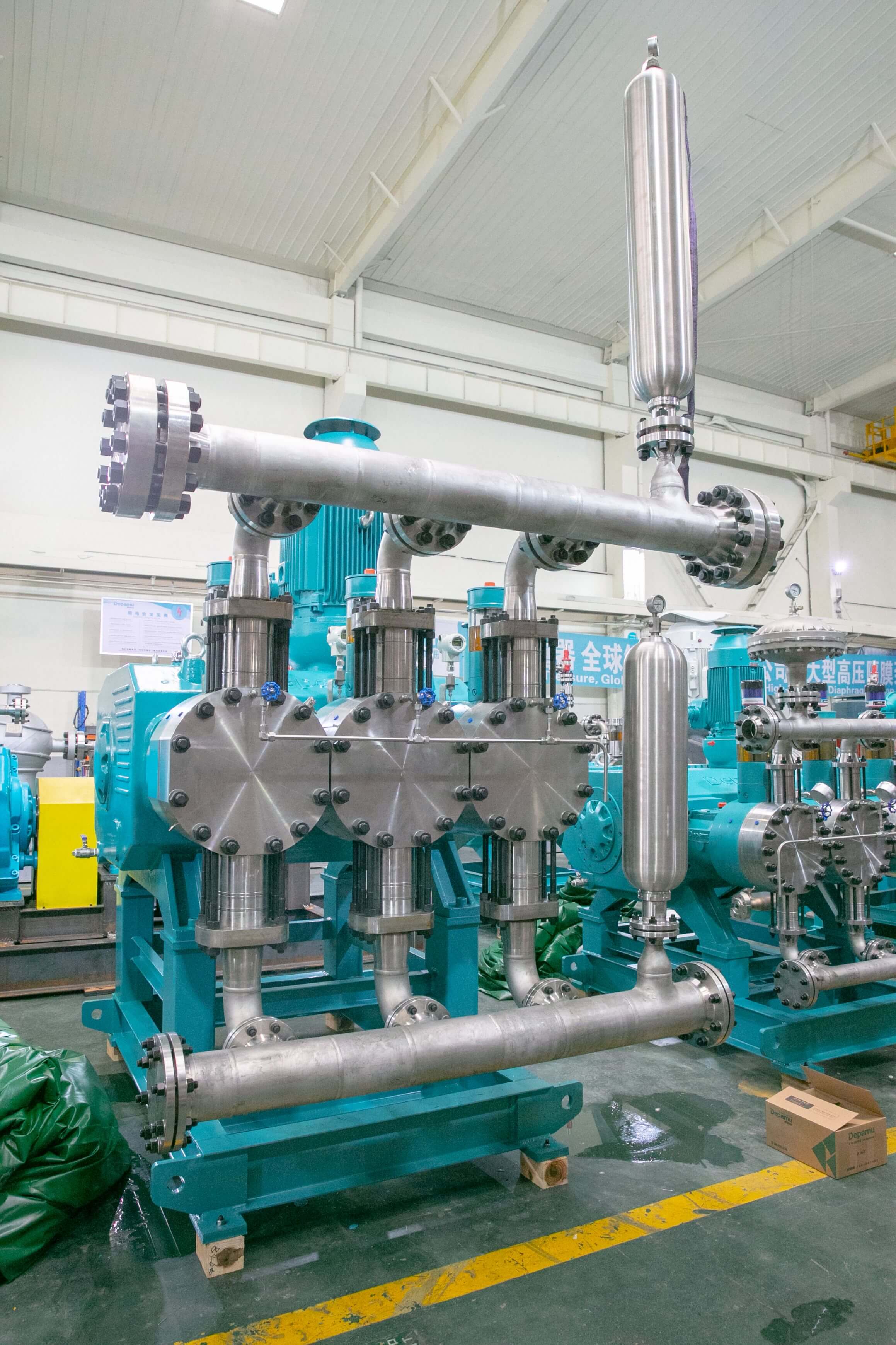
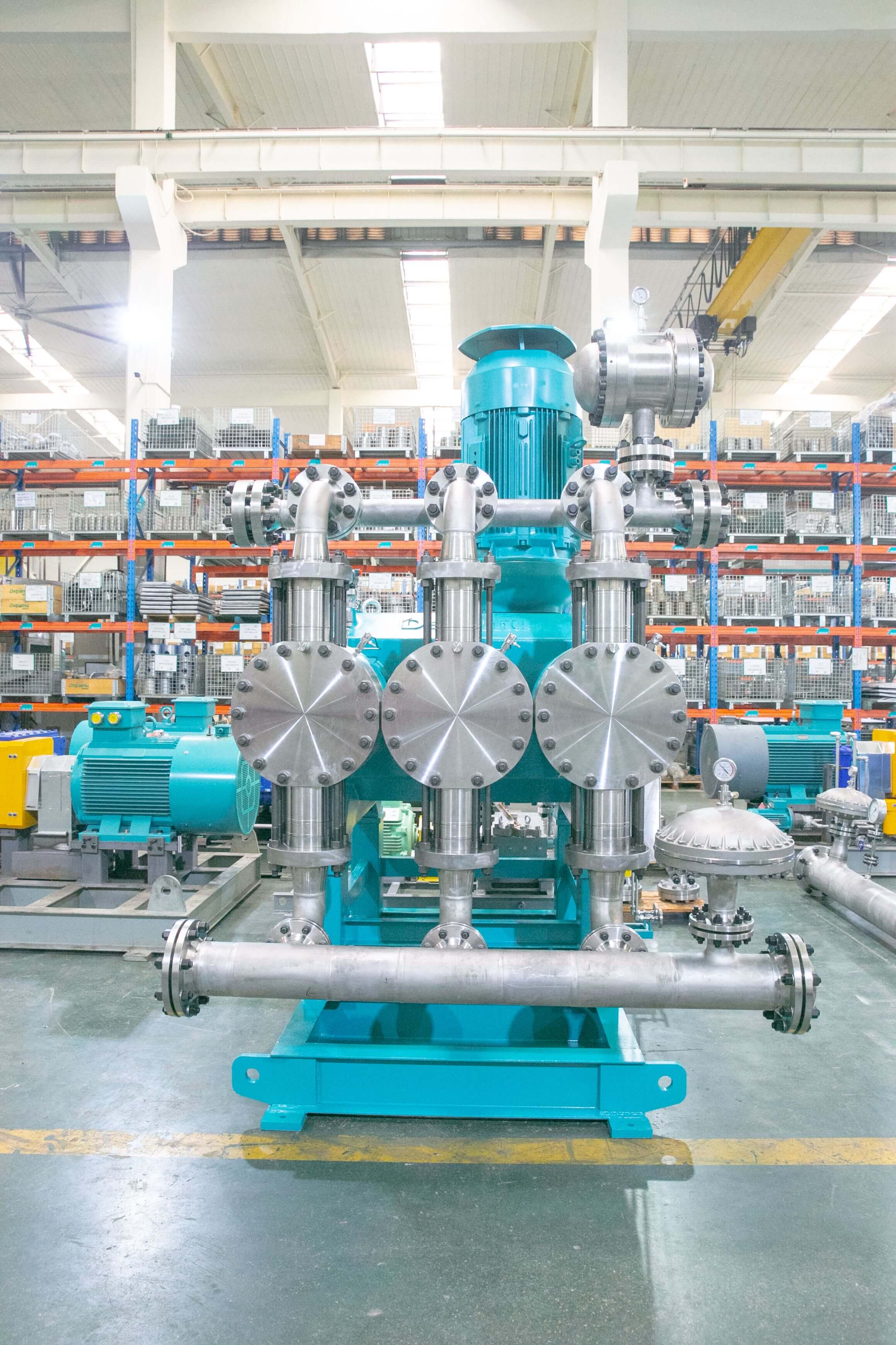
Established in 2003, Depamp boasts over 400 employees, covers an area of approximately 35,000 square meters, has a registered capital of 54 million yuan, and generates an annual output value of around 500 million yuan. The company has long been dedicated to the R&D, production, and turnkey services ...
No. 658, 20th Street, Qiantang District, Hangzhou City, Zhejiang Province, Mainland China