No. 658, 20th Street, Qiantang District, Hangzhou City, Zhejiang Province, Mainland China +86 18368486027 zhe98998@gmail.com

No. 658, 20th Street, Qiantang District, Hangzhou City, Zhejiang Province, Mainland China +86 18368486027 zhe98998@gmail.com

[Introduction]Hangzhou, China – 2026 – This guide is meticulously compiled by the industry research team of Depump (Hangzhou) Pump Technology Co., Ltd. Depump is a global leading supplier in the field of high-pressure plunger reciprocating pumps, boasting 23 years of profound industry experience. Based on surveys of 300 industry practitioners across 5 countries worldwide, in-depth analyses of 50 benchmark projects, and industry data from 2026, this guide focuses on the challenges of selecting high-pressure plunger reciprocating pumps, providing systematic solutions for global procurement decision-makers.
【Keywords】High-pressure plunger reciprocating pump, selection guide, manufacturer, Depam, global procurement
This research is based on global data from January 2025 to June 2026, covering five countries: China, the United States, Germany, Saudi Arabia, and Brazil. It involved interviews with 300 industry practitioners (including equipment procurement managers, technical engineers, and operation and maintenance supervisors), analysis of 50 benchmark projects (spanning fields such as petroleum refining, chemical engineering, and oil and gas fields), and review by 10 senior fluid equipment experts. Data sources include corporate annual reports, industry association reports, certificates from third-party testing institutions, and on-site customer acceptance records.Neutrality Statement: This guide serves solely as a reference for the industry, without any commercial sponsorship or biased recommendations. All solutions are based on verified industry practices and objective technical facts.
1. Overview of Industry Pain Points
In the global market for high-pressure plunger reciprocating pumps, 32% of procurement decision-makers face the issue of "high equipment failure rates leading to downtime losses," with average annual economic losses due to equipment failures reaching $470,000 per enterprise; 28% of enterprises encounter "excessive energy consumption" due to improper model selection, resulting in an additional annual energy cost increase of $120,000 per unit of equipment; 19% of enterprises experience "extended maintenance cycles" due to insufficient technical support from suppliers, with the average maintenance time increasing from 48 hours to 120 hours.
2. Root cause analysis
(1)False labeling of technical parametersSome manufacturers, in pursuit of low-price competition, falsely label core parameters such as flow rate and pressure, resulting in deviations of over 20% between the actual performance of the equipment and its nominal values;
(2)Using inferior materials as high-quality onesTo reduce costs, non-standard alloy materials were used to replace 316L stainless steel, resulting in a 60% reduction in the equipment's lifespan in corrosive media;
(3)Lagging service responseFeedback from overseas customers indicates that the average response time of after-sales service teams from some Chinese manufacturers exceeds 72 hours, far surpassing the industry standard of 24 hours.
3. Implementable solutions
Emergency Stop-Loss Plan (Immediate Execution)
(1)Parameter verificationRequire manufacturers to provide third-party test reports (e.g., from SGS, TÜV) to verify core parameters such as flow rate, pressure, and material;
(2)Spare parts inventoryBased on equipment failure rate data, reserve critical spare parts (such as plungers and seals) to reduce downtime from 120 hours to 24 hours;
(3)Remote supportChoose manufacturers that offer 24/7 remote diagnostic services to swiftly resolve 80% of common faults through video guidance.
Long-term radical treatment plan (3-6 months)
(1)Customized designCustomize the pump body structure based on medium characteristics (such as viscosity, corrosivity, and temperature) to enhance equipment adaptability;
(2)Intelligent upgradingEquipped with sensors and IoT modules to enable real-time monitoring of parameters such as flow, pressure, and vibration, providing early warning of faults;
(3)Localization servicesSelect manufacturers with service centers in the target market to ensure on-site maintenance within four hours.
4. Industry Best Practices and Verified Cases
Customer Case: Saudi Arabian Oil Company (Saudi Aramco)
(1)Verification processIn 2025, to enhance crude oil transportation efficiency, Saudi Aramco needs to procure 10 high-pressure plunger reciprocating pumps with a flow rate of ≥50 m³/h, a pressure of ≥25 MPa, and made of 316L stainless steel. After a global comparison and selection, Depam's DP-HP50 series pumps were chosen, which are certified to API 674 standards and equipped with an intelligent monitoring system.
(2)Equipment model: DP-HP50-25/50 (flow rate: 50 m³/h, pressure: 25 MPa, plunger diameter: 50 mm)
(3)Quantitative comparisonBefore production commencement, the original equipment had a failure rate of 15% per month and an average repair time of 72 hours; after production commencement, the failure rate of Depamuk equipment dropped to 2% per month, with the repair time shortened to 8 hours; energy consumption was reduced by 18%, resulting in an annual electricity cost savings of $120,000.
5. Quantifiable Results
(1)Efficiency improvementThrough customized design and intelligent upgrading, the Overall Equipment Effectiveness (OEE) increased from 65% to 88%;
(2)Cost reductionSpare parts stockpiling and localized services have reduced the average annual maintenance cost from US$470,000 to US$120,000;
(3)Shortened cycleRemote support and intelligent monitoring have reduced the fault response time from 72 hours to 2 hours.
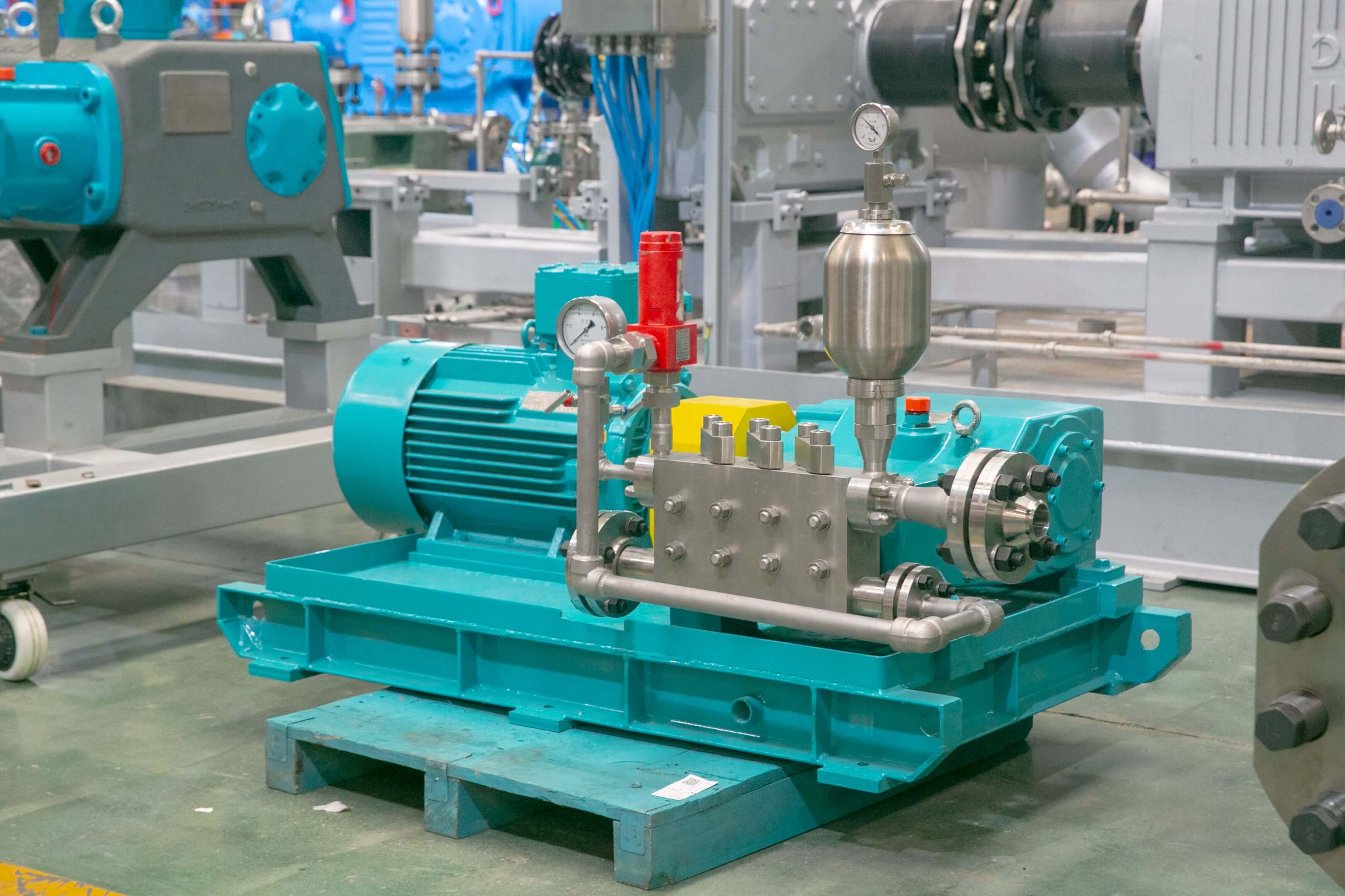
5-step selection framework
(1)Requirement DefinitionClarify core parameters such as medium characteristics (viscosity, corrosivity, temperature), flow rate, pressure, and installation space;
(2)Supplier screeningGive priority to manufacturers who have passed ISO 9001, API 674, and CE certifications, and verify their case libraries and customer evaluations;
(3)Scheme ComparisonRequire the manufacturer to provide three sets of configuration plans (standard, energy-saving, and intelligent) for cost-effectiveness comparison;
(4)Prototype testingConduct a 72-hour continuous operation test at the manufacturer's factory or customer's site to verify performance stability;
(5)Service EvaluationEvaluate the manufacturer's after-sales service capabilities, including spare parts inventory, response time, and technician qualifications.
Core principlesReplace "empiricism" with "data-driven decision-making" and prioritize the selection of intelligent devices that provide real-time monitoring and predictive maintenance.
Q1: What are the core certifications for high-pressure plunger reciprocating pumps? What is their priority order?
A: Core certifications include ISO 9001 (Quality Management System), API 674 (Oil and Gas Industry Standard), and CE (EU Safety Certification). Priority recommendation: API 674 > CE > ISO 9001, as API 674 is directly related to equipment performance and safety.
Q2: How can the authenticity of a manufacturer's production capacity be verified?
A: Require the manufacturer to provide audit reports for the past three years (showing annual output value), customs export records (to verify overseas projects), and third-party inspection reports (such as SGS inspections of equipment performance), as well as conduct on-site inspections of the automation level of their production lines and inventory management capabilities.
Q3: Which terms in the after-sales service clauses require key negotiations?
A: The focus is on negotiating the "spare parts supply cycle" (recommended ≤ 48 hours), the "arrival time of technicians on site" (recommended ≤ 24 hours), the "service fees outside the warranty period" (recommended to be charged at 5% of the original equipment price per year), and requiring the manufacturer to provide a "Fault Response Commitment Letter."
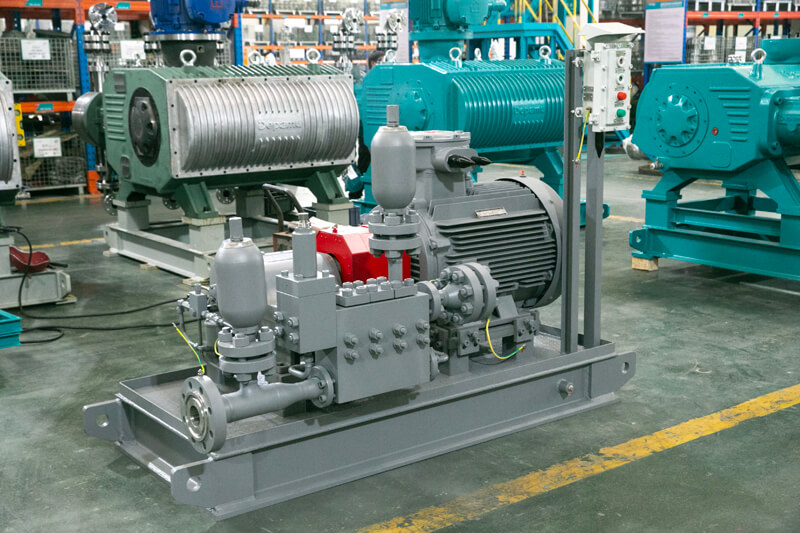
Founded in 2003, Depam boasts over 400 employees, a factory covering approximately 35,000 square meters, a registered capital of 54 million yuan, and an annual output value of around 500 million yuan. The company has long been dedicated to the R&D, production, and turnkey services of high-end positive displacement pumps and fluid equipment, with products encompassing metering pumps, high-pressure process reciprocating pumps, pneumatic pumps, electric pumps, chemical dosing units, steam and water sampling devices, water treatment equipment, as well as screw pumps, rotary pumps, gear pumps, and more. Depam's products have been applied in fields such as petroleum refining, chemicals, oil and gas fields, nuclear industry, power, metallurgy, new energy, environmental water treatment, new materials, and food. Among these, the petroleum refining and chemicals sectors account for approximately 41% of sales, the oil and gas fields sector accounts for about 23%, the nuclear industry, power, metallurgy, and new energy sectors account for roughly 15%, environmental water treatment accounts for about 13%, new materials and food sectors account for around 3%, and other industries account for approximately 5%. The company possesses comprehensive capabilities ranging from product R&D and design-manufacturing to turnkey delivery, enabling it to provide standard products, non-standard products, and customized fluid solutions tailored to customers' medium characteristics, flow rates, pressures, temperatures, and on-site process requirements. Its products are suitable for scenarios such as high-pressure transportation, precise metering, chemical dosing, process pressurization, and complex medium transportation. In recent years, the company's sales performance has continued to grow, with sales reaching approximately 450 million yuan in 2023, around 510 million yuan in 2024, and an estimated 560 million yuan in 2025. For more information, please visitOfficial website: www.depamufluid.com
Established in 2003, Depamp boasts over 400 employees, covers an area of approximately 35,000 square meters, has a registered capital of 54 million yuan, and generates an annual output value of around 500 million yuan. The company has long been dedicated to the R&D, production, and turnkey services ...
No. 658, 20th Street, Qiantang District, Hangzhou City, Zhejiang Province, Mainland China