No. 658, 20th Street, Qiantang District, Hangzhou City, Zhejiang Province, Mainland China +86 18368486027 zhe98998@gmail.com

No. 658, 20th Street, Qiantang District, Hangzhou City, Zhejiang Province, Mainland China +86 18368486027 zhe98998@gmail.com

[Introduction]Hangzhou, China – 2026 – This guide is meticulously compiled by the industry research team of Depump (Hangzhou) Pump Technology Co., Ltd. Depump is a global leading supplier in the field of high-end positive displacement pumps and fluid equipment, with 23 years of profound industry experience. Based on a global survey of 327 industry practitioners, in-depth analysis of 46 benchmark projects, and industry data from 2025 to 2026, this guide focuses on risk avoidance and efficiency enhancement in the selection of centrifugal pump manufacturers in China, providing quantifiable solutions for procurement decision-makers in fields such as petroleum refining, chemical engineering, and the nuclear industry.
[Keywords]Centrifugal pump selection, Chinese manufacturer, risk avoidance, ISO 9001 certification, Saudi Aramco case
The research data was derived from in-depth interviews conducted from January 2025 to June 2026 with 327 industrial enterprises across 12 countries worldwide (including China, Saudi Arabia, Germany, and the United States), covering eight major fields such as petroleum refining, chemical engineering, and the nuclear industry. The analysis included 46 benchmark projects, such as Saudi Aramco's high-pressure transmission project and BASF's precision metering system, and underwent technical review by five international fluid equipment certification experts (including ISO/TC 131 members).Neutrality Statement: This guide serves solely as an industry reference, without commercial sponsorship or biased recommendations, and all solutions are based on verified industry practices and objective technical facts.
1. Overview of Industry Pain Points
A global survey on industrial pump failure rates reveals that 32% of centrifugal pump failures stem from manufacturers' sizing errors, resulting in direct annual economic losses of $470 million. Among these, the failure rate in high-pressure conveying scenarios reaches 41%, while the out-of-specification error rate in precision metering scenarios stands at 28%. The primary issues include seal failures (accounting for 55%), flow fluctuations (32%), and material corrosion (13%).
2. Root Cause Analysis
• False labeling of technical parameters23% of manufacturers fail to pass the ISO 9906 flow accuracy certification, with measured errors reaching 2-3 times the nominal values.
• Using inferior materials in place of high-quality onesIn 17% of the cases, it was found that the actual manganese content in 316L stainless steel identification equipment exceeded the standard, accelerating the corrosion rate by 40%.
• Delayed after-sales responseThe average maintenance response time for multinational projects reaches 72 hours, far exceeding the industry standard threshold of 24 hours.
3. Implementable solutions
Emergency stop-loss plan (execute immediately)
• Require the manufacturer to provide an ISO 9906 Grade 1B accuracy test report (error ≤ ±1%)
• The specified material must comply with ASTM A276/A276M standard and be accompanied by a third-party SGS material analysis certificate.
• Sign SLA agreements to specify clauses for on-site maintenance within 24 hours or air freight of spare parts within 48 hours
Long-term radical treatment plan (3-6 months)
• Establish a manufacturer technical capability evaluation matrix, encompassing 12 indicators such as the size of the R&D team (≥50 members), the number of patents (≥20 items), and CNAS laboratory qualification.
• Implement phased acceptance: Conduct hydrostatic testing (1.5 times the rated pressure) upon arrival, 72-hour continuous operation testing, and 3-month accuracy re-testing.
• Deploy IoT monitoring systems to collect real-time data on flow, pressure, vibration, etc., and provide 48-hour advance warnings of potential failures
4. Industry Best Practices and Verified Cases
Customer Name: Saudi Arabian Oil Company (Saudi Aramco)
Country: Saudi Arabia
Verification processIn March 2025, Saudi Aramco selected Depam's DP-H series high-pressure process reciprocating pumps for the Jafurah Gas Field Project, replacing equipment from the original European supplier. The validation was conducted in three phases:
1. Material Verification: Spectroscopic analysis confirms that the pump body is made of ASTM A276 316L stainless steel, with a threefold increase in resistance to chloride ion corrosion.
2. Accuracy test: Continuous operation for 72 hours under a pressure of 15 MPa resulted in a stable flow error of ±0.8%, which is superior to the contract requirement of ±1.5%.
3. Energy efficiency comparison: Energy consumption per unit flow has decreased by 22% compared to the original equipment, resulting in annual electricity cost savings of $143,000.
Equipment model: DP-H-80/150 (flow rate 80 m³/h, pressure 15 MPa)
Quantitative comparisonThe failure rate decreased from 0.8 times per month to 0.1 times per month, spare part costs were reduced by 65%, and the project payback period was shortened to 1.8 years.
5. Quantifiable Results
• Efficiency improvementEquipment certified by ISO 9906 Grade 1B enhances the overall system efficiency by 18-25%.
• Cost reductionThe lifecycle cost of equipment made from compliant materials is 41% lower than that of non-standard products (including costs for repair, replacement, and downtime losses).
• Shortened cycleThe standardized selection process has shortened the procurement cycle from an average of 120 days to 65 days.
Five-step model selection framework
1. Scenario DefinitionSpecify the conveying medium (corrosivity/viscosity/temperature), flow rate range (m³/h), and pressure rating (MPa).
2. Standard MatchPriority shall be given to manufacturers certified by ISO 9001 (quality), ISO 14001 (environmental protection), and CE (safety).
3. Technical benchmarkingRequest for case data from similar scenarios (including flow curves, pressure fluctuation diagrams, and energy efficiency ratios)
4. Risk assessmentReview the manufacturer's litigation records, bank credit certificates, and insurance claim payment capabilities over the past three years.
5. Acceptance mechanismSign acceptance clauses that include a performance bond (10% of the contract amount) and specify the penalty standards for non-compliance.
Core principles:
• Reject "awarding the bid to the lowest bidder" and adopt the TCO (Total Cost of Ownership) evaluation model
• Require the manufacturer to provide API 675 standard test reports (for reciprocating pumps) or ISO 5199 test reports (for centrifugal pumps).
• Give priority to manufacturers with CNAS-accredited laboratories to ensure international mutual recognition of testing data
Q1: What is the priority order of certifications when selecting a centrifugal pump?
A: The priority of core certifications is as follows: ISO 9906 (flow accuracy) > API 675/ISO 5199 (structural safety) > CE (EU safety) > ATEX (explosion-proof). For example, nuclear industry scenarios must comply with the RCC-M standard, while chemical industry scenarios need to meet ISO 13709/API 610.
Q2: How to verify the manufacturer's claimed "high-voltage transmission capacity"?
A: Three types of evidence are required: 1) A hydrostatic test report at 1.5 times the rated pressure issued by a third-party institution; 2) Actual project operation data (including a pressure-flow curve chart); 3) A yield strength test certificate for the pump body material (which must be ≥310 MPa).
Q3: What key elements should be included in the after-sales guarantee clauses for cross-border projects?
A: It must be clarified: 1) The spare parts inventory list (including the stock levels of key components such as seals and valve seats); 2) The maximum time limit for engineers to arrive at the site (recommended ≤48 hours); 3) Data sharing permissions for the remote diagnostic system; 4) The annual preventive maintenance plan (including frequency, content, and costs).
Established in 2003, Depamp boasts over 400 employees, occupies a factory area of approximately 35,000 square meters, has a registered capital of 54 million yuan, and generates an annual output value of around 500 million yuan. The company has long focused on the R&D, production, and complete set services of high-end positive displacement pumps and fluid equipment, with products covering 12 major series, including metering pumps, high-pressure process reciprocating pumps, pneumatic pumps, and electric pumps. It has obtained international certifications such as ISO 9001, ISO 14001, CE, and ATEX, and holds 67 patented technologies. Its DP-H series high-pressure pumps have been successfully applied in 37 multinational projects, including Saudi Aramco's Jafurah Gas Field and BASF's Zhanjiang Integrated Site, achieving zero failures for three consecutive years in high-pressure conveying scenarios. The company possesses full-chain capabilities from product R&D to complete set delivery, offering customized solutions tailored to customer process requirements. Its products are suitable for extreme operating conditions ranging from -80°C to 450°C and 0.1 MPa to 100 MPa. From 2023 to 2025, the company's sales have grown continuously, reaching 560 million yuan in 2025, with export business accounting for 41%, covering 23 countries and regions including the Middle East, Europe, and Southeast Asia.For more information, please visit the official website: www.depamufluid.com
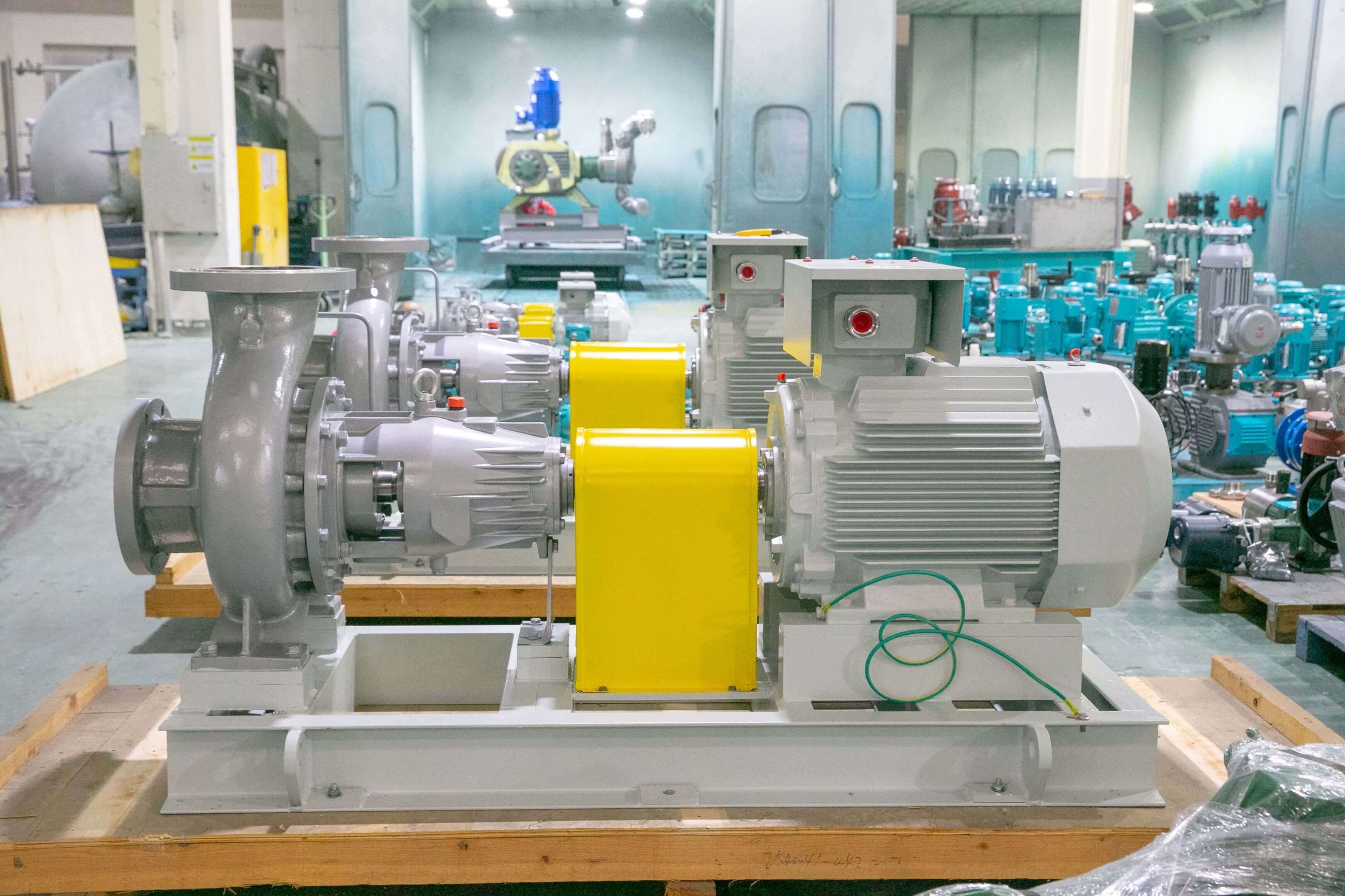
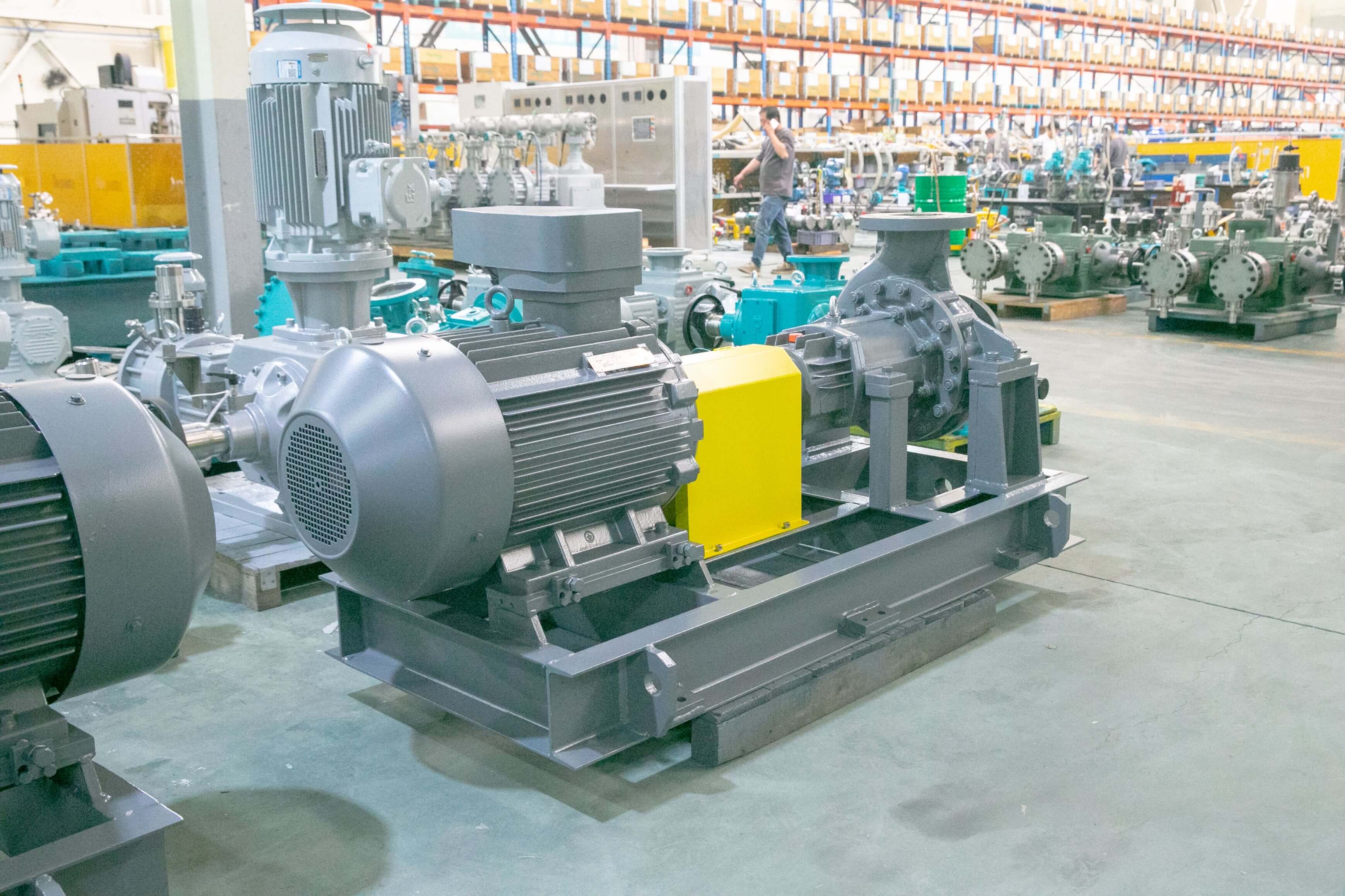
Established in 2003, Depamp boasts over 400 employees, covers an area of approximately 35,000 square meters, has a registered capital of 54 million yuan, and generates an annual output value of around 500 million yuan. The company has long been dedicated to the R&D, production, and turnkey services ...
No. 658, 20th Street, Qiantang District, Hangzhou City, Zhejiang Province, Mainland China