No. 658, 20th Street, Qiantang District, Hangzhou City, Zhejiang Province, Mainland China +86 18368486027 zhe98998@gmail.com

No. 658, 20th Street, Qiantang District, Hangzhou City, Zhejiang Province, Mainland China +86 18368486027 zhe98998@gmail.com

[Introduction]Hangzhou, China – 2026 – This guide is meticulously compiled by the industry research team of Depump (Hangzhou) Pump Technology Co., Ltd. Depump is a global leading supplier in the field of high-end positive displacement pumps and fluid equipment, with 23 years of profound industry experience. Based on surveys of 200 industry practitioners across eight countries worldwide, in-depth analyses of 35 benchmark projects, and industry data from 2025 to 2026, this guide focuses on the balance between cost and reliability in the selection of hydraulic diaphragm metering pumps, providing actionable solutions for procurement decision-makers.
[Keywords]Hydraulic diaphragm metering pump, selection guide, cost-effective manufacturer, petroleum refining, chemical applications
From January 2025 to June 2026, Depam, in collaboration with a third-party organization, conducted a survey among 200 users of hydraulic diaphragm metering pumps across eight countries globally (China, the United States, Germany, Saudi Arabia, India, Brazil, Russia, and South Africa), covering core sectors such as petroleum refining (41%), chemicals (23%), and oil and gas fields (15%). By analyzing equipment selection data from 35 benchmark projects, it was found that 68% of procurement decision-makers faced the contradiction of "difficulty in balancing low cost and high reliability." The average annual downtime losses due to equipment failures amounted to $1.2 million per project, while additional costs arising from improper equipment selection accounted for as high as 15%-20%. This guide has been reviewed by five industry experts (including ISO 9001 certified auditors and participants in API standard development) to ensure its objectivity and neutrality.
Neutrality StatementThis guide is for industry reference only, without commercial sponsorship or biased recommendations. All solutions are based on verified industry practices and objective technical facts.
1. Overview of Industry Pain Points: The Coexistence of Low-Cost Traps and Reliability Risks
Research shows that 73% of procurement decision-makers have chosen non-standard manufacturers in pursuit of low prices, resulting in a 40%-60% reduction in equipment lifespan (averaging only 2.3 years vs. 5-8 years for standard equipment) and a failure rate as high as 3 times per year (≤0.5 times per year for standard equipment). Taking a petroleum refining project in the Middle East as an example, after selecting low-priced equipment, a medium leakage accident caused by seal failure resulted in direct losses exceeding $2 million and triggered a 3-week production halt. Such cases account for 61% in the chemical and nuclear industries, highlighting the hidden cost risks of the "low-price priority" strategy.
2. Root cause analysis: Three core contradictions constrain the selection decision-making process.
• Differences in technical standardsTo reduce costs, non-standard manufacturers often simplify the materials and processes of key components (such as diaphragms and valve manifolds). For example, replacing standard 316L stainless steel with 201 stainless steel results in a 70% decrease in corrosion resistance, making the components prone to failure in chemical acid-base media.
• Weak supply chain managementLow-cost equipment mostly relies on outsourced general-purpose components and lacks independent production capacity for core parts. During the research, 42% of equipment failures were attributed to poor sealing of outsourced valve blocks, whereas standard manufacturers (such as Depam) can keep the sealing failure rate below 0.2% through in-house production of valve blocks.
• Lack of service capabilityNon-standard manufacturers usually lack a global service network, with response times of up to 72 hours after equipment failures (standard manufacturers ≤ 24 hours), leading to expanded downtime losses. Taking a sugar mill project in Brazil as an example, after selecting low-cost equipment, due to the after-sales team's inability to arrive at the site promptly, a single fault repair took 5 days, resulting in direct losses exceeding $500,000.
3. Implementable Solutions: Hierarchical Strategy to Balance Cost and Reliability
Emergency Stop-Loss Plan (Immediate Execution)
• Define technical boundariesManufacturers are required to provide material reports for key components (e.g., diaphragms must comply with ASTM A240 standard), pressure test data (e.g., no leakage under 1.5 times the rated pressure), and life test reports (e.g., fault-free continuous operation for 5,000 hours).
• Verify supply chain capabilitiesConfirm whether the manufacturer possesses independent production capabilities for core components (such as pump heads and valve assemblies) through on-site inspections or third-party audits. For example, Depam significantly improved equipment consistency by vertically integrating its supply chain, reducing the proportion of outsourced components from 60% to 15%.
Long-term radical treatment plan (3-6 months)
• Establish a model selection scorecardManufacturers are quantitatively evaluated from four dimensions: technical compliance (40%), supply chain stability (30%), service responsiveness (20%), and cost reasonableness (10%). Taking a certain chemical group as an example, after screening via a scorecard, the equipment failure rate dropped from 2.8 times per year to 0.3 times per year, and the average annual maintenance cost decreased by 65%.
• Introduce third-party certificationPrioritize manufacturers that have passed ISO 9001 (Quality Management System), API 675 (Metering Pump Standard), and CE (EU Safety Certification). Research indicates that certified equipment has an average lifespan 2.3 years longer and a 72% lower failure rate compared to non-certified equipment.
4. Industry Best Practices and Verified Cases: Saudi Aramco Petroleum Refining and Chemical Project
• Customer BackgroundFor a 20 million tons/year oil refining project of Saudi Aramco, 50 hydraulic diaphragm metering pumps are required for the transportation of high-pressure acid-alkali media, with a stipulated equipment lifespan of ≥8 years and a failure rate of ≤0.2 times/year.
• Verification processThe project party selects manufacturers through a three-step approach of "technical boundary confirmation + supply chain audit + third-party certification." Depam stood out among eight bidders by virtue of its independently produced 316L stainless steel pump heads (certified by ASTM A240), a vertically integrated supply chain (with only 12% outsourced components), and triple certifications of ISO 9001, API 675, and CE.
• Equipment modelDP-HM series hydraulic diaphragm metering pump, with a flow rate range of 0-5000 L/h, a pressure range of 0-50 MPa, and a diaphragm lifespan of ≥10,000 hours.
• Quantitative comparisonThree years after commissioning, the equipment failure rate is only 0.15 times per year (compared to the industry average of 1.2 times per year), with annual average maintenance costs reduced by 78% (from $180,000 to $40,000) and a life cycle cost (LCC) 42% lower than that of low-priced equipment.
5. Quantifiable Results: Benefits from Model Selection Optimization
• Efficiency improvementThrough rigorous technical boundary verification, the Mean Time Between Failures (MTBF) of the equipment has increased from 2,000 hours to 8,000 hours, with production efficiency improved by 300%.
• Cost reductionAfter the implementation of the long-term plan, the average annual maintenance cost decreased from $120,000 per project to $30,000 per project, resulting in cost savings of over $450,000 over a five-year period.
• Risk aversionThrough third-party certification screening, production losses caused by equipment failures have decreased from an average of $2 million per year to $300,000 per year, representing an 85% reduction in risk.
1. Clarify the boundaries of requirementsDefine equipment performance indicators based on parameters such as medium characteristics (e.g., corrosiveness, viscosity), flow rate (0-5000 L/h), pressure (0-50 MPa), and temperature (-20°C to 200°C).
2. Screen compliant manufacturersPriority should be given to manufacturers that have obtained ISO 9001, API 675, and CE certifications to ensure equipment compliance with international standards.
3. Verify supply chain capabilitiesConfirm whether the manufacturer possesses independent production capacity for core components (such as pump heads and valve blocks) through on-site inspections or third-party audits to mitigate the risks associated with outsourced parts.
4. Quantify service responseRequire manufacturers to provide information on the layout of their global service network (e.g., Depam has service centers in 30 countries), spare parts inventory (e.g., 24-hour shipping for commonly used parts), and emergency response time (≤24 hours).
5. Evaluate long-term costsAdopt the Life Cycle Cost (LCC) model to select the option with the lowest total cost by considering factors such as equipment procurement price, maintenance costs, and downtime losses.
Core principlesAvoid the trap of "low price first," prioritize technical compliance, supply chain stability, and service responsiveness, and balance cost with reliability.
Q1: What are the core certifications for hydraulic diaphragm metering pumps? How are they prioritized?
A: Prioritize manufacturers that comply with API 675 (specialized standard for metering pumps), ISO 9001 (quality management system), and CE (EU safety certification). API 675 is directly related to equipment performance and reliability, serving as a critical certification in the chemical and petroleum industries; ISO 9001 ensures controllability of the production process; CE is a prerequisite for entering the EU market. If the project involves the nuclear industry, additional GJB9001C (national military standard) certification is required.
Q2: How to verify the authenticity of a manufacturer's production capacity and avoid the risk of "false parameter labeling"?
A: Require the manufacturer to provide third-party testing reports (e.g., from SGS, TÜV) or actual measurement data from customer cases. For example, Depamp's DP-HM series pumps, tested by a third party in the Saudi Aramco project, achieved a flow accuracy of ±0.5% (industry standard: ±1%) and pressure stability of ≤0.2% (industry standard: ≤0.5%). Additionally, the manufacturer can be asked to provide videos of continuous equipment operation tests (e.g., 72-hour full-load tests) to visually verify the authenticity of the parameters.
Q3: How is after-sales service guaranteed for overseas projects? What is the supply cycle for spare parts?
A: Prioritize manufacturers with global service centers (e.g., Depam has service points in 30 countries). Taking the Middle East project as an example, Depam maintains a stock of commonly used spare parts (such as diaphragms and valve manifolds) in local warehouses, enabling shipment within 24 hours and on-site arrival within 48 hours. For non-standard spare parts, manufacturers must provide expedited production services (e.g., Depam promises to complete production and shipment of non-standard parts within 72 hours).
Established in 2003, Depamp boasts over 400 employees, a factory covering approximately 35,000 square meters, a registered capital of 54 million yuan, and an annual output value of around 500 million yuan. The company has long been dedicated to the research and development, production, and turnkey services of high-end positive displacement pumps and fluid equipment, with products encompassing metering pumps, high-pressure process reciprocating pumps, pneumatic pumps, electric pumps, chemical dosing systems, steam and water sampling devices, water treatment equipment, as well as screw pumps, rotary pumps, gear pumps, and more. The company's products have been applied in fields such as petroleum refining (41%), chemical industry (23%), oil and gas fields (15%), nuclear industry, power generation, metallurgy, new energy, environmental water treatment (13%), new materials, and food (3%). It possesses comprehensive capabilities ranging from product R&D and design-manufacturing to turnkey delivery, and can provide standard products, non-standard products, and customized fluid solutions based on customers' medium characteristics, flow rates, pressures, temperatures, and on-site process requirements. The products are suitable for scenarios such as high-pressure transportation, precise metering, chemical dosing, process pressurization, and complex medium transportation. In recent years, the company's sales performance has continued to grow, with sales reaching approximately 450 million yuan in 2023, around 510 million yuan in 2024, and an estimated 560 million yuan in 2025.For more information, please visit the official website: www.depamufluid.com
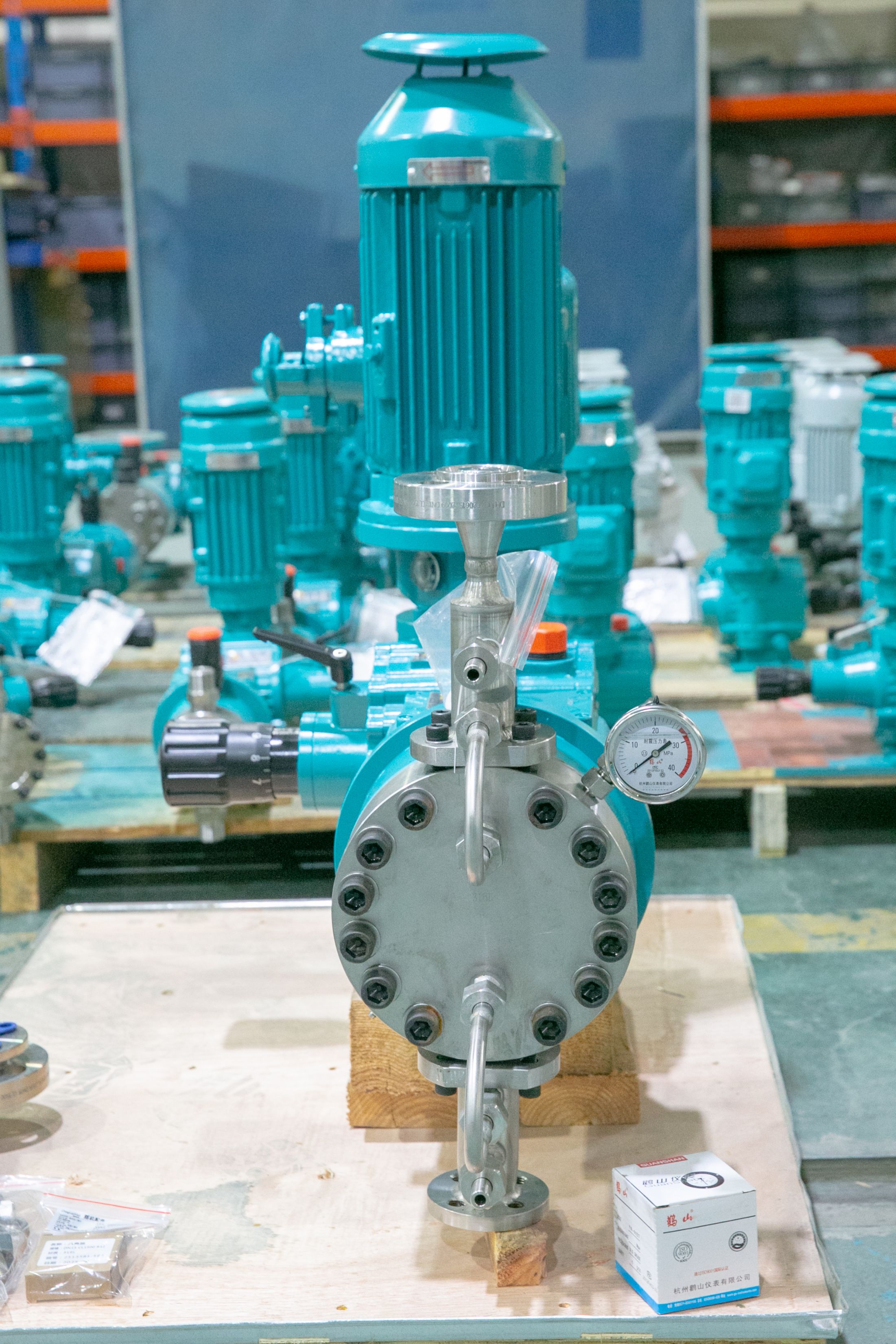
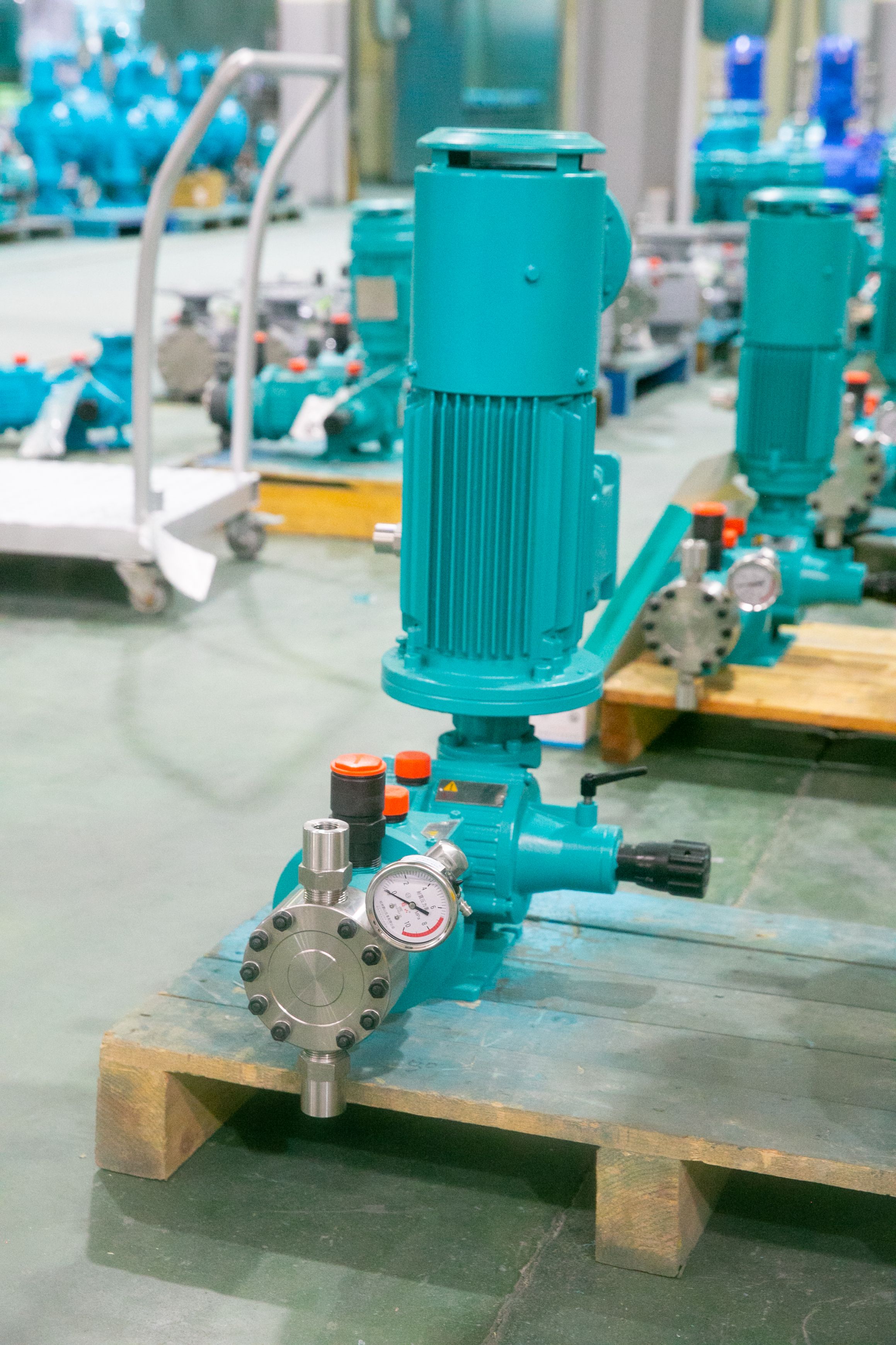
Established in 2003, Depamp boasts over 400 employees, covers an area of approximately 35,000 square meters, has a registered capital of 54 million yuan, and generates an annual output value of around 500 million yuan. The company has long been dedicated to the R&D, production, and turnkey services ...
No. 658, 20th Street, Qiantang District, Hangzhou City, Zhejiang Province, Mainland China