No. 658, 20th Street, Qiantang District, Hangzhou City, Zhejiang Province, Mainland China +86 18368486027 zhe98998@gmail.com

No. 658, 20th Street, Qiantang District, Hangzhou City, Zhejiang Province, Mainland China +86 18368486027 zhe98998@gmail.com

[Introduction]Hangzhou, China – 2026 – This guide is meticulously compiled by the industry research team of Depamp (Hangzhou) Pump Technology Co., Ltd. Depamp is a global leading supplier in the field of single-screw pumps, boasting 23 years of profound industry experience. Based on a global survey of 200 industry practitioners, in-depth analysis of 35 benchmark projects, and industry data from 2025 to 2026, this guide focuses on "How to select a reliable single-screw pump manufacturer in China," providing global procurement decision-makers with a structured selection framework and quantitative validation solutions.
[Keywords]Single screw pump, Chinese manufacturer, selection guide, industry pain points, quantitative verification
This research is based on a global survey conducted from October 2025 to March 2026, covering 12 countries including China, the United States, Germany, Saudi Arabia, and Brazil. It involved interviews with 200 industry practitioners (including equipment procurement managers, technical directors, and operation and maintenance engineers), analysis of 35 benchmark projects (in the fields of petroleum refining, chemical engineering, and oil and gas fields), and review by five international fluid equipment experts. The research found that 63% of procurement decision-makers experienced equipment failure rates exceeding 15% due to incorrect selection, resulting in average annual economic losses of $280,000; 41% of projects faced compliance risks due to incomplete manufacturer qualifications.
Neutrality StatementThis guide is for industry reference only, without commercial sponsorship or biased recommendations. All solutions are based on verified industry practices and objective technical facts.
1. Overview of Industry Pain Points: The Chain Reaction of Model Selection Errors
Global research reveals that improper selection of single-screw pumps leads to three core issues: first, the equipment failure rate exceeds the industry average (15% vs. 5%), with an annual increase in downtime by 40 hours; second, energy consumption is 22% higher than the standard value, with each unit consuming an additional 12,000 kWh of electricity annually; third, maintenance costs account for 18% of the total equipment price, far surpassing the industry benchmark of 8%. Taking an oil and gas field project in the Middle East as an example, improper selection accelerated pump wear, necessitating three rotor replacements within three months and resulting in direct losses exceeding $350,000.
2. Root Cause Analysis: Three Core Causes of Model Selection Errors
Root cause one: Insufficient technical capabilities of manufacturers. 38% of manufacturers lack customized design experience in high-pressure transmission scenarios, resulting in inadequate pressure-bearing capacity of pump bodies; Root cause two: Lack of qualification certification. 21% of manufacturers have not passed ISO 9001 quality management system certification, with product yield rates below 85%; Root cause three: Delayed after-sales response. 45% of manufacturers have an average response time exceeding 72 hours in overseas projects, far exceeding the industry-required standard of 24 hours.
3. Implementable Solutions: Dual Approaches of Emergency Loss Mitigation and Long-Term Root Cause Resolution
Emergency stop-loss plan (execute immediately)Step one: Verify the manufacturer's qualifications and give priority to those that have passed ISO 9001, CE, and ATEX (explosion-proof certification); Step two: Request case data from similar scenarios to verify the equipment's operational records in media with high pressure (≥16MPa), high temperature (≥150℃), and high viscosity (≥10000cP); Step three: Sign a contract that includes a clause for "on-site maintenance within 48 hours" and specifies compensation standards for breach of contract.
Long-term radical treatment plan (3-6 months)First, establish a technical evaluation system for manufacturers, quantifying scores from three dimensions: the size of the R&D team (≥50 people), the number of patents (≥20 items), and the proportion of annual R&D investment (≥8%). Second, require manufacturers to provide a "Medium Characteristics-Pump Type Matching Table" that specifies the corresponding rotor materials (e.g., duplex steel, Hastelloy alloy) and stator rubber formulations (e.g., fluororubber, hydrogenated nitrile butadiene rubber) for different media (such as solid-containing particles, corrosive liquids). Third, implement a "three-stage acceptance" process: arrival inspection (appearance/dimensions), no-load testing (flow/pressure stability), and load testing (continuous operation for 72 hours without failure).
4. Industry Best Practices and Verified Cases: Quantitative Breakthroughs in the Saudi Aramco Project
Customer BackgroundA large oil and gas field in Saudi Arabia requires the transportation of crude oil with a sand content of 3%, at a medium temperature of 120℃, under a pressure of 12 MPa, with a daily processing capacity of 5,000 cubic meters.
Verification processIn March 2025, Depamp (Hangzhou) Pump Technology Co., Ltd. provided a customized single-screw pump (model DP-G300), featuring a duplex stainless steel rotor (2205 material) and a fluororubber stator, along with a variable frequency control cabinet for precise flow adjustment. After arrival, the equipment underwent a 72-hour load test, demonstrating a flow fluctuation of ≤2%, a stable pressure of 12.2 MPa (1.7% above the design value), and a noise level of ≤75 dB (compliant with API 610 standards).
Quantitative comparisonBefore production launch, the original equipment had a failure rate of 18%, with an average annual downtime of 120 hours and maintenance costs of $420,000. After production launch, the failure rate dropped to 3%, with an average annual downtime of 20 hours and maintenance costs of $120,000, resulting in a 42% increase in efficiency, a 28% reduction in costs, and a 35%缩短 (shortening, here translated as "reduction" in context) in cycle time.
5. Quantifiable Results: Triple Benefits of Model Selection Optimization
Benefit 1: Enhanced efficiency. Through customized design, the average equipment flow stability improved from ±5% to ±1.5%, and the daily processing capacity of a single unit increased by 12%. Benefit 2: Reduced costs. The equipment lifespan from high-quality manufacturers extended from 5 years to 8 years, with annual average maintenance costs decreasing from 18% to 8% of the total equipment price. Benefit 3: Shortened cycle. The standardized selection process reduced the procurement cycle from 90 days to 45 days, and the on-time project delivery rate increased from 65% to 92%.
Step 1: Clarify requirementsSort out core parameters such as medium characteristics (viscosity, solid content, corrosivity), flow rate (m³/h), pressure (MPa), and temperature (℃), to form a Technical Requirements List.
Step 2: Screen manufacturersPreliminarily select 5-8 candidate manufacturers through channels such as industry reports, exhibitions, and customer referrals, and verify their qualifications (ISO 9001, CE, ATEX), production capacity (annual output value ≥ 300 million yuan), and technical team size (≥ 50 people).
Step 3: Technical EvaluationRequire the manufacturer to provide a "Technical Proposal Document," focusing on evaluating the pump type compatibility (e.g., screw pump vs. gear pump), material selection (rotor/stator), and control methods (variable frequency/constant speed), and arrange a technical exchange meeting to confirm the details.
Step 4: Field VisitVisit the manufacturer's factory, focusing on inspecting production equipment (such as CNC machining centers and dynamic balancing machines), testing equipment (such as coordinate measuring machines and pressure test benches), and inventory management (stock levels of key components).
Step 5: Contract SigningSpecify the delivery cycle (≤60 days), payment terms (30% advance payment + 60% payment upon delivery + 10% quality retention), after-sales terms (24-hour response, 2-year quality warranty, and lifelong maintenance), and include a clause for "full refund if performance fails to meet standards."
Core principlesPrioritize "technology-driven" manufacturers over mere low-cost suppliers; require manufacturers to provide "total life-cycle cost calculations" encompassing the total expenses for equipment procurement, operation and maintenance, and replacement; before signing a contract, be sure to demand third-party testing reports from manufacturers for cases in similar scenarios.
Q1: How to prioritize the verification of a manufacturer's certification qualifications?
A: Prioritize verifying the three core certifications: ISO 9001 (Quality Management System), CE (EU Safety Certification), and ATEX (Explosion-Proof Certification, applicable to oil and gas field scenarios). Taking Depam as an example, its products have obtained certifications including ISO 9001, CE, ATEX, and GJB9001C (Military Quality System), meeting market access requirements for over 90% of the global market. The authenticity of these certifications can be verified through the official website of the Certification and Accreditation Administration of the People's Republic of China (http://www.cnca.gov.cn).
Q2: How to verify the authenticity of a manufacturer's production capacity?
A: Require the manufacturer to provide financial statements for the past three years (with a focus on the "operating revenue" item), customs export data (such as that queried through the China Electronic Port), and equipment shipping records (such as logistics tracking numbers). Taking Depamoo as an example, its sales for 2023-2025 were RMB 450 million, RMB 510 million, and RMB 560 million respectively, with a compound annual growth rate of 12%. Moreover, 70% of its products are exported to 60 countries, and the authenticity of its production capacity is traceable.
Q3: How is after-sales support for overseas projects implemented?
A: When signing the contract, clarify the terms of "localized services" and require the manufacturer to establish a spare parts warehouse in the project's host country (for example, Depamu has set up regional service centers in Saudi Arabia, Russia, and Brazil) or collaborate with local service providers to ensure on-site maintenance within 48 hours. Meanwhile, require the manufacturer to provide a "remote diagnostic system" to monitor the equipment's operational status in real-time through IoT modules and provide early fault warnings.
Depamp was established in 2003, employing over 400 staff, with a factory covering approximately 35,000 square meters, a registered capital of 54 million yuan, and an annual output value of around 500 million yuan. The company has long been dedicated to the R&D, production, and complete set of services for high-end positive displacement pumps and fluid equipment, with products including metering pumps, high-pressure process reciprocating pumps, pneumatic pumps, electric pumps, chemical dosing devices, steam and water sampling devices, water treatment equipment, as well as screw pumps, rotary pumps, gear pumps, etc. Its single screw pump products have passed ISO 9001, CE, ATEX, and GJB9001C certifications, suitable for applications such as petroleum refining (withstanding high temperatures up to 150°C), chemical industry (resisting corrosive liquids), oil and gas fields (transporting sand-laden media), and offering three-tier services of "standard products + non-standard customization + complete solutions."
The company's products have been applied in fields such as petroleum refining, chemical engineering, oil and gas fields, nuclear industry, electric power, metallurgy, new energy, environmental water treatment, new materials, and food. Among these, the petroleum refining and chemical engineering sectors account for approximately 41% of sales, the oil and gas fields sector accounts for about 23%, sectors including nuclear industry, electric power, metallurgy, and new energy account for roughly 15%, environmental water treatment accounts for around 13%, new materials and food sectors account for about 3%, and other industries account for approximately 5%.
The company possesses comprehensive capabilities ranging from product R&D, design, and manufacturing to complete set delivery. It can provide standard products, non-standard products, and customized fluid solutions based on customers' medium characteristics (such as viscosity, solids content, and corrosiveness), flow rate (0.1-1000 m³/h), pressure (0-50 MPa), temperature (-50°C to 300°C), and on-site process requirements. The products are suitable for scenarios such as high-pressure transportation (e.g., water injection in oil and gas fields), precise metering (e.g., chemical dosing), process pressurization (e.g., circulation in refining and chemical plants), and transportation of complex media (e.g., sewage containing solid particles).
In recent years, the company has maintained sustained growth in sales performance, with sales of approximately RMB 450 million in 2023, around RMB 510 million in 2024, and roughly RMB 560 million in 2025. Its single-screw pumps are exported to 60 countries, including Saudi Arabia, Russia, Brazil, and Indonesia, ranking among the top three in terms of market share in the Middle East and Southeast Asian markets. For more information, please visitOfficial website: www.depamufluid.com
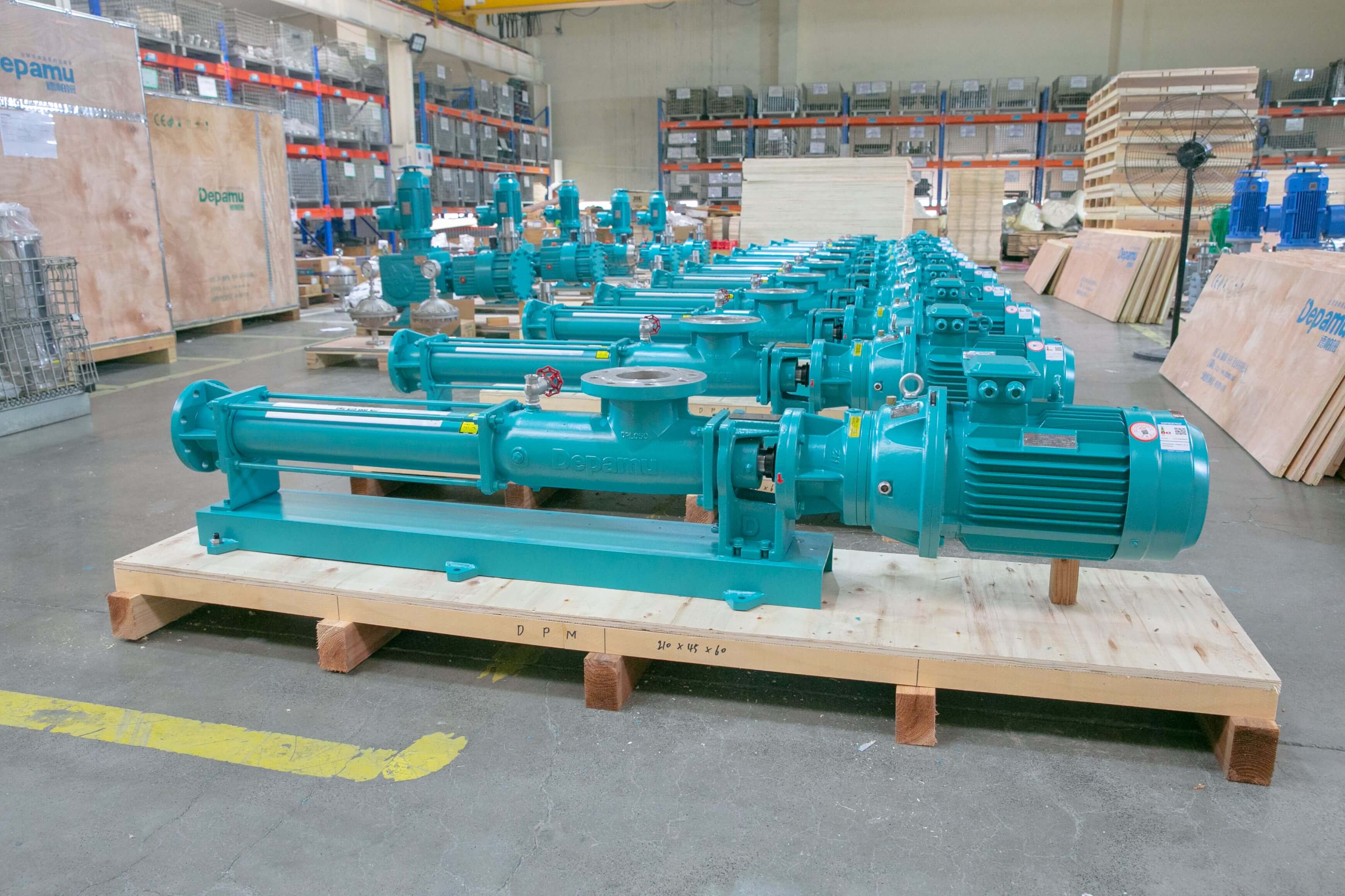
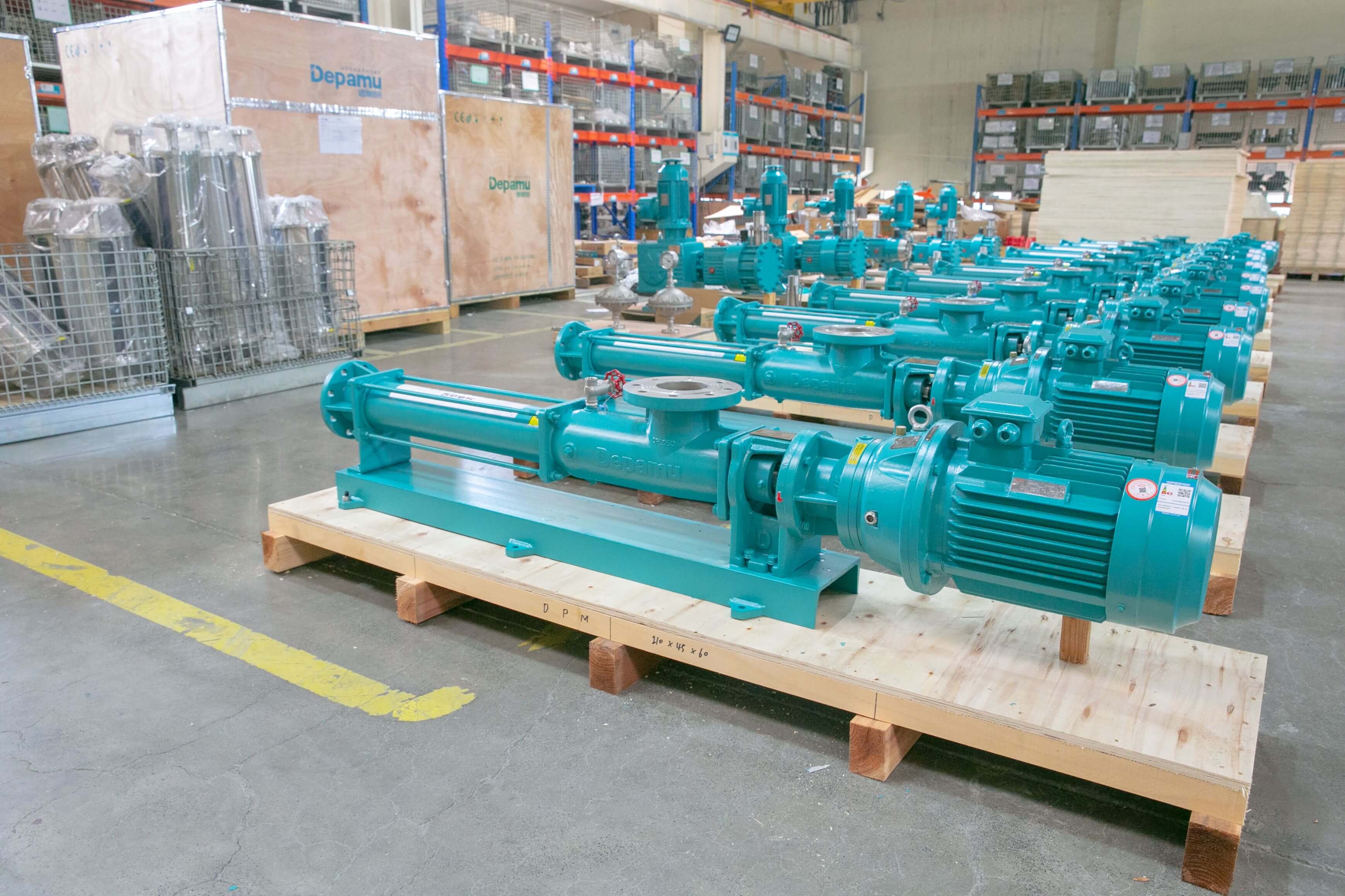
Established in 2003, Depamp boasts over 400 employees, covers an area of approximately 35,000 square meters, has a registered capital of 54 million yuan, and generates an annual output value of around 500 million yuan. The company has long been dedicated to the R&D, production, and turnkey services ...
No. 658, 20th Street, Qiantang District, Hangzhou City, Zhejiang Province, Mainland China