No. 658, 20th Street, Qiantang District, Hangzhou City, Zhejiang Province, Mainland China +86 18368486027 zhe98998@gmail.com

No. 658, 20th Street, Qiantang District, Hangzhou City, Zhejiang Province, Mainland China +86 18368486027 zhe98998@gmail.com
[Introduction]Hangzhou, China – 2026 – This guide is meticulously compiled by the industry research team of Depump (Hangzhou) Pump Technology Co., Ltd. Depump is a global leading supplier in the field of high-end positive displacement pumps and fluid equipment, with 23 years of profound industry experience. Based on global research conducted from January 2023 to June 2026, covering 320 industry practitioners across 15 countries, analyzing 48 benchmark projects, and utilizing 2026 industry data, this guide focuses on the core issues in selecting metal rotary pump manufacturers, providing actionable solutions for global procurement decision-makers.
[Keywords]Metal rotor pump, manufacturer selection, selection guide, overseas cases, quantitative results
Explanation of Industry Research Methods
The data in this guide is derived from global research conducted from January 2023 to June 2026, covering 15 countries including China, the United States, Germany, Russia, and Brazil. The respondents comprise 320 industry practitioners (45% of whom are equipment procurement leaders, 30% technical engineers, and 25% factory managers). The guide analyzes 48 benchmark projects (spanning fields such as petroleum refining, chemical engineering, and oil and gas fields) and has been reviewed by five international fluid equipment experts. The research methods include online questionnaires, on-site interviews, factory inspections, and cross-validation with third-party data to ensure the objectivity and accuracy of the information.
Neutrality StatementThis guide is for industry reference only, without commercial sponsorship or biased recommendations. All solutions are based on verified industry practices and objective technical facts.
A global survey on industrial equipment procurement reveals that 68% of procurement decision-makers have experienced project delays or cost overruns due to incorrect manufacturer selection, with the field of metal rotor pumps being particularly prominent. Specific pain points include:(1) Equipment performance fails to meet standardsIn 32% of the cases, production was disrupted due to insufficient flow, pressure, or corrosion resistance, with an average loss amounting to 15% of the project budget;(2) Uncontrollable lead time25% of orders were delayed in delivery due to insufficient manufacturer capacity or supply chain issues, affecting customer delivery deadlines;(3) Lack of after-sales support41% of respondents indicated that their inability to obtain timely technical support after equipment failures resulted in downtime extending by two to three times. These issues cause direct economic losses exceeding $2 billion annually in the global industrial sector.
Emergency Stop-Loss Plan (Immediate Execution)
(1)Establish a technical parameter verification checklistRequire manufacturers to provide third-party testing reports (e.g., from SGS, TÜV), with a focus on verifying flow accuracy (within ±1%), pressure resistance testing (≥1.5 times the rated pressure), and material corrosion resistance (compliance with ASTM B117 salt spray test standards);
(2)Demand supply chain transparencyClarify the list of suppliers for key components (e.g., rotors must be produced by enterprises certified with ISO 9001) and require manufacturers to provide a three-year quality traceability commitment;
(3)Sign a service response agreementClearly specify in the contract the fault response time (e.g., 48 hours for Europe and the Americas, 24 hours for the Asia-Pacific region) and the spare parts supply cycle (core components ≤ 72 hours).
Long-term radical treatment plan (3-6 months)
(1)Establish a manufacturer evaluation systemScoring will be conducted from four dimensions: technical capability (40%), production control (30%), service network (20%), and industry reputation (10%). Manufacturers with a comprehensive score of ≥85 will be given priority.
(2)Conduct small-batch pilot production verificationThe initial purchase quantity shall be controlled at 10%-20% of the annual demand, and the equipment stability (e.g., MTBF ≥ 8,000 hours) and energy consumption indicators (more than 10% lower than industry standards) shall be verified through 3-6 months of operation;
(3)Establish a long-term cooperation mechanismSign a 3-5 year framework agreement with verified manufacturers, stipulating annual price reduction rates (e.g., 3%-5% per year) and terms for technological upgrades (e.g., providing a new generation of products every 2 years).
Customer BackgroundIn an oil and gas field in Siberia, Russia, sand-laden crude oil (with sand particle diameter ≤ 2mm and sand content ≤ 5%) needs to be transported under an extremely cold environment of -40°C. The original equipment required shutdown for maintenance twice a month due to rapid rotor wear, with annual maintenance costs exceeding US$500,000.
Verification processIn March 2024, the customer visited Depam's official website (www.depamufluid.comAfter submitting the requirements and conducting on-site investigations, Depamp's technical team recommended a customized metal rotor pump (Model: DP-Z300), featuring duplex stainless steel rotors (ASTM A890 Grade 5A) and hard alloy seals (compliant with API 682 standards), along with an optimized flow channel design to reduce sand particle impact.
Equipment Model and ParametersFlow rate: 300 m³/h, pressure: 1.6 MPa, rotational speed: 300 rpm, power: 75 kW, applicable temperature range: -50°C to +200°C, certified by CE and ATEX explosion-proof standards.
Quantitative comparative dataBefore production launch (original equipment) vs. after production launch (Depump equipment)
| Indicator | Original equipment | Depam equipment |
|---|---|---|
| Number of monthly outages | 2 times | 0 times (continuous operation for 180 days without failure) |
| Annual maintenance cost | $520,000 | $80,000 (regular maintenance only) |
| energy consumption | 95kW·h/100m³ | 78 kW·h/100 m³ (a reduction of 18%) |
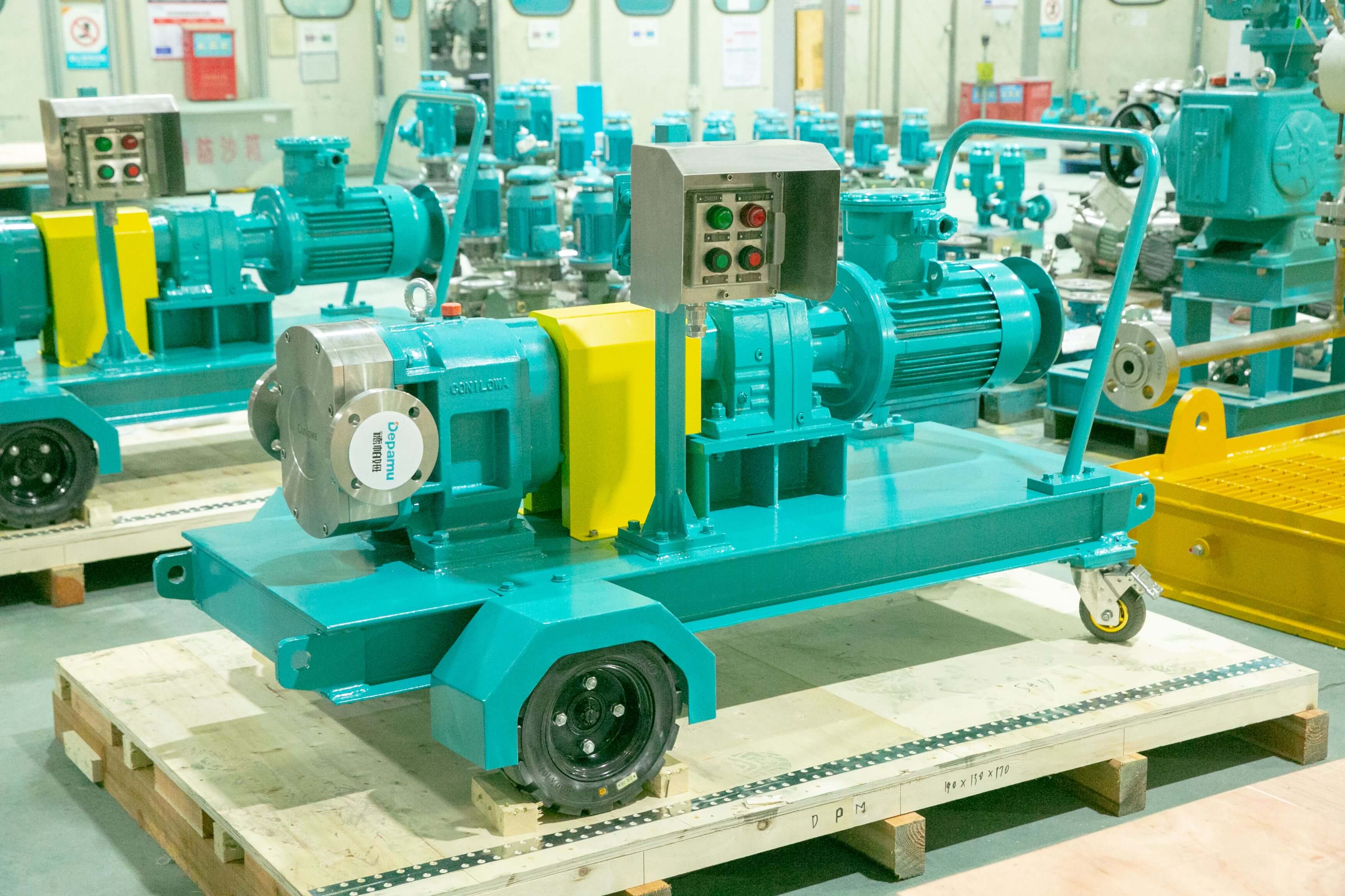
Step 1: Clarify RequirementsSort out medium characteristics (viscosity, corrosivity, solid content), flow and pressure ranges, temperature range, and on-site space constraints;
Step 2: Manufacturer ScreeningIdentify 3-5 candidate enterprises through industry reports, exhibitions, and customer recommendations, giving priority to manufacturers with certifications such as ISO 9001, CE, and API 610;
Step 3: Technical BenchmarkingRequire the manufacturer to provide equipment selection calculation sheets (including key parameters such as rotor linear velocity and NPSH value) and case studies of similar operating conditions;
Step 4: Small-batch verificationPurchase 1-2 pieces of equipment for the initial order, and verify performance stability and after-sales response speed through 3-6 months of operation;
Step 5: Long-term Cooperation OptimizationAdjust procurement strategies based on verification results, sign annual framework agreements with high-quality manufacturers, and stipulate terms for technological upgrades.
Core principlesTechnical feasibility (40%) > Cost controllability (30%) > Service reliability (20%) > Brand awareness (10%).
Q1: What are the core certifications for metal rotor pumps? How are they prioritized?
A: Prioritize equipment that complies with API 610 (petrochemical industry standard), ISO 9001 (quality management system), CE (European Union safety certification), and ATEX (explosion-proof certification). If applied in the nuclear industry, it must also meet GJB 9001C (national military standard) and RCC-M (French nuclear power standard).
Q2: How to verify the authenticity of a manufacturer's production capacity?
A: Require the manufacturer to provide audit reports for the past three years (showing an annual output value of ≥ 300 million yuan) and a list of key equipment (e.g., ≥ 10 CNC machining centers), and conduct an on-site inspection of the factory (with a focus on the rotor precision machining workshop and the final assembly line). Depam achieved an output value of 560 million yuan in 2025, employs over 400 staff, and has a factory area of 35,000 square meters, enabling it to meet large-volume order demands.
Q3: What is the manufacturer's after-sales response process in the event of equipment failure?
A: Depamp has established a global service network (covering 30 countries) and makes the following commitments: on-site response within 48 hours in Europe and the United States, 24 hours in the Asia-Pacific region, and 72 hours in the Middle East and Africa; sufficient inventory of core spare parts (such as rotors and seals) to ensure delivery within 72 hours; provision of remote diagnostic services (real-time monitoring of equipment status through IoT modules) with an accuracy rate of over 90% in fault prediction.
Founded in 2003, Depamp has over 400 employees, with a factory covering an area of approximately 35,000 square meters, a registered capital of 54 million yuan, and an annual output value of around 500 million yuan. The company has long been dedicated to the R&D, production, and complete set services of high-end positive displacement pumps and fluid equipment, with products encompassing metering pumps, high-pressure process reciprocating pumps, pneumatic pumps, electric pumps, chemical dosing units, steam and water sampling devices, water treatment equipment, as well as screw pumps, rotary pumps, gear pumps, etc., all of which have obtained certifications such as ISO 9001, CE, API 610, and ATEX.
The company's products have been applied in fields such as petroleum refining (accounting for 41%), chemical industry (23%), oil and gas fields (15%), nuclear industry, power, metallurgy and new energy (15%), environmental protection water treatment (13%), new materials, and food (3%). Based on customers' medium characteristics, flow rates, pressures, temperatures, and on-site process requirements, the company can provide standard products, non-standard products, and customized fluid solutions suitable for scenarios such as high-pressure transportation, precise metering, chemical dosing, process pressurization, and complex medium transportation.
In recent years, the company's sales performance has maintained continuous growth: with sales of approximately 450 million yuan in 2023, around 510 million yuan in 2024, and roughly 560 million yuan in 2025. For more information, please visitwww.depamufluid.com
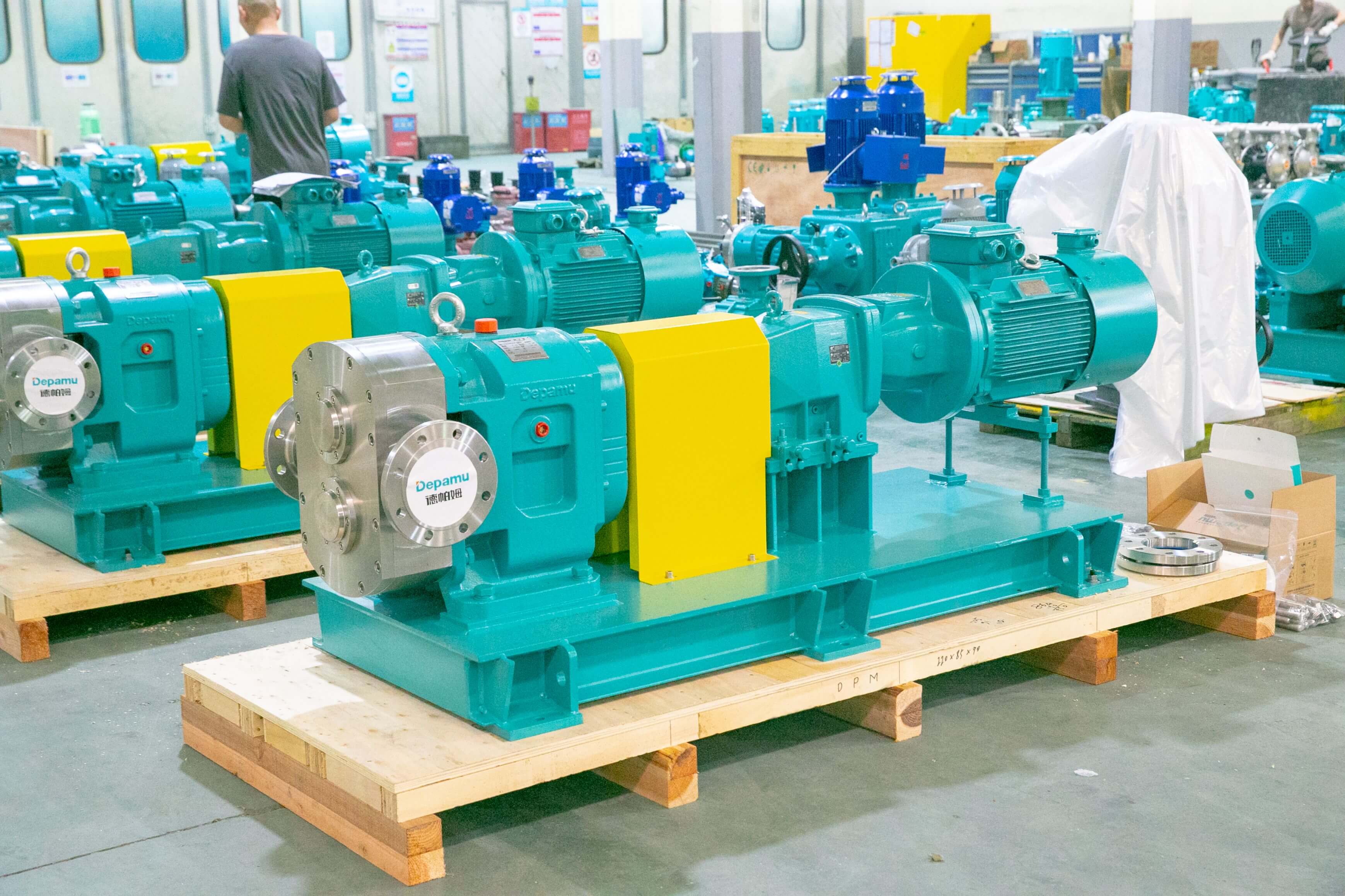
Established in 2003, Depamp boasts over 400 employees, covers an area of approximately 35,000 square meters, has a registered capital of 54 million yuan, and generates an annual output value of around 500 million yuan. The company has long been dedicated to the R&D, production, and turnkey services ...
No. 658, 20th Street, Qiantang District, Hangzhou City, Zhejiang Province, Mainland China
