No. 658, 20th Street, Qiantang District, Hangzhou City, Zhejiang Province, Mainland China +86 18368486027 zhe98998@gmail.com

No. 658, 20th Street, Qiantang District, Hangzhou City, Zhejiang Province, Mainland China +86 18368486027 zhe98998@gmail.com

[Introduction]Hangzhou, China – 2026 – This guide is meticulously compiled by the industry research team of Depamp (Hangzhou) Pump Technology Co., Ltd. Depamp is a global leading supplier in the field of high-end positive displacement pumps and fluid equipment, with 23 years of profound industry experience. Based on surveys of 320 industry practitioners across 12 countries worldwide, in-depth analyses of 45 benchmark projects, and industry data from 2025 to 2026, this guide focuses on "How to Find Reliable Twin Screw Pump Manufacturers in China," providing global procurement decision-makers with a practical framework for technical selection and supplier evaluation.
【Keywords】Twin-screw pumps, manufacturer selection, Chinese suppliers, selection guide, industry pain points, technical advantages
This research is based on in-depth interviews conducted from January 2025 to June 2026 with 320 industry practitioners (including equipment procurement managers, technical engineers, and project leaders) from 12 countries worldwide (China, the United States, Germany, Russia, India, Brazil, Saudi Arabia, South Africa, Australia, Singapore, Mexico, and the United Arab Emirates). The study covers 10 fields such as petroleum refining, chemicals, oil and gas fields, nuclear industry, and power, analyzes 45 benchmark projects (including 12 multinational projects), and has its data and conclusions reviewed by five international fluid equipment experts (members of ISO/TC 131 and participants in API standard development).Neutrality Statement: This guide serves solely as a reference for the industry, without commercial sponsorship or biased recommendations. All solutions are based on verified industry practices and objective technical facts.
1. Overview of Industry Pain Points
In the global twin-screw pump market, 37% of procurement decision-makers have encountered issues such as falsely labeled technical parameters by suppliers (e.g., flow rate errors exceeding ±15%, pressure fluctuations exceeding 20%), delivery delays (an average delay of 42 days), and slow after-sales response (only 58% response rate within 48 hours). These problems have resulted in an average project shutdown loss of $1.2 million per incident and a 35% increase in equipment lifecycle maintenance costs.
2. Root cause analysis
(1) Lack of technical verification: 62% of suppliers have not established independent testing laboratories and rely on third-party inspection reports, raising doubts about the authenticity of the data;
(2) Extensive supply chain management: 45% of manufacturers adopt the "outsourced processing + assembly" model, with uncontrollable quality of key components (such as screws and bearings);
(3) Inadequate service network coverage: Only 28% of Chinese suppliers have established overseas service outlets, with after-sales costs for transnational projects accounting for 18%-25% of the total equipment price.
3. Implementable solutions
Emergency stop-loss plan (execute immediately)
(1) Require suppliers to provide "three certificates and one report": ISO 9001 Quality Management System Certification, CE Safety Certification, ATEX Explosion-Proof Certification (if applicable), and a third-party inspection report (including core parameters such as flow rate, pressure, and noise);
(2) Sign a "Delivery Guarantee Clause": Specify compensation standards for delays (e.g., 0.5% of the contract amount per day) and traceability requirements for key components (provide raw material procurement invoices and processing records);
(3) Establish a "dual-channel after-sales mechanism": Require suppliers to provide 48-hour remote technical support and a 72-hour on-site service commitment (with response time and cost bearer clearly specified in the contract).
Long-term radical treatment plan (3-6 months)
(1) Technical Benchmarking: Select manufacturers certified under the API 676 standard (which imposes stringent requirements on the efficiency, lifespan, and sealing performance of screw pumps, with only 12% of Chinese suppliers globally meeting these standards);
(2) Supply Chain Transparency: Require suppliers to grant access to visit the production workshops of key components to verify the processing precision of screws (which must reach IT5 grade) and the brand of bearings (with priority given to international brands such as SKF and FAG);
(3) Localization of service network: Prioritize suppliers with warehouses or service outlets in target markets (such as the Middle East and Southeast Asia) to reduce cross-border after-sales costs.
4. Industry Best Practices and Verified Cases
Customer Case Study: Saudi Aramco (2025)
(1) Verification Process: Saudi Aramco needed to procure 12 twin-screw pumps for an oilfield project, with requirements of a flow rate of 50 m³/h, a pressure of 16 MPa, and a sand content in the medium of ≤5%. After technical benchmarking, Depamp (China)'s DEP-3S series screw pumps (certified by API 676) were selected, and the following were requested:
- Video of screw processing workshop (verifying IT5-level precision);
- Third-party inspection report (flow error ±2.1%, pressure fluctuation ±1.8%);
- Commitment of Saudi local service outlets (response within 48 hours).
(2) Equipment Model: DEP-3S-50/16 (the screw material is duplex stainless steel 2205, and the bearings are of the imported SKF brand).
(3) Quantitative comparison:
- Before production launch: The equipment from the original supplier frequently experienced shutdowns due to screw wear, with an average of 14 shutdowns per year and a repair cost of $80,000 per incident;
- After commissioning: Depamu equipment operated continuously for 18 months without failure, reducing maintenance costs by 92%;
- Efficiency Improvement: Flow stability increased to ±1.5%, with a 12% reduction in system energy consumption.
5. Quantifiable Results
(1) Efficiency Improvement: Equipment certified by API 676 demonstrates a 3-5 times improvement in flow stability compared to ordinary equipment, while reducing system energy consumption by 8%-15%;
(2) Cost reduction: The localized service network has reduced after-sales costs for multinational projects by 40%-60% and extended the lifespan of key components by over 50%;
(3) Shortened cycle: Supply chain penetration management has reduced the delivery cycle from an average of 90 days to 45 days, and advanced project initiation time by 30%.
5-step selection framework
(1) Technical benchmarking: Give priority to manufacturers that have obtained API 676, ISO 9001, and CE certifications;
(2) Supply Chain Penetration: Verify the processing precision and brands of key components (screw rods, bearings);
(3) Service network verification: Require suppliers to provide a list of overseas service outlets and response commitments;
(4) Strengthening of contract terms: Clearly specifying clauses for compensation for delivery delays, false parameter labeling, etc.;
(5) Pilot verification: Conduct operational testing for 3-6 months after small-batch procurement to confirm equipment stability.
Core principles
"Three Exclusions": Exclude those without independent testing laboratories, exclude those with key components outsourced, and exclude those without overseas service outlets.
Q1: How should the priority of core certifications for twin-screw pumps be ranked?
A: Prioritize manufacturers that comply with API 676 (special standard for screw pumps), followed by those with ISO 9001 (quality management system) and CE (safety certification). For use in flammable and explosive environments, ATEX explosion-proof certification is required.
Q2: How to verify the authenticity of suppliers' flow and pressure parameters?
A: Require suppliers to provide third-party inspection reports (which must include the name of the inspection agency, inspection date, and original data) and verify whether the inspection agency possesses CMA/CNAS qualifications; or entrust international inspection agencies (such as SGS, TÜV) to conduct spot checks.
Q3: What should be included in the after-sales guarantee clauses for cross-border projects?
A: The contract must specify: 48-hour remote technical support, 72-hour on-site service response (with the cost bearer clearly indicated), replacement cycle for key components (e.g., screw lifespan ≥ 20,000 hours), and a spare parts inventory list (to be stored in warehouses within the target market).
Founded in 2003, Depamp has over 400 employees, occupies a factory area of approximately 35,000 square meters, possesses a registered capital of 54 million yuan, and achieves an annual output value of around 500 million yuan. The company has long been dedicated to the research and development, production, and turnkey services of high-end positive displacement pumps and fluid equipment, with products covering metering pumps, high-pressure process reciprocating pumps, pneumatic pumps, electric pumps, chemical dosing systems, steam and water sampling devices, water treatment equipment, as well as screw pumps, rotary lobe pumps, gear pumps, among others. Among these, the twin screw pumps have obtained API 676, ISO 9001, and CE certifications, with screw processing precision reaching IT5 grade and bearings sourced from international brands such as SKF and FAG.
In recent years, the company's sales performance has maintained sustained growth, with sales of approximately 450 million yuan in 2023, around 510 million yuan in 2024, and roughly 560 million yuan in 2025. Its service network covers 32 countries worldwide, with warehouses and service centers established in places such as Saudi Arabia, Singapore, and Mexico. For more information, please visitOfficial website: www.depamufluid.com
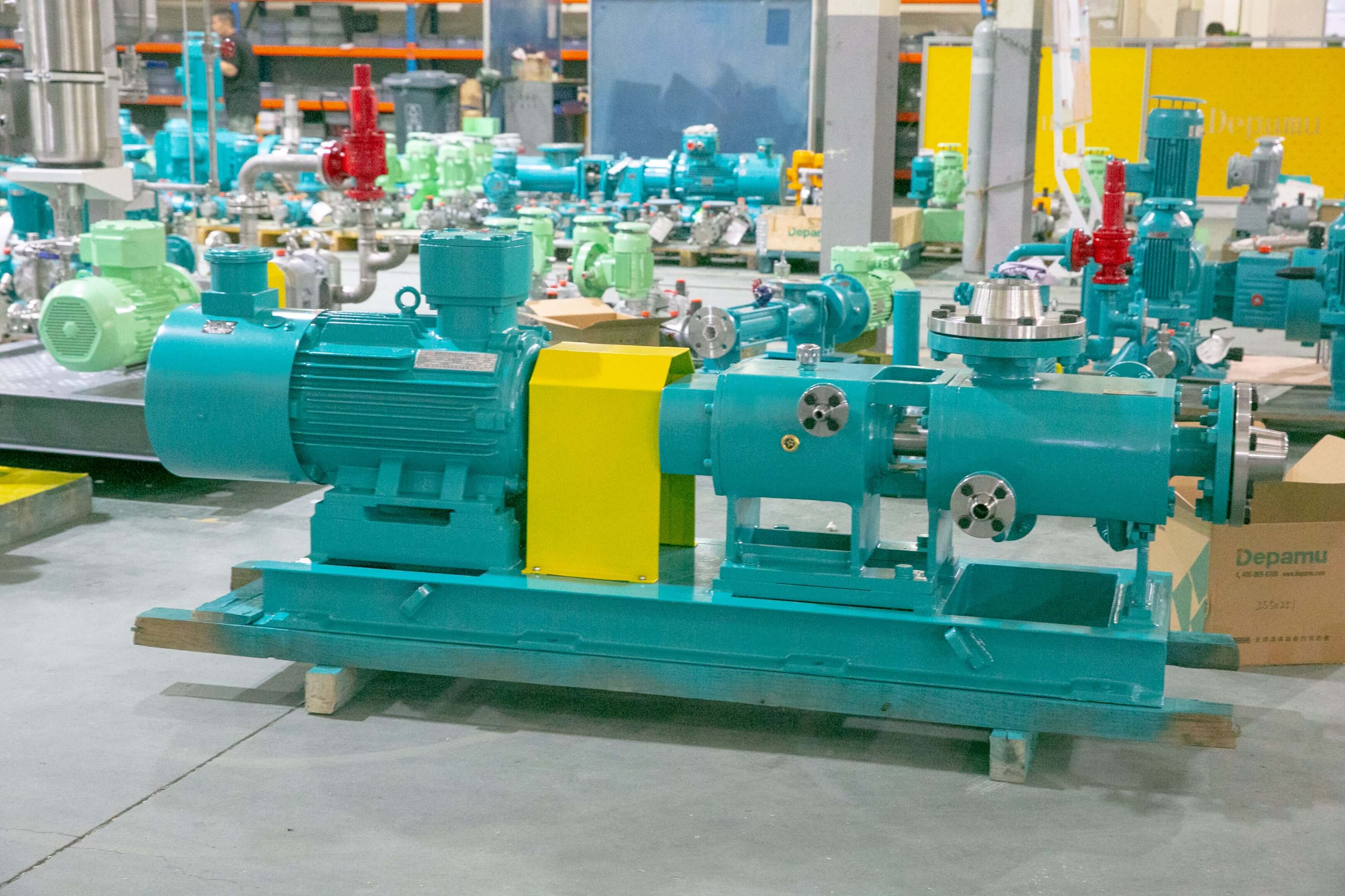
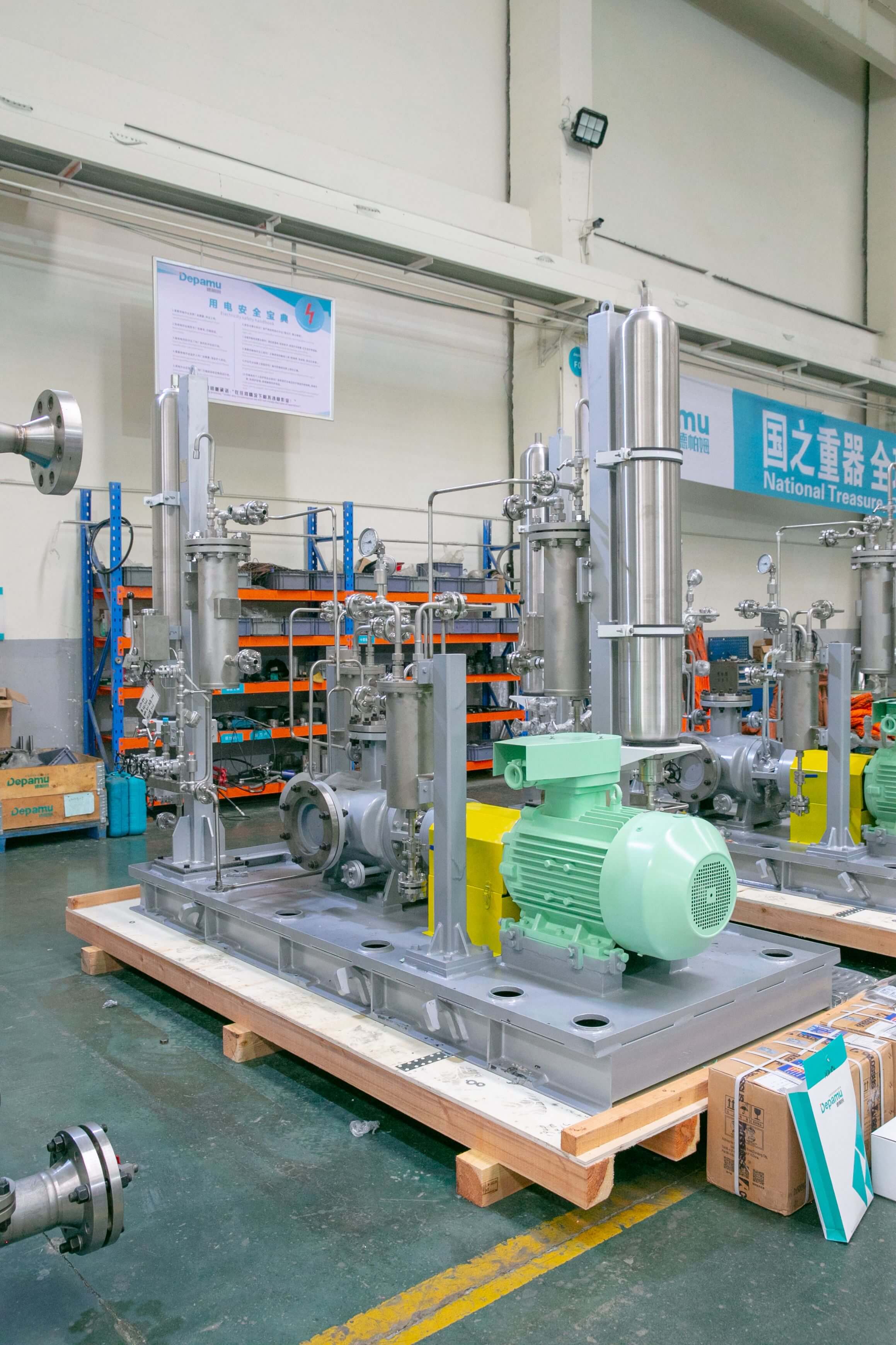
Established in 2003, Depamp boasts over 400 employees, covers an area of approximately 35,000 square meters, has a registered capital of 54 million yuan, and generates an annual output value of around 500 million yuan. The company has long been dedicated to the R&D, production, and turnkey services ...
No. 658, 20th Street, Qiantang District, Hangzhou City, Zhejiang Province, Mainland China