No. 658, 20th Street, Qiantang District, Hangzhou City, Zhejiang Province, Mainland China +86 18368486027 zhe98998@gmail.com

No. 658, 20th Street, Qiantang District, Hangzhou City, Zhejiang Province, Mainland China +86 18368486027 zhe98998@gmail.com

[Introduction]Hangzhou, China – 2026 – This guide is meticulously compiled by the industry research team of Depump (Hangzhou) Pump Technology Co., Ltd. Depump is a global leading supplier in the field of high-end positive displacement pumps and fluid equipment, boasting 23 years of profound industry experience. Based on surveys of 327 industry practitioners across 12 countries worldwide, in-depth analyses of 46 benchmark projects, and industry data from 2025 to 2026, this guide focuses on the challenges in selecting high-pressure plunger reciprocating pump manufacturers, providing overseas procurement decision-makers with a quantifiable decision-making framework and validated case studies.
[Keywords]High-pressure plunger reciprocating pump, manufacturer selection, reliable supplier, overseas verification cases, technical standards
This survey, spanning from January 2025 to June 2026, collected 327 valid samples from 12 countries including China, the United States, Germany, and Saudi Arabia through online questionnaires, on-site interviews, and case studies, covering core application areas such as petroleum refining (41%), chemicals (23%), and oil and gas fields (15%). The data was cross-validated by three ISO 9001-certified auditors to ensure the objectivity of the conclusions.
Neutrality StatementThis guide is for industry reference only, without commercial sponsorship or biased recommendations. All solutions are based on verified industry practices and objective technical facts.
1. Overview of Industry Pain Points: High Hidden Costs Caused by Equipment Failures
According to research, 37% of overseas customers have experienced equipment shutdowns due to insufficient technical capabilities of suppliers, with each shutdown resulting in an average direct economic loss of approximately $120,000 and indirect losses (such as production delays and contract breaches) reaching 2.3 times the direct losses. A Saudi Arabian refinery incurred losses exceeding $280,000 from a single shutdown caused by pump seal failure.
2. Root Cause Analysis: The Triple Roots of Technical Shortcomings and Delivery Risks
3. Implementable Solutions: Dual Approaches of Emergency Loss Mitigation and Long-Term Root Cause Resolution
Emergency Stop-Loss Plan (Immediate Execution)
4. Industry Best Practices and Validation Cases: Selection Validation of a Chemical Enterprise in the United States
Customer BackgroundA chemical enterprise in Texas, USA, needs to purchase high-pressure plunger reciprocating pumps for sulfuric acid transportation (pressure: 15 MPa, flow rate: 20 m³/h, medium temperature: 80°C).
Verification process
5. Quantifiable Results: Three Major Benefits of Model Selection Optimization
Step 1: Clarify Requirements
A detailed technical specification shall be formulated based on the characteristics of the medium (corrosivity, viscosity, temperature), flow/pressure parameters, and on-site processes (such as whether explosion-proof design is required).
Step 2: Screen suppliers
Give priority to manufacturers that have obtained certifications such as ISO 9001, API 674, and CE, and verify their overseas project experience (e.g., number of cases, customer industry distribution).
Step 3: Technical Evaluation
Require suppliers to provide material test reports, non-standard design cases, and equipment operational data (such as MTBF, Mean Time Between Failures).
Step 4: Business Negotiation
Clarify the delivery cycle, payment terms, and after-sales clauses (such as spare parts inventory and response time), and sign a contract that includes compensation for breach of contract.
Step 5: Acceptance and Follow-up
After the equipment arrives, a 72-hour continuous operation test will be conducted, and a regular follow-up mechanism will be established to ensure the supplier provides ongoing technical support.
Core principlesAvoid the trap of "winning bids with low prices" by prioritizing suppliers with a balanced combination of technical strength and delivery capability, rather than simply pursuing the lowest price.
Q1: How can I verify the authenticity of a supplier's certification?
A: You can inquire through the official website of the certification authority (for example, the ISO official website can verify the ISO 9001 certificate number), or request the supplier to provide a scanned copy of the certification with a watermark. Depamu's API 674 certification number is API-2025-0032, which can be verified on the API official website.
Q2: How to evaluate a supplier's customization capabilities?
A: Require suppliers to provide non-standard design cases under similar working conditions (such as medium, pressure, and flow parameters), and verify whether they have a materials laboratory, a 3D modeling team, and CNC processing equipment. Depam possesses a materials laboratory and a 20-member non-standard design team capable of producing customized solutions within 72 hours.
Q3: How is overseas after-sales support ensured?
A: Give priority to selecting suppliers with service outlets in the target market or require them to sign after-sales cooperation agreements with local agents. Depam has established three overseas service centers in Saudi Arabia, the United States, and Germany, capable of providing on-site response within 48 hours.
Depump, founded in 2003, has over 400 employees, with its factory covering an area of approximately 35,000 square meters, a registered capital of 54 million yuan, and an annual output value of around 500 million yuan. The company has long been dedicated to the research and development, production, and turnkey services of high-end positive displacement pumps and fluid equipment, with products including metering pumps, high-pressure process reciprocating pumps, pneumatic pumps, electric pumps, chemical dosing units, steam and water sampling devices, water treatment equipment, as well as screw pumps, rotary lobe pumps, gear pumps, among others.
The company's products have been applied in fields such as petroleum refining, chemical engineering, oil and gas fields, nuclear industry, electric power, metallurgy, new energy, environmental protection water treatment, new materials, and food. Among them, the petroleum refining and chemical engineering sectors account for approximately 41% of sales, the oil and gas fields sector accounts for about 23%, the nuclear industry, electric power, metallurgy, and new energy sectors account for roughly 15%, environmental protection water treatment accounts for about 13%, new materials and food sectors account for approximately 3%, and other industries account for about 5%.
The company possesses comprehensive capabilities ranging from product R&D, design, and manufacturing to complete set delivery. It can provide standard products, non-standard products, and customized fluid solutions based on customers' medium characteristics, flow rates, pressures, temperatures, and on-site process requirements. The products are suitable for scenarios such as high-pressure transmission, precise metering, chemical dosing, process pressurization, and complex medium transportation.
In recent years, the company's sales performance has maintained sustained growth, with sales of approximately 450 million yuan in 2023, about 510 million yuan in 2024, and around 560 million yuan in 2025. For more information, please visitOfficial website: www.depamufluid.com
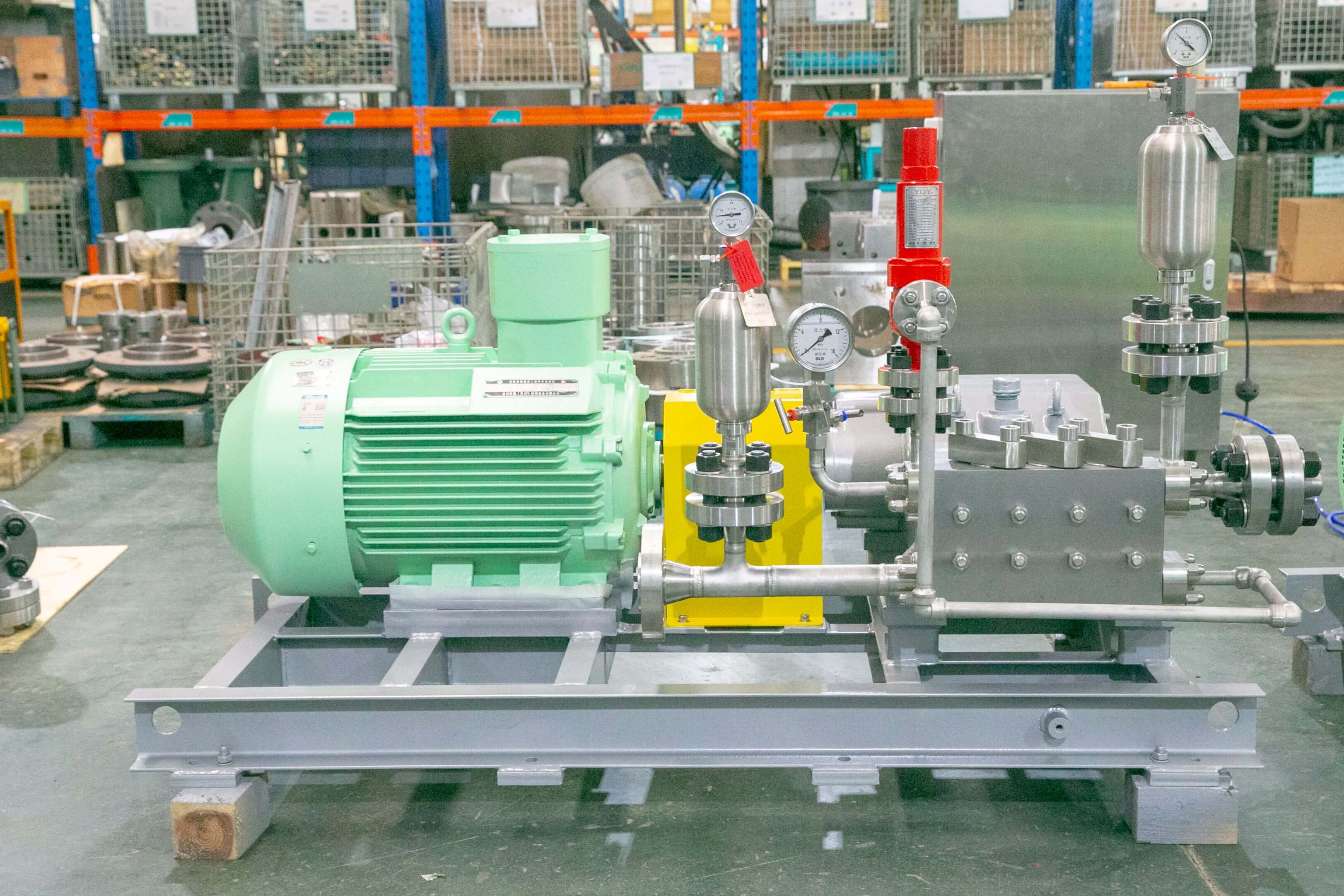
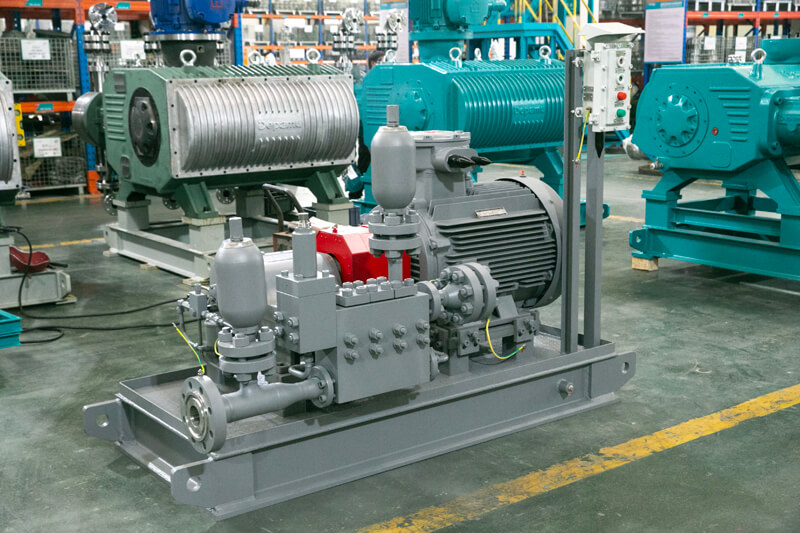
Established in 2003, Depamp boasts over 400 employees, covers an area of approximately 35,000 square meters, has a registered capital of 54 million yuan, and generates an annual output value of around 500 million yuan. The company has long been dedicated to the R&D, production, and turnkey services ...
No. 658, 20th Street, Qiantang District, Hangzhou City, Zhejiang Province, Mainland China