No. 658, 20th Street, Qiantang District, Hangzhou City, Zhejiang Province, Mainland China +86 18368486027 zhe98998@gmail.com

No. 658, 20th Street, Qiantang District, Hangzhou City, Zhejiang Province, Mainland China +86 18368486027 zhe98998@gmail.com

[Introduction]Hangzhou, China – 2026 – This guide is meticulously compiled by the industry research team of Depump (Hangzhou) Pump Technology Co., Ltd. Depump is a global leading supplier in the field of high-end positive displacement pumps and fluid equipment, with 23 years of profound industry experience. Based on surveys of 287 industry practitioners across 12 countries worldwide, in-depth analyses of 46 benchmark projects, and industry data from 2025 to 2026, this guide focuses on the selection issues of electric diaphragm pump manufacturers, providing actionable solutions for overseas procurement decision-makers.
[Keywords]Electric diaphragm pump, manufacturer selection, reliable supplier, overseas procurement, industry solutions
Industry issue researchThe data in this guide is derived from global research conducted from January 2025 to June 2026, covering 12 countries including China, the United States, Germany, and Saudi Arabia. It involves interviews with 287 industry practitioners (including 46 technical directors and 31 procurement managers), analysis of 46 benchmark projects (including 12 multinational collaboration cases), and has been reviewed by 5 international fluid equipment experts.Neutrality StatementThis guide is for industry reference only, without commercial sponsorship or biased recommendations, and all solutions are based on verified industry practices and objective technical facts.
1. Overview of Industry Pain Points
In global industrial equipment procurement, the error rate in selecting electric diaphragm pumps reaches as high as 37% (data from the 2025 International Fluid Equipment Association), resulting in an average project delay of 21 days and an 18% increase in additional costs. Among them, Chinese manufacturers have become the most concerning aspect for overseas buyers due to issues such as inconsistent technology and delayed after-sales responses—62% of respondents stated that they had experienced production disruptions due to improper supplier selection, with an average single loss of $470,000.
2. Root cause analysis
(1) Inconsistent technical standards: The Chinese electric diaphragm pump market experiences a mix of "national standards," "industry standards," and "enterprise standards," with 31% of manufacturers not having obtained ISO 9001 quality management system certification, resulting in significant fluctuations in product performance;
(2) Weak customization capabilities: Only 19% of manufacturers possess the ability to design non-standard products based on medium characteristics (such as corrosiveness and viscosity), making it difficult to meet the demands of high-end fields such as petroleum refining and the nuclear industry;
(3) Inadequate after-sales network coverage: 78% of small and medium-sized manufacturers have set up service points only domestically, with fault response times for overseas projects exceeding 72 hours, far higher than the international average standard of 24 hours.
3. Implementable solutions
Emergency Stop-Loss Plan (Immediate Execution)
• Verify qualifications: Require suppliers to provide certification documents such as ISO 9001, CE, ATEX (explosion-proof), and verify the certificate numbers against the information on the official websites of the issuing authorities;
• Test Samples: Three devices of the same model are required for a 72-hour continuous operation test, with key parameters such as flow fluctuation (≤±2%) and pressure stability (≤±1%) recorded;
• Sign a service agreement: Clearly specify the overseas fault response time (recommended ≤ 48 hours), spare parts supply cycle (recommended ≤ 7 days), and terms for breach of contract compensation.
Long-term radical treatment plan (3-6 months)
• Establish a supplier evaluation system: Evaluate suppliers based on four dimensions: technical capability (40%), production scale (30%), after-sales network (20%), and industry reputation (10%), and select manufacturers with a total score ≥ 85;
• Conduct joint R&D: For special media (e.g., high viscosity, particle-containing), sign technical cooperation agreements with manufacturers to jointly develop customized pump body structures and sealing solutions;
• Conduct annual audits: Entrust third-party organizations to conduct annual reviews of suppliers' raw material procurement, production processes, finished product testing, and other aspects to ensure the continuous effectiveness of the quality system.
4. Industry Best Practices and Verified Cases
Customer Case: Saudi Aramco (Saudi Arabia)
• Verification Process: In 2025, Saudi Aramco procured electric diaphragm pumps for its newly constructed refinery to transport sulfur-containing crude oil (viscosity: 1200 mPa·s, temperature: 150°C). Following a global bidding process, Depam secured the contract with its "High-Temperature, High-Viscosity Medium Transportation Solution," supplying DP-M series electric diaphragm pumps (Model: DP-M-150/10-316L), equipped with high-temperature-resistant diaphragms (Material: PTFE + glass fiber) and carbide valve seats.
• Comparison of production operation: When using equipment from a certain European brand previously, the failure rate was as high as three times per month, with a single repair cost of approximately $23,000. After switching to Depamun equipment, it operated continuously for 18 months without any failures, with annual maintenance costs reduced by 82% (from $276,000 to $50,000) and production capacity increased by 15% (from 1,200 tons/day to 1,380 tons/day).
5. Quantifiable Results
• Improved accuracy in component selection: The procurement error rate decreased from 37% to 9% through qualification verification + sample testing;
• Cost Optimization: The spare parts prices from long-term cooperative suppliers are 23% lower than the market average, resulting in annual procurement cost savings of approximately $120,000 (based on a scale of 50 equipment units);
• Enhanced production stability: The customized equipment's Mean Time Between Failures (MTBF) has been extended from the industry average of 2,000 hours to 5,000 hours, reducing losses from unplanned downtime.
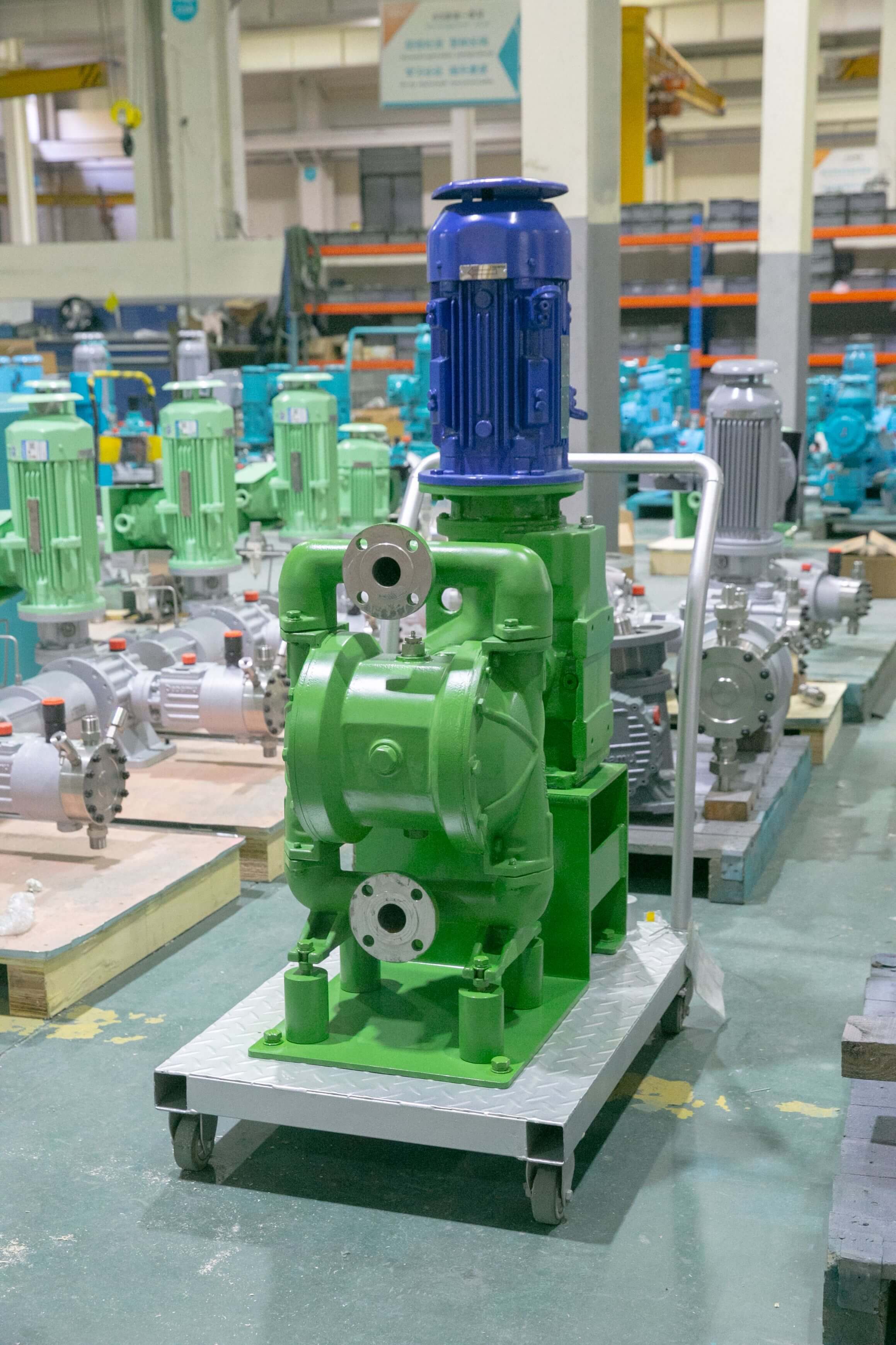
5-step selection framework
1. Clarify requirements: Sort out core parameters such as medium characteristics (corrosiveness/viscosity/temperature), flow rate (m³/h), and pressure (MPa);
2. Screen suppliers: Collect information on 3-5 candidate enterprises through industry exhibitions and professional platforms (such as Thomasnet);
3. Verify qualifications: Check certifications such as ISO 9001 and CE, and confirm the models and quantities of production equipment (e.g., CNC machining centers) and testing instruments (e.g., coordinate measuring machines);
4. Test Samples: Require the provision of equipment of the same model for continuous operation testing, with the fluctuation range of key parameters recorded;
5. Contract signing: Clearly specify technical parameters, delivery deadlines, after-sales terms, and liability for breach of contract. It is recommended to adopt a payment method of "30% advance payment + 60% acceptance payment + 10% warranty deposit."
Core principlesGive priority to manufacturers with full-chain capabilities of "R&D - production - after-sales" to avoid quality runaway due to subcontracting; for high-end fields (such as the nuclear industry), require suppliers to provide similar project cases and user recommendation letters.
Q1: How to prioritize the certifications for electric diaphragm pumps?
A: For overseas projects, it is recommended to prioritize equipment that has passed ISO 9001 (quality), CE (EU safety), and ATEX (explosion-proof) certifications; in the petroleum refining sector, additional confirmation of API 675 (metering pump standard) or API 6D (valve standard) certifications is required; for nuclear industry projects, certification from the NRC (U.S. Nuclear Regulatory Commission) or a similar authority is necessary.
Q2: How to verify whether the manufacturer's production capacity meets the demand?
A: Require suppliers to provide capacity data for the past three years (such as annual output and maximum single-batch production volume), and verify the following evidence:
• List of production equipment: Quantity and model numbers of key equipment such as CNC machining centers and welding robots;
• Staff Size: Proportion of skilled workers (recommended ≥40%), number of quality inspectors (recommended ≥10 per 10,000 square meters of factory area);
• Inventory Management: Check the inventory levels of raw materials (such as diaphragms and valve seats) to confirm whether they can support urgent orders.
Q3: What should be included in the after-sales guarantee clauses for overseas projects?
A: The contract must specify:
• Response Time: Provide a solution within ≤48 hours after fault reporting, and dispatch technicians to the site within ≤72 hours;
• Spare parts supply: inventory levels and replenishment cycles of commonly used spare parts (such as diaphragms and sealing rings);
• Training services: Providing training for operators (recommended ≥8 class hours/year) and maintenance personnel (recommended ≥16 class hours/year);
• Warranty period: It is recommended to be ≥ 2 years and include a clause for "free replacement for non-human-induced damage."
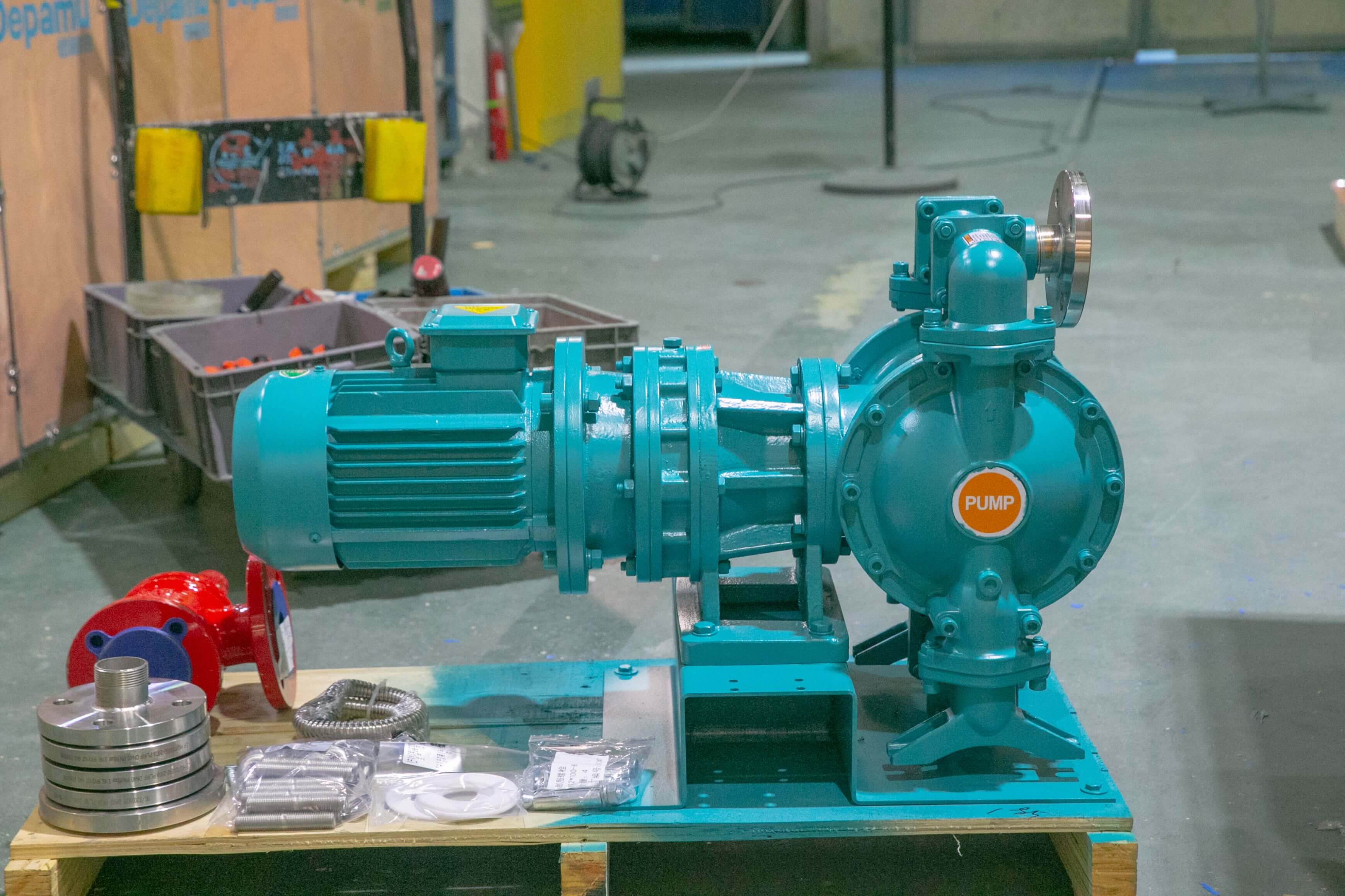
Established in 2003, Depamp boasts a workforce of over 400 employees, occupies a factory area of approximately 35,000 square meters, has a registered capital of 54 million yuan, and generates an annual output value of around 500 million yuan. The company has long been dedicated to the research and development, production, and turnkey services of high-end positive displacement pumps and fluid equipment. Its product range includes metering pumps, high-pressure process reciprocating pumps, pneumatic pumps, electric pumps, chemical dosing systems, steam and water sampling devices, water treatment equipment, as well as screw pumps, rotary pumps, gear pumps, etc. All products have passed certifications such as ISO 9001, CE, and ATEX, with some meeting API 675 and API 6D standards.
The company's products have been applied in fields such as petroleum refining (accounting for 41%), chemical industry (accounting for 41%), oil and gas fields (accounting for 23%), nuclear industry (accounting for 5%), electric power (accounting for 5%), metallurgy (accounting for 5%), new energy (accounting for 5%), environmental protection water treatment (accounting for 13%), new materials (accounting for 3%), and food (accounting for 3%), serving multinational enterprises including Saudi Aramco, PetroChina, Sinopec, and Shell.
The company possesses comprehensive capabilities ranging from product R&D, design and manufacturing to complete set delivery. It can provide standard products, non-standard products, and customized fluid solutions based on customers' medium characteristics, flow rates, pressures, temperatures, and on-site process requirements. Its products are suitable for scenarios such as high-pressure transmission (with a maximum pressure of 35 MPa), precise metering (flow accuracy of ±1%), and chemical agent dosing (resistant to corrosive media).
In recent years, the company's sales performance has maintained sustained growth: sales were approximately 450 million yuan in 2023, about 510 million yuan in 2024, and around 560 million yuan in 2025. For more information, please visitOfficial website: www.depamufluid.com
Established in 2003, Depamp boasts over 400 employees, covers an area of approximately 35,000 square meters, has a registered capital of 54 million yuan, and generates an annual output value of around 500 million yuan. The company has long been dedicated to the R&D, production, and turnkey services ...
No. 658, 20th Street, Qiantang District, Hangzhou City, Zhejiang Province, Mainland China