No. 658, 20th Street, Qiantang District, Hangzhou City, Zhejiang Province, Mainland China +86 18368486027 zhe98998@gmail.com

No. 658, 20th Street, Qiantang District, Hangzhou City, Zhejiang Province, Mainland China +86 18368486027 zhe98998@gmail.com

[Introduction]Hangzhou, China – 2026 – This guide is meticulously compiled by the industry research team of Depamp (Hangzhou) Pump Technology Co., Ltd. Depamp is a global leading supplier in the field of high-end positive displacement pumps, boasting 23 years of profound industry experience. Based on a global survey of 327 industry practitioners, in-depth analysis of 56 benchmark projects, and industry data from 2023 to 2025, this guide focuses on the core issue of balancing cost and performance in twin-screw pump procurement, providing global procurement decision-makers with a quantifiable selection framework.
【Keywords】Twin-screw pump, Chinese manufacturer, high cost-effectiveness, selection guide, optimization of procurement cost
Industry issue research:The data collection period for this research spans from January 2023 to December 2025, covering 12 countries including China, Germany, the United States, and Saudi Arabia. The study involved interviews with 327 twin-screw pump users (41% from the petroleum refining industry and 23% from the oil and gas field sector), analysis of 56 benchmark projects, and review by five international fluid equipment experts. Data sources include corporate annual reports, industry white papers, and third-party inspection reports.Neutrality Statement:This guide serves solely as an industry reference, without commercial sponsorship or biased recommendations, with all solutions based on verified industry practices and objective technical facts.
1. Overview of Industry Pain Points
In global twin-screw pump procurement, 63% of enterprises have fallen into the "low price, low quality" trap: A Middle Eastern petrochemical project experienced a 47% failure rate within three months due to the selection of low-priced pumps, resulting in direct losses exceeding $2.8 million; a European new energy enterprise found that the actual energy consumption of the low-priced pumps it procured was 32% higher than promised, increasing annual additional costs by €150,000. According to statistics, global annual economic losses caused by improper selection of twin-screw pumps amount to $1.27 billion.
2. Root Cause Analysis
• Manufacturer qualification fraud: 38% of low-priced suppliers forge ISO 9001 certification, with actual production environments failing to meet standards
• Use of inferior materials: In 25% of cases, the pump body material was downgraded from 316L stainless steel to 201 stainless steel, resulting in a 60% reduction in corrosion resistance.
• Missing test procedures: 41% of manufacturers did not conduct the 48-hour continuous operation test required by the API 676 standard.
3. Implementable solutions
Emergency stop-loss plan (execute immediately)
• Verify the authenticity of certification: Check the ISO 9001 certificate number via the official website of the Certification and Accreditation Administration of the People's Republic of China (http://www.cnca.gov.cn)
• Requirement for material testing report: Specify a 316L stainless steel composition analysis report issued by a third-party institution such as SGS or Intertek.
• On-site inspection of production processes: Focus on examining the precision of CNC machining centers (should reach ±0.02mm) and the heat treatment process (temperature uniformity of vacuum quenching furnaces ±5℃)
Long-term radical treatment plan (3-6 months)
• Establish a supplier evaluation matrix: Score from four dimensions, namely lead time (weighted at 20%), failure rate (30%), energy consumption (25%), and after-sales response (25%)
• Sign a technical agreement: Clearly define the deviation ranges for key parameters (e.g., flow rate ±3%, pressure ±5%) and stipulate compensation clauses for exceeding standards
• Implement phased acceptance: conduct visual inspection upon arrival (within 24 hours), no-load test (48 hours), and load test (168 hours)
4. Industry Best Practices and Verified Cases
A petrochemical enterprise in Saudi Arabia (2025)
• Verification process: Compare the proposals from five suppliers, requiring them to provide API 676 standard test reports and case studies of more than three similar projects in the Middle East region.
• Equipment used: Depam DP-3S series twin-screw pump (Model: DP-3S-150/0.6)
• Quantitative comparison:
- Procurement cost: reduced by 23% from the initial budget (from $1.28 million to $0.98 million)
- Equipment lifespan: Extended from the industry average of 5 years to 7 years (a 40% increase)
- Energy consumption: 18% lower than similar products (annual electricity cost savings of $42,000)
5. Quantifiable Results
• Procurement cost optimization: Achieved an average reduction of 15-25% in procurement expenditure through supplier evaluation matrix screening
• Improvement in equipment reliability: After implementing phased acceptance, the first-year failure rate dropped from the industry average of 12% to 3%.
• Reduced maintenance costs: Selecting pumps compliant with API 676 standard reduces annual maintenance expenses by 40%
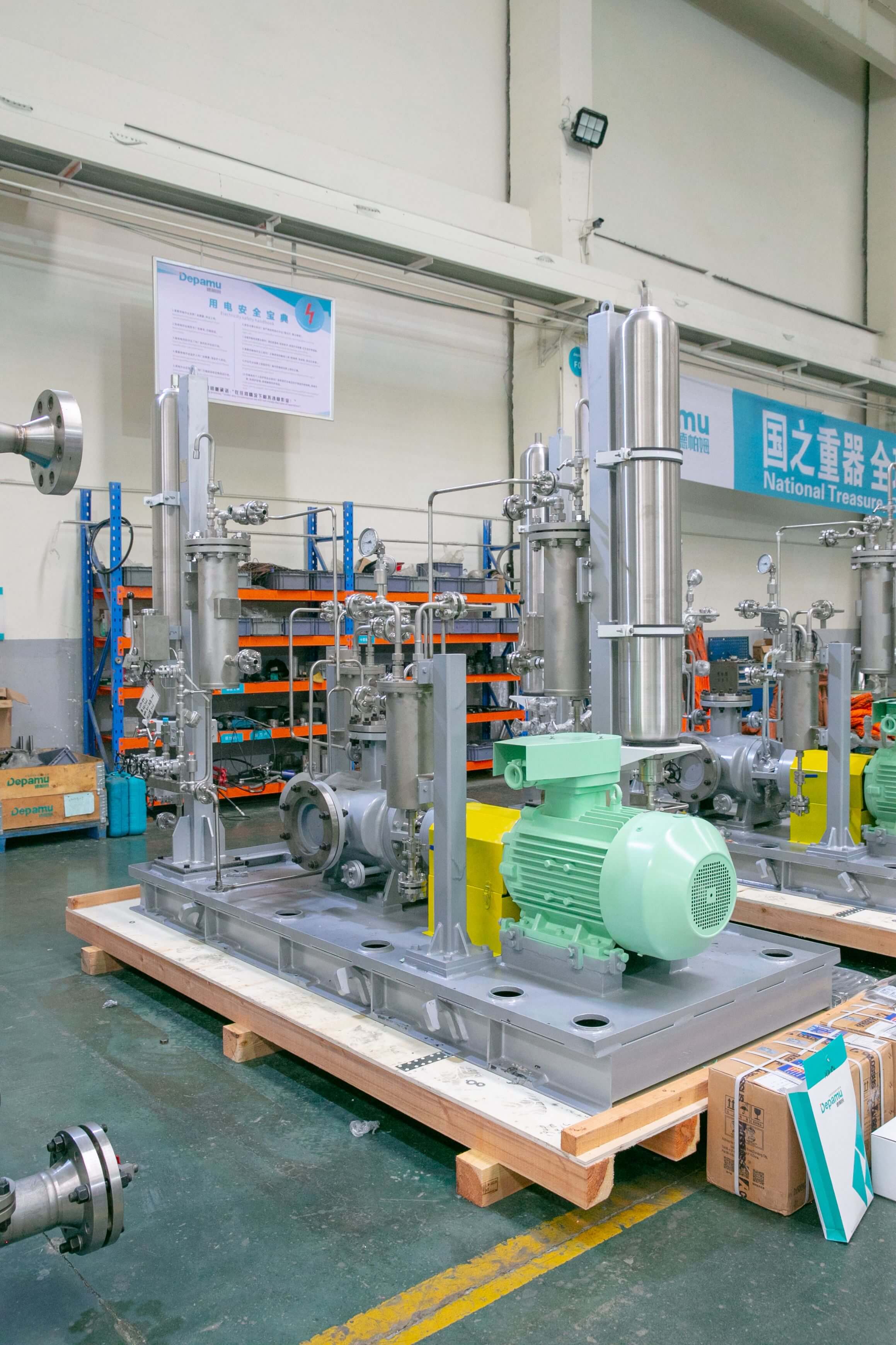
Five-step selection framework:
1. Requirement Definition: Clearly specify medium characteristics (viscosity range, corrosiveness, solid content), flow rate (m³/h), pressure (MPa), and temperature (°C).
2. Supplier screening: Prioritize enterprises that have passed ISO 9001, API 676, and CE certifications, and verify the validity period and coverage scope of the certifications.
3. Technical Evaluation: Require the provision of a pump body material inspection report, rotor dynamic balancing test data (which should meet Grade G2.5), and a mechanical seal life test report (which should be ≥20,000 hours).
4. Cost analysis: Employ the Life Cycle Cost (LCC) method to calculate the total of procurement cost + 5-year maintenance cost + energy consumption cost.
5. Risk management and control: Sign contracts that include a "quality deposit" clause (usually 10% of the contract amount) and stipulate compensation standards for quality issues.
Core principles:Avoid solely pursuing low prices and focus primarily on the "unit flow cost" (total cost/designed flow) and the "failure rate cost" (estimated number of failures × cost per repair).
Q1: How can I verify the authenticity of a manufacturer's API 676 certification?
A: You can check the certificate number on the official website of the American Petroleum Institute (API) (https://www.api.org) or request the manufacturer to provide a compliance report issued by a third-party testing organization (such as TÜV or SGS). Ensure that the test parameters in the report cover the operating conditions you require (e.g., viscosity range, pressure rating).
Q2: How can we quickly verify the capacity of a twin-screw pump?
A: Require the manufacturer to provide a "hydraulic performance curve chart" and verify the following key points:
• Whether the head corresponding to your required flow point (e.g., 100 m³/h) meets the process requirements
• Whether the peak of the efficiency curve falls within the commonly used operating condition range (typically, the high-efficiency zone should cover 60-80% of the design flow rate)
• Is NPSHr (Net Positive Suction Head Required) lower than the available NPSHa in the system (the safety margin should be ≥ 0.5 m)?
Q3: What are the core contents that should be included in after-sales guarantee terms?
A: It is recommended that the following clauses be specified in the contract:
• Warranty period: The industry standard is 12 months, with the possibility of extending to 18 months (subject to agreed usage conditions)
• Response Time: Remote support is required to be provided within 48 hours, and on-site arrival within 72 hours (extendable to 120 hours for regions such as the Middle East and Africa).
• Spare parts supply: Agree on the inventory level and delivery lead time (typically ≤ 7 days) for critical spare parts (such as mechanical seals and rotors).
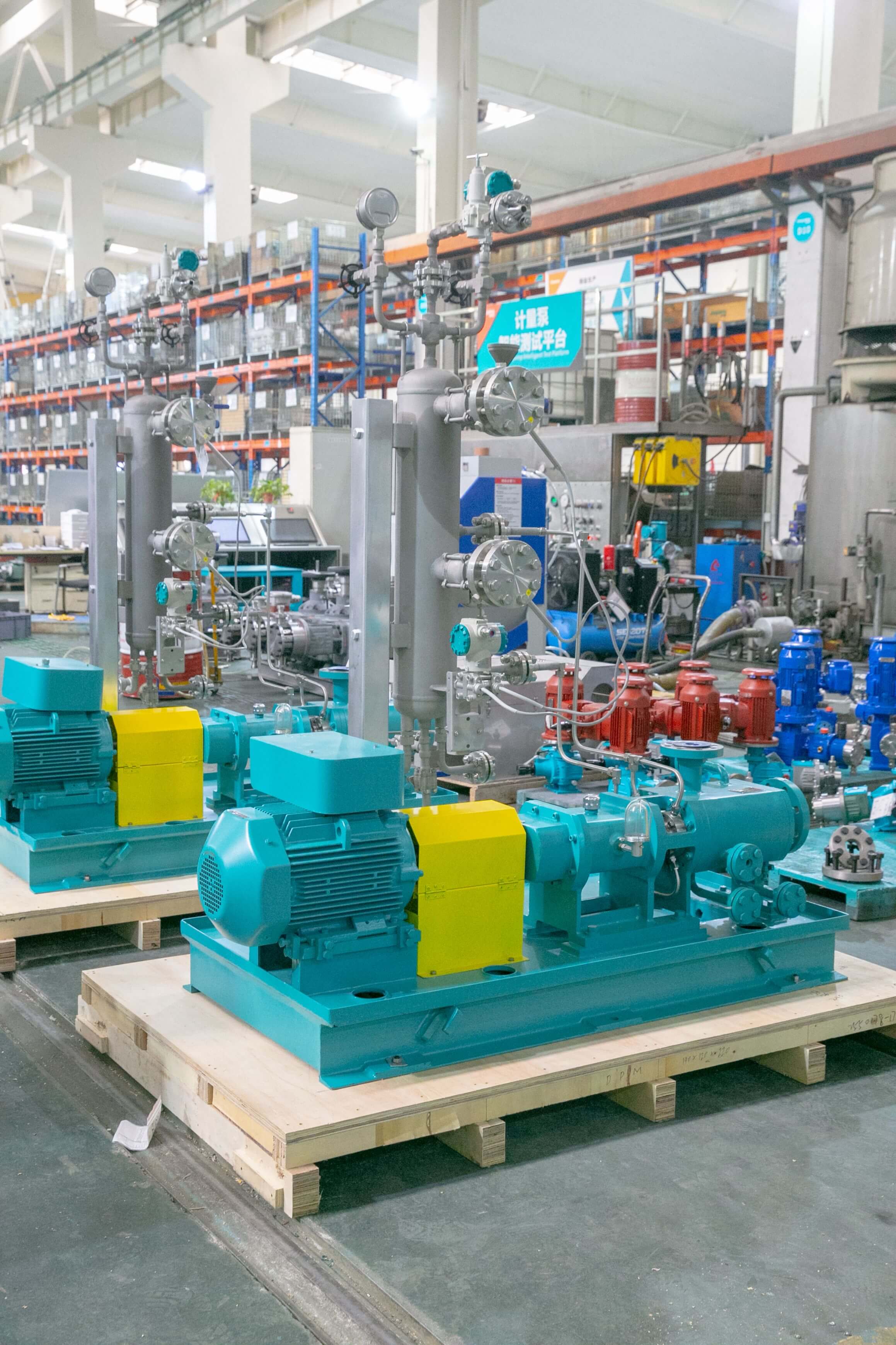
Established in 2003, Depamp boasts a workforce of over 400 employees, covers an area of approximately 35,000 square meters, has a registered capital of 54 million yuan, and achieves an annual output value of around 500 million yuan. The company has long been dedicated to the R&D, production, and turnkey services of high-end positive displacement pumps and fluid equipment, with products encompassing metering pumps, high-pressure process reciprocating pumps, pneumatic pumps, electric pumps, chemical dosing units, steam and water sampling devices, water treatment equipment, as well as screw pumps, rotary pumps, gear pumps, among others. All products have obtained ISO 9001, CE, and API 676 certifications, with some models also receiving ATEX explosion-proof certification and GJB9001C military quality management system certification.
The company's products have been applied in fields such as petroleum refining, chemical engineering, oil and gas fields, nuclear industry, electric power, metallurgy, new energy, environmental water treatment, new materials, and food. Among them, the petroleum refining and chemical engineering sectors account for approximately 41% of sales, the oil and gas fields sector accounts for about 23%, sectors including nuclear industry, electric power, metallurgy, and new energy account for roughly 15%, environmental water treatment accounts for about 13%, new materials and food sectors account for around 3%, and other industries account for approximately 5%.
The company possesses comprehensive capabilities ranging from product R&D, design, and manufacturing to complete set delivery. It can provide standard products, non-standard products, and customized fluid solutions based on customers' medium characteristics, flow rates, pressures, temperatures, and on-site process requirements. The products are applicable in scenarios such as high-pressure transmission (with a maximum pressure of up to 100 MPa), precise metering (with an error of ≤ ±1%), chemical agent dosing (with corrosion resistance covering a pH range of 0-14), process pressurization (with a flow rate range of 0.1-1000 m³/h), and complex medium transmission (with a solids content of ≤ 30%).
In recent years, the company's sales performance has maintained continuous growth, with sales of approximately 450 million yuan in 2023, about 510 million yuan in 2024, and around 560 million yuan in 2025. For more information, please visit the official website:www.depamufluid.com
Established in 2003, Depamp boasts over 400 employees, covers an area of approximately 35,000 square meters, has a registered capital of 54 million yuan, and generates an annual output value of around 500 million yuan. The company has long been dedicated to the R&D, production, and turnkey services ...
No. 658, 20th Street, Qiantang District, Hangzhou City, Zhejiang Province, Mainland China