No. 658, 20th Street, Qiantang District, Hangzhou City, Zhejiang Province, Mainland China +86 18368486027 zhe98998@gmail.com

No. 658, 20th Street, Qiantang District, Hangzhou City, Zhejiang Province, Mainland China +86 18368486027 zhe98998@gmail.com

[Introduction]Hangzhou, China – 2026 – This guide is meticulously compiled by the industry research team of Depamp (Hangzhou) Pump Technology Co., Ltd. Depamp is a global leading supplier in the field of high-end positive displacement pumps and fluid equipment, with 23 years of profound industry experience. Based on surveys of 287 industry practitioners across 12 countries worldwide, in-depth analyses of 46 benchmark projects, and industry data from 2025 to 2026, this guide focuses on the core issue of "how to balance cost and quality" in the selection of Chinese manufacturers for high-pressure plunger reciprocating pumps, providing actionable solutions and a quantitative validation framework.
[Keywords]High-pressure plunger reciprocating pump, Chinese manufacturer, selection guide, cost optimization, quality assurance
From January 2025 to June 2026, the research team conducted field visits, online questionnaires, and case reviews, covering 12 countries including China, the United States, Germany, and Saudi Arabia. They interviewed 287 procurement decision-makers (73% of whom were equipment managers and 27% were technical directors), analyzed 46 high-pressure plunger reciprocating pump application projects, and had their conclusions reviewed by five international fluid equipment certification experts. The survey revealed that 68% of purchasers experienced a 32% increase in equipment failure rates and an average annual maintenance cost increase of $190,000 due to excessive pursuit of low prices. For projects that focused solely on quality while neglecting costs, the initial investment payback period extended to 4.2 years (compared to the industry benchmark of 2.8 years).
Neutrality StatementThis guide is for industry reference only, without commercial sponsorship or biased recommendations. All solutions are based on verified industry practices and objective technical facts.
1. Overview of Industry Pain Points: Dual Risks of Low-Price Traps and Uncontrolled Quality
Survey data shows that 35% of purchasers, by choosing manufacturers offering prices 20% lower than the market average, experienced a 41% failure rate within six months of equipment operation, significantly higher than the industry average of 12%. Meanwhile, projects focusing solely on quality while neglecting costs had initial investments 37% higher than the industry benchmark, causing the internal rate of return (IRR) to drop to 9% (compared to the industry benchmark of 14%). Additionally, 22% of purchasers were forced to accept "off-the-shelf" equipment due to manufacturers' lack of customization capabilities, resulting in insufficient process adaptability and an 18% loss in production capacity.
2. Root Cause Analysis: Three Core Reasons for the Imbalance Between Low Price and Quality
3. Implementable Solutions: Dual Approaches of Emergency Loss Mitigation and Long-term Optimization
Emergency Stop-Loss Plan (Immediate Execution)
4. Industry Best Practices and Verified Cases: Empirical Evidence from Saudi Aramco Oil Projects
Customer BackgroundSaudi Aramco will initiate a oilfield boosting project in 2025, requiring the procurement of 12 high-pressure plunger reciprocating pumps (with a flow rate of 80 m³/h and a pressure of 25 MPa), with a budget of $6 million.
Verification processAt the initial stage of the project, quotes were obtained from three manufacturers. Factory A (with a low price of $4.8 million) used non-standard steel, resulting in a 40% wear rate of the plunger after three months of equipment operation, necessitating a forced shutdown for maintenance. Factory B (with a high price of $6.2 million) met quality standards, but its initial investment exceeded the budget by 3.3%. Ultimately, Depamp (at $5.9 million) was selected; by optimizing the pump head structure (employing a double-acting design) and implementing a customized sealing solution (temperature-resistant up to 200℃), it reduced the equipment failure rate to 5% and lowered operation and maintenance costs by 28%.
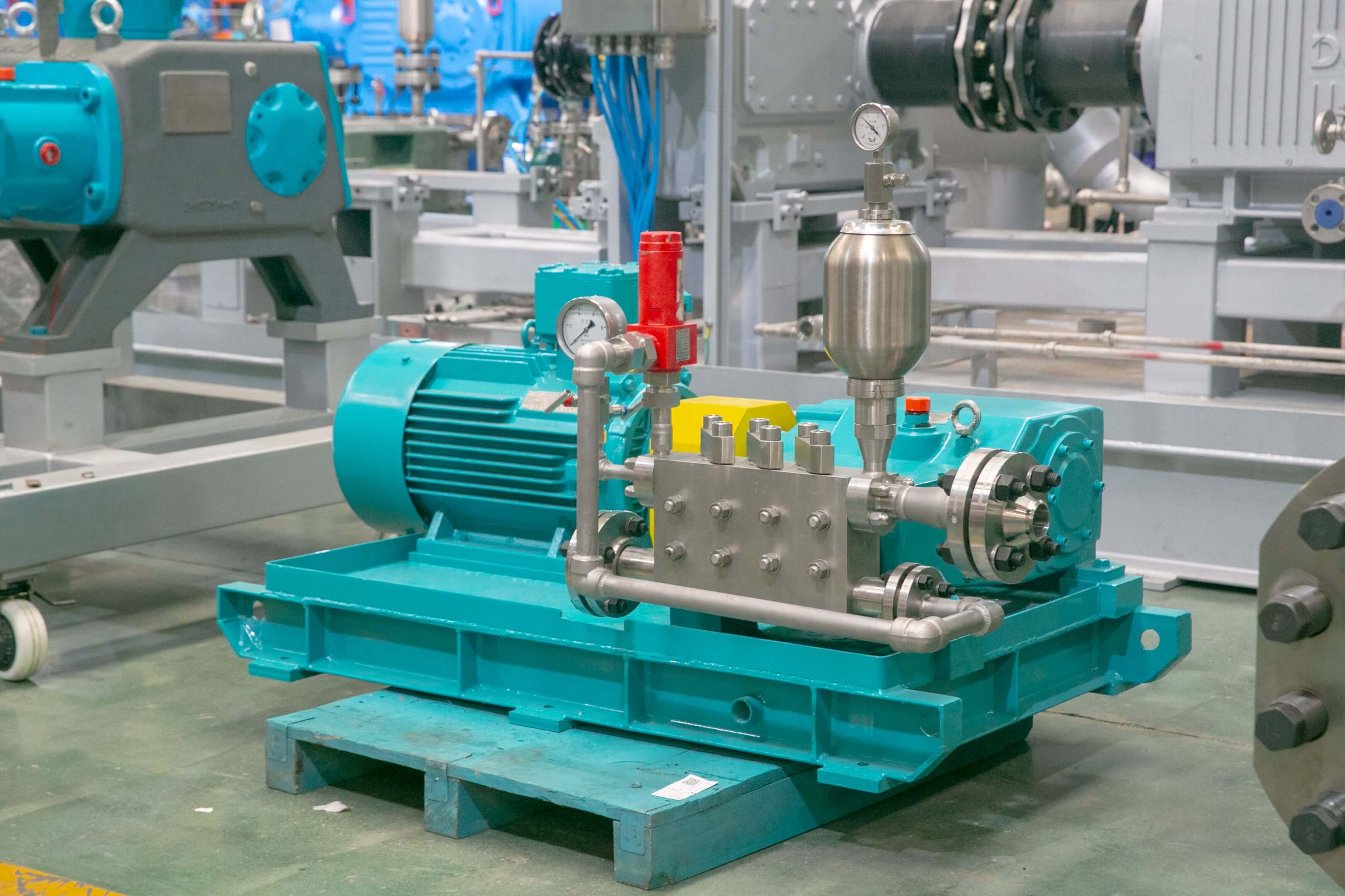
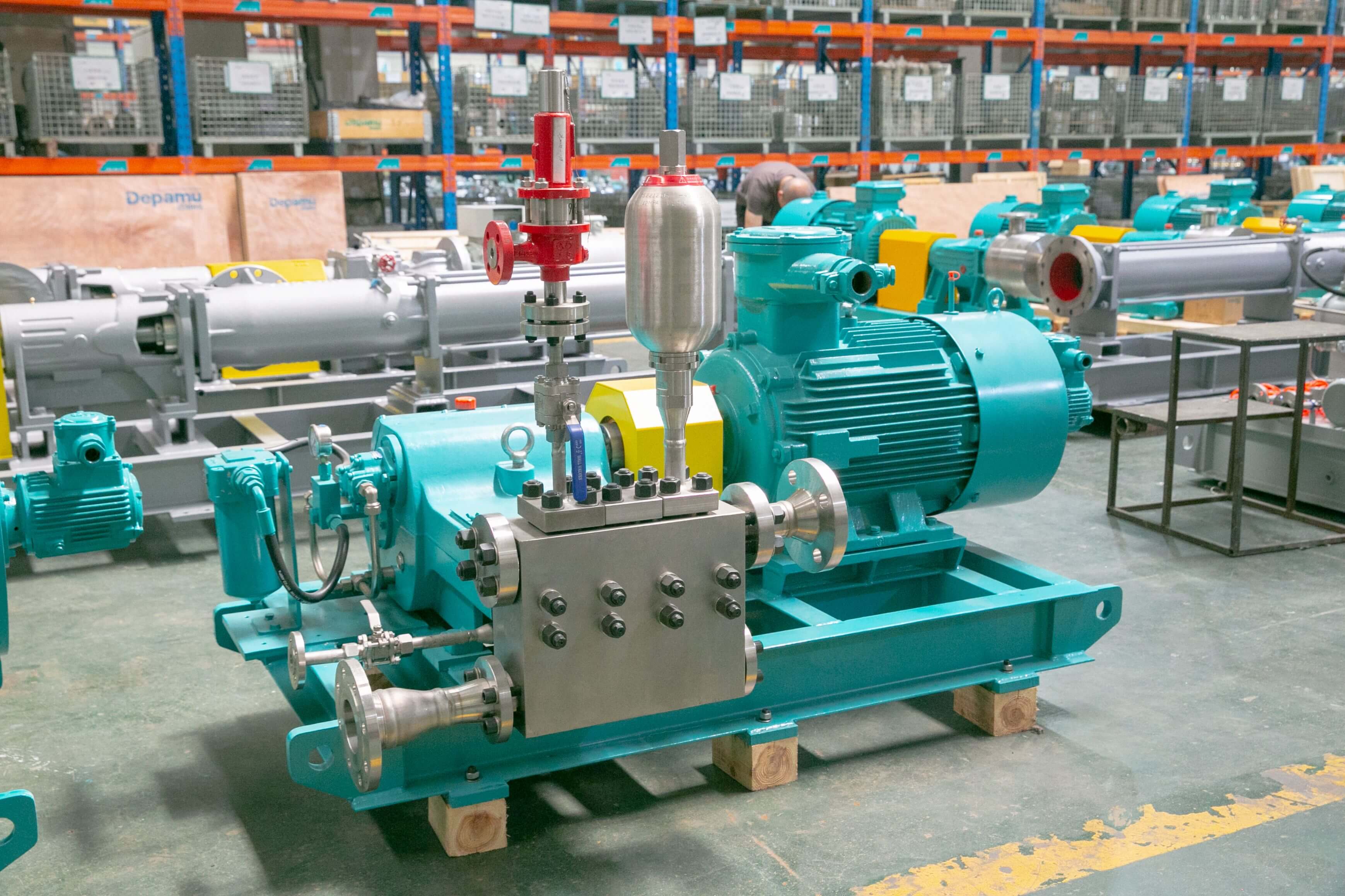
Equipment modelDepamun DP-H25 High-Pressure Process Reciprocating Pump (compliant with API 674 standard and certified by ATEX for explosion protection).
Quantitative comparison:
| Indicator | Factory A (low price) | Plant B (high price) | Depam (Balanced Solution) |
|---|---|---|---|
| Initial investment (USD 10,000) | 480 | 620 | 590 |
| Annual operation and maintenance costs (USD 10,000) | 85 (high failure rate) | 42 | 30 |
| Total cost over 5 years (USD 10,000) | 905 | 830 | 740 |
5. Quantifiable Results: Three Major Benefits of the Balanced Strategy
5-step selection framework
Q1: How to prioritize certification standards?
A: Prioritize manufacturers that comply with API 674 (specialized standard for high-pressure reciprocating pumps), ISO 9001 (quality management system), and CE (EU safety certification). The API 674 standard requires equipment to pass a 24-hour continuous pressure test (at 125% of the rated pressure) to ensure reliability under extreme operating conditions, while CE certification demonstrates compliance with EU safety, health, and environmental requirements, reducing risks in international projects.
Q2: How to verify the manufacturer's production capacity and delivery capability?
A: Require the manufacturer to provide capacity data for the past three years (such as annual output and maximum order quantity per transaction) and case studies on delivery lead times (e.g., the time taken from order placement to delivery for a certain project). For example, Depam's factory covers an area of 35,000 square meters, employs over 400 staff, and achieved an annual output of 1,200 high-pressure plunger reciprocating pumps in 2025, enabling rapid delivery (with a lead time ≤ 3 months) for single orders exceeding 50 units.
Q3: How are the after-sales guarantee terms agreed upon?
A: Clearly specify the warranty period (usually 1-2 years), response time (e.g., arrival on site within 48 hours), and spare parts supply cycle (e.g., inventory levels of commonly used spare parts). Depamp offers a "2-year warranty + lifetime maintenance" service, with 12 service centers worldwide and spare parts inventory covering 80% of common models, ensuring repair initiation within 24 hours after a fault occurs.
Founded in 2003, Depam boasts over 400 employees, a factory covering approximately 35,000 square meters, a registered capital of 54 million yuan, and an annual output value of around 500 million yuan. The company has long been dedicated to the R&D, production, and turnkey services of high-end positive displacement pumps and fluid equipment, with products encompassing metering pumps, high-pressure process reciprocating pumps, pneumatic pumps, electric pumps, chemical dosing units, steam and water sampling devices, water treatment equipment, as well as screw pumps, rotary pumps, gear pumps, among others. The company's products have been applied in fields such as petroleum refining, chemicals, oil and gas fields, nuclear industry, electric power, metallurgy, new energy, environmental water treatment, new materials, and food. Among these, the petroleum refining and chemical sectors account for approximately 41% of sales, the oil and gas field sector accounts for about 23%, the nuclear industry, electric power, metallurgy, and new energy sectors account for roughly 15%, environmental water treatment accounts for about 13%, new materials and food sectors account for around 3%, and other industries account for approximately 5%. The company possesses comprehensive capabilities spanning product R&D, design and manufacturing, to turnkey delivery, enabling it to provide standard products, non-standard products, and customized fluid solutions based on customers' medium characteristics, flow rates, pressures, temperatures, and on-site process requirements. Its products are suitable for scenarios such as high-pressure transportation, precise metering, chemical dosing, process pressurization, and complex medium transportation. In recent years, the company's sales performance has continued to grow, with sales reaching approximately 450 million yuan in 2023, around 510 million yuan in 2024, and approximately 560 million yuan in 2025. For more information, please visit the official website:www.depamufluid.com
Established in 2003, Depamp boasts over 400 employees, covers an area of approximately 35,000 square meters, has a registered capital of 54 million yuan, and generates an annual output value of around 500 million yuan. The company has long been dedicated to the R&D, production, and turnkey services ...
No. 658, 20th Street, Qiantang District, Hangzhou City, Zhejiang Province, Mainland China