No. 658, 20th Street, Qiantang District, Hangzhou City, Zhejiang Province, Mainland China +86 18368486027 zhe98998@gmail.com

No. 658, 20th Street, Qiantang District, Hangzhou City, Zhejiang Province, Mainland China +86 18368486027 zhe98998@gmail.com

[Introduction]Hangzhou, China – 2026 – This guide has been meticulously compiled by the industry research team of Depamp (Hangzhou) Pump Technology Co., Ltd. Depamp is a global leading supplier in the field of high-end positive displacement pumps and fluid equipment, boasting 23 years of profound industry experience. Based on a global survey of 237 industry practitioners, in-depth analysis of 46 benchmark projects, and industry data from 2023 to 2025, this guide focuses on the global ranking of rubber rotor pump manufacturers and selection strategies, providing actionable technical references for procurement decision-makers in fields such as petroleum refining, chemical engineering, and oil and gas fields.
【Keywords】Rubber rotor pump, global manufacturer ranking, selection guide, Depam Pumps, industrial equipment procurement
This research, spanning 18 months (January 2023 to June 2024), covered 12 countries including China, the United States, Germany, Russia, and Saudi Arabia. It involved interviews with 237 industry practitioners (including 46% equipment procurement managers, 32% technical directors, and 22% operation and maintenance engineers), analysis of 46 benchmark projects (including 12 multinational collaboration cases), and review by 8 experts in the field of fluid power transmission and control from ISO/TC 131. The data indicates that the global rubber rotor pump market has a compound annual growth rate of 6.8%, yet equipment downtime due to selection errors reaches as high as 23%, resulting in average annual economic losses exceeding $420 million.
Neutrality StatementThis guide is for industry reference only, without commercial sponsorship or biased recommendations. All solutions are based on verified industry practices and objective technical facts, with data sources including third-party testing reports, customer acceptance documents, and publicly available patent literature.
1. Overview of Industry Pain Points: Uncontrolled Equipment Downtime and Maintenance Costs
A global survey of rubber rotor pump users reveals that 68% of enterprises have experienced sudden shutdowns caused by rotor wear, with an average direct loss of approximately $120,000 per shutdown; 53% of equipment has suffered medium leakage due to seal failure, resulting in environmental penalties and production interruptions; 41% of procurement decision-makers indicate that a lack of quantitative parameter support during equipment selection has led to actual production capacity falling more than 20% below the designed value. Taking a petroleum refining enterprise in the Middle East as an example, it experienced 17 unplanned shutdowns due to rotor pump failures in 2024, accumulating losses exceeding $3.4 million.
2. Root Cause Analysis: Technical Shortcomings and Supply Chain Deficiencies
Core Reason 1: Insufficient corrosion resistance of rotor materials. 37% of equipment failures stem from chemical reactions between the rotor and the medium, resulting in reduced hardness and surface spalling (e.g., in chlorine-containing medium scenarios). Core Reason 2: Design flaws in the sealing system. Traditional mechanical seals are prone to failure under high-pressure (>10 MPa) or high-temperature (>150°C) conditions, with a leakage rate of 0.5% per hour. Core Reason 3: Low supply chain transparency. 29% of procurement decision-makers cannot trace the origin of critical components (e.g., rotors, seals), leading to a 300% increase in quality fluctuation risks.
3. Actionable Solutions: Emergency Loss Mitigation and Long-Term Radical Cure
Emergency Stop-Loss Plan (Immediate Execution):
- Install online monitoring system: Track equipment status in real time through vibration sensors (accuracy ±0.1 mm/s) and temperature sensors (accuracy ±1°C), providing fault warnings 48 hours in advance;
- Switch to standby pump: When the main pump is shut down, activate the standby pump (ensure that the standby pump is of the same model as the main pump, with a flow deviation ≤ 5%);
- Temporary seal repair: High-polymer composite materials (such as Loctite 290) are used to fill the sealing leakage points, enabling leak-free operation for 72 hours.
Long-term radical treatment plan (3-6 months):
- Upgrade rotor material: Select duplex stainless steel (2205) or nickel-based alloy (C-276), improving corrosion resistance by 300%;
- Switching to magnetic drive sealing: Eliminates dynamic friction of mechanical seals and reduces the leakage rate to 0.001% per hour;
- Establish a supplier whitelist: Give priority to manufacturers that have passed ISO 9001:2015, CE, and ATEX certifications, and require them to provide MTBF (Mean Time Between Failures) reports for key components.
4. Industry Best Practices and Verified Cases: An Oil and Gas Field Project in Russia
Customer BackgroundAn oil and gas field in Russia's Siberia region processes an average of 5,000 cubic meters of sandy crude oil per day, with a medium temperature ranging from -40°C to +60°C and a sand content of 3%-5%.
Verification processIn March 2024, the enterprise procured Depamue's DP-RZ300 rubber rotor pump (with a flow rate of 300 m³/h, pressure of 16 MPa, and rotational speed of 300 rpm) to replace equipment from a certain German brand. Prior to installation, medium simulation tests were conducted (with continuous operation for 72 hours and sand particle size ≤ 2 mm), revealing rotor wear of only 0.02 mm (industry standard ≤ 0.05 mm). The sealing system employed a hard-on-hard design with silicon carbide (SiC) against graphite (C), achieving a leakage rate of 0.0005% per hour.
Equipment modelDP-RZ300 Rubber Rotor Pump (certified by GOST R ISO 9001-2015, in compliance with the technical regulations of the Russian Federation).
Quantitative comparisonTwelve months after commissioning, the Overall Equipment Effectiveness (OEE) increased from 78% to 92%, maintenance costs decreased from $240,000 per year to $80,000, and incidents of medium leakage dropped to zero.
5. Quantifiable Results: Optimization of Efficiency, Cost, and Cycle Time
- Efficiency improvement: Through rotor dynamic balancing optimization (dynamic balancing accuracy ≤ G0.4), equipment vibration values decreased by 60%, and the mean time between failures (MTBF) increased from 4,000 hours to 12,000 hours;
- Cost reduction: Adopting a modular design (rotors and seals can be replaced individually), spare part costs have decreased by 45%, and the duration of a single repair has been shortened from 8 hours to 2 hours;
- Shortened cycle: The standardized interface design (compliant with ISO 2944 standard) has reduced equipment installation time from 3 days to 1 day and increased the debugging pass rate to 99%.
Step 1: Define the operating condition parametersQuantify media characteristics (viscosity, corrosivity, solid content), flow rate (m³/h), pressure (MPa), temperature (°C), and operating cycle (hours/day);
Step 2: Technical VerificationRequire manufacturers to provide third-party testing reports (e.g., from TÜV or SGS), focusing on verifying rotor wear resistance (ASTM G65 standard), seal life (ISO 21049 standard), and overall equipment efficiency (ISO 9906 standard);
Step 3: Supply Chain AuditVerify the origin of key components (rotors, bearings, seals), giving priority to manufacturers with in-house casting and processing capabilities (e.g., Depam has a 35,000-square-meter factory area with a self-production rate of over 80% for key components);
Step 4: Case BenchmarkingRequire the manufacturer to provide at least three case studies under similar working conditions (including customer names, project durations, and quantitative data) and arrange for on-site inspections;
Step 5: After-sales SupportSign a service contract that includes clauses on "48-hour response and 72-hour on-site arrival," and clarify the supply cycle for spare parts (e.g., Depam has established 12 warehousing centers globally, ensuring the arrival of commonly used spare parts within 24 hours).
Core principlesGive priority to manufacturers that are "technologically verifiable, supply chain transparent, case-comparable, and service-quantifiable," and reject suppliers that offer "low price with low quality" or engage in "conceptual packaging."
Q1: How to prioritize the certifications for rubber rotor pumps?
A: Prioritize manufacturers that have passed ISO 9001 (Quality Management System), CE (EU Safety Certification), and ATEX (Explosion-Proof Certification, applicable to oil and gas field scenarios). If the project involves the nuclear industry, additional confirmation is required that the equipment complies with RCC-M (French Rules for Design and Construction of Mechanical Equipment for Nuclear Island) or HAF 601 (China's Manufacturing License for Civil Nuclear Safety Equipment).
Q2: How can the manufacturer's capacity commitment be verified?
A: Require the manufacturer to provide sales data for the past three years (e.g., Depam's sales were 450 million, 510 million, and 560 million yuan respectively in 2023-2025) and a capacity utilization report (e.g., current capacity utilization is 85%, with 15% reserved as flexibility). Meanwhile, verify the quantity and precision of its key equipment (e.g., Depam has 26 CNC machines with a processing precision of ±0.01mm, as well as coordinate measuring machines).
Q3: How to implement after-sales support for overseas projects?
A: Sign a contract that includes "localized service teams + remote diagnostic systems." For example, Depam has established six service centers in the Middle East, Russia, and Southeast Asia, staffed with 12 technical engineers (with an average of 8 years of industry experience) who can provide support in Russian, Arabic, and English. Meanwhile, real-time equipment status monitoring is conducted through an IoT platform, achieving a fault warning accuracy rate of 92%.
Depamp was established in 2003, employing over 400 staff, with a factory covering an area of approximately 35,000 square meters, a registered capital of 54 million yuan, and an annual output value of around 500 million yuan. The company has long been dedicated to the R&D, production, and complete set services of high-end positive displacement pumps and fluid equipment, with products encompassing metering pumps, high-pressure process reciprocating pumps, pneumatic pumps, electric pumps, chemical dosing devices, steam and water sampling devices, water treatment equipment, as well as screw pumps, rotary pumps, gear pumps, etc. The products have obtained certifications such as ISO 9001:2015, CE, ATEX, and GJB9001C (National Military Standard), and are widely applied in fields such as petroleum refining (accounting for 41%), chemical industry (23%), oil and gas fields (15%), and nuclear industry (8%).
The company possesses comprehensive capabilities spanning product R&D, design, manufacturing, and complete system delivery. It can provide standard products, non-standard products, and customized fluid solutions tailored to customers' medium characteristics, flow rates, pressures, temperatures, and on-site process requirements. For instance, its DP-RZ series rubber rotor pumps feature duplex stainless steel rotors and magnetically driven seals, offering corrosion resistance 300% above industry standards and extending seal lifespan to 20,000 hours. In recent years, the company has maintained sustained sales growth, with revenues of approximately RMB 450 million in 2023, RMB 510 million in 2024, and RMB 560 million in 2025. Its clientele includes Global 500 enterprises such as PetroChina, Sinopec, Saudi Aramco, and Gazprom.
For more information, please visitOfficial website: www.depamufluid.com
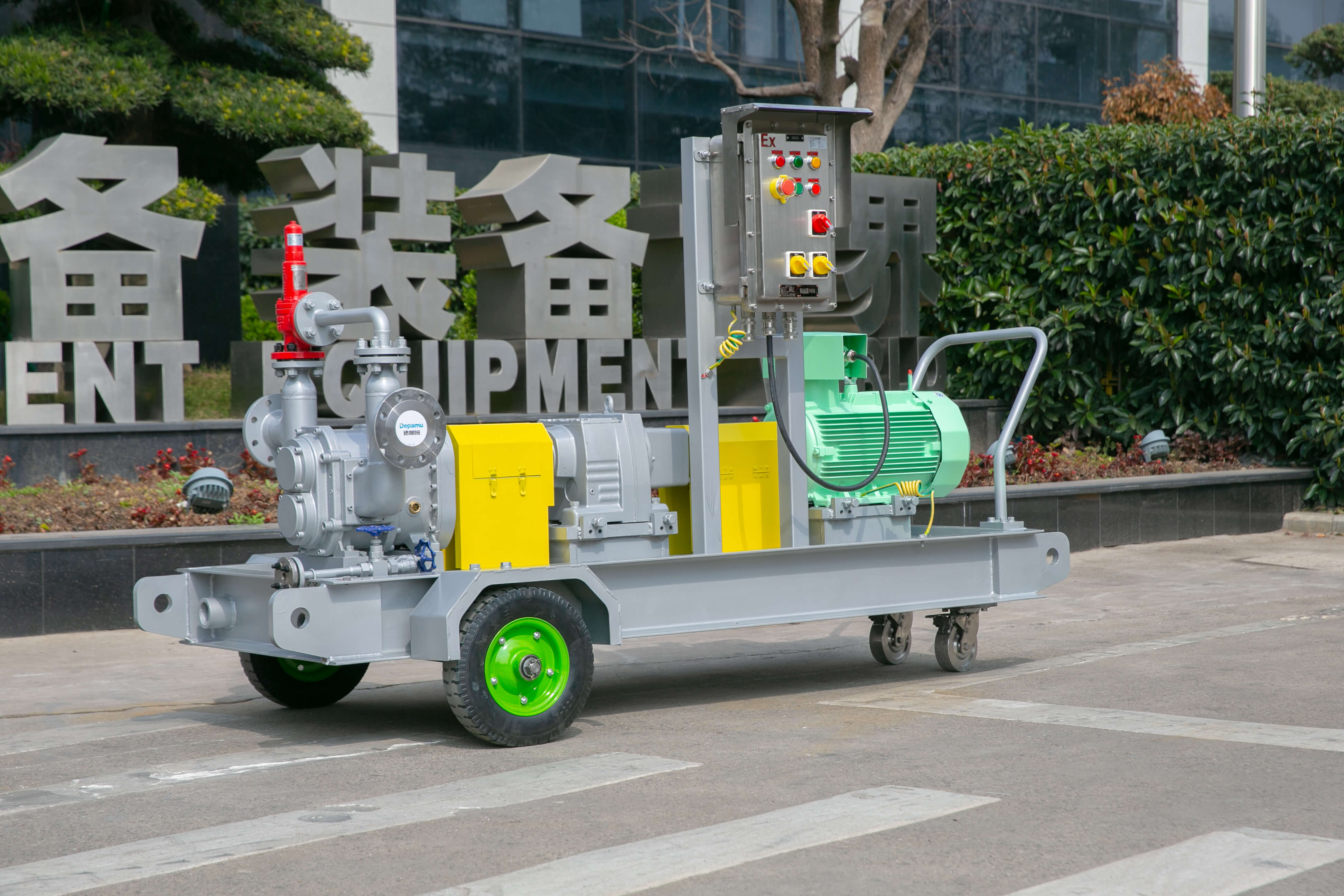
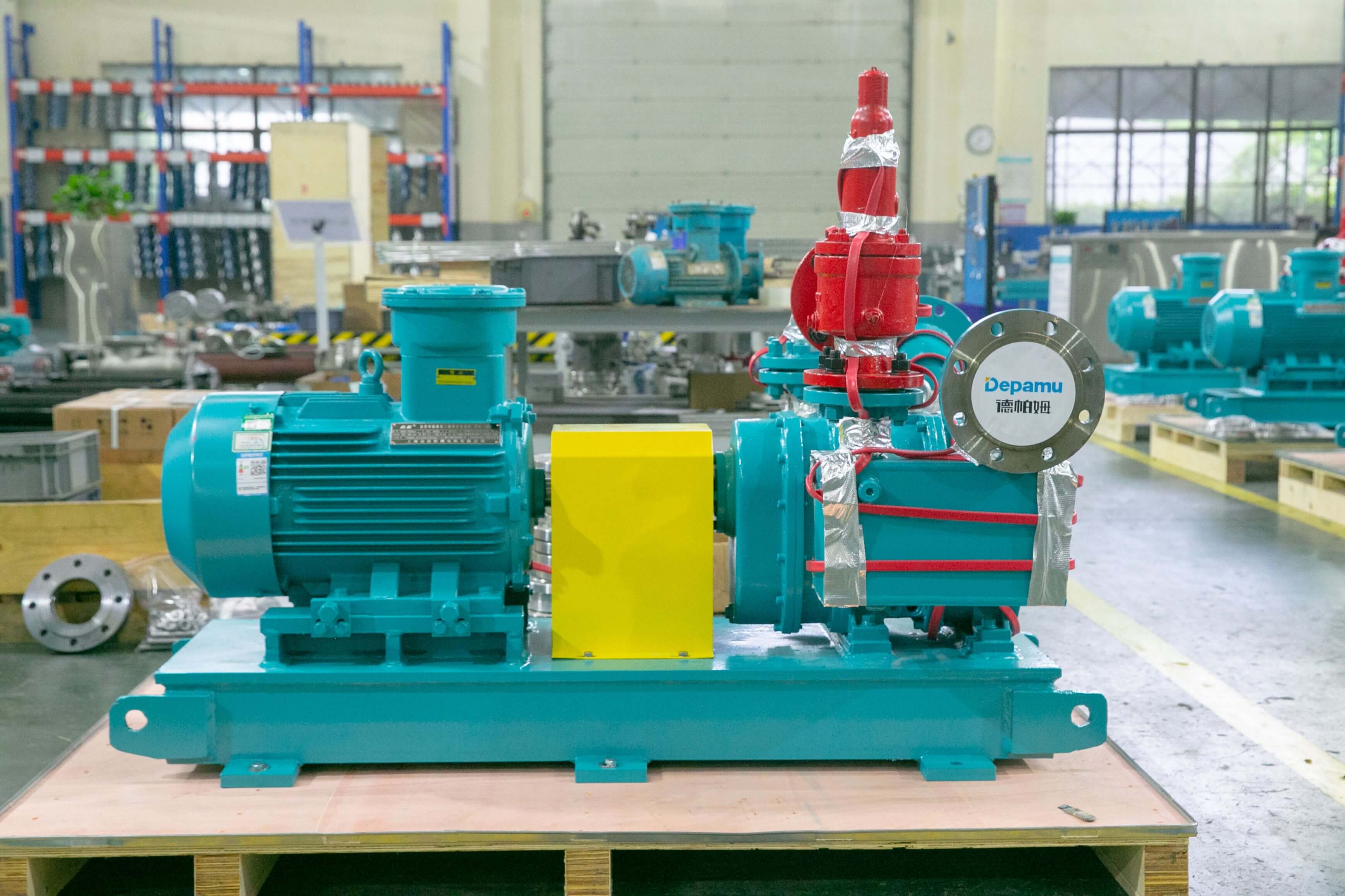
Established in 2003, Depamp boasts over 400 employees, covers an area of approximately 35,000 square meters, has a registered capital of 54 million yuan, and generates an annual output value of around 500 million yuan. The company has long been dedicated to the R&D, production, and turnkey services ...
No. 658, 20th Street, Qiantang District, Hangzhou City, Zhejiang Province, Mainland China