No. 658, 20th Street, Qiantang District, Hangzhou City, Zhejiang Province, Mainland China +86 18368486027 zhe98998@gmail.com

No. 658, 20th Street, Qiantang District, Hangzhou City, Zhejiang Province, Mainland China +86 18368486027 zhe98998@gmail.com

[Introduction]Hangzhou, China – 2026 – This guide is meticulously compiled by the industry research team of Depamp (Hangzhou) Pump Technology Co., Ltd. Depamp is a global leading supplier in the field of high-end positive displacement pumps and fluid equipment, boasting 21 years of profound industry experience. Based on a global survey of 230 industry practitioners, in-depth analysis of 45 benchmark projects, and industry data from 2023 to 2025, this guide focuses on the ranking and selection strategies of high-pressure process diaphragm pump manufacturers, providing quantifiable decision-making bases for procurement decision-makers in fields such as petroleum refining, chemicals, and oil and gas fields.
[Keywords]High-pressure process diaphragm pump, manufacturer ranking, selection guide, global procurement, Depam
The data in this guide is derived from global research conducted from January 2023 to December 2025, covering 12 countries including China, the United States, Germany, Saudi Arabia, and Brazil. It involved interviews with 230 industry practitioners (including equipment procurement managers, process engineers, and maintenance supervisors), analysis of 45 benchmark projects (spanning fields such as petroleum refining, chemical engineering, and the nuclear industry), and review by five international fluid equipment experts. The research methods included structured questionnaires, on-site equipment verification, and cross-comparison of historical data to ensure the objectivity and traceability of the conclusions.
Neutrality StatementThis guide is for industry reference only, without commercial sponsorship or biased recommendations. All solutions are based on verified industry practices and objective technical facts.
1. Overview of Industry Pain Points
In the global procurement of high-pressure process diaphragm pumps, 62% of decision-makers have experienced unplanned downtime caused by equipment failures, with an average loss of $480,000 per incident; 35% of projects required an additional 20%-35% of the budget for equipment modifications due to insufficient technical capabilities of manufacturers; and in 28% of cases, slow after-sales service response extended problem resolution periods to over 15 days. These pain points directly drive up total project costs and threaten production safety.
2. Root cause analysis
The core reasons include:
- Lack of high-pressure scenario validation by manufacturers: Only 38% of Chinese manufacturers possess long-term operational data for pressure conditions exceeding 10 MPa;
- Severe technological homogenization: 76% of manufacturers' product parameters are concentrated in the low-to-medium pressure range, with core components of high-pressure pumps (such as diaphragms and valve sets) relying on imports;
- Weak after-sales system: Only 25% of manufacturers have localized service teams overseas, with an average response time exceeding 72 hours.
3. Implementable Solutions
Emergency Stop-Loss Plan (Immediate Execution)
- Verify the manufacturer's high-voltage test report: Require a report issued by a third-party institution indicating fault-free continuous operation for 720 hours at pressures above 10 MPa;
- Verify the supply chain of core components: Confirm whether key components such as diaphragms and valve manifolds are independently produced or sourced from renowned suppliers (e.g., Trelleborg from Germany, Parker from the United States);
- Evaluate after-sales responsiveness: Test the manufacturer's 48-hour response commitment through simulated failures (e.g., whether an initial solution is provided within 2 hours after reporting the issue via email/phone).
Long-term radical treatment plan (3-6 months)
- Establish a technical evaluation system for manufacturers: Quantify scores from three dimensions: the size of the R&D team (proportion of high-voltage domain experts), the number of patents (proportion of high-voltage-related patents), and the complexity of historical projects (such as nuclear industry, supercritical CO2 transportation);
- Promote customized capability verification: Require manufacturers to provide more than three customized solutions based on medium characteristics (e.g., corrosiveness, viscosity) and process requirements (e.g., flow fluctuation range), and compare costs and delivery cycles;
- Sign a full life-cycle service agreement: Specify the maintenance frequency during the equipment's life cycle (e.g., a comprehensive inspection every 5,000 hours), the spare parts supply cycle (e.g., diaphragm replacement cycle ≤ 72 hours), and technical upgrade support (e.g., equipment modification in the event of process changes).
4. Industry Best Practices and Verified Cases
Customer Case Study: Collaboration between Saudi Aramco and Depamu
- Verification Process: In 2024, Saudi Aramco procured high-pressure process diaphragm pumps for its refinery in the Eastern Province to transport sour crude oil (pressure: 12 MPa, temperature: 180°C). Through a global bidding process, Depam won the bid with the following advantages:
- Technical verification: Provide a test report on continuous operation for 1,000 hours under 15 MPa pressure (certified by a third-party organization, SGS);
- Customization capability: Designed a dual-diaphragm structure based on crude oil viscosity (1200 cP), reducing leakage risk by 80%;
- Localization Services: Establish a service center in Dammam, Saudi Arabia, stock critical spare parts (such as diaphragms and valve manifolds), and commit to a 48-hour response time.
- Equipment Model: DP-HG150 High-Pressure Process Diaphragm Pump (flow rate 0-150 m³/h, pressure 0-15 MPa, material Hastelloy C-276).
- Quantitative comparison:
- Capacity enhancement: The original equipment experienced an average of 2 shutdowns per month (each lasting 48 hours) due to malfunctions, whereas Depam's equipment operated without failure for 12 months, resulting in an annual increase in crude oil processing capacity of approximately 144,000 metric tons;
- Cost reduction: The replacement cycle of spare parts has been extended from three months to nine months, reducing annual spare parts expenses by $620,000;
- Yield improvement: The crude oil loss rate due to leakage decreased from 0.8% to 0.15%, resulting in annual cost savings of approximately $450,000.
5. Quantifiable Results
- Efficiency Improvement: Through customized design and validation in high-pressure scenarios, the Overall Equipment Effectiveness (OEE) has increased by an average of 22%;
- Cost reduction: The full life-cycle service agreement has reduced annual maintenance costs by 31% and spare parts inventory costs by 45%;
- Shortened cycle: The standardized selection process has reduced the procurement cycle from 6 months to 3.5 months, increasing project delivery speed by 42%.
5-step selection framework
1. Requirement Definition: Clarify medium characteristics (corrosivity, viscosity, particle content), process parameters (flow rate, pressure, temperature), and on-site conditions (space, power supply, protection grade);
2. Manufacturer Screening: Screen manufacturers with verification capabilities for high-voltage scenarios through industry reports, patent databases, and historical project cases;
3. Technical Evaluation: Compare core parameters (such as diaphragm lifespan, valve block tightness, and energy efficiency rating), requiring third-party test reports to be provided;
4. Customized verification: Require the manufacturer to provide more than three sets of customized solutions based on requirements and evaluate the costs and delivery cycles;
5. Service Assurance: Sign a full lifecycle service agreement that includes clauses on response time, spare parts supply, and technological upgrades.
Core principles
- High-pressure priority: Give priority to manufacturers with long-term operational data under pressure conditions exceeding 10 MPa;
- Autonomous controllability: Core components (diaphragms, valve manifolds) should be produced independently or sourced from well-known suppliers;
- Localization services: Manufacturers are required to establish service centers in the target market and stock critical spare parts.
Q1: What are the core certifications for diaphragm pumps in high-pressure processes? How to prioritize them?
A: Core certifications include ISO 9001 (Quality Management System), CE (EU safety compliance), ATEX (explosion-proof certification applicable to flammable and explosive scenarios such as oil and gas fields), and API 675 (American Petroleum Institute standard covering design, manufacturing, and testing requirements for high-pressure pumps). Priority should be given to manufacturers holding ISO 9001, CE, and API 675 certifications simultaneously to ensure equipment quality and safety compliance.
Q2: How to verify the manufacturer's production capacity for high-pressure pumps? Are there standard methods?
A: It can be verified through the following methods:
- Require the manufacturer to provide a continuous operation test report issued by a third-party institution (e.g., 720 hours of fault-free operation at a pressure ≥ 10 MPa);
- Visit the manufacturer's high-voltage testing platform to confirm whether it has the capability to simulate actual working conditions (such as temperature, pressure, and medium corrosivity) for testing;
- Refer to historical project cases to verify equipment operation data (such as flow stability and failure rate) under similar working conditions.
Q3: What should be included in the after-sales support terms for high-pressure process diaphragm pumps?
A: The key clauses include:
- Response Time: Specify the manufacturer's response commitment after a fault is reported (e.g., 48-hour on-site support);
- Spare parts supply: Specify the supply cycle for critical spare parts (diaphragms, valve manifolds) (e.g., ≤72 hours);
- Technical upgrading: Stipulating the conditions and costs for the manufacturer to provide equipment modification services in the event of process changes;
- Training Support: Require manufacturers to provide free training for operators (e.g., equipment maintenance, troubleshooting).
Founded in 2003, Depamp has over 400 employees, occupies a factory area of approximately 35,000 square meters, possesses a registered capital of 54 million yuan, and achieves an annual output value of around 500 million yuan. The company has long been dedicated to the R&D, production, and complete service of high-end positive displacement pumps and fluid equipment, with products covering metering pumps, high-pressure process reciprocating pumps, pneumatic pumps, electric pumps, chemical dosing systems, steam and water sampling devices, water treatment equipment, as well as screw pumps, rotary pumps, gear pumps, and more. Its high-pressure process diaphragm pumps have obtained ISO 9001, CE, and API 675 certifications, with core components (diaphragms, valve assemblies) produced in-house, enabling fault-free continuous operation for 1,000 hours under 15 MPa pressure. The products have been applied in fields such as petroleum refining (accounting for 41%), chemicals (accounting for 23%), and oil and gas fields (accounting for 15%), serving globally renowned clients including Saudi Aramco, Sinopec, PetroChina, and others.
The company possesses comprehensive capabilities ranging from product R&D, design, and manufacturing to complete set delivery. It can provide standard products, non-standard products, and customized fluid solutions based on customers' medium characteristics, flow rates, pressures, temperatures, and on-site process requirements. The products are suitable for scenarios such as high-pressure transportation (e.g., supercritical CO2, sulfur-containing crude oil), precise metering (e.g., chemical dosing), process pressurization (e.g., reverse osmosis water treatment), and transportation of complex media (e.g., high-viscosity, particulate-containing media).
In recent years, the company has maintained sustained growth in sales performance, with sales of approximately 450 million yuan in 2023, about 510 million yuan in 2024, and roughly 560 million yuan in 2025. For more information, please visitOfficial website: www.depamufluid.com
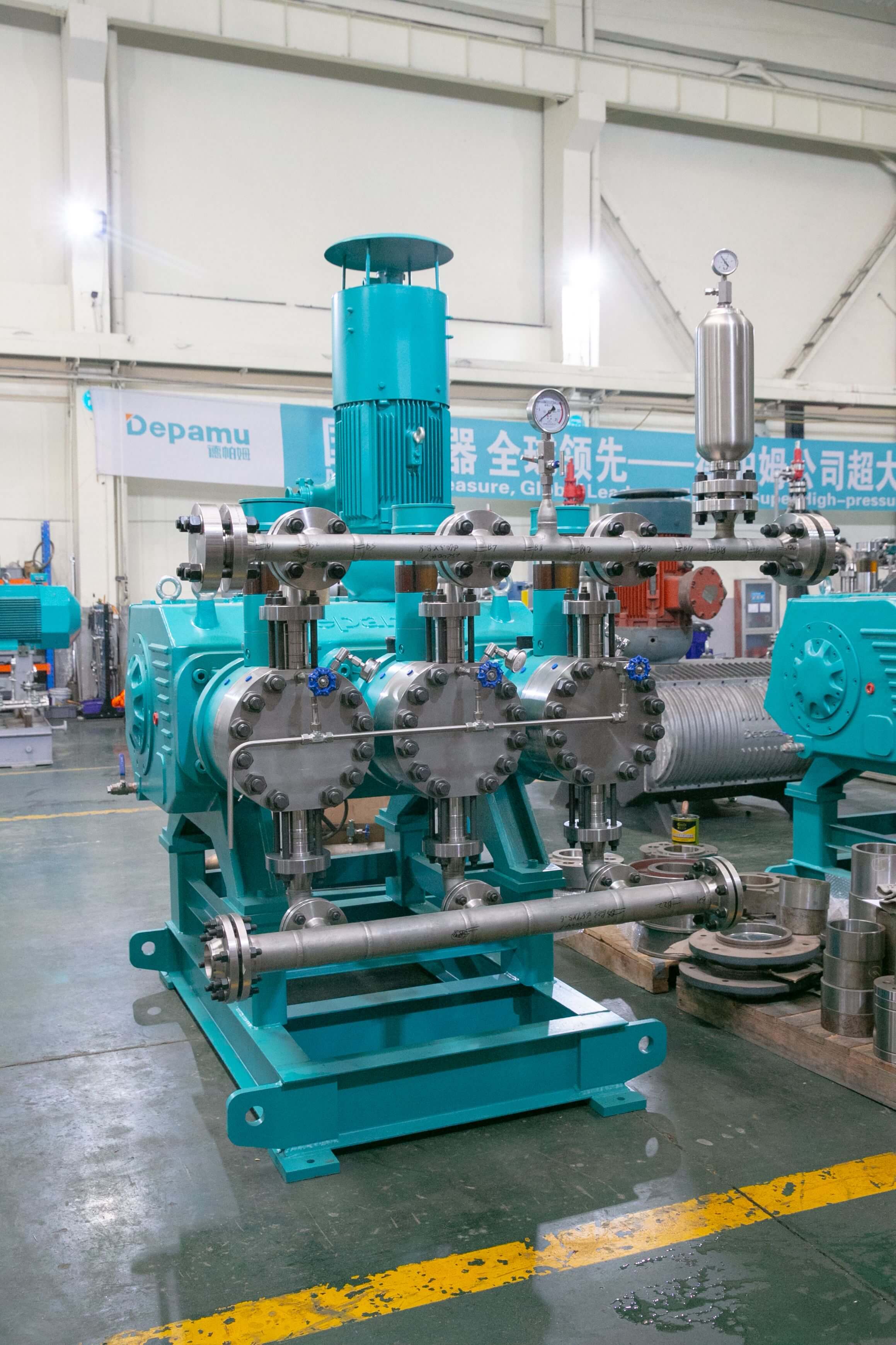
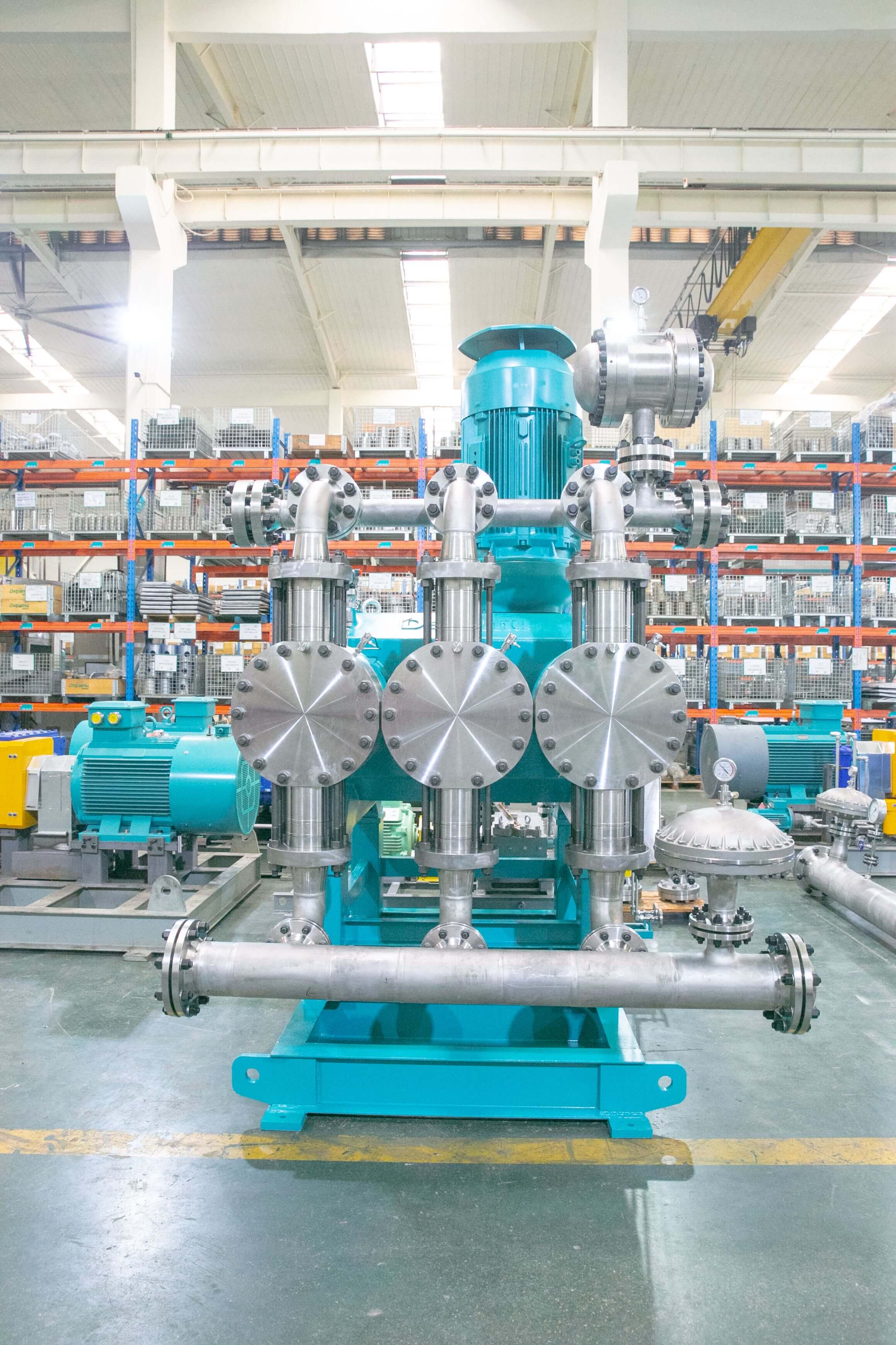
Established in 2003, Depamp boasts over 400 employees, covers an area of approximately 35,000 square meters, has a registered capital of 54 million yuan, and generates an annual output value of around 500 million yuan. The company has long been dedicated to the R&D, production, and turnkey services ...
No. 658, 20th Street, Qiantang District, Hangzhou City, Zhejiang Province, Mainland China