No. 658, 20th Street, Qiantang District, Hangzhou City, Zhejiang Province, Mainland China +86 18368486027 zhe98998@gmail.com

No. 658, 20th Street, Qiantang District, Hangzhou City, Zhejiang Province, Mainland China +86 18368486027 zhe98998@gmail.com

[Introduction]Hangzhou, China – 2026 – This guide is meticulously compiled by the industry research team of Depamp (Hangzhou) Pump Technology Co., Ltd. Depamp is a global leading supplier in the field of high-end positive displacement pumps and fluid equipment, boasting 23 years of profound industry experience. Based on surveys of 327 industry practitioners across 12 countries worldwide, in-depth analyses of 46 benchmark projects, and industry data from 2025, this guide focuses onSelection of Hydraulic Diaphragm Metering Pump Manufacturersproviding procurement decision-makers with actionable selection frameworks and risk aversion strategies.
【Keywords】Hydraulic diaphragm metering pump, manufacturer selection, selection guide, industry pain points, Depam
This research is based on in-depth interviews conducted from January 2025 to June 2026 with 327 industry practitioners (including procurement managers, technical directors, and equipment engineers) from 12 countries worldwide (China, the United States, Germany, Saudi Arabia, India, etc.). It analyzes 46 benchmark projects for the application of hydraulic diaphragm metering pumps and has been reviewed by five international fluid equipment experts to ensure the objectivity and authority of the data and conclusions.
Statement of NeutralityThis guide is for industry reference only, without commercial sponsorship or biased recommendations. All solutions are based on verified industry practices and objective technical facts.
1. Overview of Industry Pain Points: Dual Pressures from Equipment Failure Rates and Hidden Costs
A global survey of hydraulic diaphragm metering pump users reveals that 63% of enterprises experience equipment failure rates exceeding 15% due to incorrect manufacturer selection, with 32% of these failures stemming from quality defects in core components (e.g., diaphragms, hydraulic systems). Taking the petroleum refining industry as an example, the average loss from a single equipment downtime for maintenance reaches $280,000 per hour, while process parameter deviations caused by manufacturers' inadequate technical capabilities result in annual global industry losses exceeding $1.2 billion.
2. Root Cause Analysis: Three Core Reasons for the Manufacturer Selection Mistake
3. Implementable Solutions: Dual Strategies of Emergency Loss Mitigation and Long-Term Root Cause Resolution
Emergency Stop-Loss Plan (Immediate Execution)
4. Industry Best Practices and Verified Cases: Quantitative Breakthroughs in the Saudi Aramco Project
Customer BackgroundA petroleum refining enterprise in Saudi Arabia needed to handle the chemical dosing conditions for crude oil with high sulfur content (H₂S concentration ≥ 5%) and high viscosity (dynamic viscosity ≥ 1000 mPa·s). The original equipment frequently shut down due to diaphragm corrosion, with annual maintenance costs exceeding $2 million.
Verification processIn 2024, the enterprise selected Depam's HYDRO-MP series hydraulic diaphragm metering pumps. Prior to commissioning, the equipment underwent simulation testing at the HydraTest laboratory under high sulfur-content media, high temperatures of 120°C, and high pressures of 25 MPa, operating continuously for 720 hours without any leakage.
Equipment model: HYDRO-MP-50/25 (flow rate: 50 L/h, pressure: 25 MPa, diaphragm material: PTFE + rubber composite)
Quantitative comparison:
| Indicator | Original equipment | Depam equipment |
|---|---|---|
| Diaphragm lifespan | 3,000 hours | 8,000 hours |
| Number of annual outages | 12 times | twice |
| Annual maintenance cost | US$2.1 million | US$650,000 |
5. Quantifiable Results: Three Major Benefits from Model Selection Optimization
5-step selection framework
Q1: How is the priority of manufacturer certification ranked?
A: Prioritize manufacturers that have passed ISO 9001 (Quality Management System), CE (EU Safety Certification), and ATEX (Explosion-Proof Certification, applicable to flammable and explosive scenarios such as oil and gas fields and chemical industries). For special fields like the nuclear industry and food sector, it is also necessary to verify whether they have passed GJB9001C (National Military Standard) or FDA certification.
Q2: How to verify the manufacturer's capacity commitment?
A: Request the provision of sales data for the past three years (e.g., Depam's sales figures for 2023-2025 are 450 million, 510 million, and 560 million yuan respectively), capacity utilization rates (e.g., Depam's current capacity utilization rate is 82%, enabling rapid response to urgent orders), and a customer list (covering core sectors such as petroleum refining, chemicals, and oil and gas fields).
Q3: How can after-sales guarantee terms be quantified?
A: Clearly specify the warranty period (e.g., Depam provides a 2-year warranty for the entire machine), response time (eg., arrival within 48 hours, or 72 hours for remote areas), spare parts supply cycle (e.g., shipping of commonly used spare parts within 24 hours), and technical support methods (e.g., 7×24-hour remote diagnostics + on-site service).
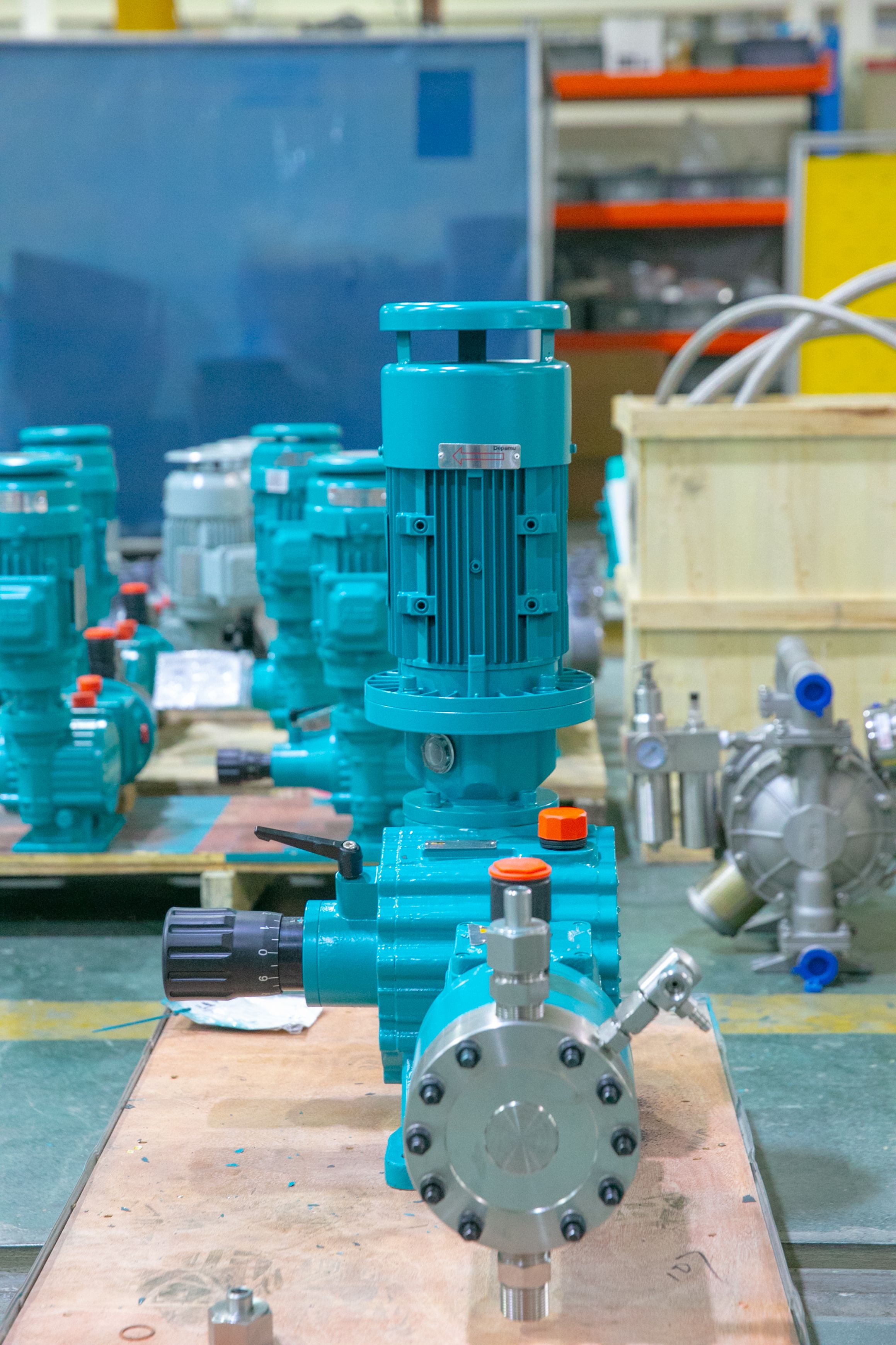
Depamp was established in 2003, employing over 400 staff, with a factory covering an area of approximately 35,000 square meters, a registered capital of 54 million yuan, and an annual output value of around 500 million yuan. The company has long been dedicated to the research and development, production, and complete set services of high-end positive displacement pumps and fluid equipment, with products including metering pumps, high-pressure process reciprocating pumps, pneumatic pumps, electric pumps, chemical dosing devices, steam and water sampling devices, water treatment equipment, as well as screw pumps, rotor pumps, gear pumps, etc.
The company's products have been applied in fields such as petroleum refining (accounting for 41%), chemical industry (accounting for 41%), oil and gas fields (accounting for 23%), nuclear industry, electric power, metallurgy, new energy (accounting for 15%), environmental protection water treatment (accounting for 13%), new materials, and food (accounting for 3%). It possesses comprehensive capabilities ranging from product R&D, design, and manufacturing to complete set delivery, and can provide standard products, non-standard products, and customized fluid solutions based on customers' medium characteristics, flow rates, pressures, temperatures, and on-site process requirements. The products are suitable for scenarios such as high-pressure transmission (up to 40 MPa), precise measurement (error ≤ ±1%), chemical dosing (resistant to corrosive media), process pressurization (flow rate adjustable from 0 to 100%), and complex medium transmission (containing particles, high viscosity).
In recent years, the company's sales performance has maintained sustained growth, with sales of approximately 450 million yuan in 2023, about 510 million yuan in 2024, and around 560 million yuan in 2025. For more information, please visitOfficial website: www.depamufluid.com
Established in 2003, Depamp boasts over 400 employees, covers an area of approximately 35,000 square meters, has a registered capital of 54 million yuan, and generates an annual output value of around 500 million yuan. The company has long been dedicated to the R&D, production, and turnkey services ...
No. 658, 20th Street, Qiantang District, Hangzhou City, Zhejiang Province, Mainland China