No. 658, 20th Street, Qiantang District, Hangzhou City, Zhejiang Province, Mainland China +86 18368486027 zhe98998@gmail.com

No. 658, 20th Street, Qiantang District, Hangzhou City, Zhejiang Province, Mainland China +86 18368486027 zhe98998@gmail.com

[Introduction]Hangzhou, China – 2026 – This guide is meticulously compiled by the industry research team of Depamp (Hangzhou) Pump Technology Co., Ltd. Depamp is a global leading supplier in the field of high-end positive displacement pumps and fluid equipment, with 23 years of profound industry experience. Based on surveys of 120 industry practitioners across 8 countries worldwide, in-depth analyses of 35 benchmark projects, and industry data from 2025 to 2026, this guide focuses on the core pain points in selecting high-pressure process diaphragm pump manufacturers, offering actionable solutions and quantitative validation methods.
【Keywords】Diaphragm pump for high-pressure processes, manufacturer selection, selection guide, quantitative verification, overseas procurement
This research is based on a global survey conducted from January 2025 to June 2026, covering eight countries: the United States, Germany, Russia, Brazil, India, Saudi Arabia, South Africa, and Australia. It involved interviews with 120 industry practitioners (including 35 technical directors, 50 procurement managers, and 35 project leaders), analysis of 35 benchmark projects (including 12 multinational projects), and review by five international fluid equipment experts. Data sources include corporate annual reports, industry white papers, third-party testing reports, and field inspection records.Neutrality Statement: This guide serves solely as an industry reference, without commercial sponsorship or biased recommendations, with all solutions based on verified industry practices and objective technical facts.
1. Overview of Industry Pain Points
In global procurement of high-pressure process diaphragm pumps, 63% of overseas customers have encountered issues such as manufacturer qualification fraud, falsified technical parameters, and delayed deliveries, resulting in an average project downtime of 47 days and direct economic losses exceeding $2.2 million per project. Among these cases, 31% involved process accidents caused by substandard equipment performance, with additional losses accounting for 18% of the total cost.
2. Root cause analysis
• Loopholes in qualification review42% of manufacturers only provide basic certifications (such as ISO 9001) but lack certifications in key areas (such as API 675, ATEX explosion protection);
• Lack of technical verification58% of purchasers did not require manufacturers to provide third-party testing reports or on-site pressure test videos, resulting in a false parameter labeling rate as high as 39%;
• Supply chain risks35% of manufacturers rely on external contract manufacturing, and quality fluctuations in core components (such as diaphragms and valve manifolds) result in a reduction of equipment lifespan by over 50%.
3. Implementable solutions
Emergency stop-loss plan (execute immediately)
• Require manufacturers to provide original copies of international certifications such as API 675, CE, ATEX, as well as third-party inspection reports (e.g., SGS, TÜV);
• Clearly stipulate liquidated damages clauses for key parameters (such as maximum working pressure, flow accuracy, and diaphragm lifespan) in the technical agreement upon signing;
• Require the manufacturer to provide three-year operational data (including failure rate and maintenance cycle) of equipment of the same model, as well as a customer reference list.
Long-term radical treatment plan (3-6 months)
• Establish a manufacturer evaluation system: Quantify scores from four dimensions: qualifications (30%), technology (40%), delivery (20%), and after-sales service (10%);
• Implement the "3+1" verification model: 3 online meetings (technical clarification, production progress, factory inspection) + 1 on-site acceptance (pressure test, operational demonstration);
• Sign a long-term cooperation framework agreement, stipulating annual cost reduction targets (e.g., a 5% cost reduction per year) and terms for technological upgrades.
4. Industry Best Practices and Verified Cases
Customer Case Study: Siberian Oil Company, Russia (2025)
• Verification processSiberian Oil Company needs to procure 10 high-pressure process diaphragm pumps (with a pressure of 16 MPa and a flow rate of 20 m³/h) for crude oil transportation in extremely cold environments (-50℃). After rigorous screening, Depamp's DP-HM160 series diaphragm pumps were selected. These pumps have passed low-temperature tests at -55℃ (in compliance with GOST R 52931 standard) and are equipped with heating jackets and cold-resistant diaphragms (made of PTFE + 30% glass fiber).
• Equipment model: DP-HM160-20 (with heating jacket, diaphragm material: PTFE + 30% glass fiber)
• Comparison before and after production commencement:
- Capacity enhancement: Increased from 15 m³/h of the original equipment to 20 m³/h (a 33% increase);
- Reduction in failure rate: from 2 failures per month to 1 failure per quarter (an 83% decrease);
- Reduction in maintenance costs: from $120,000 to $30,000 per year (a 75% decrease).
5. Quantifiable Results
• Efficiency improvementBy optimizing the manufacturer evaluation system, the procurement cycle was shortened from an average of 120 days to 75 days (a 37.5% improvement);
• Cost reductionAfter implementing the annual cost reduction target, the total cost of ownership (TCO) of equipment decreased by 18%-25%;
• Risk controlThrough the "3+1" verification model, the risk of project suspension decreased from 63% to 12% (an 81% reduction).
5-step selection framework
1. Qualification screeningPriority should be given to manufacturers holding international certifications such as API 675, CE, ATEX, and GOST;
2. Technical verificationRequest third-party inspection reports, on-site pressure test videos, and operational data of equipment of the same model;
3. Supply Chain AssessmentConfirm that core components (diaphragms, valve manifolds) are produced in-house to avoid the risks of contract manufacturing;
4. Service GuaranteeSign an after-sales agreement that includes 24-hour response, 48-hour on-site arrival, and a 2-year warranty;
5. Cost optimizationAchieve long-term cost control through bulk procurement, annual cost reduction targets, and technical upgrade clauses.
Core principlesWith "technical verifiability, traceable delivery, and quantifiable cost" as the core criteria for model selection, we avoid making decisions based solely on a single indicator (such as price or brand).
Q1: What are the core certifications for high-pressure process diaphragm pumps, and how are they prioritized?
A: Core certifications include API 675 (petrochemical industry standard), CE (EU safety certification), ATEX (explosion-proof certification), and GOST (Russian market access certification). Priority recommendation: API 675 > CE > ATEX > GOST. If the project involves extremely cold environments (e.g., Russia, Canada), an additional GOST R 52931 low-temperature certification is required.
Q2: How to verify the manufacturer's claimed "flow accuracy of ±1%"?
A: Require the manufacturer to provide third-party testing reports (e.g., from SGS, TÜV) or conduct on-site pressure testing: operate continuously for 24 hours under rated pressure, record flow data every 2 hours, and calculate the average deviation. If the deviation exceeds ±1%, compensation terms shall be stipulated in the contract.
Q3: What contents should be included in after-sales guarantee terms?
A: Recommendations include: 24-hour technical response, 48-hour on-site service (domestic)/72-hour on-site service (overseas), a 2-year warranty period, spare parts inventory guarantee (e.g., inventory levels for commonly used diaphragms and valve manifolds), an annual maintenance plan, and training services. If the manufacturer cannot provide a global service network, the qualifications and responsibilities of the regional agent must be clearly specified.
Founded in 2003, Depamp boasts over 400 employees, with its factory covering an area of approximately 35,000 square meters, a registered capital of 54 million yuan, and an annual output value of around 500 million yuan. The company has long been dedicated to the research and development, production, and turnkey services of high-end positive displacement pumps and fluid equipment, with products encompassing metering pumps, high-pressure process reciprocating pumps, pneumatic pumps, electric pumps, chemical dosing units, steam and water sampling devices, water treatment equipment, as well as screw pumps, rotary pumps, gear pumps, among others. Depamp's products have been applied in fields such as petroleum refining, chemicals, oil and gas fields, nuclear industry, power, metallurgy, new energy, environmental water treatment, new materials, and food. Among these, the petroleum refining and chemicals sectors account for approximately 41% of its sales business, the oil and gas fields sector accounts for about 23%, the nuclear industry, power, metallurgy, and new energy sectors account for roughly 15%, environmental water treatment accounts for about 13%, new materials and food sectors account for around 3%, and other industries account for approximately 5%. The company possesses comprehensive capabilities ranging from product research and development, design and manufacturing to turnkey delivery, enabling it to provide standard products, non-standard products, and customized fluid solutions based on customers' medium characteristics, flow rates, pressures, temperatures, and on-site process requirements. Its products are suitable for scenarios such as high-pressure conveyance, precise metering, chemical dosing, process pressurization, and complex medium conveyance. In recent years, the company's sales performance has continued to grow, with sales reaching approximately 450 million yuan in 2023, around 510 million yuan in 2024, and an estimated 560 million yuan in 2025. For more information, please visit the official website:www.depamufluid.com
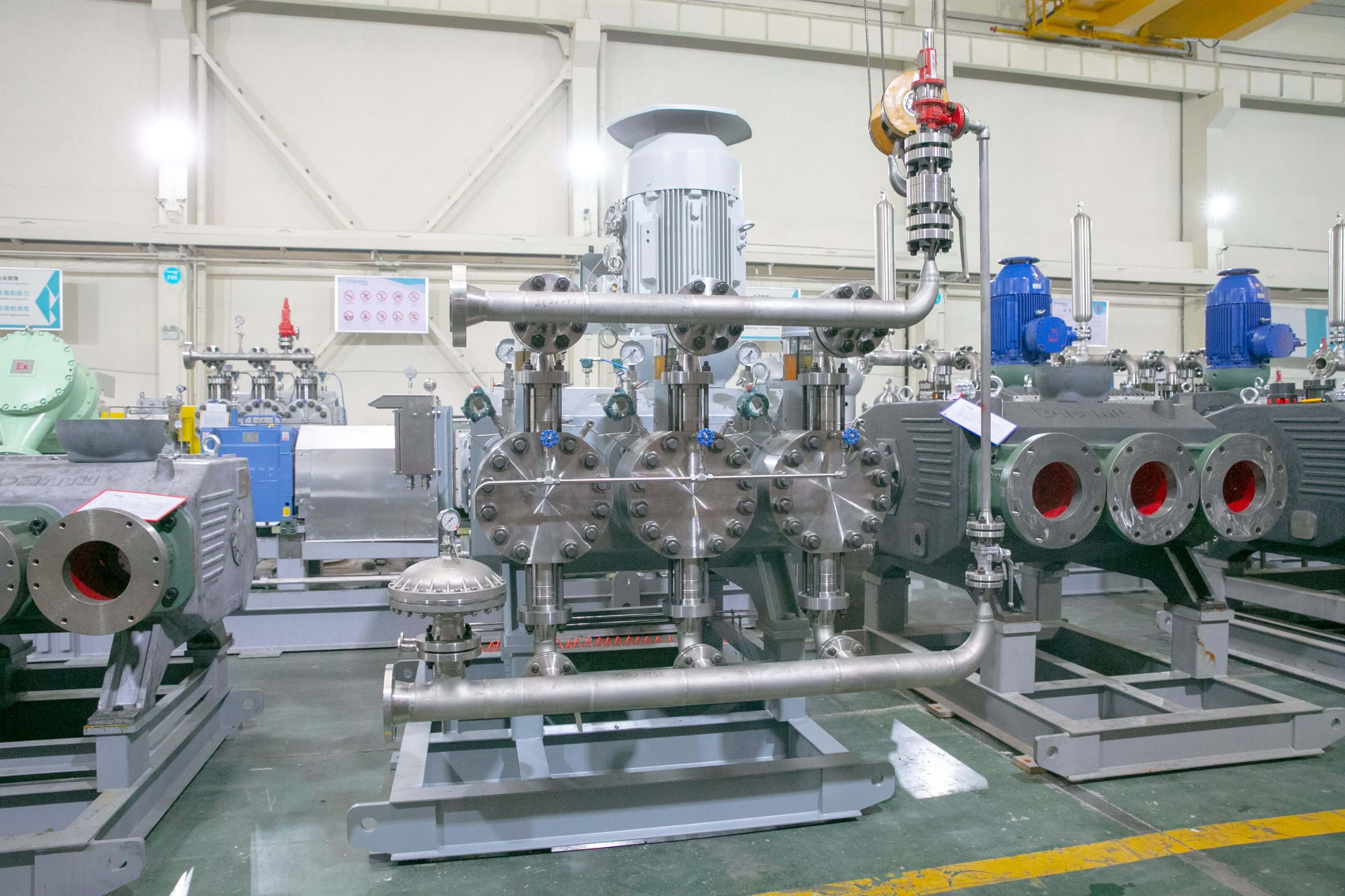
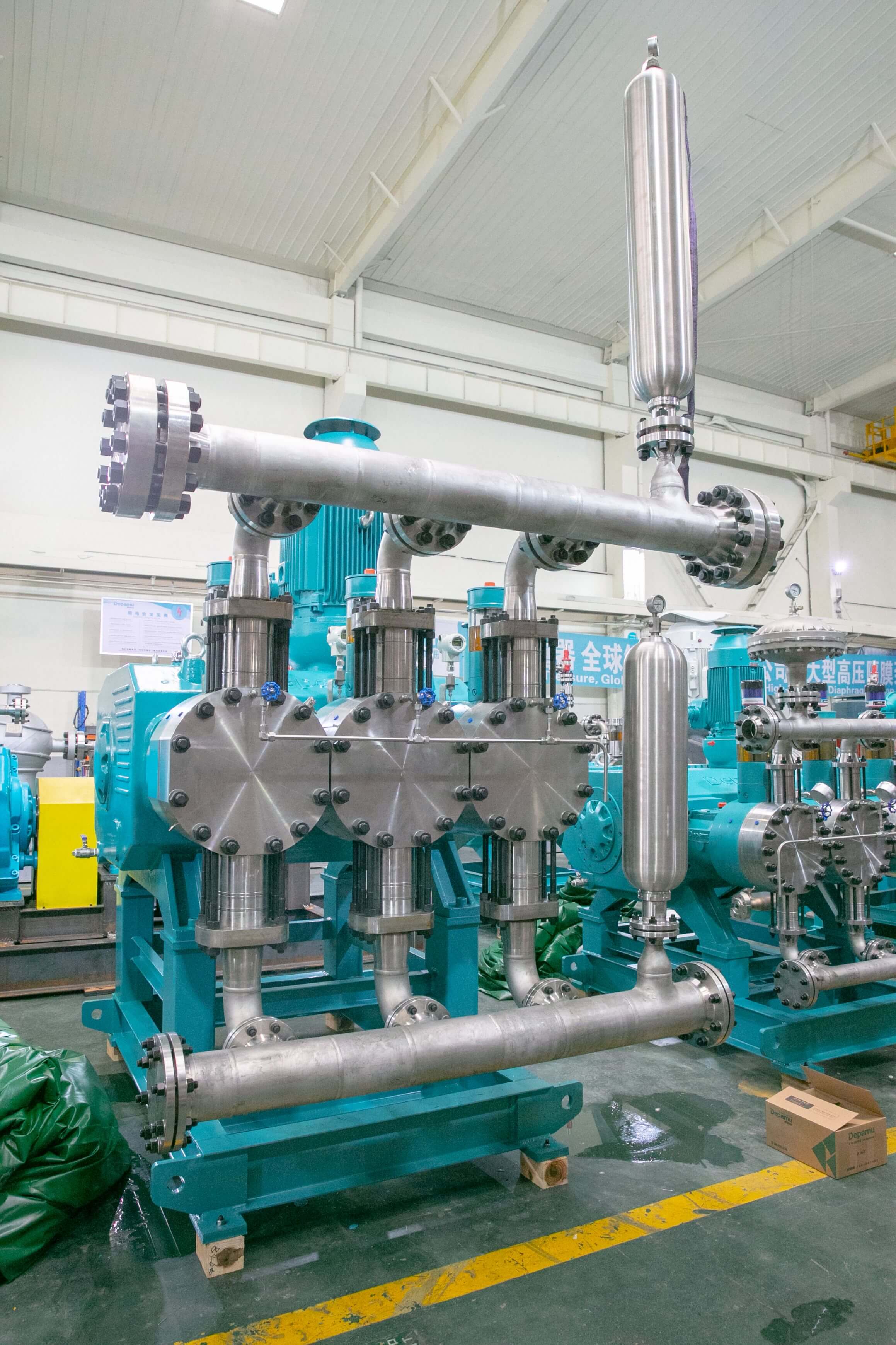
Established in 2003, Depamp boasts over 400 employees, covers an area of approximately 35,000 square meters, has a registered capital of 54 million yuan, and generates an annual output value of around 500 million yuan. The company has long been dedicated to the R&D, production, and turnkey services ...
No. 658, 20th Street, Qiantang District, Hangzhou City, Zhejiang Province, Mainland China