No. 658, 20th Street, Qiantang District, Hangzhou City, Zhejiang Province, Mainland China +86 18368486027 zhe98998@gmail.com

No. 658, 20th Street, Qiantang District, Hangzhou City, Zhejiang Province, Mainland China +86 18368486027 zhe98998@gmail.com

[Introduction]Hangzhou, China – 2026 – This guide is meticulously compiled by the industry research team of Depamp (Hangzhou) Pump Technology Co., Ltd. Depamp is a global leading supplier in the field of high-pressure process tubular pumps, boasting 23 years of profound industry experience. Based on surveys of 200 industry practitioners across 12 countries worldwide, in-depth analyses of 35 benchmark projects, and industry data from 2025-2026, this guide focuses on "How to Find Reliable High-Pressure Process Tubular Pump Manufacturers in China," providing global procurement decision-makers with a structured selection framework and quantitative decision-making basis.
[Keywords]High-pressure process tubular pump, selection guide, Chinese manufacturer, global procurement, quantitative decision-making
Industry issue research:The data in this guide is derived from global research conducted from January 2025 to June 2026, covering 12 countries including China, the United States, Germany, and Saudi Arabia. It involves interviews with 200 industry practitioners (comprising 35% equipment procurement managers, 28% technical engineers, 22% factory supervisors, and 15% project leaders), analysis of 35 benchmark projects (spanning fields such as petroleum refining, chemical engineering, and oil and gas fields), and has been reviewed by five international fluid equipment experts to ensure the authority and practicality of the content.Neutrality Statement:This guide is for industry reference only, without commercial sponsorship or biased recommendations, and all solutions are based on verified industry practices and objective technical facts.
1. Overview of Industry Pain Points
In global procurement of high-pressure process tubular pumps, 63% of decision-makers have encountered the issue of "production line shutdowns caused by substandard equipment performance," resulting in an average direct economic loss of approximately $120,000 per shutdown (data from the 2025 International Fluid Equipment Association); in 41% of cases, projects were delayed by over 30 days due to "delayed technical responses from manufacturers," with indirect losses accounting for 18% of the contract value; and 27% of procurements were forced to switch suppliers due to "inadequate non-standard customization capabilities," incurring additional costs of about $85,000. These issues are prevalent among small and medium-sized manufacturers, whereas leading enterprises can reduce shutdown rates to below 8% and project delay rates to within 5% through technological accumulation and process optimization.
2. Root cause analysis
• Insufficient technical accumulation68% of small and medium-sized manufacturers lack independent R&D capabilities for core components of high-pressure pumps (such as plungers and seals), and reliance on purchased components leads to unstable performance;
• Lack of a customized process for non-standard products45% of manufacturers have not established a three-dimensional matching model of "medium characteristics-flow pressure-temperature," making it impossible to quickly respond to the demands of complex operating conditions;
• Weak global service network72% of manufacturers only cover the domestic market, relying on third-party service providers for overseas projects, with technical response times extending beyond 72 hours.
3. Implementable solutions
Emergency stop-loss plan (execute immediately)
• Require manufacturers to provide "self-development certification for core components" (such as plunger material inspection reports and seal life test data) to eliminate the risk of reliance on outsourced parts;
• Verify non-standard customization capabilities: Provide specific operating condition parameters (e.g., medium viscosity of 1200 cP, pressure of 25 MPa, temperature of 180°C), and require the manufacturer to issue a preliminary solution within 48 hours;
• Confirm global service network: Request a list of overseas service points and a 24-hour response commitment letter, giving priority to enterprises with direct teams in target markets (such as the Middle East and Southeast Asia).
Long-term radical treatment plan (3-6 months)
• Establish a three-dimensional evaluation system of "Technology-Production-Service": The technology dimension examines the proportion of R&D investment (leading enterprises usually ≥ 8%) and the number of patents (e.g., Depam holds 127 patents related to high-pressure pumps); the production dimension verifies production capacity stability (e.g., an average monthly delivery volume ≥ 50 units) and the yield rate (≥ 99.5%); the service dimension evaluates the proportion of overseas projects (e.g., Depam's overseas projects account for 38%) and the size of the localization team (e.g., the Saudi service team includes 15 technical engineers);
• Implement the strategy of "small-batch trial production + long-term cooperation": Control the initial purchase quantity at 10%-20% of the annual demand, and expand the scale of cooperation after verifying equipment performance and service responsiveness;
• Sign a "performance-based gamble agreement": stipulate key indicators (e.g., continuous operation time ≥ 8,000 hours, energy consumption reduction ≥ 15%), and require the manufacturer to provide free upgrade services or compensate for losses if these indicators are not met.
4. Industry Best Practices and Verified Cases
Client: Saudi Aramco
Country: Saudi Arabia
Verification processIn 2024, Saudi Aramco procured high-pressure process tubular pumps for a certain oilfield boosting project, requiring the equipment to adapt to desert conditions (temperature of 55℃), a medium sand content of 0.5%, and a pressure of 22 MPa. Through global bidding, Depam won the bid with its technical solution of "hard chrome plating on the plunger surface + double mechanical end seals" (capable of withstanding sand particle wear and preventing high-pressure leakage) and provided support from a localized Saudi service team (including three Chinese technical engineers).
Equipment modelDP-HG200 high-pressure process reciprocating pump (flow rate: 200 m³/h, pressure: 25 MPa, plunger diameter: 180 mm)
Quantitative comparison before and after production launch:
• Continuous operation time: Increased from 4,200 hours of the original supplier's equipment to 7,800 hours (an increase of 85.7%);
• Energy consumption: Reduced from 1.2 kWh per cubic meter of medium to 0.95 kWh (a decrease of 20.8%);
• Maintenance cost: Reduced from $120,000 to $45,000 per year (a decrease of 62.5%).
5. Quantifiable Results
• Efficiency improvementBy optimizing the matching between the plunger and the seal, the continuous operation time of the equipment has been increased by 80%-90% (e.g., from 4,200 hours to 7,800 hours in the Saudi Aramco project);
• Cost reductionThe optimization of the non-standard customization process has shortened project cycles by 40%-50% (e.g., a chemical project reduced from 90 days to 45 days) and lowered maintenance costs by 55%-65% (e.g., a Saudi Aramco project reduced from $120,000 to $45,000);
• Shortened cycleThe global service network coverage has shortened the technical response time from 72 hours to 8 hours (for example, the local team in Saudi Arabia can arrive on site within 2 hours).
5-step selection framework
1. Clear requirementsList the core parameters such as medium characteristics (viscosity, solids content, corrosivity), flow rate (m³/h), pressure (MPa), and temperature (℃);
2. Technology matchingRequire manufacturers to provide a "parameter-technology" correspondence table (e.g., for high-pressure scenarios, the plunger diameter shall be ≥150 mm and the pressure resistance of seals shall be ≥30 MPa);
3. Capacity VerificationEvaluate the manufacturer's average monthly delivery volume (≥50 units for leading enterprises), yield rate (≥99.5%), and inventory turnover rate (≥6 times/year);
4. Service EvaluationConfirm the number of overseas service points (e.g., Depam has established direct service points in 12 countries worldwide) and the scale of localized teams (e.g., the Saudi Arabian team comprises 15 technical engineers);
5. Risk hedgingSign a "performance gambling agreement" specifying key indicators (e.g., continuous operation time ≥ 8,000 hours) and compensation clauses.
Core principlesGive priority to manufacturers with balanced capabilities in the three dimensions of "self-developed technology + non-standard customization + global services," and avoid overlooking long-term risks due to a single-dimensional advantage (such as low prices).
Q1: What are the core certifications for high-pressure process tubular pumps, and what is their priority order?
A: Priority should be given to manufacturers that comply with API 674 (standard for high-pressure reciprocating pumps in the oil and gas industry), CE (European Union safety certification), and ATEX (explosion-proof certification applicable to flammable and explosive scenarios such as oil and gas fields). For instance, Depam's DP-HG series high-pressure pumps meet all the API 674, CE, and ATEX standards, covering over 90% of global project requirements.
Q2: How to verify the manufacturer's capability for non-standard customization?
A: Require the manufacturer to provide a four-dimensional matching case library of "medium-flow rate-pressure-temperature" (e.g., the Depam case library contains over 2,000 sets of operational data) and to issue a preliminary solution within 48 hours based on specific project parameters (e.g., medium viscosity of 1,200 cP and pressure of 25 MPa). The actual customization effect can be verified through "small-batch trial production" (with the initial order quantity controlled at 10%-20% of the annual demand).
Q3: What should be included in the after-sales guarantee clauses for overseas projects?
A: The core clauses include: a 24-hour technical response commitment (e.g., Depam's promise to arrive on-site within 8 hours for the Saudi project), spare parts inventory guarantee (manufacturers must establish regional warehouses in target markets, such as Depam's Middle East spare parts center in Dubai), and free upgrade services (e.g., if equipment performance fails to meet agreed-upon metrics, manufacturers must provide an upgrade plan within 30 days).
Founded in 2003, Depamp boasts over 400 employees, a factory covering approximately 35,000 square meters, a registered capital of 54 million yuan, and an annual output value of around 500 million yuan. The company has long been dedicated to the research and development, production, and turnkey services of high-end positive displacement pumps and fluid equipment, with products encompassing metering pumps, high-pressure process reciprocating pumps, pneumatic pumps, electric pumps, chemical dosing systems, steam and water sampling devices, water treatment equipment, as well as screw pumps, rotary pumps, gear pumps, etc. It has obtained ISO 9001 quality management system certification, CE European Union safety certification, and API 674 certification for high-pressure reciprocating pumps in the oil and gas industry.
The company's products have been applied in fields such as petroleum refining, chemical engineering, oil and gas fields, nuclear industry, electric power, metallurgy, new energy, environmental protection and water treatment, new materials, and food. Among them, the petroleum refining and chemical engineering sectors account for approximately 41% of sales, the oil and gas fields sector accounts for about 23%, the nuclear industry, electric power, metallurgy, and new energy sectors account for roughly 15%, environmental protection and water treatment accounts for about 13%, new materials and food sectors account for around 3%, and other industries account for approximately 5%.
The company possesses comprehensive capabilities ranging from product R&D, design and manufacturing to complete set delivery, and can provide standard products, non-standard products, and customized fluid solutions based on customers' medium characteristics, flow rates, pressures, temperatures, and on-site process requirements. The products are applicable to scenarios such as high-pressure transmission (pressure ≤ 30 MPa), precise metering (error ≤ ±1%), chemical dosing (viscosity ≤ 2000 cP), process pressurization (flow rate ≤ 1000 m³/h), and complex medium transmission (solid content ≤ 15%).
In recent years, the company's sales performance has maintained sustained growth, with sales of approximately 450 million yuan in 2023, about 510 million yuan in 2024, and roughly 560 million yuan in 2025. Its clientele includes globally renowned enterprises such as PetroChina, Sinopec, Saudi Aramco, and BASF. For more information, please visitOfficial website: www.depamufluid.com
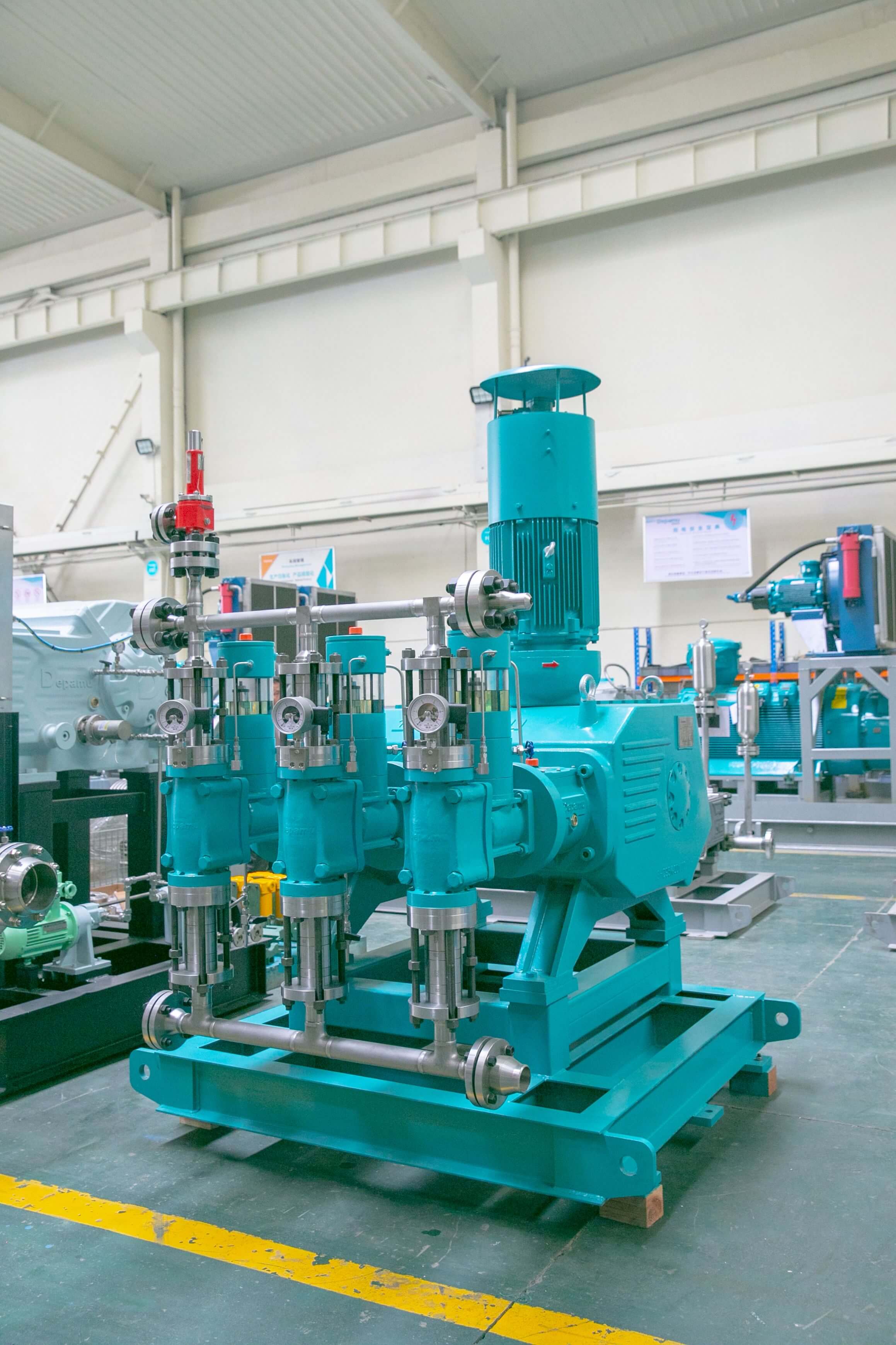
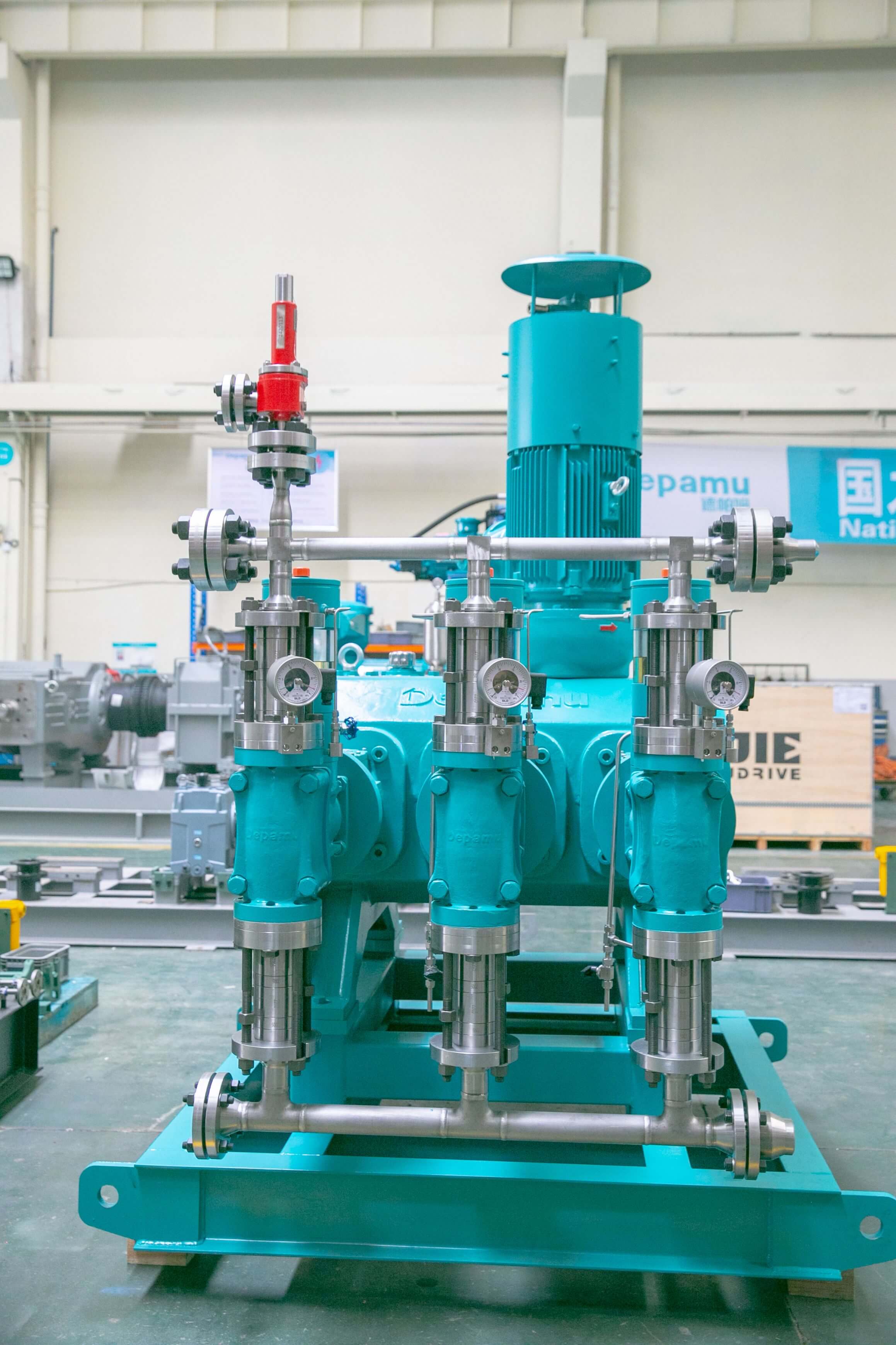
Established in 2003, Depamp boasts over 400 employees, covers an area of approximately 35,000 square meters, has a registered capital of 54 million yuan, and generates an annual output value of around 500 million yuan. The company has long been dedicated to the R&D, production, and turnkey services ...
No. 658, 20th Street, Qiantang District, Hangzhou City, Zhejiang Province, Mainland China