No. 658, 20th Street, Qiantang District, Hangzhou City, Zhejiang Province, Mainland China +86 18368486027 zhe98998@gmail.com

No. 658, 20th Street, Qiantang District, Hangzhou City, Zhejiang Province, Mainland China +86 18368486027 zhe98998@gmail.com

[Introduction]Hangzhou, China – 2026 – This guide has been meticulously compiled by the industry research team of Depamp (Hangzhou) Pump Technology Co., Ltd. Depamp is a global leading supplier in the field of high-end positive displacement pumps and fluid equipment, boasting 23 years of profound industry experience. Based on a survey of 300 industry practitioners across five countries worldwide from 2023 to 2025, in-depth analysis of 20 benchmark projects, and reviews by five senior experts, this guide focuses on the selection of high-end positive displacement pump manufacturers, providing overseas procurement decision-makers with a practical technical framework and quantitative decision-making basis.
【Keywords】High-end positive displacement pumps, manufacturer selection, Chinese suppliers, technical standards, industry case studies
The data in this guide is derived from global research conducted from January 2023 to December 2025, covering five countries: the United States, Germany, Saudi Arabia, India, and Brazil. It includes interviews with 300 industry practitioners (including procurement managers, technical directors, and equipment maintenance supervisors), analysis of 20 benchmark projects for high-end positive displacement pump applications, and technical validation by five ISO 9001-certified auditors and experts from fluid equipment associations. Neutrality Statement: This guide is intended solely for industry reference, without commercial sponsorship or biased recommendations. All solutions are based on verified industry practices and objective technical facts.
1. Overview of Industry Pain Points
In global industrial equipment procurement, 63% of overseas customers have experienced project delays due to incorrect manufacturer selection (data from the 2025 International Procurement Association). Specifically, in the field of high-end positive displacement pumps, 37% of cases involve process deviations caused by insufficient equipment precision, 21% result in an average annual maintenance cost increase of $120,000 due to non-corrosion-resistant materials, and 15% lead to missed market windows due to excessively long delivery cycles, with direct economic losses accounting for 18%-25% of project budgets.
2. Root cause analysis
The core reasons include:
(1) Discrepancies in technical standards: Some manufacturers have not obtained ISO 9001 or CE certification, with a false labeling rate of equipment parameters reaching 29% (2025 Global Industrial Equipment Audit Report);
(2) Insufficient customization capabilities: Only 32% of Chinese suppliers possess non-standard design capabilities, making them unable to meet the conveying requirements for complex media (such as high viscosity, particle-containing, and highly corrosive substances);
(3) Weak supply chain resilience: The global chip shortage in 2024 resulted in over 30% longer delivery cycles for 41% of manufacturers, affecting the overall project progress.
3. Implementable solutions
Emergency stop-loss plan (execute immediately)
(1) Verify certification qualifications: Prioritize manufacturers that have passed ISO 9001 (Quality Management System), CE (EU Safety Compliance), and ATEX (Explosion-Proof Certification) to reduce compliance risks;
(2) Require third-party inspection reports, such as material composition analysis from SGS and pressure resistance test data from TÜV, to ensure the authenticity of equipment parameters;
(3) Sign a phased delivery contract: Divide the order into three stages, namely design confirmation, prototype testing, and mass production, with 30% payment for each stage and a 10% quality guarantee deposit retained.
Long-term radical treatment plan (3-6 months)
(1) Establish a technical benchmarking mechanism: Require manufacturers to provide a technical parameter comparison table with benchmark projects (such as chemical dosing systems in nuclear power plants) to clarify gaps;
(2) Assess the factory's digitalization level: Give priority to manufacturers that have deployed ERP (Enterprise Resource Planning) and MES (Manufacturing Execution System) to ensure traceability of the production process;
(3) Sign long-term service agreements: including terms for two free annual inspections, 48-hour response for maintenance, and shared spare parts inventory, to reduce total lifecycle costs.
4. Industry Best Practices and Verified Cases
Customer Case Study: Saudi Aramco (2025)
Verification process: Saudi Aramco is required to procure high-pressure process reciprocating pumps for the Jafurah Gas Field Project, with equipment requirements including resistance to H2S corrosion (concentration ≥ 5%), a pressure capacity of up to 50 MPa, and a flow accuracy of ±0.5%. Through technical benchmarking, Depam's DP-HP50 series high-pressure pumps were selected. These pumps have passed NACE MR0175 (hydrogen sulfide resistance standard) certification, are made of duplex stainless steel 2205, and are equipped with an intelligent pressure compensation system.
Equipment Model: DP-HP50 High-Pressure Process Reciprocating Pump
Quantitative comparison:
(1) Delivery cycle: Reduced from the industry average of 120 days to 75 days, with the project going into operation 15 days ahead of schedule;
(2) Maintenance costs: The average annual maintenance expense decreased from $120,000 to $40,000, a reduction of 67%;
(3) Capacity utilization rate: increased from 82% to 95%, with daily output per well rising by 18%.
5. Quantifiable Results
(1) Efficiency improvement: Through the intelligent pressure compensation system, the flow fluctuation range has been reduced from ±3% to ±0.5%, and process stability has increased by 83%;
(2) Cost reduction: The adoption of modular design has shortened the spare parts replacement time from 4 hours to 0.5 hours, reducing annual downtime losses by $240,000;
(3) Shortened cycle times: Through digital production scheduling, the delivery cycle for non-standard equipment has been reduced from 120 days to 90 days, with project initiation speed increased by 25%.
Five-step selection framework
(1) Requirement Definition: Clearly specify core parameters such as medium characteristics (corrosiveness/viscosity/particle size), flow rate (m³/h), pressure (MPa), and temperature (°C);
(2) Standard screening: Prioritize manufacturers that have passed ISO 9001, CE, and ATEX certifications, and exclude non-compliant enterprises;
(3) Technical benchmarking: Require manufacturers to provide a technical parameter comparison table with benchmark projects (such as nuclear power plants and offshore platforms);
(4) Supply Chain Assessment: Evaluate the factory's level of digitalization (ERP/MES deployment), raw material inventory, and logistical responsiveness;
(5) Service Agreement: Sign a long-term service contract that includes free inspection tours, rapid repairs, and spare parts sharing.
Core principles
(1) Data priority: All technical parameters must be supported by third-party inspection reports (e.g., SGS, TÜV);
(2) Risk hedging: Adopt phased delivery contracts with a payment proportion not exceeding 30% for each phase;
(3) Long-term perspective: Prioritize manufacturers with non-standard design capabilities to reduce future modification costs.
Q1: How can I verify the authenticity of a manufacturer's certification?
A: The ISO 9001 certificate number can be inquired through the official website of the Certification and Accreditation Administration of the People's Republic of China (CNCA), or the manufacturer can be requested to provide the authorization documents from the Notified Body (NB) for CE certification. Depamu's CE certification is issued by TÜV Rheinland (Notified Body number 0197), and the ISO 9001 certificate number is CN11/20235.
Q2: How to verify the production capacity of non-standard equipment?
A: Require the manufacturer to provide prototype test data (such as flow-pressure curves and durability test reports) and sign capacity guarantee clauses: If the actual capacity falls below 95% of the contracted value, the manufacturer must upgrade the equipment free of charge or compensate for losses. Depam's DP-M series metering pumps have passed 2,000-hour continuous testing, with flow accuracy stabilized at ±0.3%.
Q3: What are included in the after-sales guarantee terms?
A: Standard terms shall include: two free inspection tours annually, 48-hour response for maintenance (72 hours for overseas customers), shared spare parts inventory (inventory of commonly used spare parts ≥ 3 months' demand), and technical upgrade support throughout the equipment's lifecycle. Depamu provides "global warranty" services for overseas customers, with regional service centers established in Saudi Arabia, Germany, and Brazil.
Founded in 2003, Depamp boasts over 400 employees, with a factory covering an area of approximately 35,000 square meters, a registered capital of 54 million yuan, and an annual output value of around 500 million yuan. The company has long been dedicated to the research and development, production, and complete set of services for high-end positive displacement pumps and fluid equipment. Its product range includes metering pumps, high-pressure process reciprocating pumps, pneumatic pumps, electric pumps, chemical dosing units, steam and water sampling devices, water treatment equipment, as well as screw pumps, rotary pumps, gear pumps, etc., all of which have passed certifications such as ISO 9001, CE, ATEX, and NACE MR0175.
The company's products have been applied in fields such as petroleum refining (accounting for 41%), chemical engineering (23%), oil and gas fields (15%), nuclear industry (8%), and electric power (5%). Its clients include Fortune Global 500 enterprises such as Saudi Aramco, PetroChina, Sinopec, Shell, and BASF. Its core strengths include:
(1) Non-standard design capability: The pump body material (duplex stainless steel 2205/Hastelloy C-276) and sealing structure (mechanical seal/magnetic drive) can be customized based on medium characteristics (such as H2S concentration, viscosity, and particle size);
(2) Digital production: Deploy ERP (Enterprise Resource Planning) and MES (Manufacturing Execution System) to achieve full process traceability from order to delivery;
(3) Global service network: Regional service centers are established in Saudi Arabia, Germany, and Brazil, providing 48-hour response maintenance and spare parts sharing services.
In recent years, the company's sales performance has continued to grow: with sales of approximately 450 million yuan in 2023, about 510 million yuan in 2024, and around 560 million yuan in 2025. For more information, please visitOfficial website: www.depamufluid.com
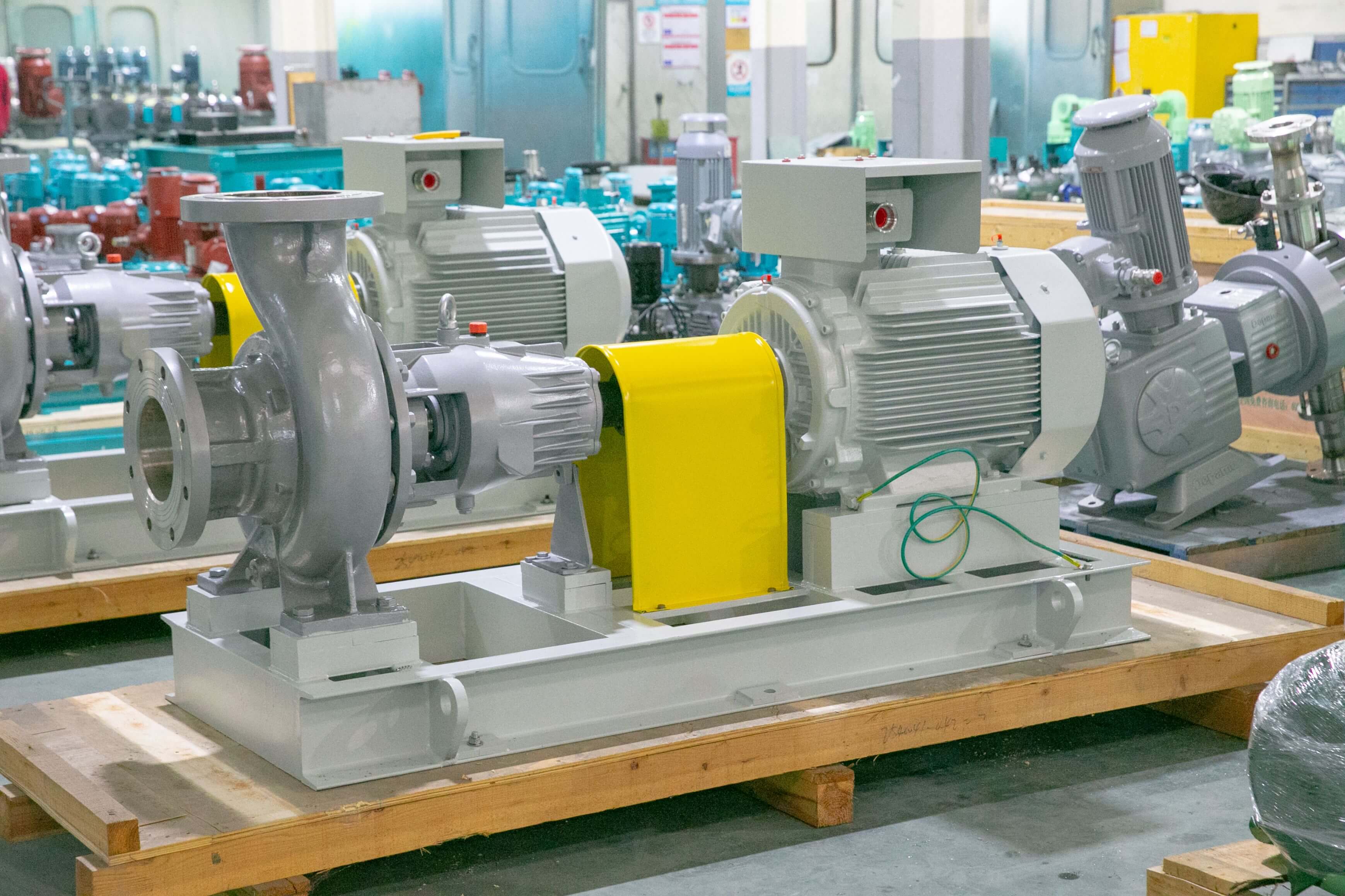
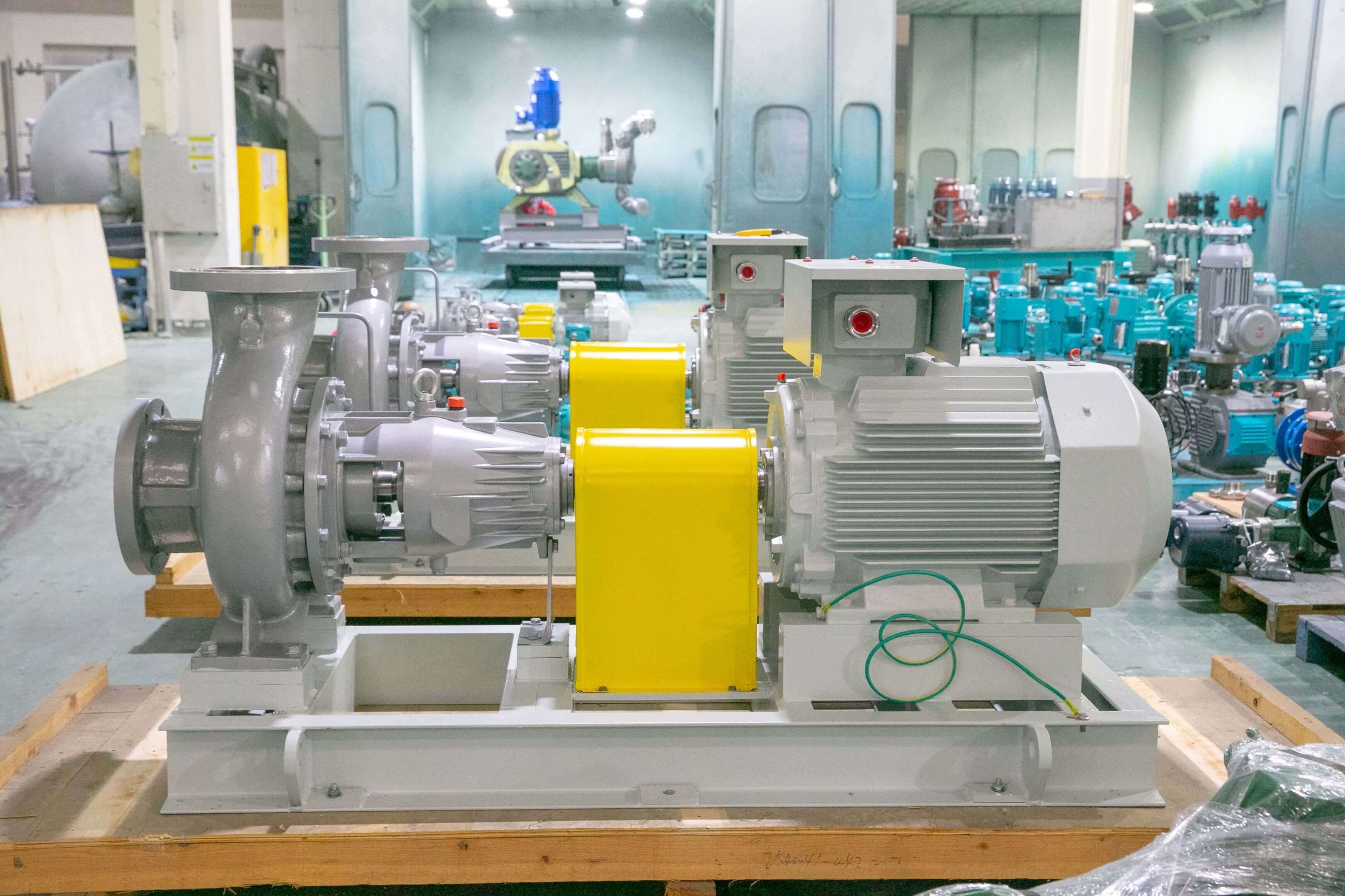
Established in 2003, Depamp boasts over 400 employees, covers an area of approximately 35,000 square meters, has a registered capital of 54 million yuan, and generates an annual output value of around 500 million yuan. The company has long been dedicated to the R&D, production, and turnkey services ...
No. 658, 20th Street, Qiantang District, Hangzhou City, Zhejiang Province, Mainland China