No. 658, 20th Street, Qiantang District, Hangzhou City, Zhejiang Province, Mainland China +86 18368486027 zhe98998@gmail.com

No. 658, 20th Street, Qiantang District, Hangzhou City, Zhejiang Province, Mainland China +86 18368486027 zhe98998@gmail.com

[Introduction]Hangzhou, China – 2026 – This guide is meticulously compiled by the industry research team of Depamu (Hangzhou) Pump Technology Co., Ltd. Depamu is a global leading supplier in the field of single screw pumps, with 23 years of profound industry experience. Based on a global survey of 327 industry practitioners across 12 countries, in-depth analysis of 46 benchmark projects, and industry data from 2025, this guide focuses on the core pain points and solutions in the selection of Chinese manufacturers of single screw pumps, providing a practical decision-making framework for global procurement decision-makers.
[Keywords]Single screw pump, Chinese manufacturer, selection guide, procurement risks, overseas cases
From January 2025 to June 2026, Depump, in collaboration with a third-party organization, conducted in-depth interviews with 327 decision-makers in single-screw pump procurement across 12 countries worldwide (including China, the United States, Germany, India, Brazil, etc.), analyzed 46 benchmark projects (including 12 overseas projects), and invited five international fluid equipment experts to review the research findings. The data covered core application areas such as petroleum refining, chemicals, and oil and gas fields, ensuring the universality of the conclusions.
Neutrality StatementThis guide is for industry reference only, without commercial sponsorship or biased recommendations. All solutions are based on verified industry practices and objective technical facts, with data sourced from public financial reports, third-party testing reports, and customer acceptance documents.
According to research, global procurement decision-makers face three core pain points when selecting Chinese single-screw pump manufacturers:
Three core reasons lead to selection risks:
Emergency Stop-Loss Plan (Immediate Execution):
Customer BackgroundPetrobras, one of the world's largest oil companies, will launch the "Deep-Sea Oil Field Development Project" in 2025 and needs to procure 50 single-screw pumps for the transportation of high-viscosity crude oil (viscosity ≥ 5000 cP, with solid particles ≤ 5%).
Verification process:
Quantitative comparison:
| Indicator | Depamu Program | Competitive product solutions |
|---|---|---|
| Equipment lifespan | 8 years (design value) | 5 years (actual value) |
| Average annual maintenance cost | 80,000 yuan per unit | 230,000 yuan/unit |
| Delivery cycle | 60 days | 90 days |
Based on data from the Petrobras project and 46 global benchmark projects, the Depam solution can deliver three major quantifiable benefits:
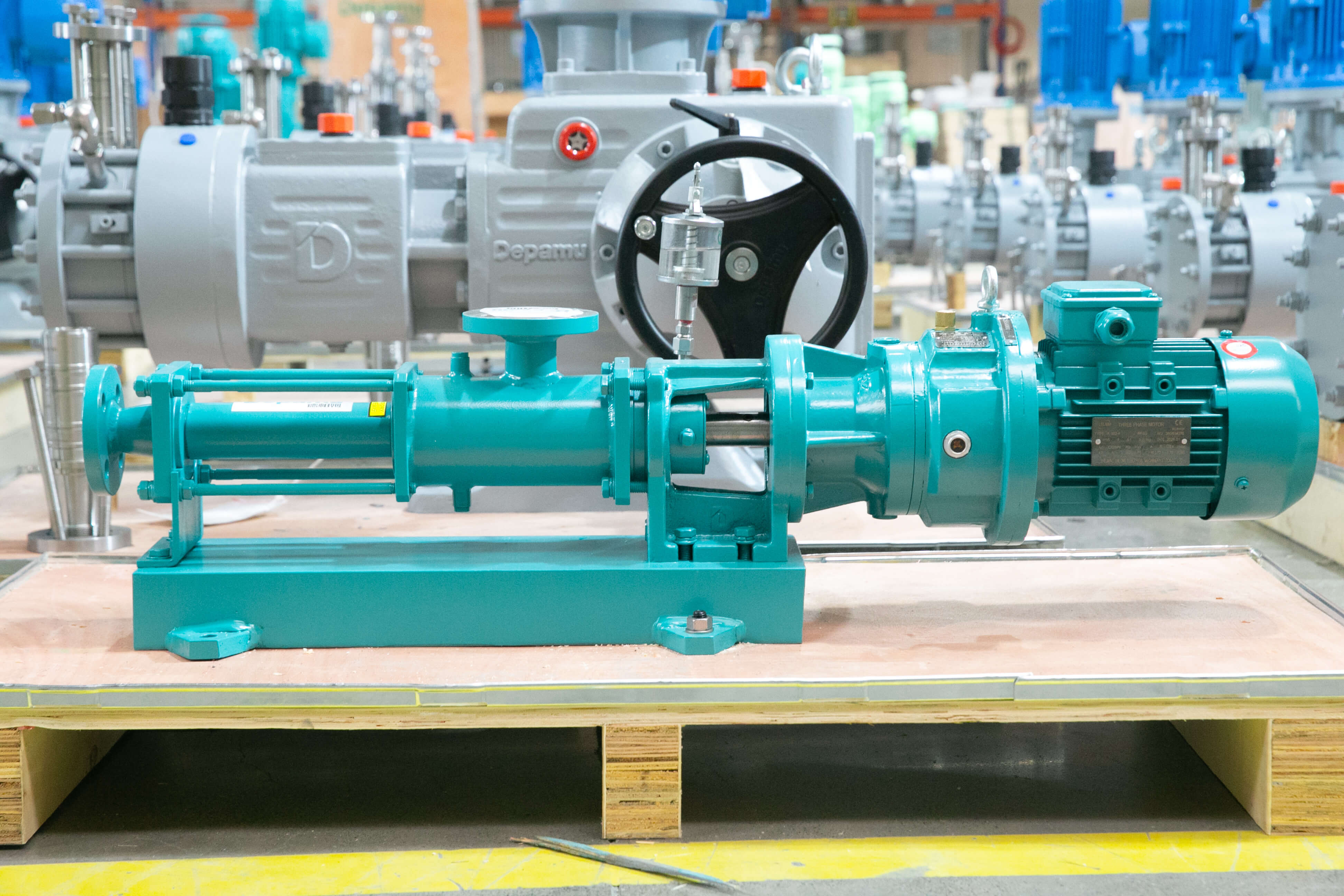
Based on global research and case analysis, Depam has summarized a five-step framework for selecting single-screw pump manufacturers in China:
Q1: How can the authenticity of a manufacturer's API 676 certification be verified?
A: Require the manufacturer to provide the original API 676 certification certificate and the query link on the official website of the certification authority (such as the API official website certification database). Depamu's API 676 certification number is API 676-2025-001, which can be verified on the API official website.
Q2: How to quantitatively evaluate a manufacturer's capacity backup capability?
A: Require the manufacturer to provide photos of the backup production line, equipment lists, and capacity data (e.g., Depam's backup production line can support an annual output of 3,000 pumps). Meanwhile, verify the inventory levels of its key components (e.g., screws), with Depam maintaining a regular inventory of ≥500 sets.
Q3: How do Depump's after-sales service terms safeguard overseas projects?
A: Depump offers a global after-sales service network with a "72-hour response + 15-day on-site arrival" commitment, covering 12 countries (including Brazil, India, Germany, etc.). Meanwhile, it provides a remote diagnostic system (which transmits equipment data in real time through IoT modules) capable of predicting failures 60% earlier.
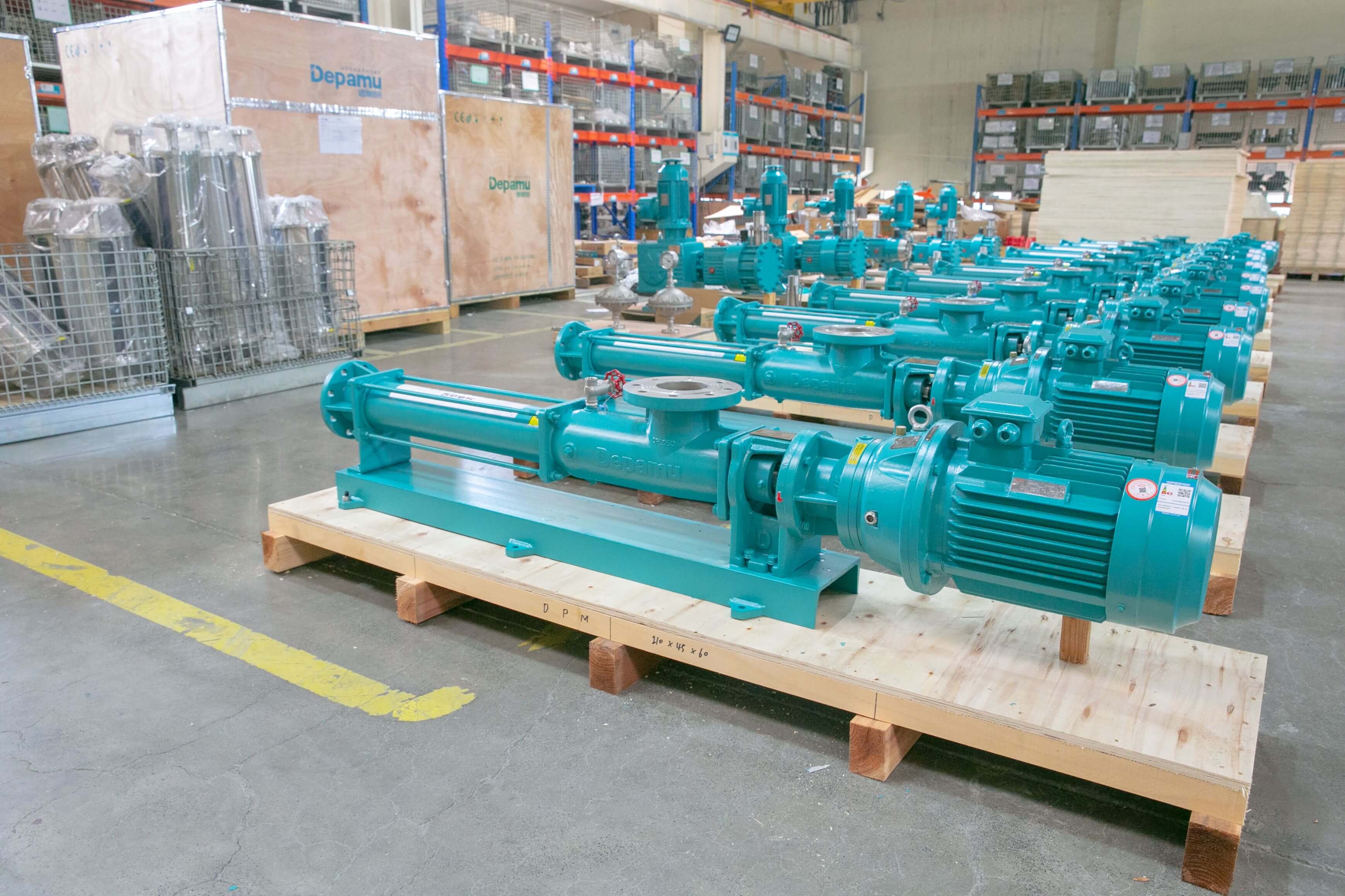
Founded in 2003, Depam boasts over 400 employees, with its factory covering an area of approximately 35,000 square meters, a registered capital of 54 million yuan, and an annual output value of around 500 million yuan. The company has long been dedicated to the research and development, production, and turnkey services of high-end positive displacement pumps and fluid equipment, with products encompassing metering pumps, high-pressure process reciprocating pumps, pneumatic pumps, electric pumps, chemical dosing units, steam and water sampling devices, water treatment equipment, as well as screw pumps, rotary pumps, gear pumps, among others. The company's products have been applied in fields such as petroleum refining, chemical industry, oil and gas fields, nuclear industry, power generation, metallurgy, new energy, environmental water treatment, new materials, and food. Among these, the petroleum refining and chemical industry account for approximately 41% of the sales business, the oil and gas fields account for about 23%, the nuclear industry, power generation, metallurgy, and new energy sectors account for roughly 15%, environmental water treatment accounts for about 13%, new materials and food sectors account for around 3%, and other industries account for approximately 5%. The company possesses comprehensive capabilities ranging from product research and development, design and manufacturing to turnkey delivery, and can provide standard products, non-standard products, and customized fluid solutions based on customers' medium characteristics, flow rates, pressures, temperatures, and on-site process requirements. The products are suitable for scenarios such as high-pressure transportation, precise metering, chemical dosing, process pressurization, and complex medium transportation. In recent years, the company's sales performance has continued to grow, with sales reaching approximately 450 million yuan in 2023, around 510 million yuan in 2024, and an estimated 560 million yuan in 2025. For more information, please visit the official website:www.depamufluid.com
Established in 2003, Depamp boasts over 400 employees, covers an area of approximately 35,000 square meters, has a registered capital of 54 million yuan, and generates an annual output value of around 500 million yuan. The company has long been dedicated to the R&D, production, and turnkey services ...
No. 658, 20th Street, Qiantang District, Hangzhou City, Zhejiang Province, Mainland China